
Six Enchanting Churches for Lovers of English History
Have you ever been tempted to indulge in a little church crawling? Here the author Rachel Morley selects six of her favourite destinations.


Rachel Morley is the author of the newly published book Church Crawling: The Secret Lives and Hidden Stories of England’s Churches.
The book is an affectionate, insightful reminder that great histories are contained within parish churches across the length and breadth of England.
Here Morley selects half a dozen of these that might just appeal to those tempted by a little 'church crawling'.

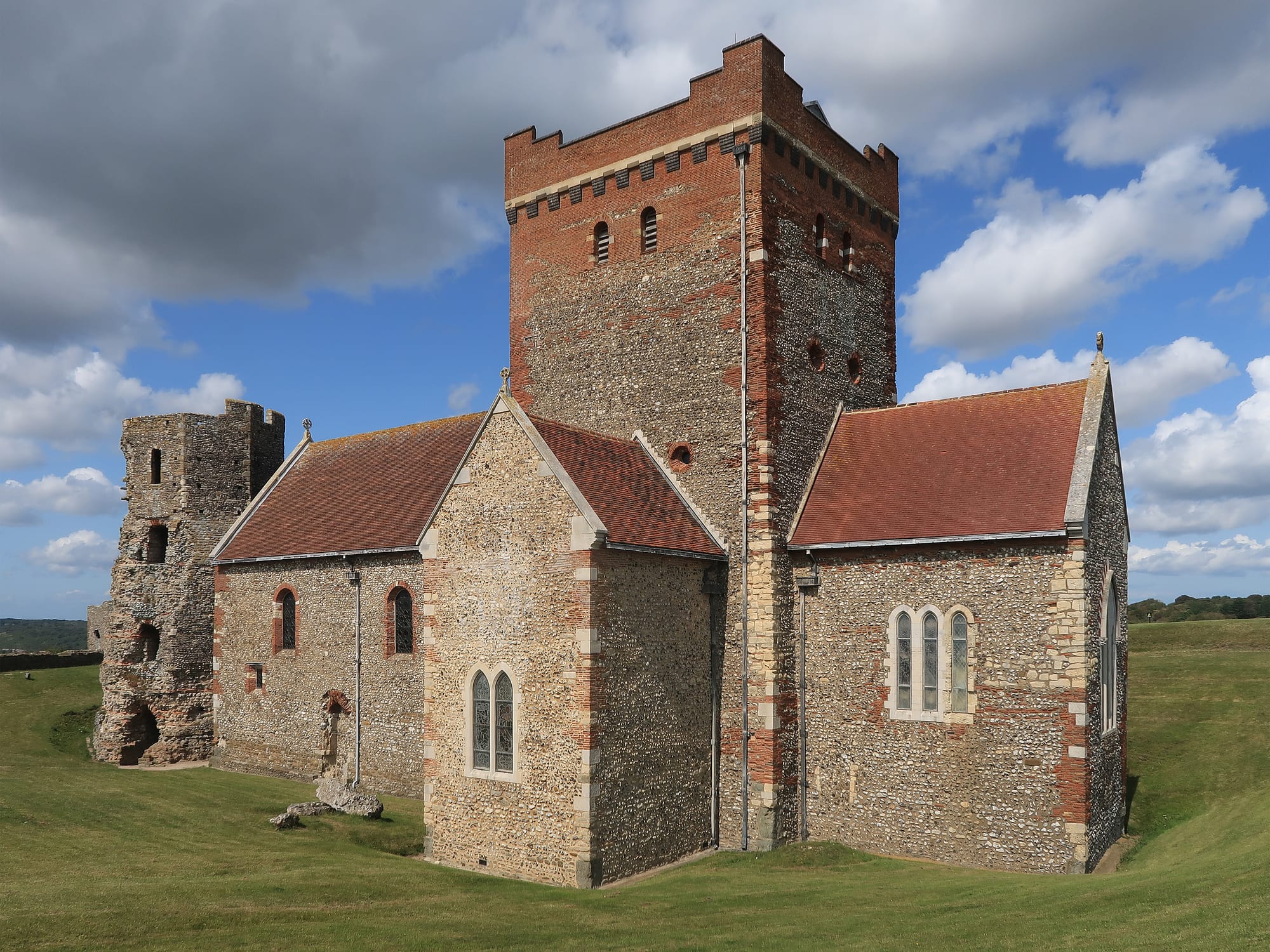
St Mary sub Castro, Dover, Kent
This outstanding relic of the Roman Empire overlooks the English Channel. It is a pharos, or lighthouse, and was built to guide ships heading towards the port at Richborough.
Mounted on Castle Hill, within the medieval curtain wall of Dover Castle, it’s one of only three lighthouses to survive from the whole of the Empire – the others are in Spain and Libya.
The lighthouse (on the left of the photograph above) is believed to have been built by the Emperor Claudius, which dates it to sometime around 50AD, at the beginning of the Roman conquest of Britain. Octagonal in plan, tapering as it reaches its original height of some 40 feet (12.5 metres), it has battered rubble walls of green sandstone, clay tiles and flint nuggets bound in characteristic hard, pink Roman mortar.
In about the year 1000, the Anglo-Saxons built their church right up close to the lighthouse. The west end of that church, St Mary sub Castro, is barely three feet from the base of the ancient tower.
At some point in the Middle Ages, the pharos was extended upwards and a crown of crenellations added to the top. The interior was reworked, bells strung up inside, and the Roman lighthouse was set to use as a medieval belfry.
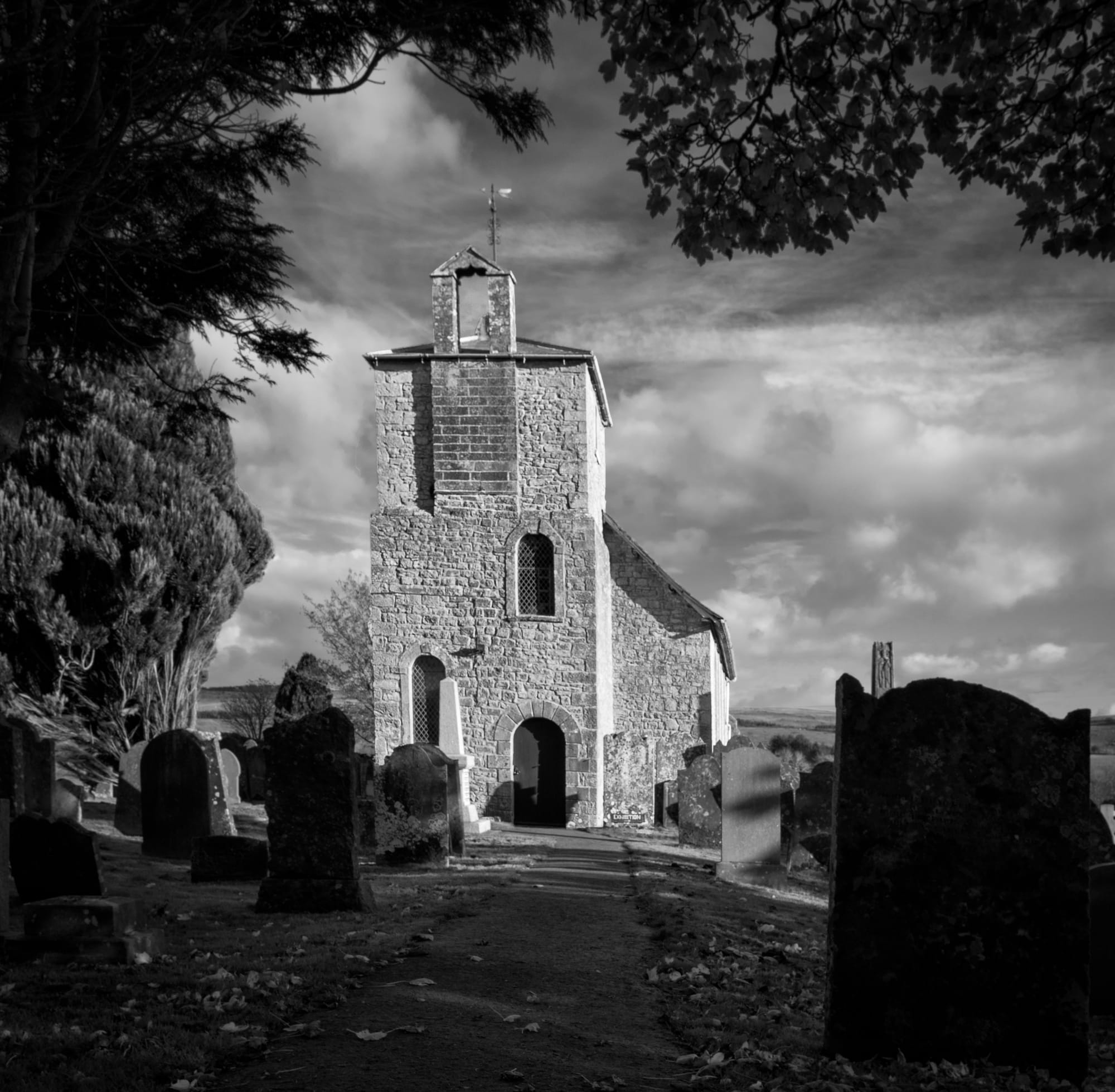
St Cuthbert's, Bewcastle, Cumbria
We can touch the beginning of time, as we know it, in a churchyard in Cumbria.
St Cuthbert’s Church occupies the site of a Roman fort, itself built on a Bronze Age settlement. In the churchyard stands a high cross (the tip of which can be seen in the photograph above) that predates the present church by about 600 years. At fourteen and a half feet tall, it is incomplete. The cross-head has been lost; the huge stone shaft snapped at the point where the arms would have spread. Carved into its south face, a semicircular sundial nestles among the branches of a blossoming tree.
The architectural historian Nikolaus Pevsner called the Bewcastle Cross ‘the greatest achievement of their date in the whole of Europe’. But what is that date? No one can be certain, though there are clues.
Its decoration draws on Roman iconography and resembles carvings at Monkwearmouth Abbey, founded in the early 670s by Benedict Biscop, whose repeated journeys to Rome helped shape early English Christianity.
The cross also bears a badly weathered runic inscription. One interpretation reads: ‘This slender pillar Hwætred, Wæthgar and Alwfwold set up in memory of Alchfrith, a king and son of Oswiu. Pray for their sins, their souls.’
If that is correct, the Bewcastle Cross and its sundial date from the late 660s, making them the oldest surviving example in England.
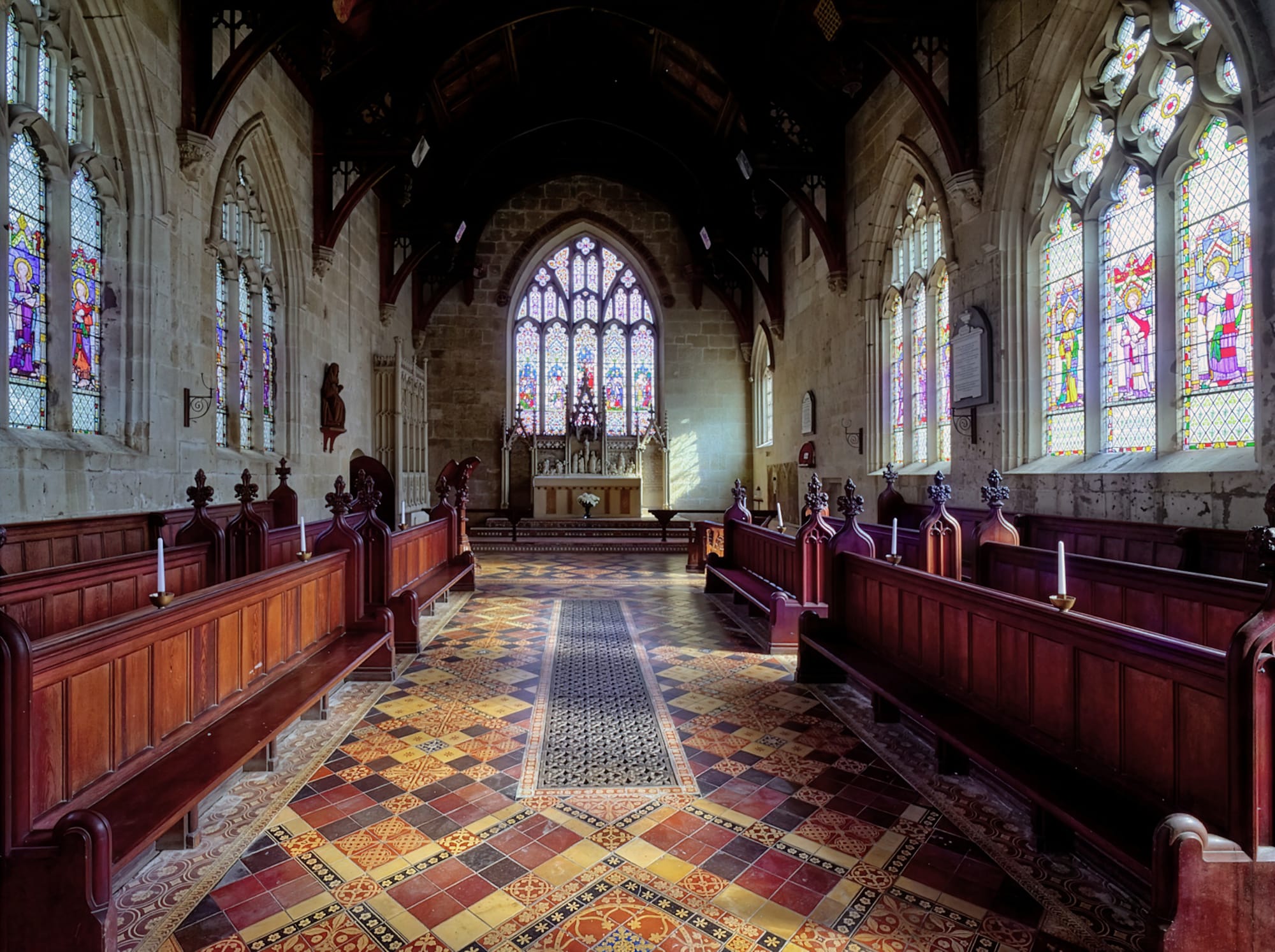
St Mary Magdalene's, Battlefield, Shropshire
There are many motives for building a church. Power, piety or an act of atonement are just some.
Following the Battle of Hastings and the Norman Conquest, the Bishops of Normandy devised a set of penances for those who had fought against the English. Given that the invasion was made partially on the grounds of religious reform and had papal support, this was important. Known as the Penitential Ordinance, this list allocated a penance for the various sins, and the scale of sins, committed. Redemption could be found through prayers, fasting, prostration, and endowing or building a church.
This practice continued long after 1066. St Mary Magdalene’s, Battlefield in Shropshire is built on the site of the ‘Battle of Shrewsbury’ between Henry IV and Henry 'Hotspur' Percy in 1403.
It’s said that over 1,600 lives were lost in that field, and the church was built as a space to pray for the souls of the dead who lay in cold clay below. Inside, the arms of the knights who fought alongside the king are carved into the roof timbers, while Henry IV himself looks out from a niche in the east end.

St Candida and Holy Cross, Whitchurch Canonicorum, Dorset
It’s estimated that between 90% and 98% of the Medieval decorative art in English churches has been lost: the process of reformation, Civil War, fashion and time have stripped us of so much.
The Norman Conquest severed ties with our Saxon saints and the Reformation threw out any idolatrous Catholic ones; these saints were part of the local amenity, and churches were stuffed with shrines. But only one shrine containing the undisturbed relics of a saint survives intact. It’s at Whitchurch Canonicorum, not far from Lyme Regis in Dorset.
The thirteenth century stone shrine with Purbeck marble top contains the bones of the mysterious ninth century saint Wite, Dorset’s patron saint. Her relics are in a chest above three small oval openings, known as 'limb holes'.
Through these holes, pilgrims could insert injured or ailing limbs or devotional tokens in the hope of receiving healing through the saint’s intercession. The shrine was an important pilgrimage destination during the Middle Ages.
If you visit today, the shrine is positioned between stout, clustered early Gothic columns. The stone is darkly streaked with grease from centuries of hands. Three kneelers are arranged before the openings, which are overflowing with multi-coloured prayer cards.

St Mary the Virgin's, Mendlesham, Suffolk
In the run-up to the start of the Anglo-Spanish War in 1585, weapons were stockpiled and military commands were assigned. Almost every community in England would have had a local armoury where weapons were stored.
A small panelled room over the south porch at St Mary the Virgin’s Mendlesham protects a singular survival: the village armoury. It’s now unique among churches and an astonishing survival.
Hanging from the walls are four complete sets of armour, mostly second-hand French and German, and a random assortment of weapons: a longbow, a couple of pikes, the village musket, and a few powder flasks carefully scratched with ‘Mendlesham’.
When it comes to churches, we’re more accustomed to seeing arms and armour carved from stone – sculptural replicas of grand metal suits forged in the royal armouries at Greenwich. But most Englishmen didn’t wear Greenwich armour; they protected themselves in whatever wearable metal they could find and fought with whatever weapons they could lay their hands on.
The Mendlesham armoury was annealed by anxieties of armadas cruising off English shores, and what survives is the reality of most people’s experience of fighting in the sixteenth and seventeenth centuries.

The Battle Area Churches, Stanford, Norfolk
In 1942, the British Army gave the residents of six Norfolk villages three weeks to pack their belongings and leave their homes. These villages were scattered across the expansive Breckland Heath and the land was needed for training for Operation Overlord (the codename for the D-Day Landings), which would eventually lead to the end of World War II.
The villagers believed they had been promised that they would be allowed to return when the war was over … But that was never to be.
When the area was requisitioned four historic churches – in the villages of Langford, Stanford, Tottington and West Tofts – were wiped off the map. The area, however, known as Stanford Training Area (STANTA), is still in use. As a live firing area, access to the churches is only possible with special permission, but we should continue to assert a right to access and not let these places be forgotten.
It’s bizarre to pass through villages mocked up to look like Northern Ireland, the Falklands, or Iraq to arrive at a piece of quintessential English architecture and landscape.
The churches are locked within barbed wire compounds. They range in age from the eleventh to the nineteenth centuries: they have Norman arches, medieval pews and monuments to Civil War heroes. But they are in a poor state – and only going to get worse.
Church Crawling: The Secret Lives and Hidden Stories of England's Churches by Rachel Morley
Bodley Head, 3 September, 2026
RRP: £22 | 416 pages | ISBN: 978-1847928009

The poet John Betjeman coined the phrase ‘church crawling’ to describe his days out visiting churches. In the spirit of Betjeman, Rachel Morley’s book captures the magical experience of poking around a dusty village church, only to have it transform – through her expert eyes – into a portal to the past, one that brings England’s people and history to life in the most colourful, moving and unexpected ways.
Through their wall-paintings and monuments, their graffiti and plaques, their jumble of furniture and curios, Morley shows these buildings to be the expression of centuries of communal memory and folk culture – time capsules of connection to ancient and medieval ways of thinking, to revolutions and wars, to lives both glorious and humble.
📸 Dive into our Features
🎤 Read Interviews
🎧 Listen to Podcasts
🖼️ Buy fine art prints & more at our Store


