
Arthur Conan Doyle and the Strange Story of the Cottingley Fairies
Seb Butcher explains how the creator of Sherlock Homes came to believe in the story of the Cottingley Fairies


In 1917, two cousins in the Yorkshire village of Cottingley took a series of photographs appearing to show fairies at the bottom of their garden.
Before long, the images had drawn in photographers, believers, sceptics and, most famously, Sir Arthur Conan Doyle.
Author Seb Butcher revisits one of the strangest photographic controversies of the twentieth century – and what it reveals about our desire to believe, our trust in new technologies, and the uneasy relationship between the two.

In the summer of 1917, two cousins in the Yorkshire village of Cottingley borrowed a camera and walked down to the beck at the bottom of the garden. Elsie Wright was sixteen and Frances Griffiths was nine. Frances had been spending much of her time by the water and would often return home with wet feet and muddy clothes. Her explanation was that she had been playing with the fairies.
The adults, unsurprisingly, were not convinced. So, Elsie and Frances decided to provide some evidence to prove them wrong. Elsie borrowed her father Arthur’s camera (a Quarter-plate ‘Midg’) and took a photograph of Frances beside the water. When Arthur developed the plate, Frances appeared sitting in the grass, looking towards the camera. In front of her were four tiny-winged dancing figures – fairies.
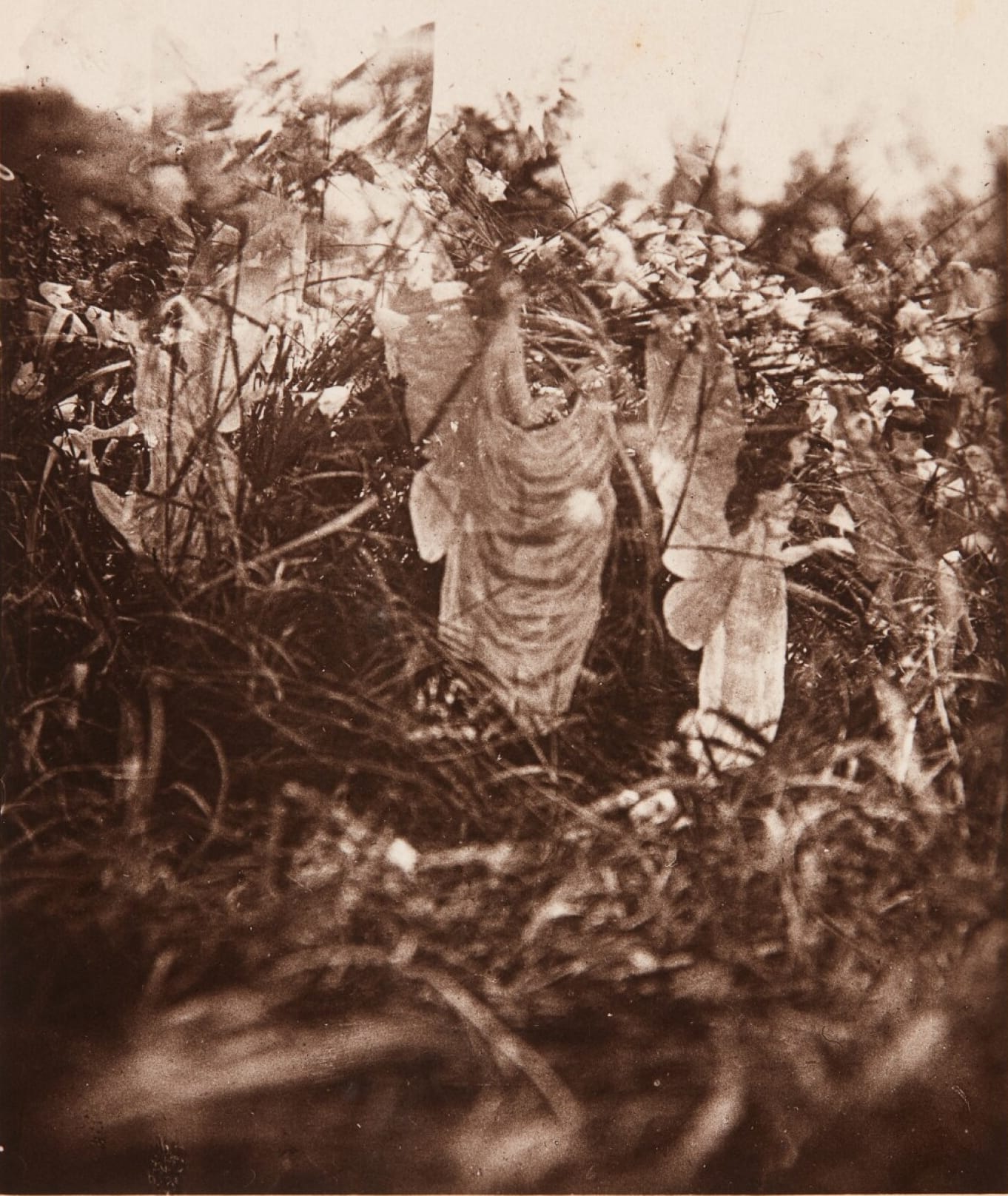

Arthur remained sceptical – he knew his daughter was artistic and suspected there was some sort of trick involved, and when a second photograph appeared later that year showing Elsie with a small-winged gnome, his doubts remained.
A couple of years later, however, the photographs began to move beyond the family. Elsie’s mother, Polly, had become interested in Theosophy (the mystical philosophy that seeks universal truth by drawing together ideas from different religious, philosophical and scientific traditions) and after attending a talk on fairies at the local Theosophical Society, brought the photographs into those circles.
They eventually came to the attention of Edward Gardner, a prominent Theosophist who took them seriously enough to begin investigating their authenticity. Rumours of these photographs also began to circulate amongst Britain’s spiritualist and theosophical networks. Before long, they reached Sir Arthur Conan Doyle. And after seeing the images himself, Doyle contacted Gardner, and the two began investigating them together.

At this point in time, Doyle was already known for his fascination of Spiritualism and psychical research. But rather than simply accepting these photographs at face value, Doyle and Gardner set about trying to establish whether they could be explained through some form of deliberate deception.
So, the images were shown to various experts in photography. Photographer Harold Snelling examined the negatives, finding no obvious evidence of manipulation. Experts from Kodak also found no sign of manipulation, though they did stop short from saying that the images proved the existence of fairies. Others remained doubtful, including the physicist and psychical researcher Sir Oliver Lodge.
Gardner wanted further evidence, so he travelled to Cottingley and supplied the girls with new cameras and photographic plates that had been secretly marked, so that any substitution of the plates could be detected. Frances and Elsie were then asked to see whether they could produce any more evidence. They did, returning with another three photographs – again showing fairies.
To Doyle and Gardner, this strengthened the case considerably that fairies did indeed exist. For this latest round of photographs, the cameras had been supplied to the girls, the plates had been specially marked and the negatives examined, and yet still, no obvious photographic manipulation could be found. Doyle was also doubtful that the girls themselves possessed the technical ability, or knowledge, to create such convincing fakes, describing it as something beyond “two children of the artisan class”.
By December 1920, he was sufficiently persuaded to put his name behind the story in The Strand Magazine, under the eye-grabbing headline “Fairies Photographed: An Epoch-Making Event”. He would later develop the case further in his 1922 book, The Coming of the Fairies.
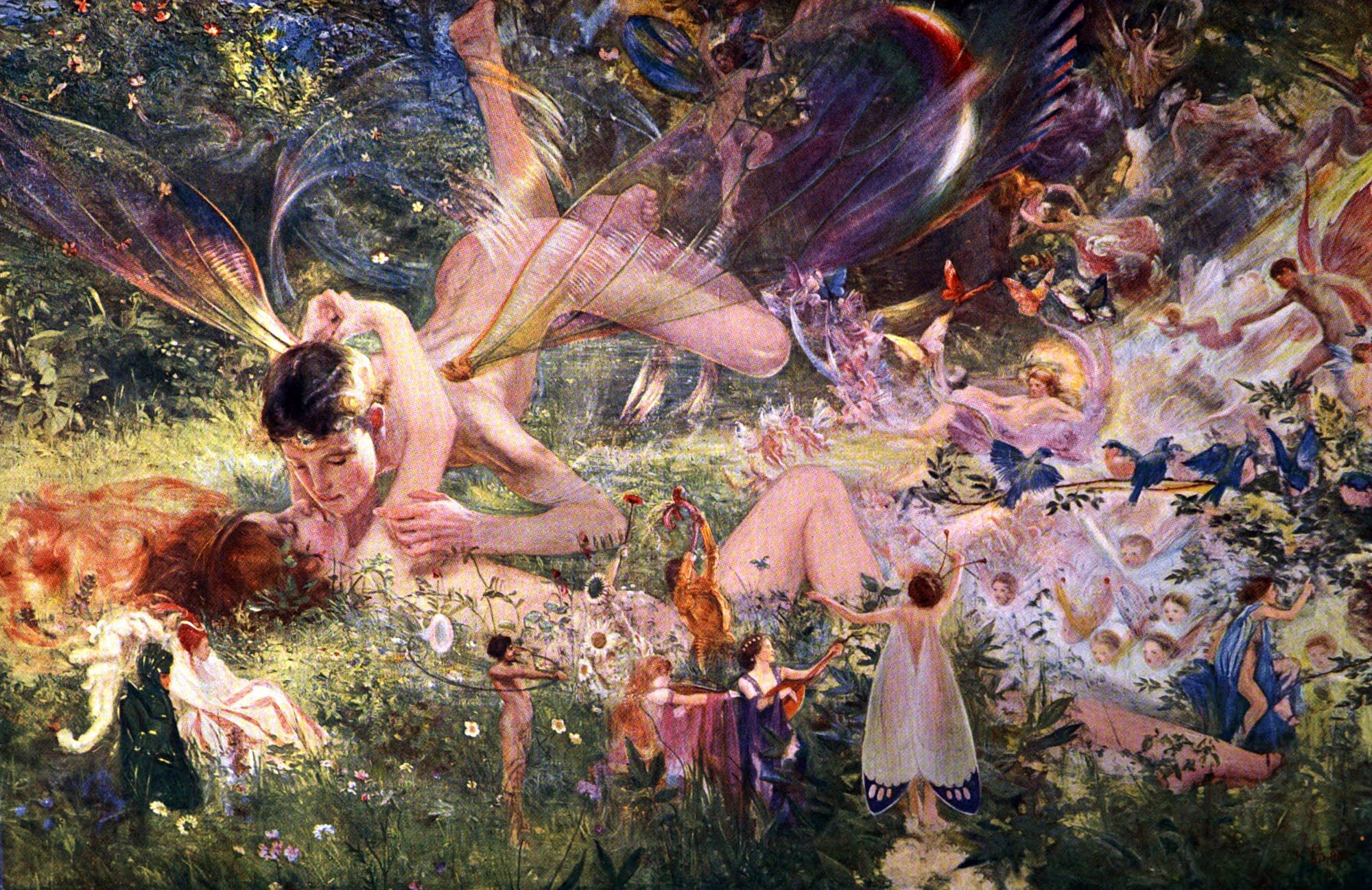
Doyle’s own prior beliefs and experience are worth considering. At this point in time, he had spent decades exploring psychical phenomena and had become committed to Spiritualism. Meanwhile, the losses he suffered around the First World War (the deaths of his son and his brother) may well have deepened that commitment, and so the possibility of existence beyond the physical world had become part of how he understood reality.
What is of equal importance, then, is that when Doyle assessed the Cottingley photographs, he was not approaching them from a completely neutral, or objective, point of view. And this is a vulnerability we are all prone to. We interpret information through the lens of what we already know, feel and believe. That cognitive filter colours how we see the world. When something appears to confirm an existing view, we tend to accept it more readily; when it challenges that view, our scepticism often grows.
Psychologists describe this as confirmation bias, while motivated reasoning helps explain why we can be remarkably good at finding reasons to defend conclusions we already want to reach. And in Doyle’s case, the conclusion he eventually reached fitted a worldview he had spent years advancing.
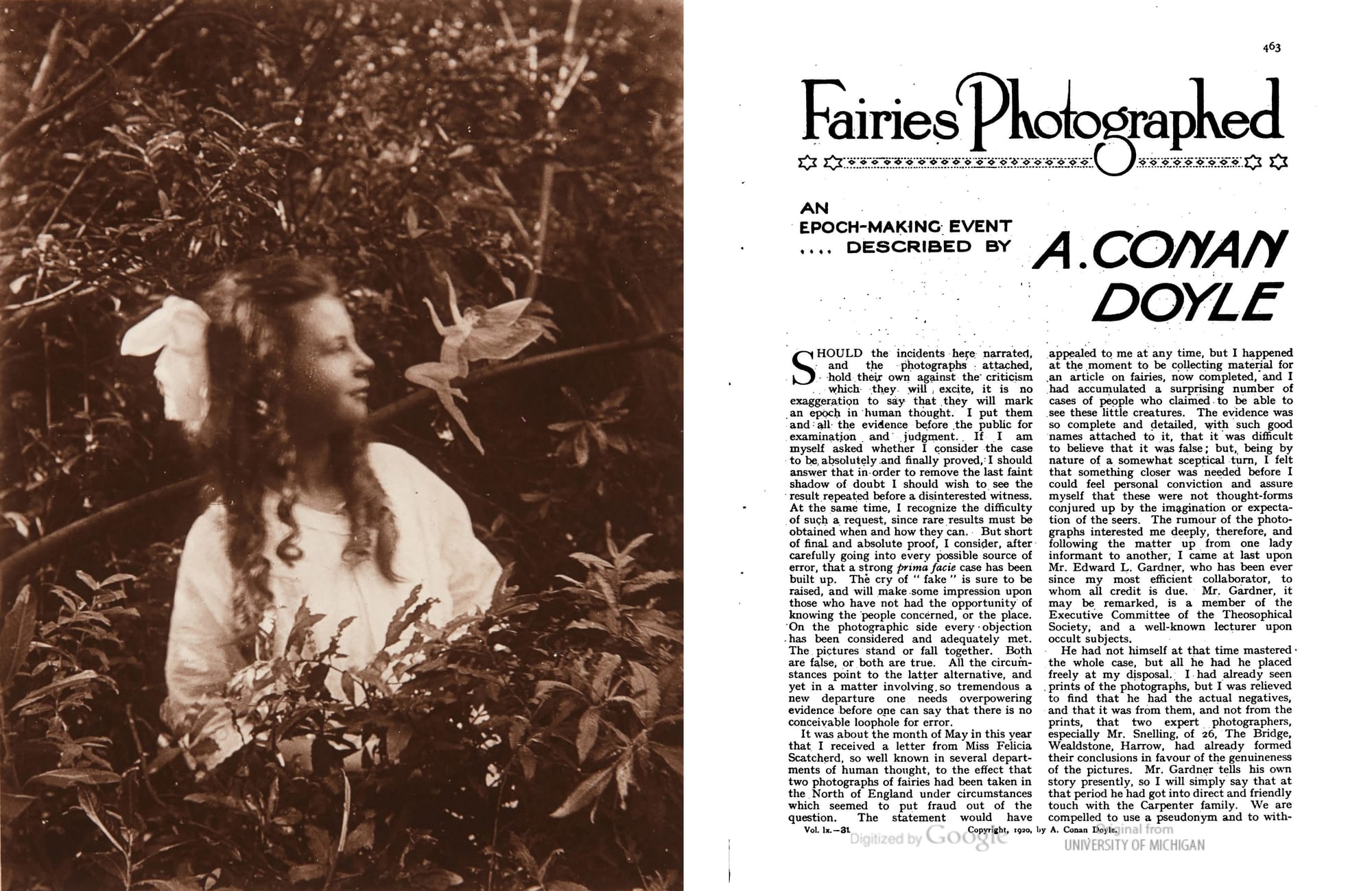
Sixty years later, the truth eventually came out. In the early 1980s, Elsie and Frances acknowledged that the first four photographs had indeed been staged. They disagreed only about the fifth photograph – with Frances maintaining that it was genuine, and Elsie claiming that all five were false. And what had started as an innocent game between two girls had grown into something neither felt particularly able to rewind.
The explanation for how these fairies had appeared in the photographs was also a pretty simple one; Elsie had drawn the fairies, partly inspired by illustrations in one of Frances’s books, cut them out and positioned them using hatpins. There was no sophisticated manipulation of the original negatives, and the camera had simply recorded what had been placed in front of it.
Doyle and Gardner had underestimated what the girls themselves were capable of. Elsie was a talented artist and had previously worked in a photographic studio. The problem, then, was not only the authority they placed in the camera, but also the assumptions they made about the people behind it.
In 1917, photography was not new. And staged or manipulated images were hardly unknown. But photographs had nevertheless come to hold an important and reliable role in how people understood evidence.
Today, the remarkable deception at Cottingley feels more relevant than ever. More than a century later, as we enter an era increasingly shaped by AI, even our most basic assumptions about what images can prove have changed fundamentally. Convincing photographs can be created without any corresponding reality behind them at all.
And while the technology has changed almost beyond recognition, our cognitive vulnerabilities have not. Our biases, emotions and assumptions – all of which are part of what makes us human – all play a role in interpreting whatever is placed in front of us. The difference now is that the technologies capable of shaping that information are becoming vastly more powerful – often making it impossible to tell what is real from what is not.
That leaves us with a question that moves far beyond the little village of Cottingley: what happens when our trust in a technology develops faster than our understanding of how it can mislead us?
For Doyle, seeing could still be believing. For us? That can no longer be enough. •
Distorted: Ultra-Processed Feeds, Splintered Worlds and How the Internet Broke Reality by Seb Butcher
Icon, 22 October 2026
RRP: £20 | ISBN: 978-1837734054
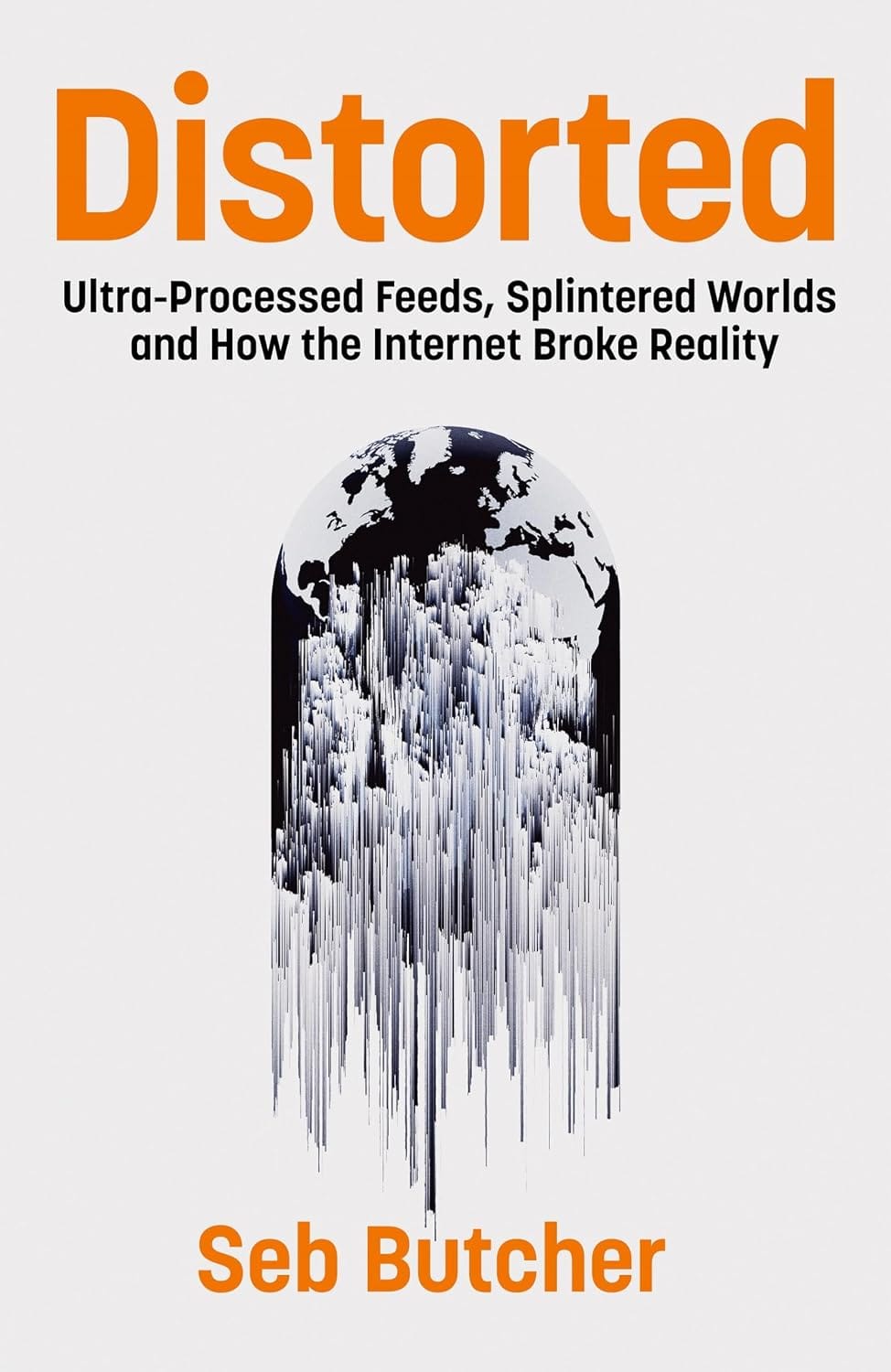
The world is hooked on ultra-processed feeds – engineered diets of outrage, falsehood and distraction that are reshaping how we think and what we believe. And like ultra-processed food, they are making us sick – eroding trust, fuelling tribalism and loosening our grip on truth.
Seb Butcher is a technology lawyer and former advisor to some of the world's largest companies. In Distorted, he delivers an eye-opening account of how the modern internet is distorting reality itself. Drawing on behavioural science, technology, politics and culture, Butcher reveals the forces behind this distortion – from our own biases to technology addiction, algorithms and generative AI –ß and why we are splintering into increasingly separate, incompatible worlds.
Clear-eyed, rigorous and deeply human, Distorted is a call to reclaim reality before it's too late. As we enter a new era shaped by AI and rising socio-political tensions, Butcher urges the reader not only to confront their online habits, but to ask deeper questions about technological power and human agency. Part diagnosis, part survival guide, Distorted offers a thoughtful and practical path toward rebuilding trust, restoring human connection and finding common ground in an increasingly fractured world – while we still can.
With thanks to Elle-Jay Christodoulou.
📸 Dive into our Features
🎤 Read Interviews
🎧 Listen to Podcasts
🖼️ Buy fine art prints & more at our Store



