
Who was the man who became Henry VIII’s confidant after Thomas Cromwell?
In Henry VIII's famous reign the 1540s is a strangely neglected decade. Central to an understanding of it, argues Andrew Johnston, is William Paget – 'The King's Secretary'.


The 'chief minister' is a familiar character for students of the Tudor century. From Wolsey to Cecil, these were the figures who both held true power and inhabited a capricious world of political peril.
Thomas Cromwell is perhaps the most famous of all these ministers. But the man who followed him in the 1540s is one, argues Andrew Johnston, who has been overlooked.
Here he reminds us of William Paget, the forgotten Tudor mastermind.

On 28 July 1540 Thomas Cromwell, Cardinal Wolsey’s successor as Henry VIII’s great minister, was beheaded on Tower Hill.
Conventional wisdom has it that from this moment until the end of the reign in January 1547 no single person exercised authority comparable to Wolsey or Cromwell; instead, Henry governed through the privy council, a group of around 20 courtiers which had emerged in the 1530s. In fact, there was one man, a forgotten Tudor mastermind, who did emerge as Henry’s closest confidant in these last years, that was his secretary, William Paget.

Who was Paget and why has he largely been forgotten? Set against the glamour of Henry VIII’s early years, the momentous events of the 1530s and the well-trodden path of Elizabeth and Cecil, the 1540s and 1550s have always been something of a poor relation.
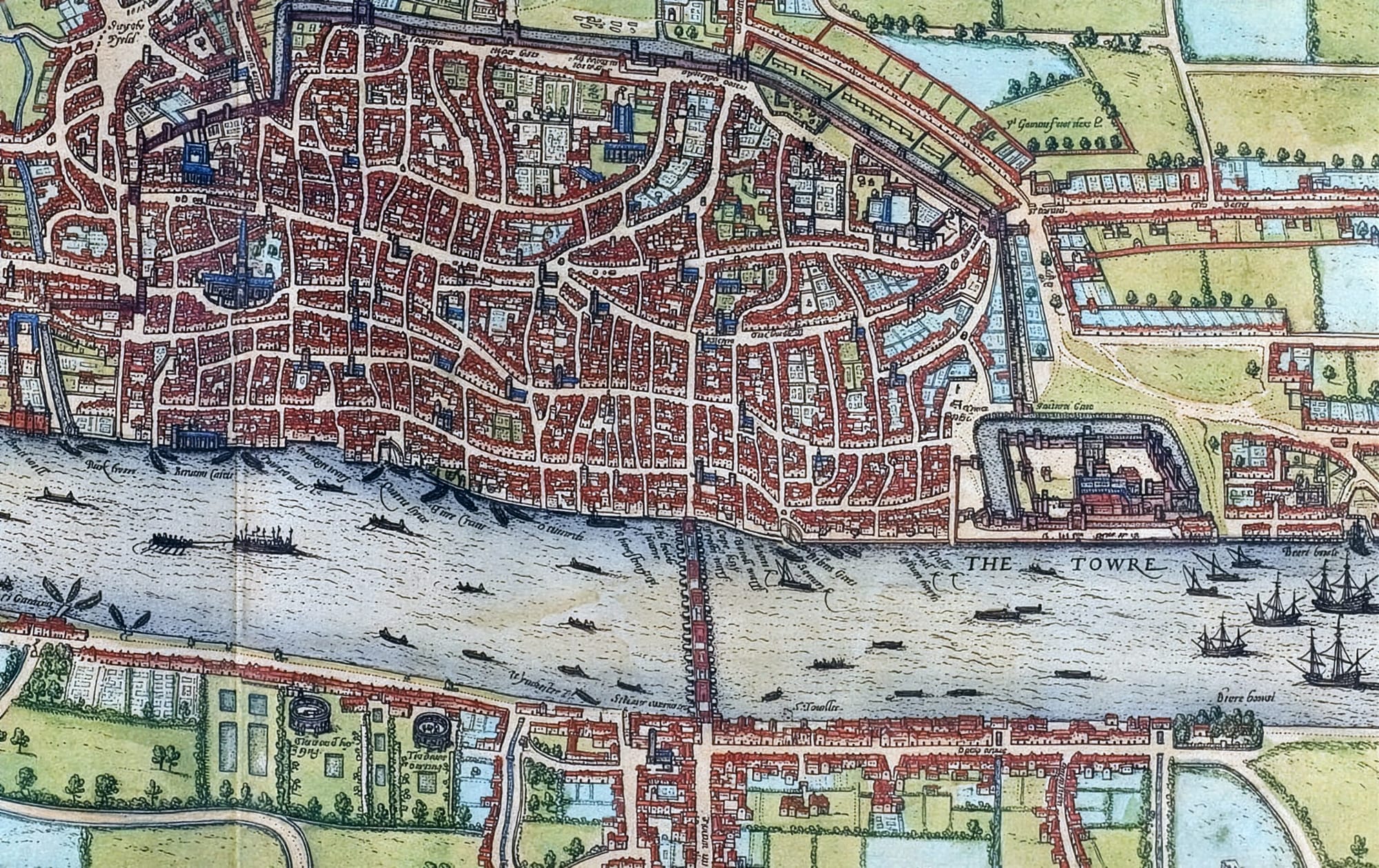
Yet this mid-Tudor period was the one in which Paget was the dominant figure, and his story is worth revisiting. He was born in the City of London at the start of the sixteenth century, and by the time he was a prominent courtier, it was well-known that he was the humble son of a ‘catchpole’; his father was a debt-collector, employed by the City authorities.
But William was clever and was educated at St Paul’s school, newly refounded by John Colet along the latest humanist lines. In the early 1520s he went to Trinity Hall, Cambridge, where he was soon taken under the wing of Trinity’s Master, Stephen Gardiner.
When his patron was made Henry VIII’s secretary in 1529, Paget’s career in public life began; by the early 1530s he had become a client of the new great minister, Thomas Cromwell. Despite Cromwell’s fall in 1540, Paget survived and soon became Henry’s ambassador in France.

When Paget returned from France in 1543, he became Henry’s secretary and was able to exert unrivalled influence. What did Henry see in him, and what did Paget make of Henry?
Like Wolsey, and Cromwell, Paget was highly intelligent and tough, with seemingly limitless reserves of stamina. However he was enough of a hypochondriac for us to know at the distance of 500 years that he suffered from haemorrhoids, sciatica and terrible seasickness.
In an apocryphal tale from Elizabeth’s reign, Henry is supposed to have put Paget in the same bracket as Cromwell as a royal servant. For his part, Paget was genuinely devoted to the king, but he was neither unquestioning nor uncritical. He later wrote of Henry’s reign that ‘then it was dangerous to do or speak though the meaning were not evil…. then the prince thought not convenient for the subject to judge or dispute or talk of the sovereign his matters.’
How was Paget able to exert influence? He was Henry’s secretary, literally the keeper of his secrets; all information coming into and leaving the court was known to him. He wrote Henry’s letters, presented all correspondence to the king and controlled access to him.
Deep in Henry’s secret lodgings in his palaces Paget spent hours with Henry, rarely leaving his side. Paget also controlled the operation of the privy council and acted as the conduit between the council and the king, since Henry seldom attended its meetings.
Paget was the first English statesman who had to navigate the diplomatic ramifications of the break from Rome. If the two great catholic rulers of Europe, Francis I and Charles V, buried their differences, then England became a target and would be, in Thomas Wriothesley’s memorable phrase ‘but a morsel amongst these choppers’.
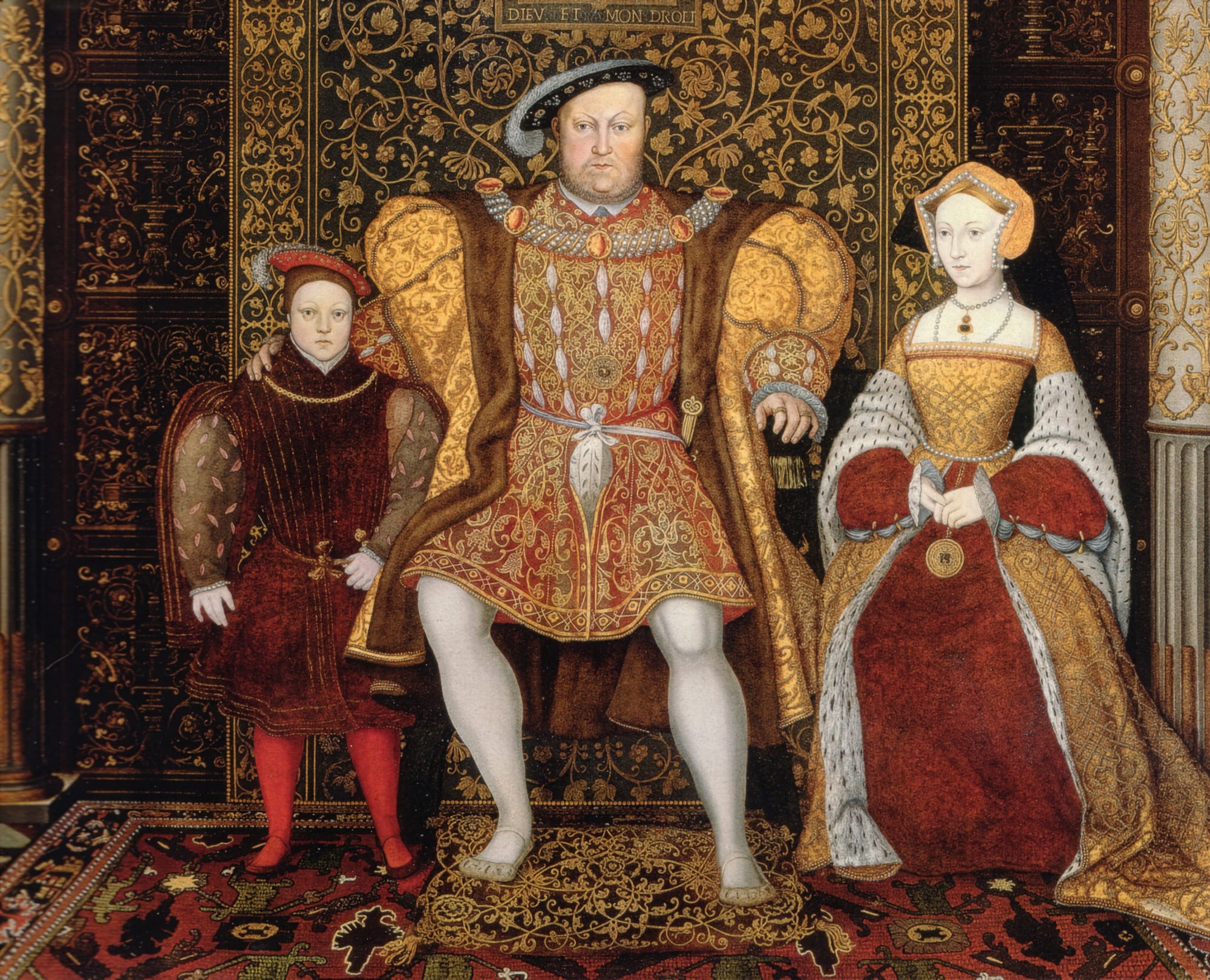
The omens were therefore good in 1542, when Francis and Charles again went to war. Henry backed Charles and in 1544 they launched a joint invasion of France. Then came disaster. As Henry captured Boulogne, in September 1544, Charles and Francis made peace; Henry found himself alone fighting a war against France and Scotland.
Worse still, what if a Catholic crusade followed? For the next two years Paget was engaged in a series of desperate diplomatic manoeuvres to try to secure peace with France whilst Henry refused to relinquish his great prize of Boulogne. When Paget did secure peace in June 1546 everyone knew it would be short-lived.
By the autumn of 1546 England was in a vulnerable position in Europe, the king was dying and the succession was uncertain. Prince Edward was only nine, and should he die, the Lady Mary and then the Lady Elizabeth would become queen.
Yet female rule was anathema. It has long been understood that Paget was the key figure at this precarious moment in English history, but what was he trying to achieve? One interpretation has it that Paget, along with Edward Seymour, led a reformist faction which defeated a conservative grouping led by the Howards and then manipulated Henry VIII’s will to establish the regime after Henry’s death. In effect he was responsible for a political coup.
A more positive reading, and one which accords better with the facts, is that in the months before and after Henry’s death, Paget was trying to establish a regime which would ensure stability and safeguard the realm in the face of the threats which it now faced.
The regime which Paget envisaged, and which he helped to shape in the weeks after Henry died, was one in which Edward Seymour, Edward’s uncle, who soon became the Duke of Somerset, would become Protector, a quasi-monarch. He would be advised by a regency council, and Paget would remain the power behind the throne. Meanwhile the young Edward would come into adulthood and learn his kingly role in a stable political environment.
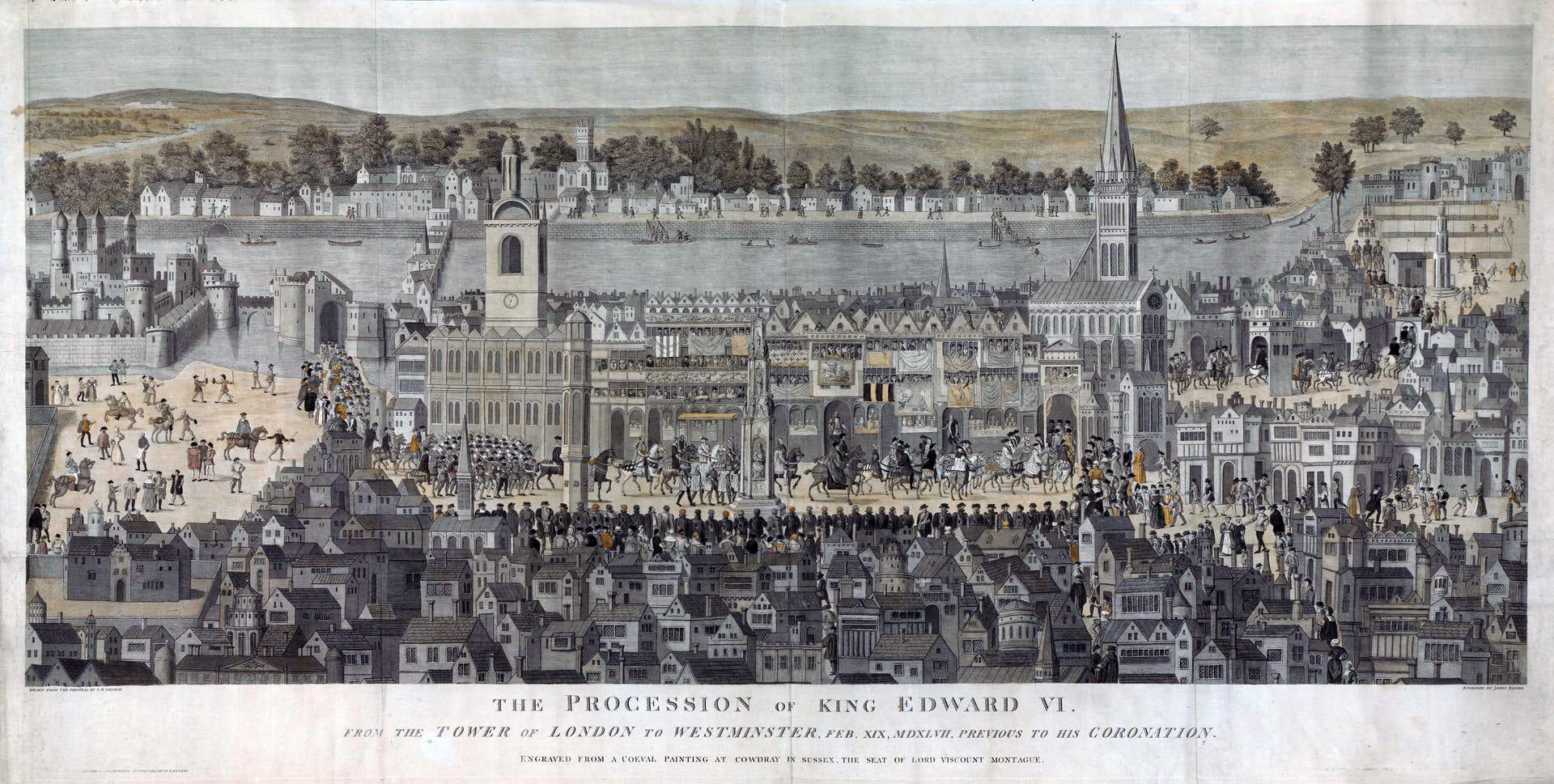
Within a few months of Henry’s death in January 1547 Paget had presided over a successful transfer of power. Yet by the end of 1549 this had collapsed. Why? The reasons were various, but perhaps the single greatest cause was Edward Seymour’s failure to fulfil the role he had assumed.
Repeatedly, in the famous ‘critiques of the protectorate’, Paget wrote to Seymour urging him to behave as a king, and above all to take his advice and listen to the regency council. For Paget, the failures in Scotland, religious division and the rebellions in the summer of 1549 all stemmed from Seymour’s misconceived style of rule.
It was in the last years of Henry’s reign, and the early part of Edward’s, that Paget was at the peak of his power. He was increasingly sidelined under the regime which followed of John Dudley and even found himself in the Tower for many months in 1551-52. He was fortunate not to suffer the same fate as Seymour, who was executed in February 1552.
Paget was, though, a true political survivor, and when Mary swept to power on the death of Edward VI in July 1553, he was one of the first to rally to her cause, again becoming one of the dominant figures at the Tudor court.
Wolsey, Cromwell, Cecil, Walsingham are familiar names from the Tudor period. Paget is the missing link. He was Cromwell’s attentive pupil, the model for William Cecil and through his eyes we can better understand the neglected 1540s and 1550s •
King's Secretary: William Paget and the Last Years of the Reign of Henry VIII by Andrew Johnston
Yale University Press, 22 September, 2026
RRP: £25 | ISBN: 978-0300285215
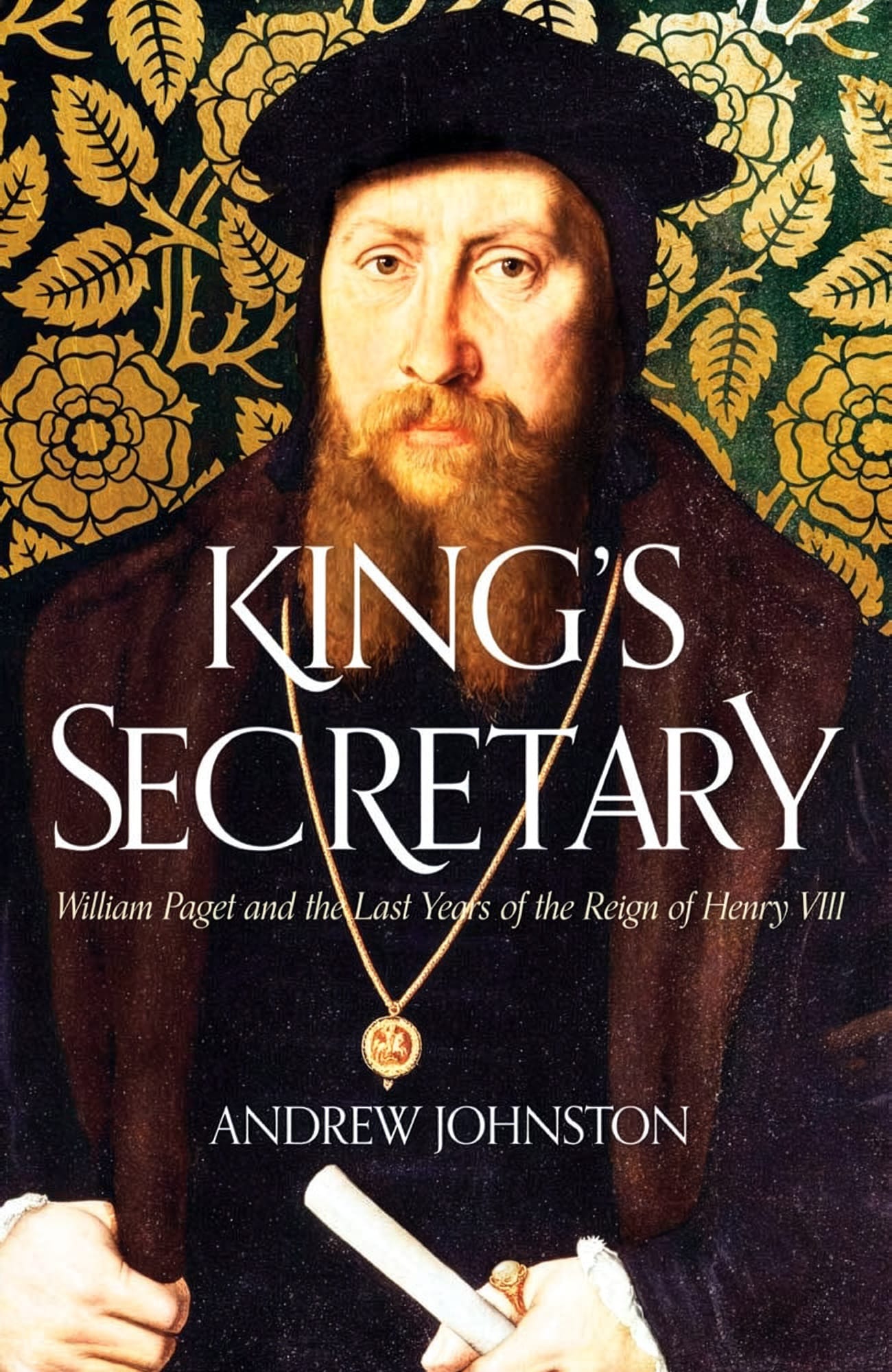
The compelling story of the end of Henry VIII’s reign—and how the fate of England was determined by the king’s secretary and minister, William Paget
In the closing years of Henry VIII’s reign, the future of England hung in the balance. The king’s potential heirs consisted of two daughters of disgraced parentage, and a young son too inexperienced to rule. With a French invasion imminent and the succession in crisis, England’s noble families vied to manipulate the succession for their own ends.
In this dramatic account, Andrew Johnston shows how one vital member of Henry VIII’s court attempted to protect the future of the kingdom, and himself. Of humble origins, William Paget was the successor of Thomas Cromwell as Henry VIII’s trusted secretary. He became the king’s closest confidant in the chaotic final years of his reign, oversaw the crisis of Tudor succession, and navigated the deadly conflicts of the Henrician court—cutting down to size the powerful Howard family, as well as heading off the French across the Channel.
This is an engrossing story of rivalry and intrigue, politics and the uncertainties of Tudor statecraft, through the eyes of one of Henry VIII’s most powerful, and most overlooked courtiers.
With thanks to Heather Nathan.
📸 Dive into our Features
🎤 Read Interviews
🎧 Listen to Podcasts
🖼️ Buy fine art prints & more at our Store



01.jpg)


