
The 43 Group: The Forgotten Fight Against British Fascism
The 43 Group was a militant British anti-fascist organisation founded just as WW2 ended. Here the novelist Susie Gordon explains what they sought to achieve.


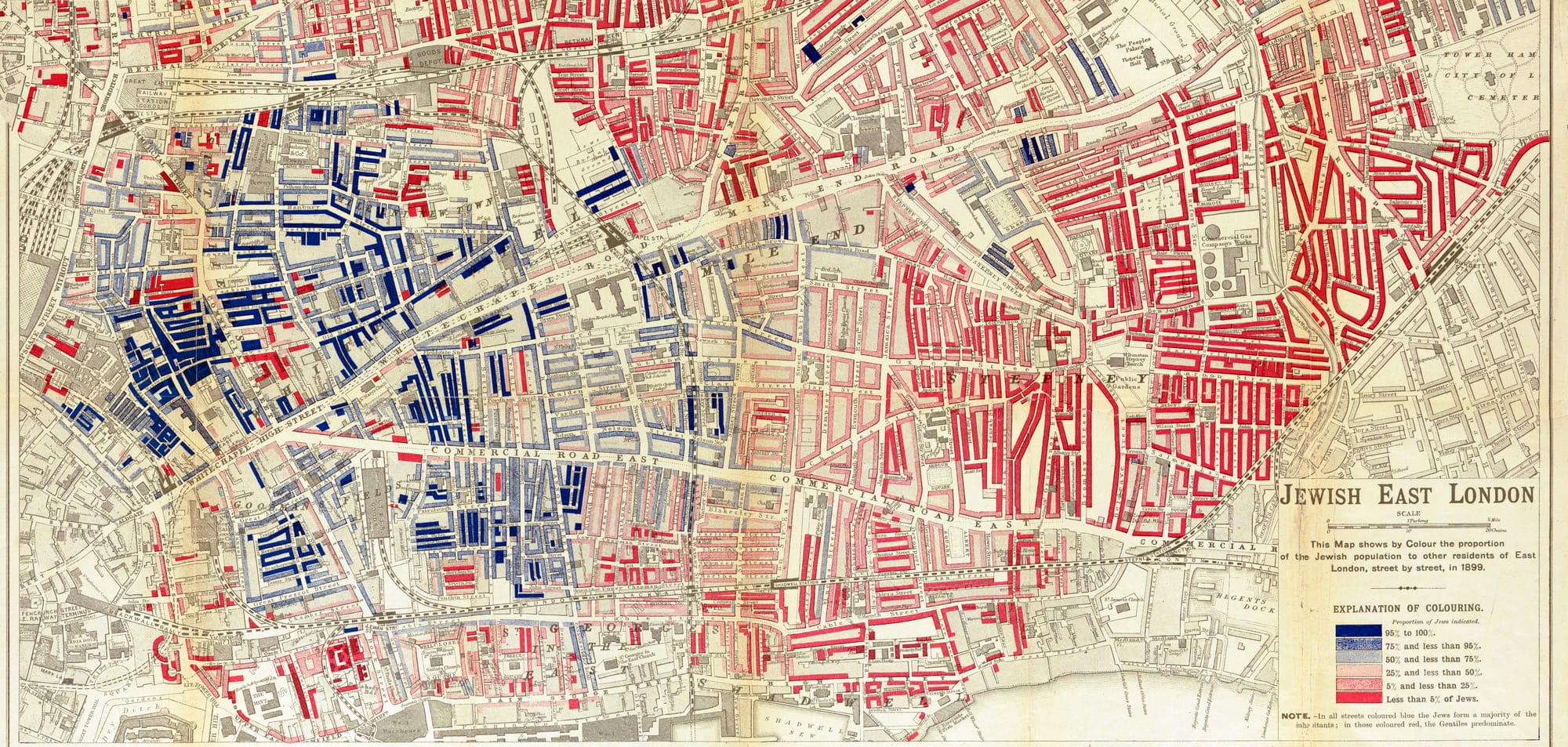
The spring of 1945 might have brought an end to the fighting in Europe, but as the victory celebrations began in London for the city's Jewish community a new struggle against fascism was beginning.
Here Susie Gordon explains the background to her evocative new novel, A Monster in the Ash, which recalls the story of 'The 43 Group', a movement founded by Jewish veterans of the East End who were determined to confront fascism on the streets of the capital.

When Morris Beckman came home to Hackney after six years at war, the last thing he expected was to see Fascism rising again.
Beckman had joined the Merchant Navy in 1939, serving as a radio officer and surviving two torpedo attacks during the Battle of the Atlantic. Like thousands of returning Jewish servicemen, he had every reason to believe that the ideology he had spent six years fighting had been defeated. Hitler was dead. The concentration camps had been liberated. Newsreels were bringing images of the Nazi genocide into British cinemas. However, in the streets where Beckman had grown up, fascism was reappearing almost before the uniforms had been put away.
Jewish shops were daubed with “PJ” (Perish Judah). The windows of a Jewish religious school in Dalston were smashed. Fascist speakers returned to street corners and meeting halls, where audiences could hear claims that not enough Jews had been killed at Belsen.
Oswald Mosley, leader of the pre-war British Union of Fascists, had been released from wartime detention. His followers were reorganising.
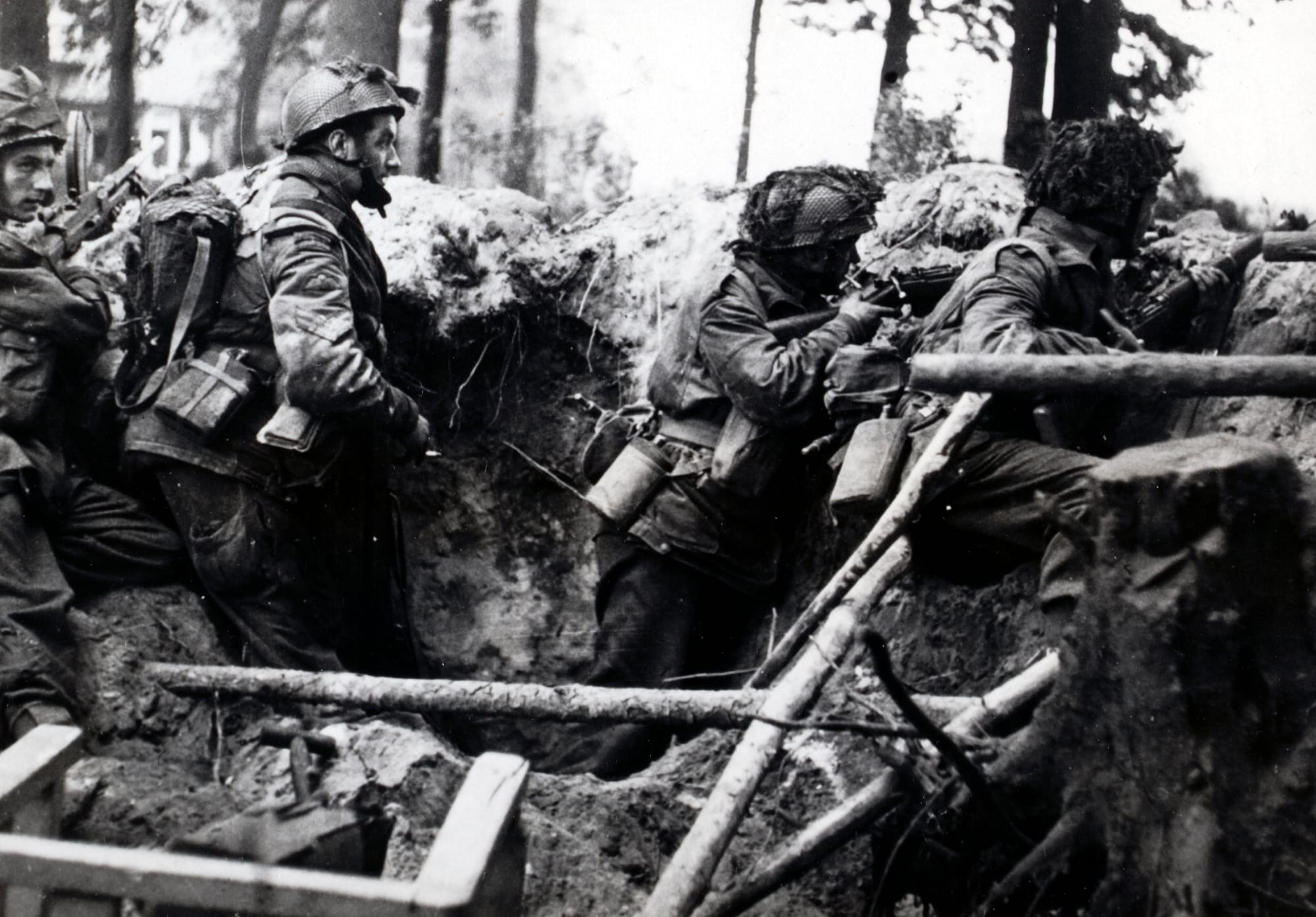

Morris Beckman was not the only Jewish veteran who found the situation intolerable. Gerry Flamberg had perhaps an even more extraordinary war behind him. A Hackney boy and middleweight boxer, he had served with the 156th Battalion of the Parachute Regiment and fought at Arnhem in September 1944.
When his regimental sergeant major was wounded, Flamberg stood exposed to enemy fire and attacked a German armoured vehicle with an anti-tank gun and a bomb. He was wounded, and captured as a prisoner of war. For his actions at Arnhem he received the Military Medal. Within two years he was fighting fascists again, this time in London.
There is something a little disorientating about the chronology. Our collective memory of British fascism tends to belong to the 1930s: Mosley, the Blackshirts, Cable Street. Then comes the war, and with it a satisfying historical full stop. Britain fights Nazi Germany; Germany is defeated; fascism joins the inventory of things the Allies have vanquished.
But for Morris Beckman and Gerry Flamberg, there was no such full stop. In early 1946, the two men, together with fellow veterans Alec Carson and Len Sherman, became involved in physically breaking up a fascist meeting. The encounter helped precipitate a gathering at Maccabi House (a Jewish sports club in Hampstead) that April.
Forty-three people attended. The number gave the organisation its name, and the 43 Group was born. Its members were not interested in debating whether fascism might eventually become dangerous. They believed that question had already been answered. Their concern was how to stop it rising and taking root.
This is essential to understanding what followed, because the methods of the 43 Group remain capable of making admirers as well as critics uncomfortable. The group gathered intelligence and infiltrated fascist organisations. They published a newspaper, On Guard. They pressured politicians to outlaw racial incitement. But they also went to fascist meetings with the express intention of preventing them from taking place, and they were prepared to use physical force to do it.
At street meetings, members might disperse themselves through a crowd before a group of trained fighters drove towards the platform. Fights broke out. Platforms were overturned. Speakers were prevented from speaking. Arrests were common.
Beckman later recalled that some of the toughest members were former Royal Marines, paratroopers and Guardsmen. These were men who knew how to fight because the British state had recently taught them how.
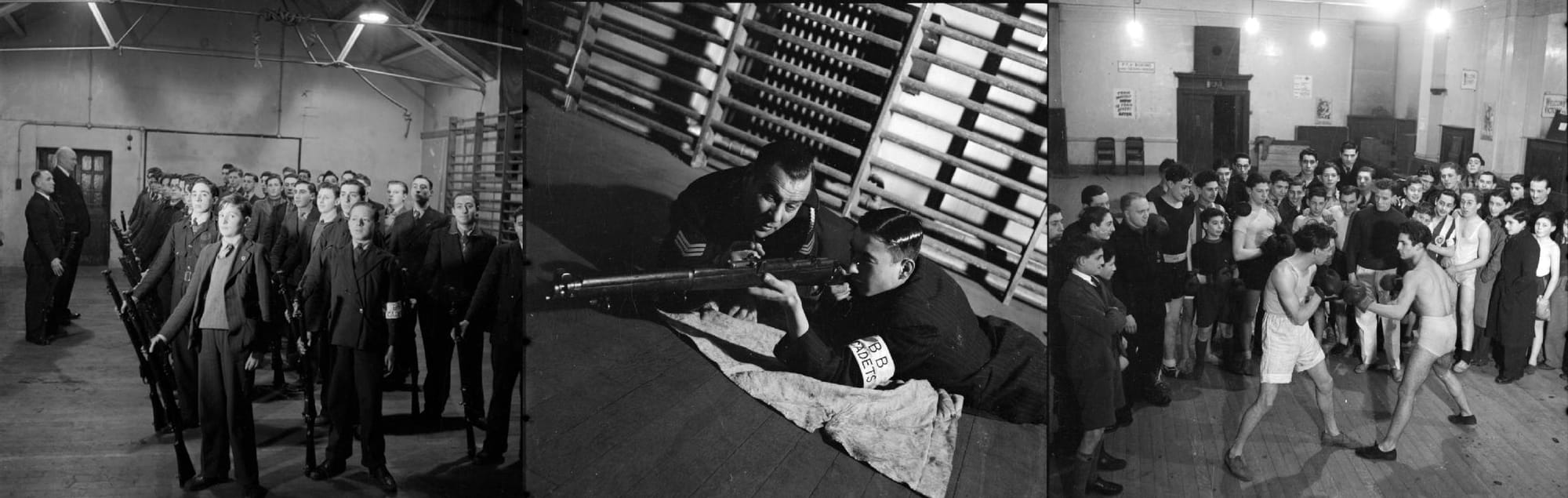
Gerry Flamberg was particularly well equipped for the job. A boxer as well as a paratrooper, he became one of the Group’s leaders and was repeatedly involved in its street operations. On Ridley Road in Dalston, one of the principal battlegrounds between fascists and anti-fascists, he helped direct attempts to break up meetings and remove speakers from their platforms.
The violence presents an awkward historical question. In a democracy, should people who despise fascism defend the fascist’s right to speak? The 43 Group’s answer was no. For its members, this was far from a seminar-room problem about the limits of free expression. Many were Jewish servicemen who had returned from a continent on which antisemitism had culminated in industrialised murder. They were now expected to stand on British streets while speakers propagated versions of the same hatred and trust that democratic institutions would contain it. They had already seen what could happen when they did not.
Morris Beckman later described the Group’s attitude with characteristic directness: “We wanted revenge – the Holocaust was in our minds.” The fascists, he said, expected Jews to conform to the antisemitic stereotype that cast them as timid, money-conscious and unwilling to fight. Instead they encountered young men who had spent the war learning precisely how to do so.
Yet to remember the 43 Group simply as Jewish toughs punching fascists is to miss much of what made it effective. Its street fighters were supported by an intelligence network that penetrated fascist organisations and passed information back to the Group.
On Guard, published between 1947 and 1949, reported not only on British fascism but on racism and far-right movements abroad. The organisation grew rapidly beyond the 43 people in the room at Maccabi House, drawing in hundreds of supporters.

The 43 Group was also not exclusively Jewish. What united its members was opposition to fascism rather than adherence to a particular political programme. Politics were deliberately kept out of Group meetings, allowing communists, trade unionists and people without formal political affiliations to work alongside one another.
By 1950, the group believed its work was done and disbanded. Mosley’s movement had not disappeared, but its attempt to reclaim the streets in the immediate post-war period had been badly damaged. Morris Beckman eventually became one of the Group’s principal chroniclers, publishing The 43 Group in 1993 and spending his later life speaking about the organisation and the antifascist struggle. He died in 2015, aged 94. Gerry Flamberg changed his name and went into the jewellery trade after the Group disbanded, keen to avoid backlash from those who disapproved of his actions.
I came across the 43 Group while researching my historical novel A Monster in the Ash, set in London’s Jewish East End in the years immediately after the Second World War. Beckman’s own account became an important route into a post-war world that has been largely eclipsed by the better-known story of British fascism before 1939.
However it was the history itself that kept pulling me back. There is something seductive about treating 1945 as an ending. It gives the Second World War a moral symmetry: fascism arose; Britain fought it; fascism was defeated.
But the men and women of the 43 Group occupied the untidier aftermath. Morris Beckman had survived the Atlantic convoys. Gerry Flamberg had fought at Arnhem, been wounded, decorated and taken prisoner. Neither man expected to come home and find another front waiting for him on the streets of London.
Perhaps that is the most unsettling part of their story. The members of the 43 Group had already seen where fascism led. They knew what happened when it was allowed to flourish, and their antifascism was born of that very knowledge •
A Monster in the Ash by Susie Gordon
Claret, 15 October 2026
RRP: £11.95 | ISBN: 978-1910461921
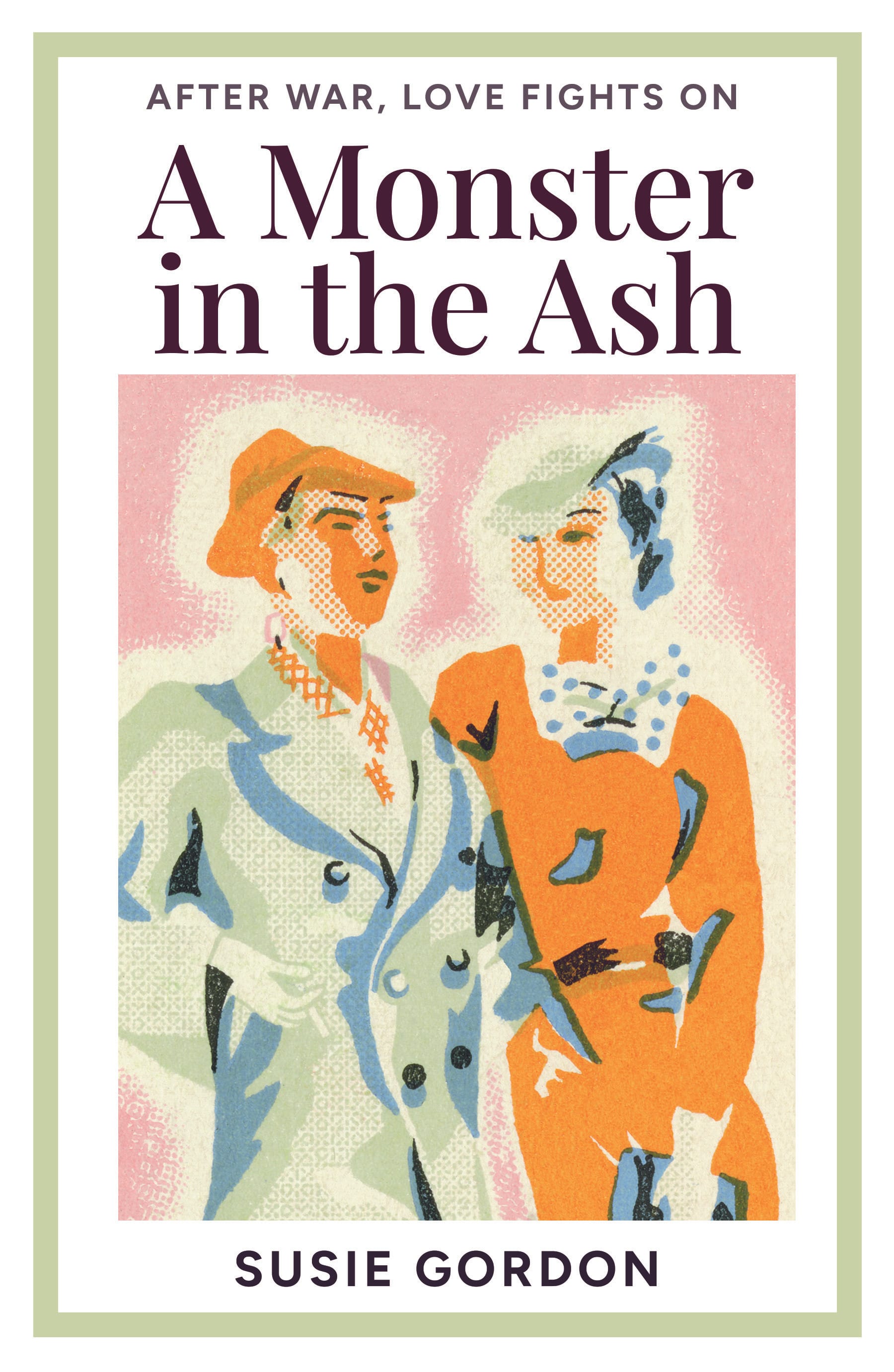
In the wake of the Second World War, British Jewish soldiers returned home to discover that, despite their hard-won victories in Europe, fascism was resurgent on their own streets. At the centre of this revival stood Oswald Mosley, newly released from wartime internment, once again rallying followers with promises to make England “pure”. In response, East-End Jewish veterans banded together to form the 43 Group, fighting back against this rising tide.
Monster in the Ash is a gripping family drama that grapples with this untold chapter of British history. It follows Sadie Shaposnick, a young woman whose decision to join the fight reshapes her domestic existence, testing her marriage and straining her closest relationships. To her surprise, Sadie finds herself thriving as she rises to this new challenge. Through Sadie’s eyes, we see the rich tapestry of the Jewish community and the range of responses to fascism in postwar England.
Sadie’s husband Leon, traumatised by war, seeks resolution through the violence of resistance. Her much wealthier and more beautiful sister Karla chooses to distance herself. However, when Karla develops a relationship with Rafi, her late husband’s brother who has just returned from fighting in Mandatory Palestine, she too is drawn into the resistance. Karla is prepared to sacrifice everything for her passion. But is that what Rafi is really asking from her?
As for Sadie, she is uncertain. Will her activism give her what she really wants—a loving husband, the acceptance of her community, and children.
Set against an evocative yet familiar landscape, this family drama is a poignant love story between Sadie and Leon, Karla and Rafi, and between the sisters themselves, as they all try to forge new lives in a new Britain.
With thanks to Kelly Pike.
📸 Dive into our Features
🎤 Read Interviews
🎧 Listen to Podcasts
🖼️ Buy fine art prints & more at our Store



.jpg?ref=unseenhistories.com)


