
How Franco's Spain Reinvented Itself in 1959 – Reflections on the 'Spanish Miracle'
Franco's 36-year rule in Spain is a period that defies simple characterisation. Tommy Duxbury examines the 1959 political shift that led to the 'Spanish Miracle'.


Francisco Franco, 'El Caudillo', has variously been described by historians as a fascist, an authoritarian, a pragmatist and a Catholic conservative. His years of power, it is clear, cannot be simply defined.
Franco was, however, clearly a more enduring political force than his 1930s peers Hitler and Mussolini.
Much of this longevity, Tommy Duxbury argues, is due to his ability to mould his politics to the historical moment. Here he explains the 1959 pivot that brought about the 'Spanish Miracle'.

By the summer of 1959, the Spanish economy was flirting dangerously with bankruptcy. Foreign reserves fell to a record low, and it seemed the government was trapped by indecision. El plan de estabilizacion was formulated not out of conviction but necessity. Inflation had eroded the value of the peseta, hollowed out peoples' savings and curbed the Spanish lifestyle.
As the twentieth anniversary of Francoism approached, the policy of autarky – a state of economic independence – and its identity had clearly failed. The task of confronting this problem fell to a small number of technocrats. For while the plan that emerged was engineered by economists like Fuentes Quintana and Sarda Dexeus it was piloted by the lawyers Alberto Ullastres and Mariano Navarro Rubio and reluctantly signed by Francisco Franco.
Supporting this plan would prove to be the most influential decision of Franco's 36-year reign. It marked the moment his regime quietly left behind the fascism that it is still remembered for today.
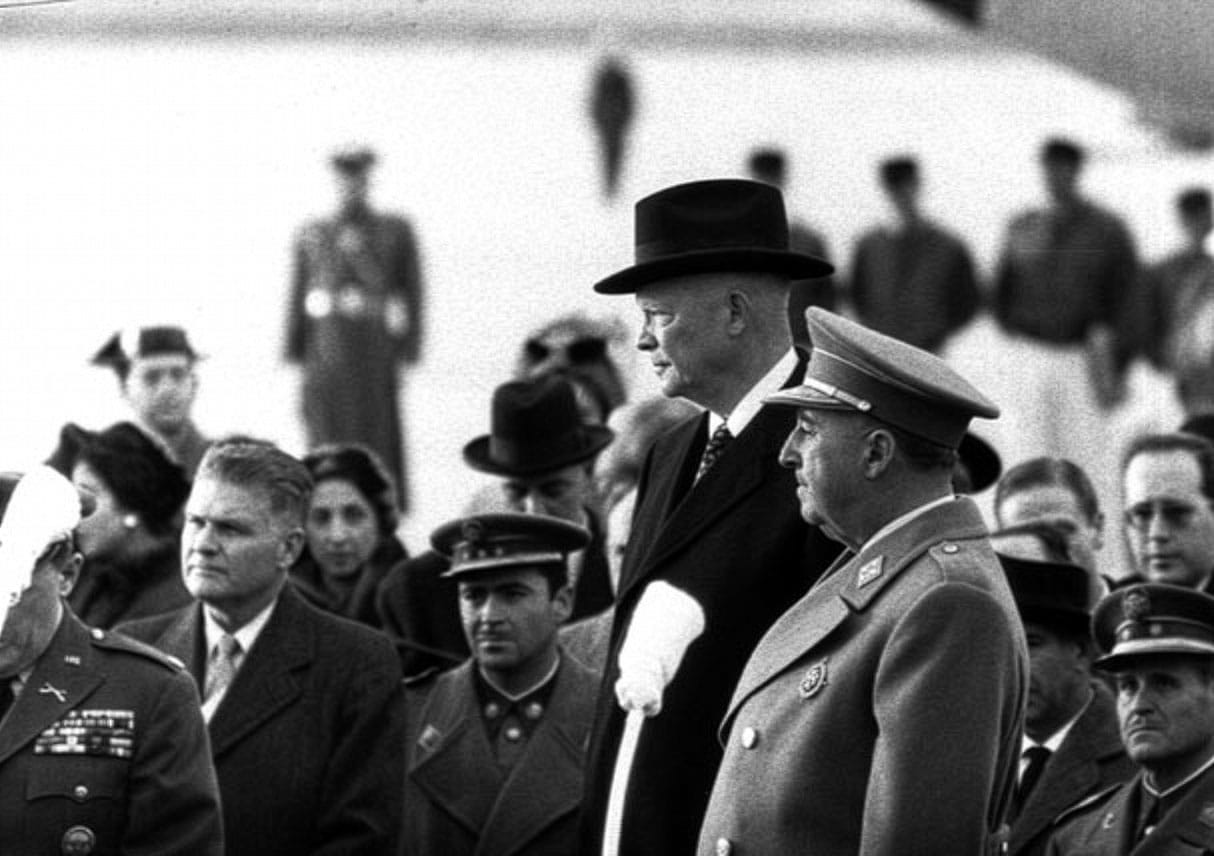

Ask people what they know about Francisco Franco and the image is a familiar one every time: a fascist 'strongman', part of the axis triumvirate, tarred with the same brush as Hitler and Mussolini, ruling through terror.
The Falange Española (FE) political party was founded in 1933 by Jose Antonio Primo de Rivera. Modelled on Italian fascism it operated on a 27-point manifesto which rejected both capitalism and Marxism, instead calling for a national-syndicalist state. This organised the economy into vertical state-run 'syndicates' grouping together workers and employers to serve state production. Opposition parties were banned and a strong nationalist vein coursed through the identity which sought to treat Spain as one absolute, supreme reality.
Under the unification degree in April 1937, Franco forcibly merged the Falange with the Carlist Monarchists (a traditionalist and legitimist political movement in Spain) creating the FET y de las JONS (the Falange Espanola tradicionalista y de las juntas de ofensiva nacional sindicalista). The FET became the only legal party in Spain. It was defined as a link between state and society, intended to form the basis of an eventual totalitarian regime, following that of Fascist Italy and Nazi Germany. Francisco Franco established himself as the absolute leader or 'El Caudillo' - deriving from the Latin word 'caput', meaning head - absorbing the party's uniform, salute and symbol as his own, becoming the figurehead of fascism in Spain.
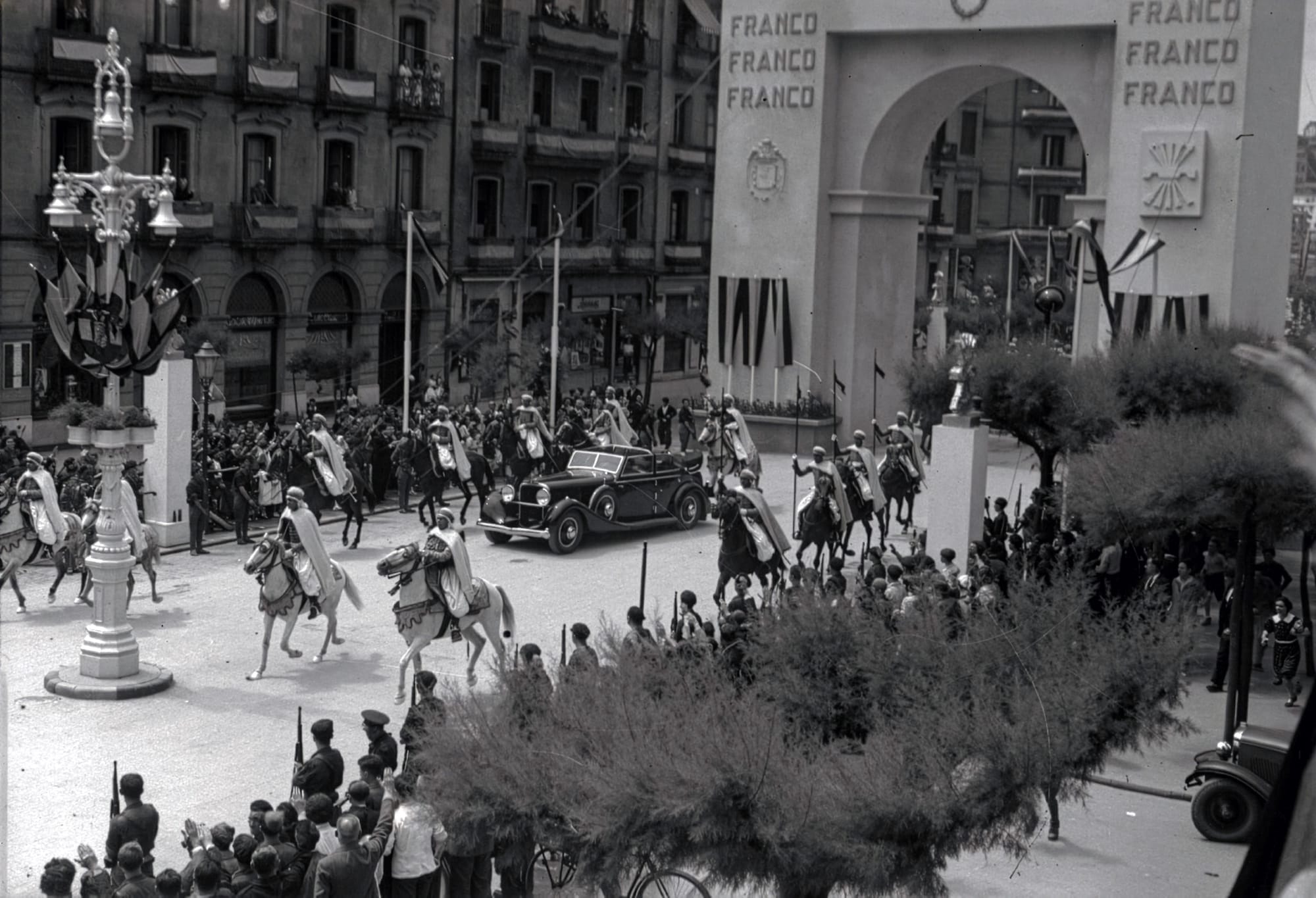
1938, the year of the Munich Agreement, saw the birth of the Italian inspired corporatist economy. The Falange introduced the 'Fuero del Trabajo' and the Organizacion Sindical Espanola, cementing into place the vertical, state-run trade unions that capsized the way free labour was organised. This confirmed the parallels between Mussolini's corporatism, the backbone of his fascist regime. Where Mussolini had corporations, Franco had vertical syndicates, one idea: the state owned both workers and employers, coordinated to serve the nation.
The last rung of the fascist ladder came with the Axis alliances that Franco and the Falange formed. During the Spanish Civil War, some 72,800 Italian troops were committed to serve the Nationalists against the Second Spanish Republic. Furthermore, in 1940 Franco met Hitler at Hendaye, France, to discuss the possibility of Spain joining the Axis. Despite its declared neutrality, 45,000 Spanish volunteers, who made up the 250th infantry division, nicknamed the Blue Division, fought alongside the Germans on the Eastern Front – most notably in the Siege of Leningrad.
By the mid-1940s Francoist Spain conformed to a familiar type. It was politically authoritarian, consisted of deep-rooted and extreme nationalism, its economy appeared corporatist and autarkist, yet the elusive totalitarian label still remained out of reach.
This was Franco's fascist peak and the early 40s is exactly what history remembers. The images are grainy and monochrome, but the story they contain is not simply black and white. The man who stood at Hendaye with Hitler was not the same one who signed the instrumental 1959 plan. By then, Spain, like the rest of the world, was already moving towards a more colourful future.
It was on that warm summer afternoon that Franco put pen to paper, etching his name on the three-page decree as he swallowed his pride in return for his nation's survival. This set out to bring security to Spain, restoring a reliable currency and stabilising the balance of payments whilst also wrestling with aggressive inflation.
The first challenge was the Peseta. Previously the national currency of Spain was controlled by a dual rate system, using a complex system of multiple, discretionary exchange rates depending on the type of import or export transaction. In 1959, this was dismantled, devaluing the currency and establishing a unified rate of about 60 Pesetas to the dollar. This made Spanish goods cheap for foreigners but conversely made imported goods for Spaniards incredibly expensive.
Austerity came next. The government imposed a strict national wage freeze, legally capping salaries therefore reducing the purchasing power of everyday workers. In addition, government spending was slashed with the state withdrawing support for public works and subsidies for inefficient state-run corporations as it adopted western, free-market tendencies.
The final step was to put the credit market into a chokehold. As the Bank of Spain drastically raised interest rates, the number of loans given out plummeted. Money was wrung out of the economy, drip-fed into the state's mouth.
Yet, medicine is always bitter. The first year of the plan was bleak. Unemployment rose. Production fell. Recession hit Spain. The immediate shock caused hundreds of thousands to leave the country, migrating in search of work to France, West Germany and Switzerland. Despite this, inflation fell from 12.6% in 1958 to 2.4% in 1960. Those who had work could now afford to live comfortably.
One surprising feature of this time was the impact of the migrants. Those who had fled in search of work sent remittances home in foreign currencies such as Swiss Francs and the Deutsche Mark, helping to replenish empty Spanish reserves with valuable foreign currencies.
This was of major importance. On an international scale, the Spanish Peseta was practically useless. It could not be used to buy foreign goods or machinery due to its instability. Not only this, but by the 1950s the government was starved of foreign currency reserves, thus, it was unable to compete internationally or purchase modern technology, catalysing the nation’s collapse. These remittances proved vital to Spain's survival.
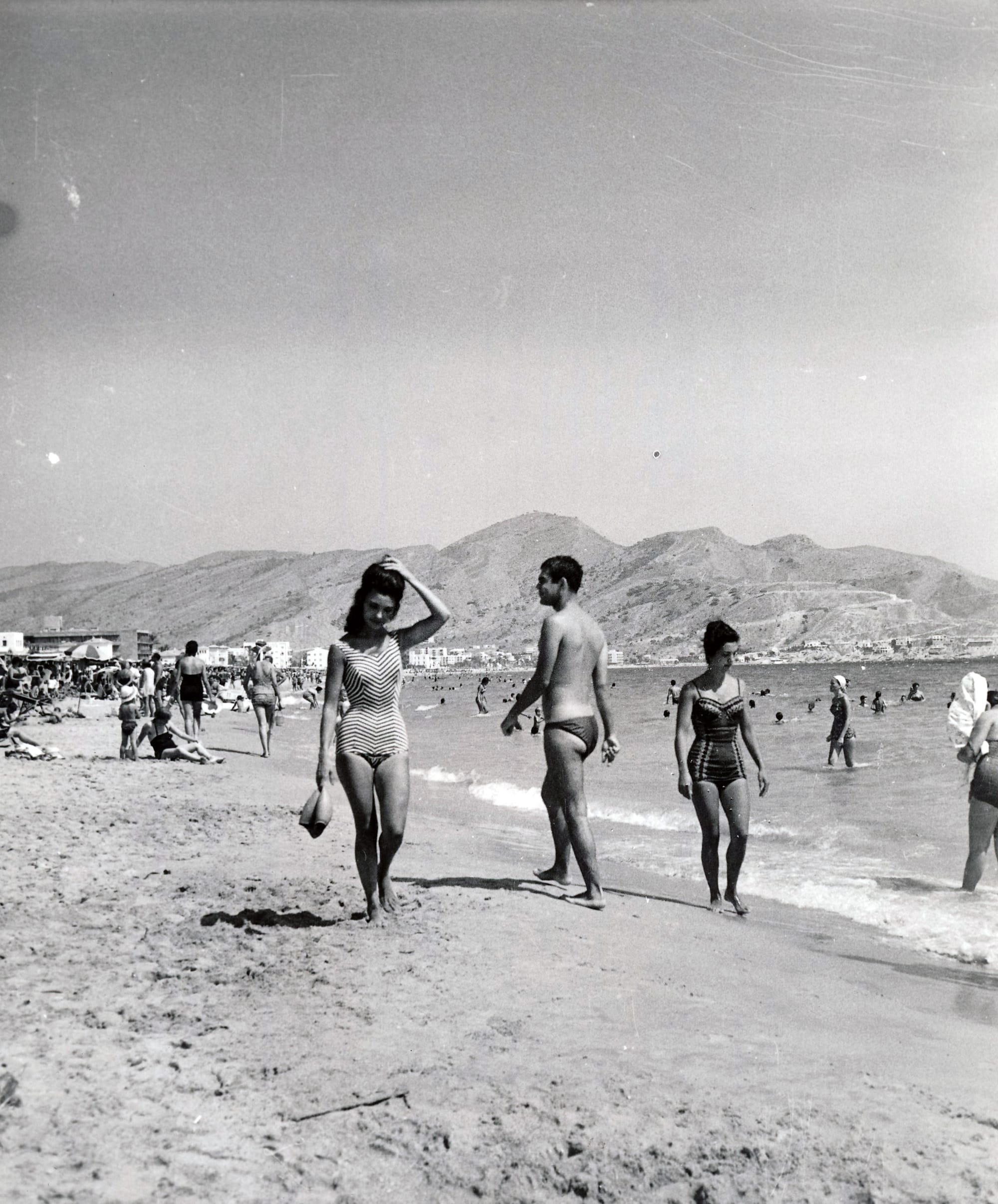
With these new changes came visitors. The Iberian Peninsula rapidly became a hotspot for European tourists. As the currency lost value, the nation became an affordable holiday destination for middle-class European tourists overnight with millions flooding to the sun-kissed coasts bringing a great influx of capital.
The coastal fishing village of Benidorm was one of those impacted by eager tourists. Its mayor, Pedro Zaragoza Orts even famously rode 300 miles to Madrid on his Vespa to personally ask Franco to permit bikinis on Benidorm beaches. Instead of sprawling the town outwards, he built up, ensuring every hotel had a sea-view, enticing the landlocked Germans and the grey-skied Brits.
In short, migrant workers and tourists became Spain's primary exports. Rather than exporting steel, oil and cars, the nation exported its labour force to Europe and its sunny beaches to tourists.
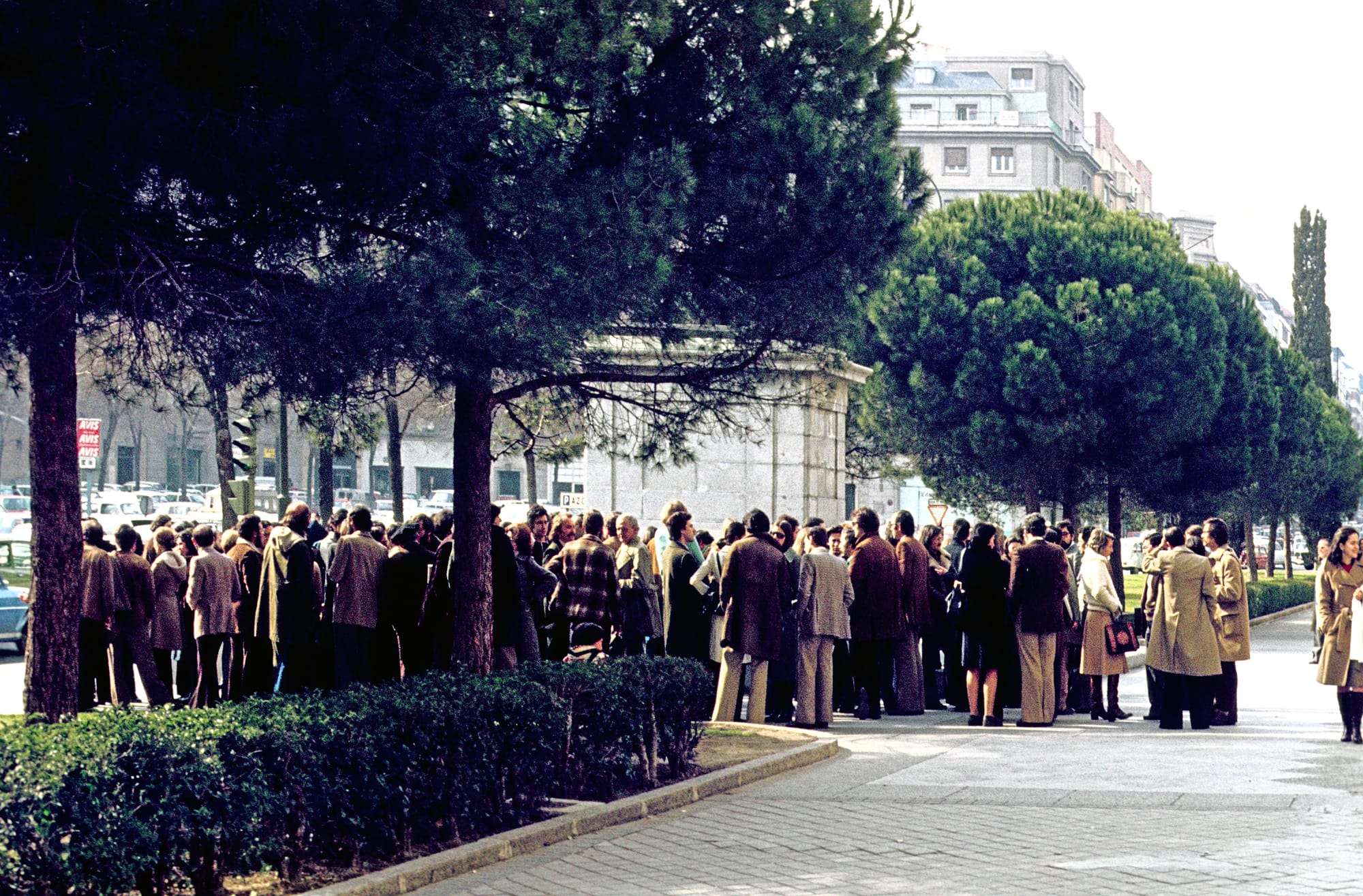
Whilst Franco begrudgingly opened borders to save the economy, he had no control over what else flooded into the country. With them, foreigners brought secularism, mini-skirts and liberal attitudes. While the tourists rebuilt the nation paella by paella, these coastal towns saw traditional, conservative Francoism dissolve quicker than anywhere else.
The second half of the marathon was liberalisation. This was perhaps the policy that pained Franco the most. After 20 years of attempted self-sufficiency, though, he realised that it was time to open Spain up to the world.
The government tore up existing trade restrictions. They eliminated quotas and regulations, allowing the import of cheaper foreign goods. Investment, meanwhile, became crucial. The government amended corporate laws allowing foreign companies to invest in Spanish businesses and repatriate profits freely. They also formally agreed to join international bodies such as the Bretton Woods system, the IMF (in 1958) and the organisation for European Economic Cooperation.
The miracle itself took place in the mid to late 60s. From that time onwards, for 15 subsequent years, GDP growth averaged around 7% a year, among the fastest in the world at the time.
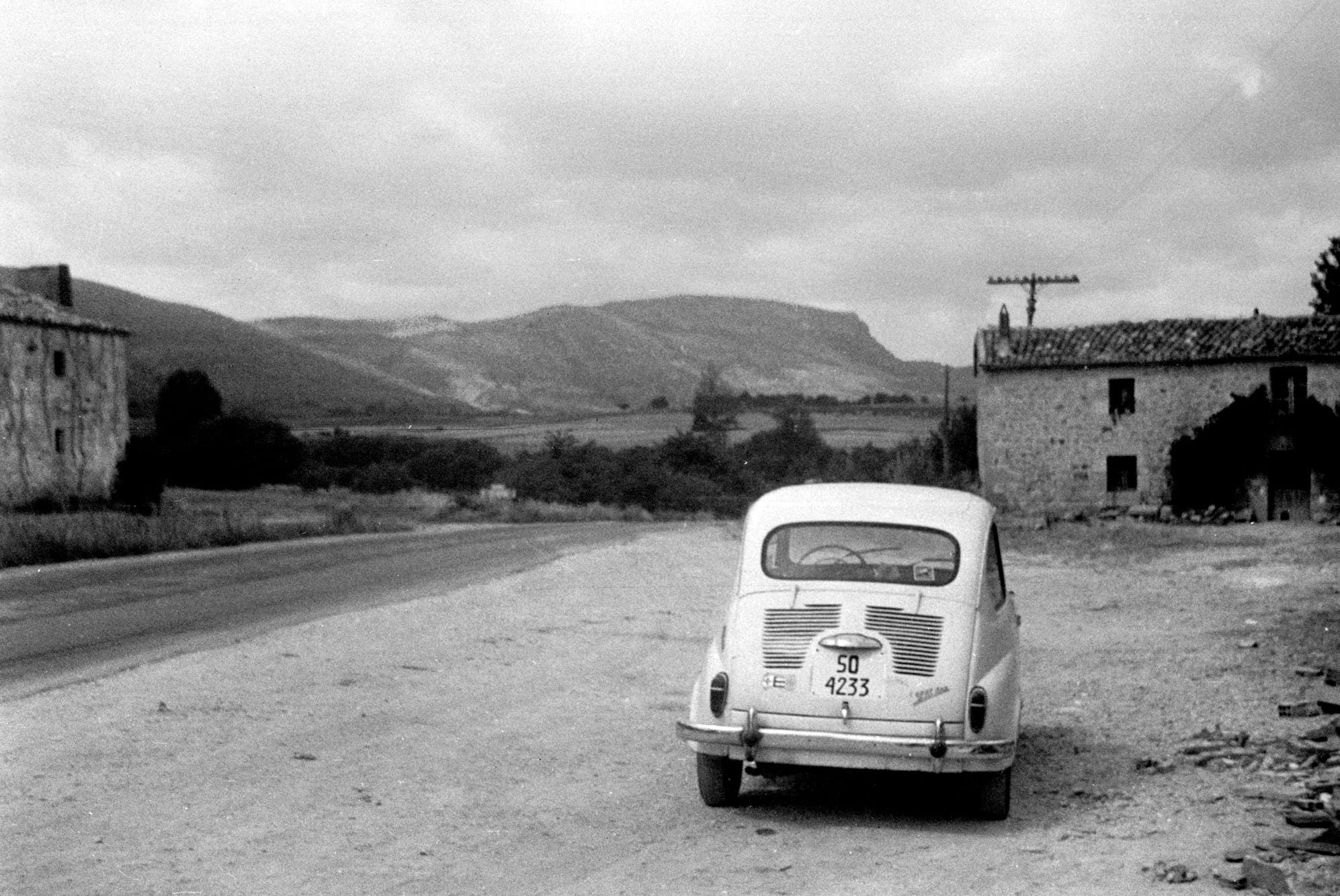
Foreign visitors rose from 4 million in 1959 to 30 million by 1975. Televisions became the norm in Spanish households. Industrial output soared, and the SEAT 600 became an emblem of the era as the first mass-produced affordable Spanish automobile. Spaniards who had queued for bread a decade earlier now saved for a car. Spain was now in colour, and on wheels.

By the time of Franco's death in 1975, Spain had experienced growth, innovation and global integration. It dropped its policy of autarky in favour of the urbanisation, world trade, and tourism it had spent 20 years pretending not to need. While the era of 'desarrollismo' (developmentalism) brought forth an economic miracle, it was not enough to spark a political one as authoritarianism prevailed despite its capitalist veneer. The material prosperity is often overshadowed by the boot of dictatorship that trod on it.
It was in 1975 – the year Microsoft was founded, that Bohemian Rhapsody was released and that the Vietnam war ended – that Francisco Franco died. His end was quite different to Hitler and Mussolini, his fellows in the axis triumvirate. He merely spent a few dwindling weeks in La Paz Hospital in Madrid before he finally passed away in late November.
Franco's was a strange legacy. After 36 years he left a country that was scarred but was nonetheless in a promising economic position. As for himself he has variously been described as a fascist, an authoritarian, a pragmatist and a Catholic conservative, sometimes all by the same historian.
Following his death and the nation's swift transition to monarchical democracy, the simplest response was just to move forward. A 'pacto del olvido' or 'pact of forgetting' prevailed, ensuring that the crimes of his regime were left unpunished and largely unspoken, as millions agreed to leave their tragic past behind.
So an era of Spanish history was left for the analysis of a new generation of historians. Franco, it seems, was never a fascist in the way Mussolini was. Nor was he a totalitarian in the way Hitler dreamed of being. Those men constructed ideologies and died with them as they fell.
Franco built one too, but when it stopped serving Spain, he abandoned it. And so, many are left unsure how to characterise him. What can be said, however, is that he was a pragmatist; and it was this refusal to be pinned down, this resistance to classification that let him rule, unchallenged, for 36 years •
📸 Dive into our Features
🎤 Read Interviews
🎧 Listen to Podcasts
🖼️ Buy fine art prints & more at our Store



.jpg)


_1967_01.jpg?ref=unseenhistories.com)
.jpg?ref=unseenhistories.com)
_02.jpg?ref=unseenhistories.com)
