
Who Was King Olaf Tryggvason of Norway?
Don Hollway tells us about the extraordinary life of Olaf Tryggvason, the Viking King of Norway


Feared and revered, the Viking King Olaf Tryggvason is a key figure in the history of the early Middle Ages. Although he reigned in Norway for just five years, his influence stretched much further than that and his legacy has been hotly debated ever since.
Here Don Hollway, author of a new study of Olaf, Hammer of the Gods, explains what is known about this great Viking's life and he weighs his lasting achievements.

Norway reveres the memory of King Olaf Tryggvason as it does its mountains, glaciers and fjords. Like them he was a force that shaped its very landscape.
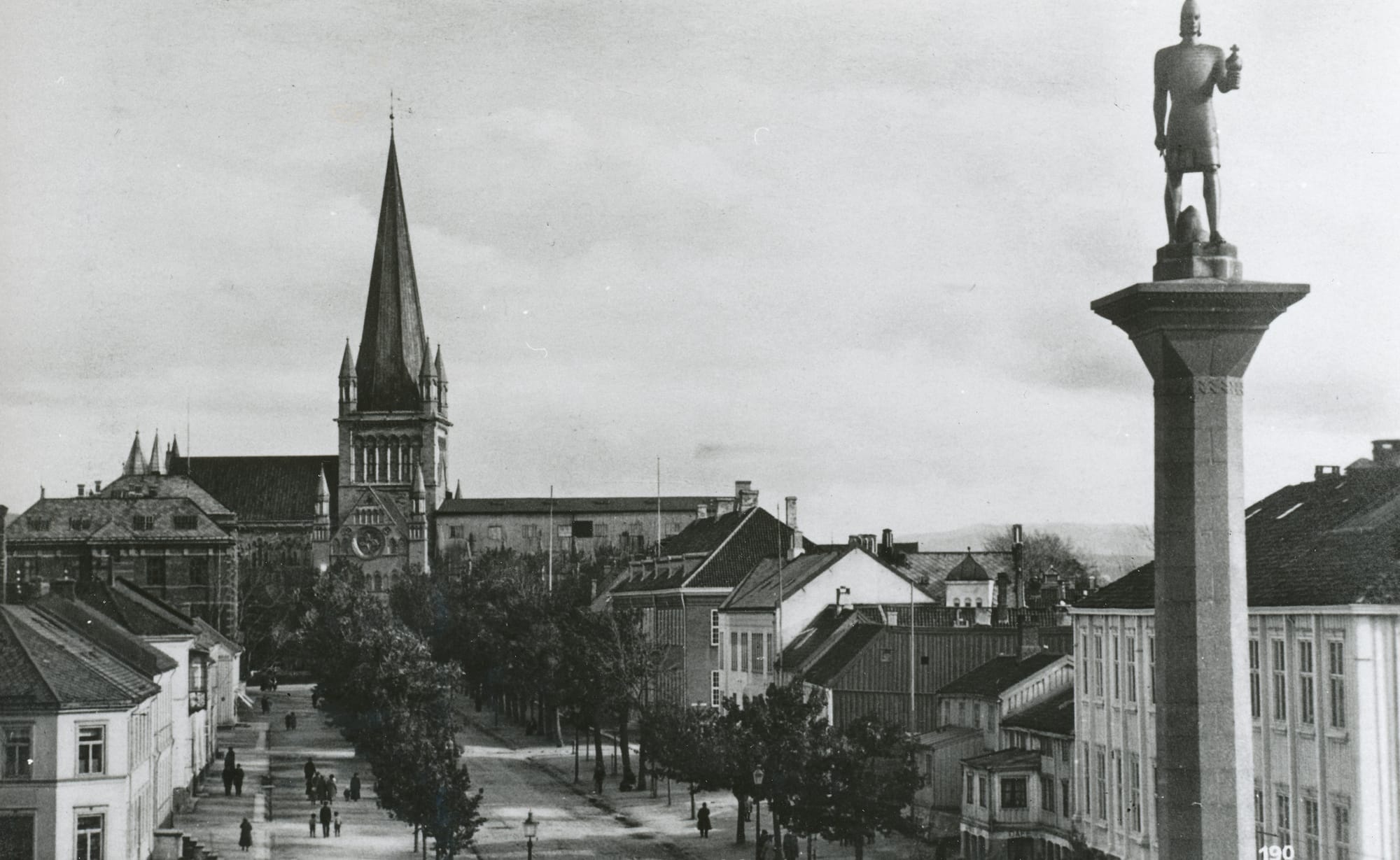
Olaf’s statue dominates the center of Trondheim, the city he founded. The country’s most ancient stone church stands on ground he consecrated in AD 995. It was by his will that in the year 1000 the parliament of Iceland, today the world's oldest, became Christian.
It was Olaf who ordered the famous Leif 'the Lucky' Erikson westward across the Atlantic to proselytise Greenland, in the course of which Leif discovered North America. And Olaf, as king, converted Norway itself – not always peaceably – from paganism to Christianity.
Olaf accomplished all of this in a reign of just five years. Not bad for a man who began life as a slave.
A gloomy beginning
Olaf's story comes to us from verses penned about him during his lifetime by his court poets, which were later gathered into the first Norwegian king’s saga, compiled roughly two centuries after his death by Icelandic monks.
They had obvious reasons to cast Olaf as a Christian champion, and in succeeding versions the tales of his exploits were embellished, even invented. By the thirteenth century his life story read like that of a medieval action hero.
Olaf was born in about AD 963, son of a minor Norwegian king who was murdered prior to his son's birth. A fugitive from infancy, Olaf was captured and sold into slavery at age three, and spent six years working on his master’s farm.
By chance a kinsman, a mercenary in the royal court of Novgorod in what is now Russia, discovered the boy and purchased him. Raised among warriors, Olaf learned weaponry, tactics, seamanship, leadership. He fought in his lord’s wars and even visited the capital of the Byzantine Empire: Constantinople, the world’s richest and most fabulous city.

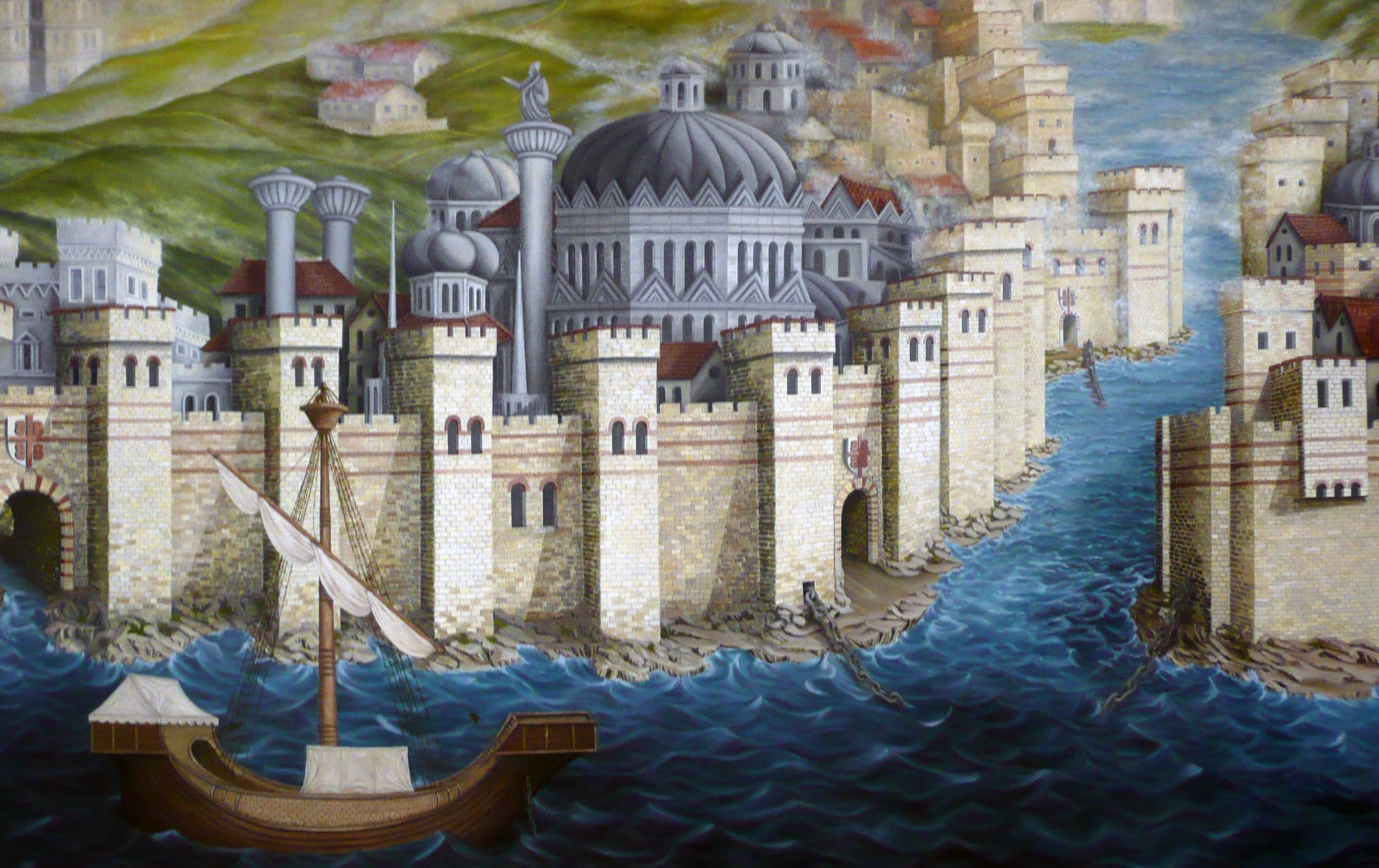
The Byzantine army, like those of the Holy Roman Empire and Anglo-Saxon England, had rebuffed Viking invaders, some of whom came to believe the 'White Christ' was a more powerful god than Thor and Odin. As a former slave Olaf was agnostic, but at this time Russians were known to sacrifice humans to their own pagan gods. His flirtation with Christianity is probably why he soon departed.
Olaf sailed west, down the Baltic Sea to fabled Jomsborg, since vanished but then the centre of a major trading empire. Its queen offered Olaf refuge and then a crown. He married her and spent three years as king of her domain, battling her enemies. Olaf likely fought on the side of the pagans in their revolt against the Holy Roman Empire in 983, which temporarily halted the spread of Christianity.
Around 985, however, Olaf’s queen died young – a not-uncommon fate in those days – and grief caused him to abandon his kingdom and return to the sea.
Wild and adventurous years
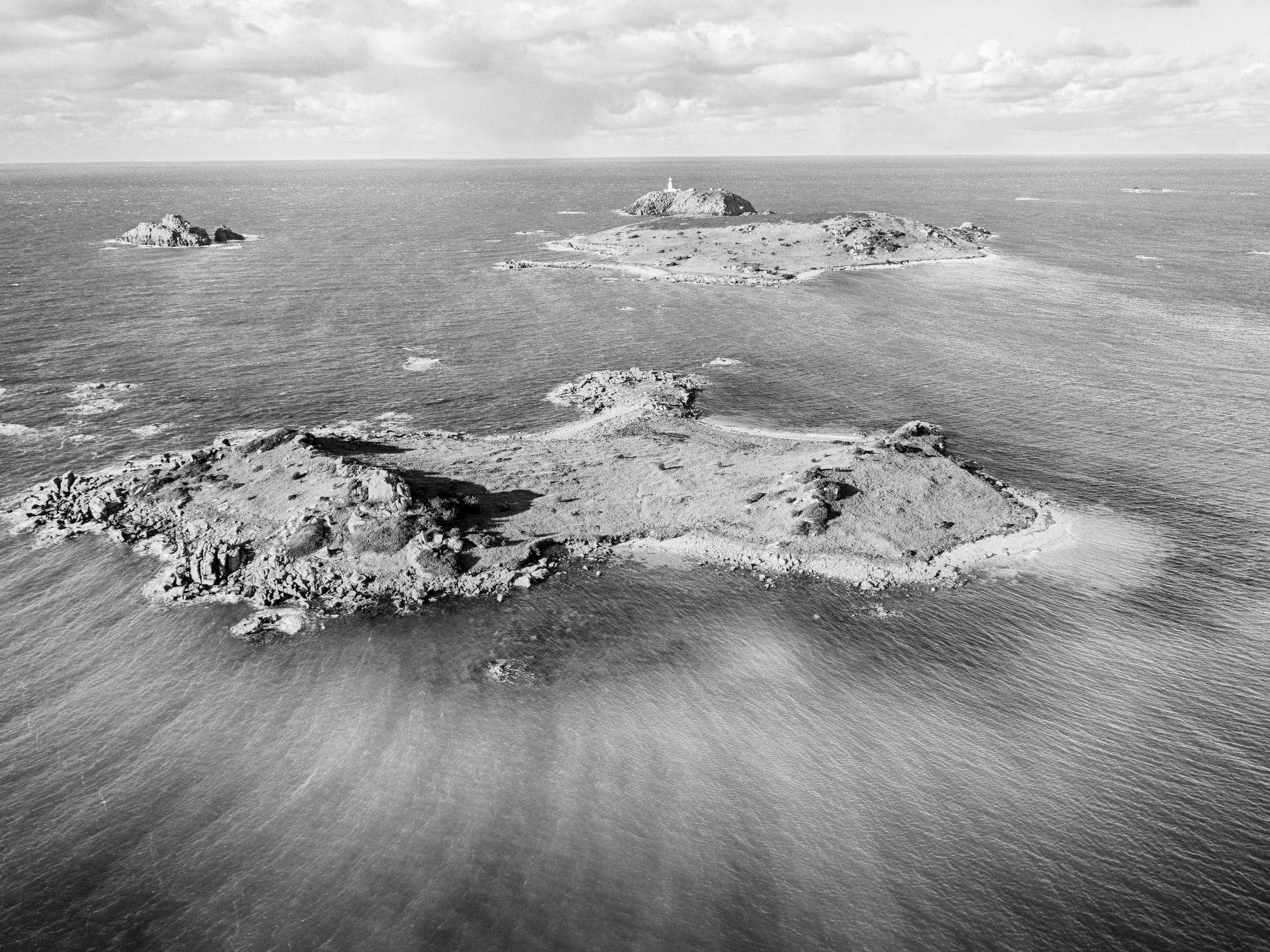
Over the years that followed he raided the coasts of Saxony, Frisia and Flanders, made his way around Scotland, through the Hebrides and down to Ireland. Finally he ended up in the Isles of Scilly at the far southwestern tip of England. There, a hermit prophesied Olaf would one day be a Christian king, and his near-death in battle convinced him to take up the cross.
Olaf was baptized and came away as a warrior of God.
His rise thereafter was so rapid that it would have been easy for him to believe that God was on his side. He fought for, and married, an English countess, sister of the king of Dublin in Ireland. With their backing, men flocked to him, and he was able to assemble the largest Viking fleet in decades, almost a hundred dragon ships.
The Anglo-Saxon Chronicle names him as the Viking leader who destroyed an English army at the Battle of Maldon in AD 991, after which he obliged England's King Aethelred, the 'Unready,' to pay him off.
A crusade in Norway
Aethelred saw this transaction as purchasing himself a Viking army. He invited Olaf to be confirmed as a Christian and he stood as his godfather. In those times, such an act was tantamount to adoption, transforming Olaf into a veritable English prince, as well as Aethelred’s ally against rival Vikings.
Having accepted this change, Olaf pledged never to raid England again, a promise he kept. England wasn’t the kingdom he coveted.
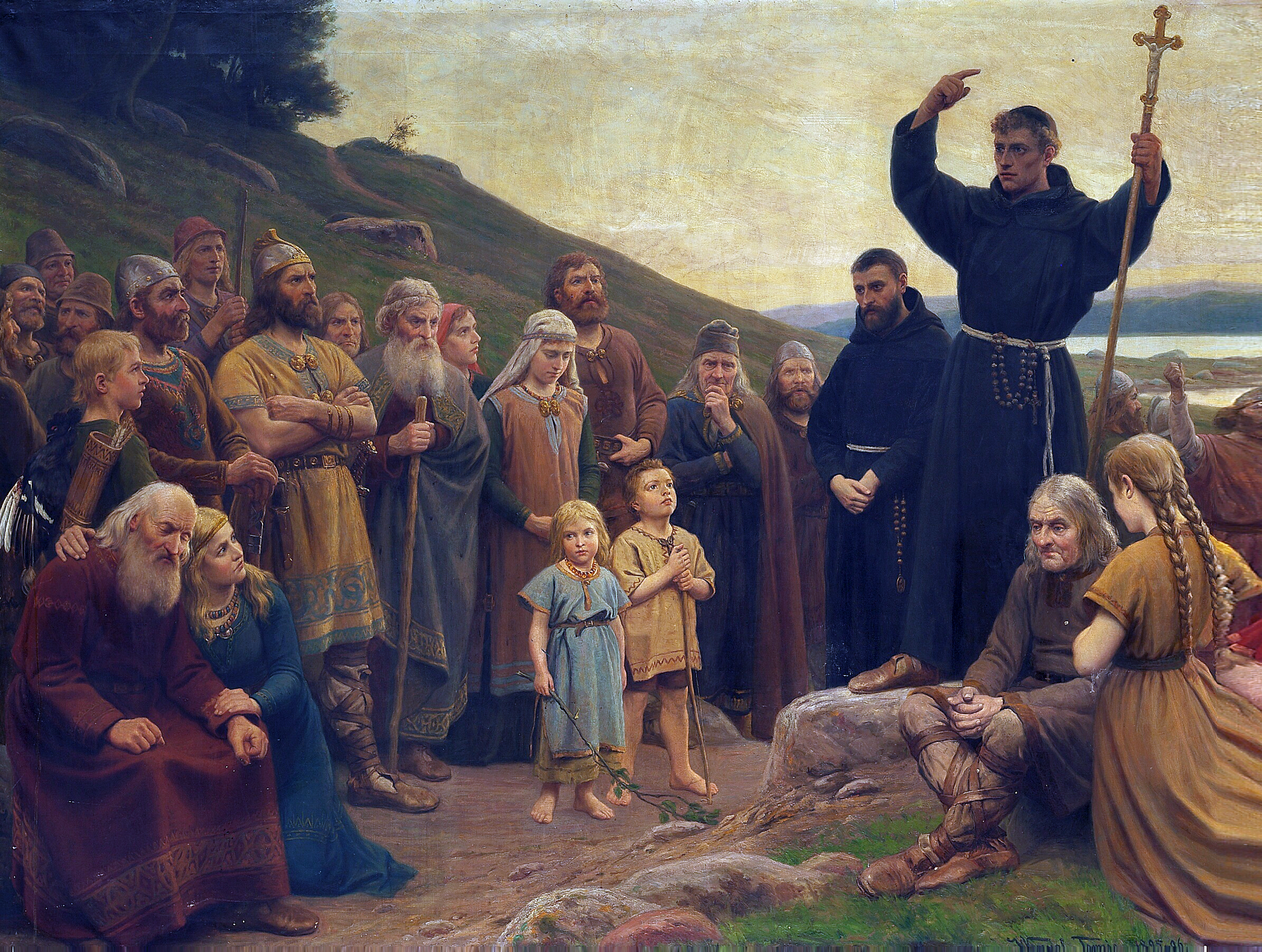
Now rich and powerful, Olaf finally returned to Norway to claim his throne. By the time he arrived, the local ruler had already been overthrown and murdered. It seemed as if God handed these lands to Olaf with hardly a struggle. In return, Olaf delivered Norway to God. He drove out or converted its pagans to the new faith.
That transition, from the old world of Odin and Thor and human sacrifices to the new one of stave churches and Christian prayer, did not happen through gentle missionary work. It took place because King Olaf Tryggvason had an army, a sense of conviction, and little patience for theological debate.
📚 Previews
Hammer of the Gods by Don Hollway features in our May 2026 previews. Find out more about the book and explore the full list
Olaf was, by modern standards, undeniably ruthless. Pagan chieftains were given the choice of baptism or death. Sorcerers were burned alive, drowned or eliminated in imaginative ways. One who held out in northern Norway was choked to death with a snake down his throat.
The Icelandic monks who recorded these events did not consider them atrocities. They considered it as simply doing God’s work. Olaf Tryggvason was no saint, but nor was he a monster. He was a man of charisma, ability and ambition in one of the most violent and chaotic corners of the Medieval world.
In that age change was seldom accomplished by any method other than force. Norway's conversion to Christianity is, by any measure, one of the most consequential religious transformations in European history, setting the example for the rest of Scandinavia.
The following century would see the launch of the Crusades; in that sense, Olaf was a man ahead of his time.
A mysterious death
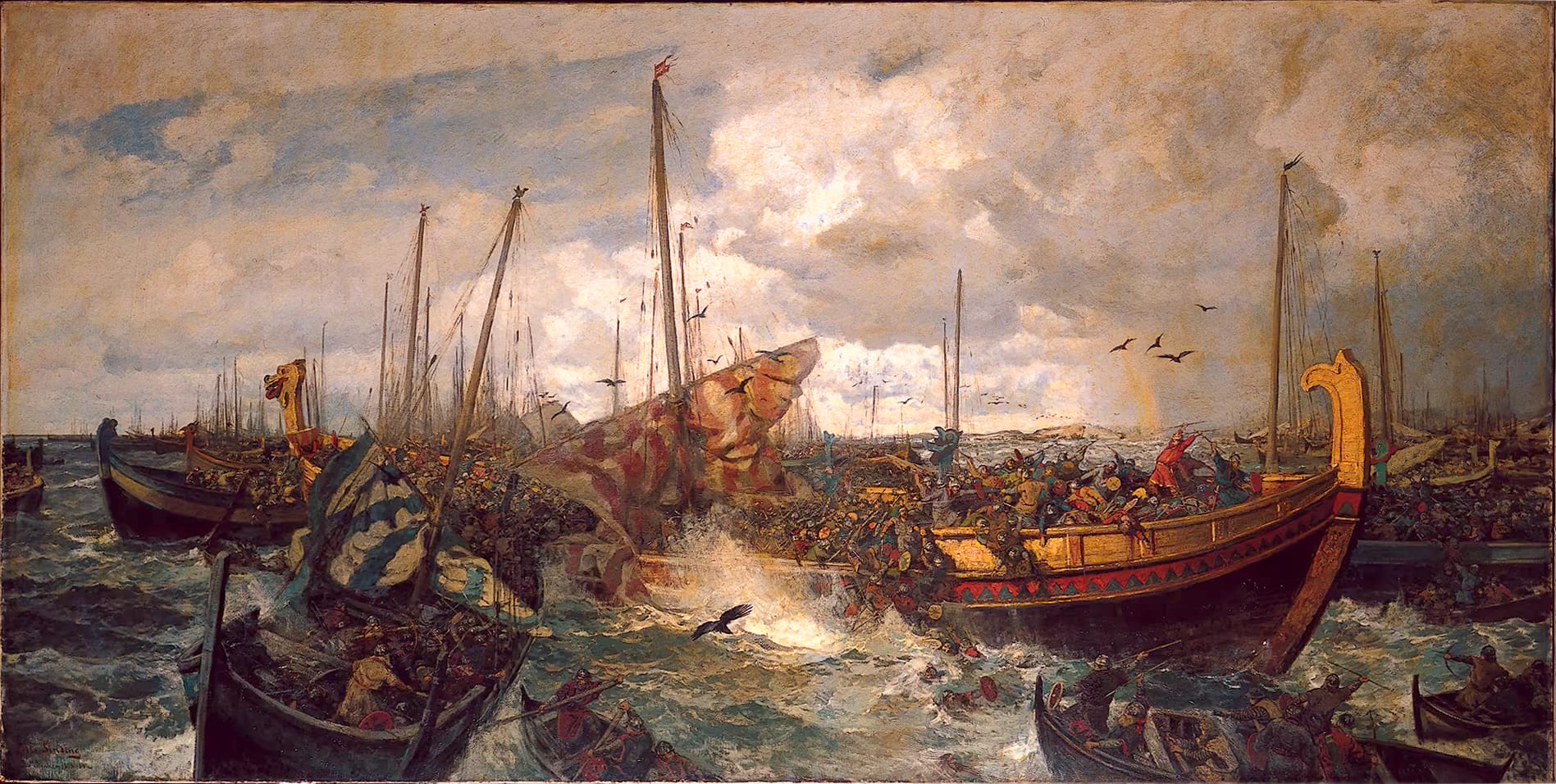
Then, one bright September morning in the year 1000, off a small island somewhere in the southern Baltic, the combined fleets of Denmark, Sweden and renegade Norwegian princes closed in around Olaf’s eleven longships.
In the battle that followed his great dragon ship, the Long Serpent, was the last to fall. At the end Olaf jumped overboard in full armor and was said to have drowned. He was never seen in Norway again.
Yet stories persisted that, though wounded, Olaf made it aboard a friendly vessel to safety and took up the life of a religious pilgrim. He was even said to have become a monk in the Holy Land, possibly to atone for the sins he had committed in the service of God.
Under his enemies’ rule, Norway briefly reverted to paganism, but the fire he lit never burned out. Olaf was pivotal to the Viking era. His reign marked the beginning of what in England has been called 'The Second Viking Age' – the age of Svein Forkbeard, Cnut the Great and Harald 'Hard Ruler' Hardrada.
Despite being hardcore Vikings, they were all at least nominally Christian. Gods die when their worshippers stop believing in them. Olaf Tryggvason didn’t just conquer Norway. He conquered its soul •
Hammer of the Gods: King Olaf's Viking Conquest
Osprey, 7 May 2026
RRP: £17.57 | 400 pages | ISBN: 978-1472871589
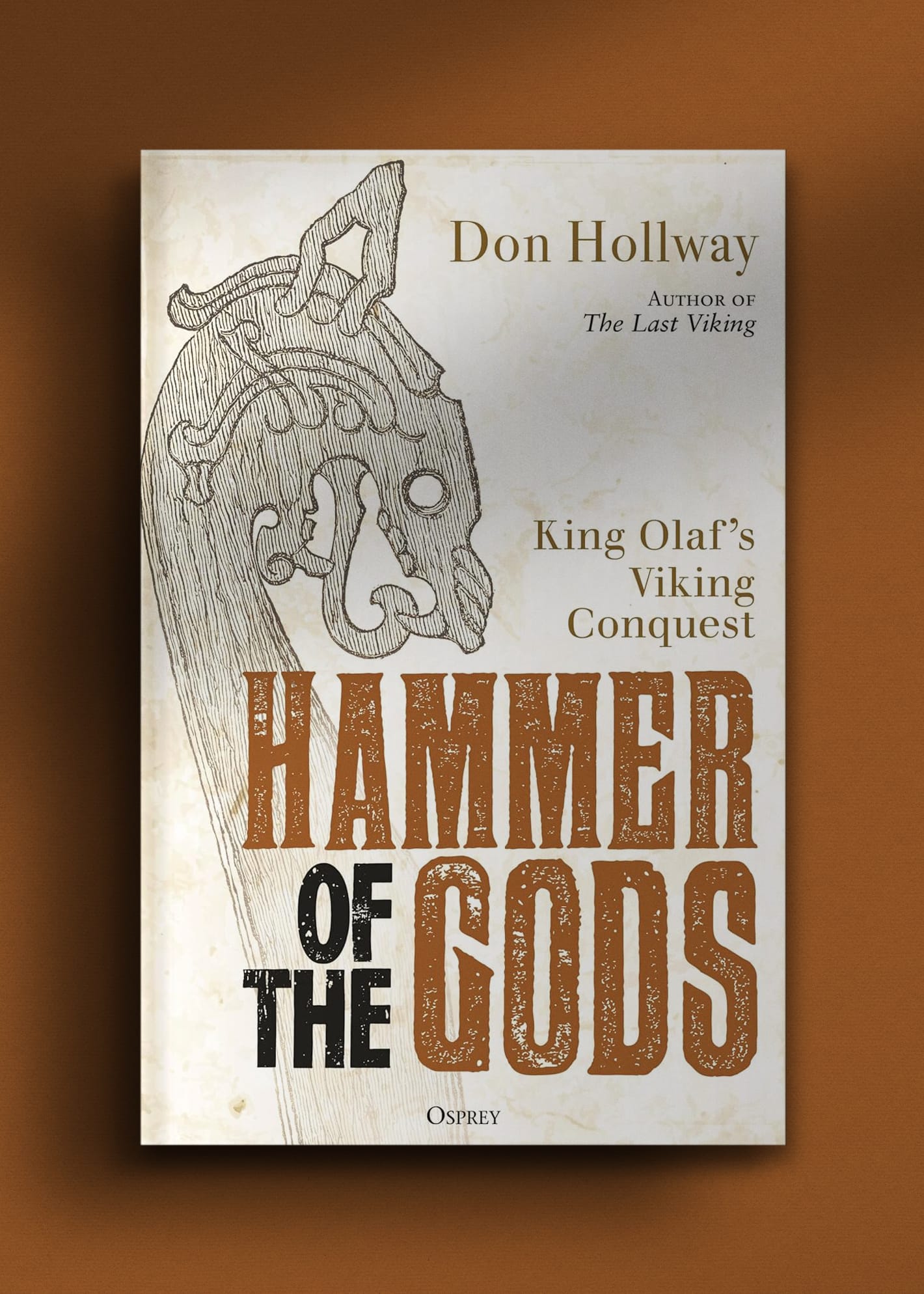
Weaving together Norse sagas and Anglo-Saxon chronicles to vividly depict the violence and spectacle of the Viking age, Don Hollway brings the legendary Olaf Tryggvason to life.
Hammer of the Gods tells the extraordinary saga of Olaf Tryggvason - warlord, wanderer, king, and crusader - whose life rivals the most legendary figures of Viking lore. Born in exile and hunted from birth, Olaf survived slavery, betrayal, and shipwreck to become a fearsome warrior across the Viking world from the icy fjords of Norway to the courts of Kyiv, the slave markets of the Baltics, and the battlefields of England and Ireland. His rise would shake the foundations of Norse society, forge new kingdoms, and ignite a holy war against the old gods themselves.
In an age of axe and flame, when the Viking world stood at the crossroads of pagan traditions and the spread of Christianity, Olaf emerged as the fiercest adherent to the new faith - a sword in one hand and a cross in the other. Drawing on a vast array of early medieval sources from Icelandic sagas and skaldic verse to Byzantine and Anglo-Saxon chronicles, Don Hollway brings the world of Olaf Tryggvason vividly to life cutting through the legend to reveal the man behind the myth.
For readers of Bernard Cornwell and lovers of Viking history, Hammer of the Gods is the epic history of a great Norse king whose story shaped the fate of a civilization.
With thanks to Elle Chilvers.
📸 Dive into our Features
🎤 Read Interviews
🎧 Listen to Podcasts
🖼️ Buy fine art prints & more at our Store


.jpg)
.jpg?ref=unseenhistories.com)


