
The Might and the Mystery of King Offa of Mercia
Offa of Mercia is an enigmatic figure in Anglo Saxon history. Powerful and respected, Rory Naismith tells us about this formidable king


King Offa of Mercia is one of the most compelling figures in Anglo Saxon history. In the Eighth Century he oversaw an ever expanding kingdom and the strength of his power was recalled by chroniclers for centuries after his death.
While 'as a man' Offa is effectively lost to history, as a leader there is much that can be said. Rory Naismith is the author of a bold new study of Offa that weighs the surviving evidence.
Words by Peter Moore

Listen
This article accompanies the Travels Through Time podcast episode Rory Naismith: Offa King of the Mercians (796)
Watch on YouTube instead
A Letter from Charlemagne
On a day in early 796, one of the first diplomatic exchanges ever to be recorded among Medieval monarchs took place. It happened when a letter from Charlemagne, King of the Franks and Lombards, reached King Offa of Mercia.
Charlemagne’s letter is remarkable. Familiar in tone, it engaged with the driving political issues of the day: traders masquerading as pilgrims, the size of cloaks being exported from England, the movements of exiles who were known to be living in Charlemagne’s kingdom.
Historians have long been intrigued by this letter for the flashes of detail that it provides into an otherwise opaque world. But among the fragments lies one central truth. Charlemagne – that most powerful of rulers – acknowledged Offa as a political force. When it came to Britain, it seems, Offa was one of the very few were worth talking to.
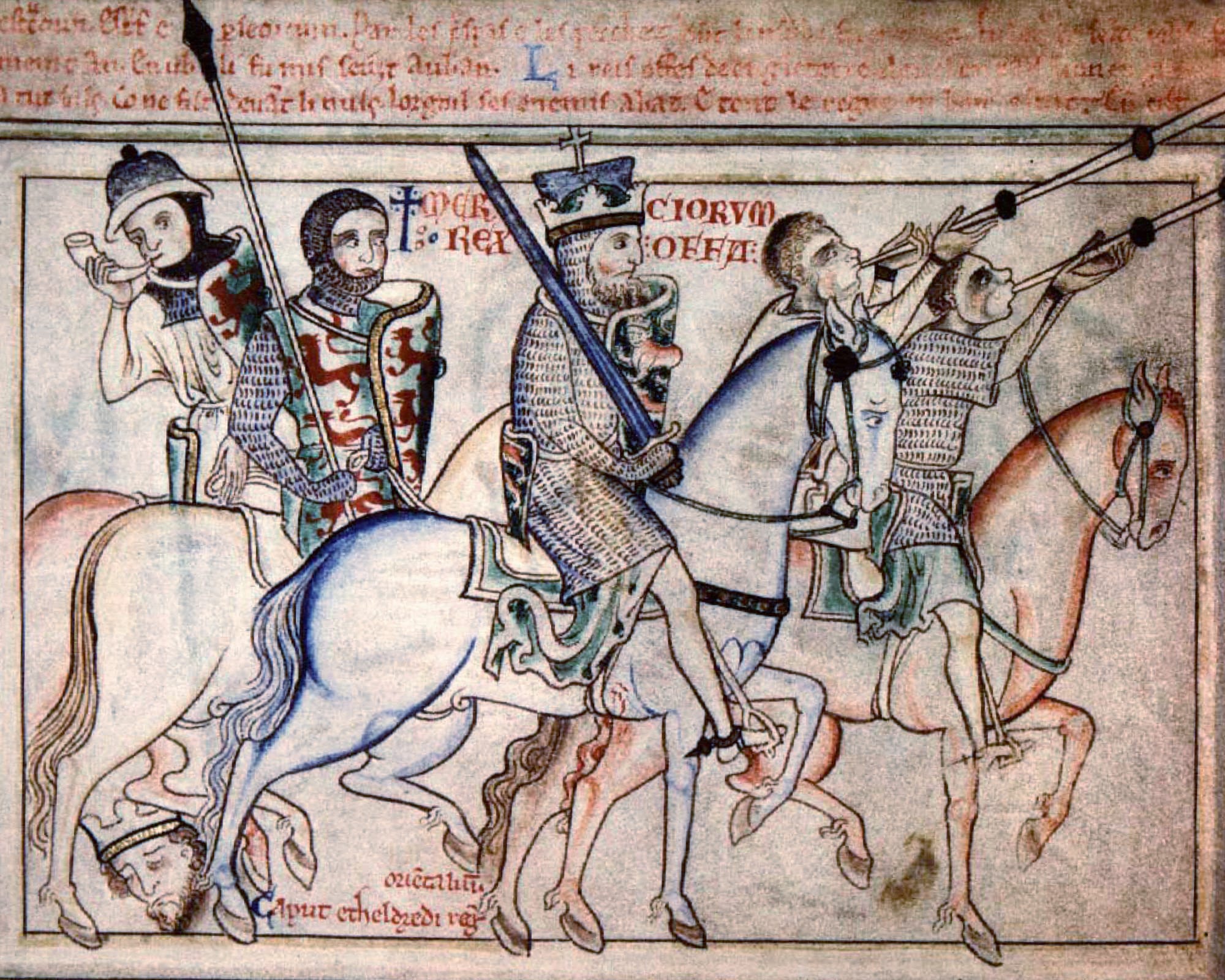
A Mighty, Tyrannical Leader
The Early Middle Ages is a beguiling, elusive time for the historian. Very little about events in Britain during that period of time – broadly the half-millennium from 500 to 100 – can be stated with clarity. The Italian humanists of the Renaissance would later refer to the period as ‘The Dark Age’, juxtaposing it with the vibrant Roman world that had preceded it.
King Offa of Mercia lived in one of the most faintly recorded periods of all. Only flashes of his life are captured in archives like the Anglo Saxon Chronicle, which in itself was a pro-Wessex source that had no reason to be generous to a rival king.
As such the view was left to predominate that Offa was a mighty, tyrannical leader who was frequently involved in sanguine episodes like the murder of Æthelberht of East Anglia. Just a hundred years after his death, one chronicler captured this view in terse language, describing him as a king ‘who struck terror throughout Britain’.
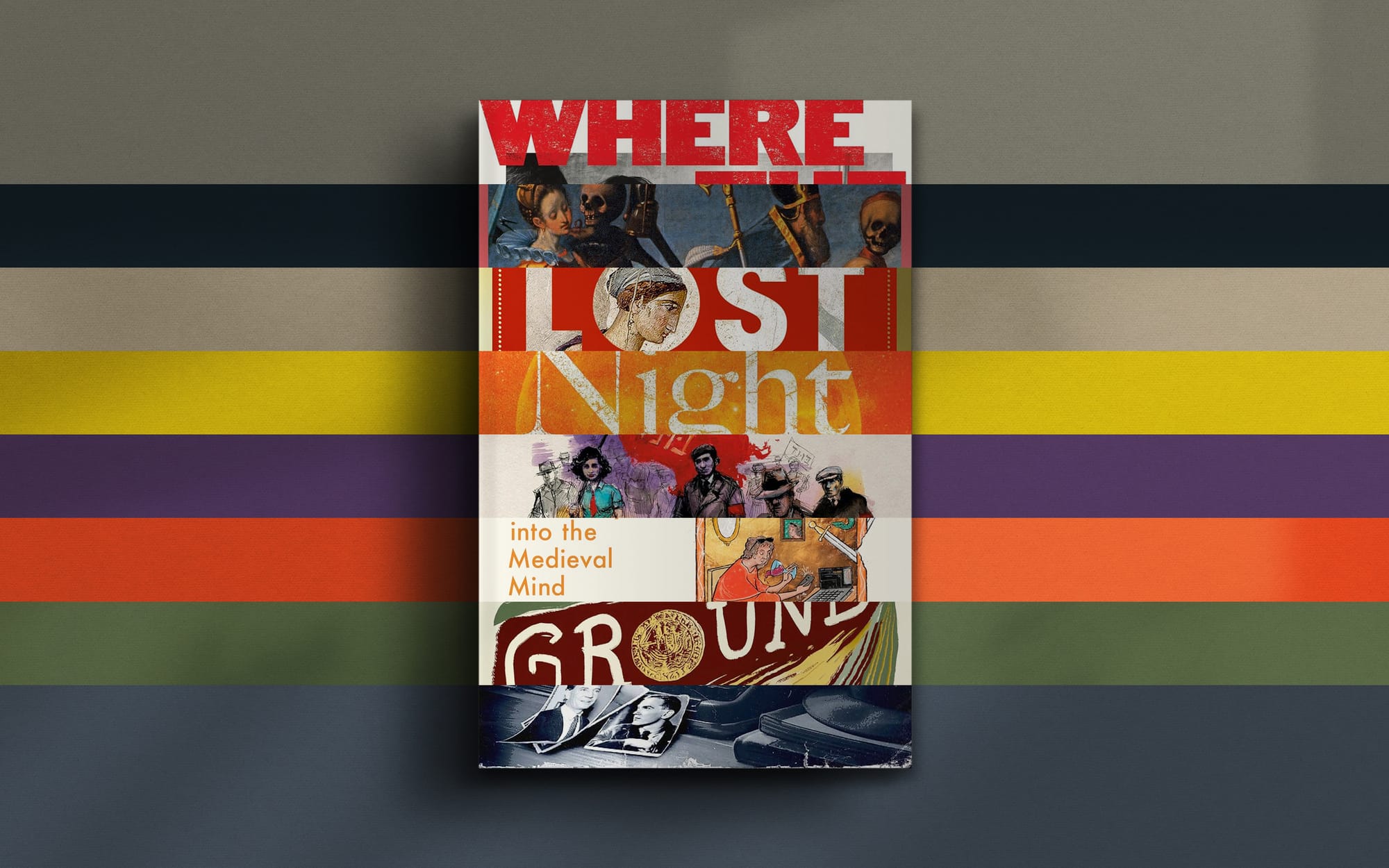
📚 Previews
Offa: King of the Mercians by Rory Naismith features in our April 2026 previews. Find out more about the book and explore the full list
But historians now recognise that this is a partial view of Offa. From the scraps that do remain it can be said that he was a very effective ruler who lived at a crucial time in Anglo Saxon history. Coming to power after years of civil war, he was able to retain power and expand his sphere of control. The force of his personality can be seen on the surviving coins from his reign, which elegantly depict his profile and forceful name: OFFA.
In the 790s Offa was the overlord of a vast geographical area. Its heartlands lay in modern-day Staffordshire, but it stretched northwards to the banks of the River Humber, across to the Fens of East Anglia, down towards London and westwards to Wales.
It is here, on the Welsh border, that the greatest physical monument to the years of Offa’s rule can still be seen today – a massive earthwork that extends north/south for more than a hundred miles.
Offa’s Dyke is an extraordinary structure that stretched from sea to sea. According to one historian, the amount of human effort required to build it is comparable to that involved in the construction of the great pyramids of Egypt.

Offa: King of the Mercians
To the mind of Rory Naismith, Professor of Early Medieval English History at the University of Cambridge, Offa is one of the most successful of all the Anglo Saxon kings and a ruler of ‘paramount interest’ in the history of the period.
As a Fellow of Corpus Christi College, where the famous Parker Chronicle is kept – the oldest of the nine surviving manuscript copies of the Anglo Saxon Chronicle – Naismith has worked at close quarters to the best surviving record of the period. This spring his study, Offa: King of the Mercians will be published.
Naismith’s book is not a traditional biography. The historical record does not contain sufficient detail to allow anything like that. Instead Naismith has pieced together a vast range of different sources, from letters and marginal references in manuscripts, to coins, charters and sculptures, to present as much of a picture as can possibly be formed.
From these sources an impression does emerge. Offa appears in the Mercian heartlands around the churches at Lichfield and Repton or near his royal seat at Tamworth, at the centre of a regal court. This was a centre but it was not a fixed location for Offa's court. Instead Naismith presents his kingdom rather like a web about which he moved, attending to each locality in turn.
Born: c. 730
Died: 29 July 796
Known for: Offa's Dyke. A 20 metre wide earthwork that runs north/south along the border between England and Wales. It was described as 'stretching from sea to sea', by a chronicler a century after Offa's death.
‘Offa is a figure of paramount interest. He stands out as probably the most successful king of what is often called the heptarchy, meaning the period of Anglo Saxon history when there were several distinct kingdoms.' – Rory Naismith, Offa: King of the Mercians, p. 2
Given the vast geographic scope of Mercia, Offa needed great energy to effectively control it. More clues about his personality are contained within Offa’s Dyke. There are intriguing similarities, he explains, between the construction of this and the vision for Hadrian's Wall several centuries before. In both cases the idea was to create a defensive structure that ran from coast to coast.
And Offa’s power was not limited to Britain. Throughout his reign he interacted with those in Europe – the church authorities in Rome, or Charlemagne across the Channel. Another tantalising artefact, too, binds Offa’s together with events even further away. An imitation Islamic gold dinar was issued at around the mid-point of Offa’s four decade reign.
Why a Mercian king should have been interested in depicting himself in such a way has provided a riddle for historians ever since the coin was discovered in the 1840s. But whatever the interpretation, it remains a piece of material history that connects Offa and his royal court at Tamworth to the faraway Abbasid Caliphate in Baghdad.
Naismith weighs all these issues in his study of Offa’s life. Often the evidence that he confronts is incomplete. As an example he cites one annal, dating to the year 776, that declares that prior to a battle between the Mercians and the men of Kent, a ‘red cross was seen in the sky’ and ‘marvellous adders’ appeared in Sussex.
And yet, Naismith explains, ‘Nothing is said about what the cross symbolised, nor why the battle took place, who led the two armies or even who won; nor, unfortunately, is there any elaboration on the adders of Sussex’.
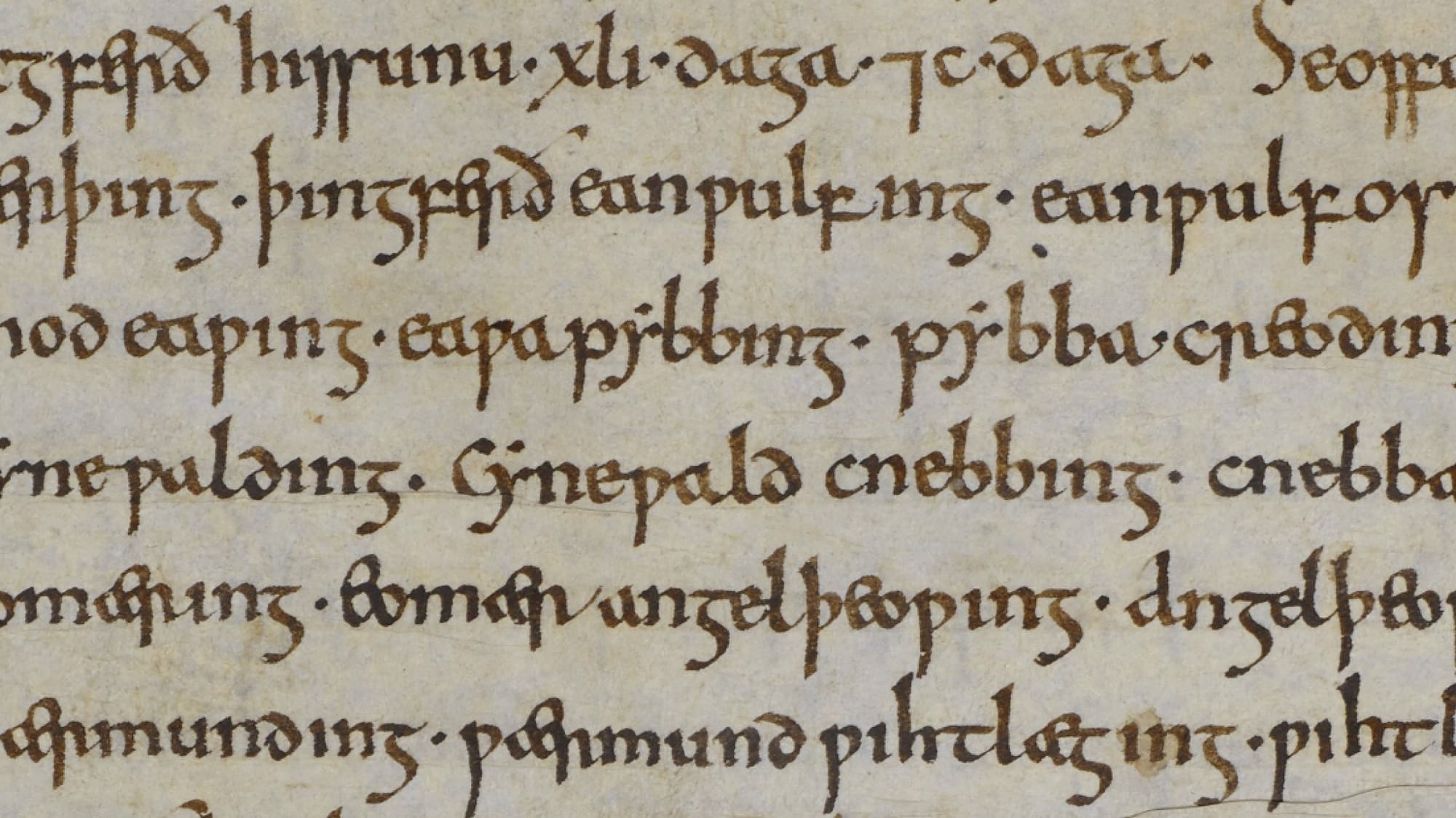
In this episode of the Travels Through Time podcast, Naismith takes us back to the year 796 as we try to form our own picture of the great Mercian king. This was a dramatic and tumultuous year in Anglo Saxon history. In Northumbria, for instance, King Æthelred I was slain by two of his ealdormen and there followed a vicious bout of factional fighting.
Offa received this news in Mercia at about the same time that the letter reached him from Charlemagne. As a younger man he might have been able to act upon the opportunities that these developments promised, but early 796 would prove to be an ephemeral high point. That summer, in July, Offa died and was buried at Bedford, an important settlement in the south eastern part of his domain.
On his death Offa was succeeded by his son and heir Ecgfrith. After such a long period of rule, this was a significant moment for the people of Mercia. But in a ‘devastating stroke of ill fortune’ that December, Ecgfrith followed his father to the grave.
In just six months Mercia was shorn of its political leadership. While Coenwulf, a new king was soon found, Naismith explains his reign ‘proved to be the last hurrah of Mercian political supremacy in southern England.’
Very soon after 796, the West Saxons gained the ascendancy. Exploiting many of the techniques pioneered by Offa they pushed the development of the Anglo Saxon world forward towards the point when, a little more than a century later, Mercia's years of political supremacy were gone. Very soon the Kingdom of England would be established •
Offa: King of the Mercians
Yale University Press, 28 April, 2026
RRP: £30 | 384 pages | ISBN: 978-0300257465
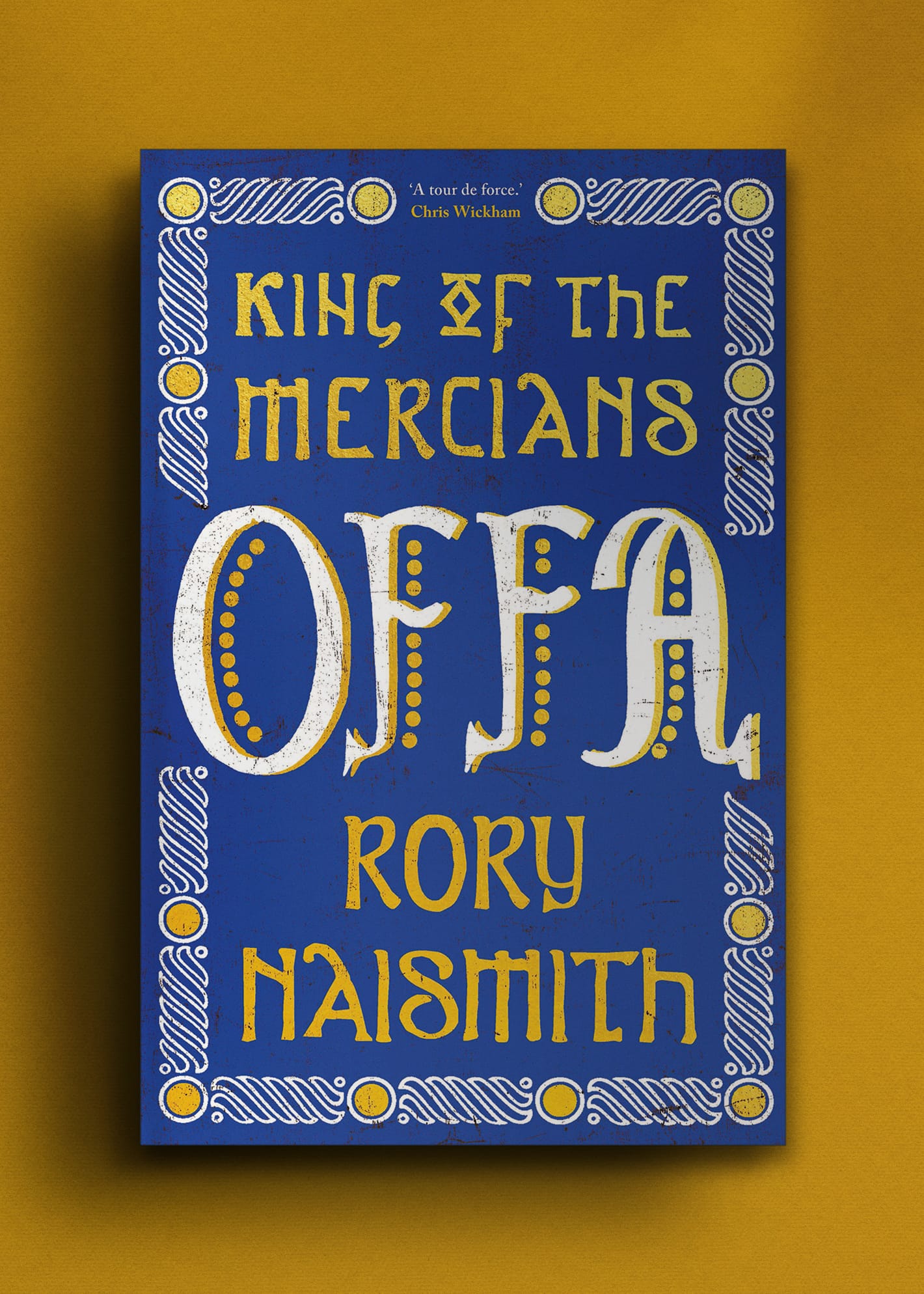
An authoritative biography of Offa of Mercia, revealing his importance as the king who stood at the turning point of Anglo-Saxon history.
Offa ruled the Mercian heartland of the west midlands from 757 to 796. But while Alfred the Great and his dynasty are seen as agents of a new beginning that resulted in a unified Anglo-Saxon kingdom, Offa is best remembered as the builder of a great dyke and as a symbol of an older, divided order.
In this major new biography, Rory Naismith challenges this view. Naismith reveals how Offa cemented Mercia’s position as the dominant force in the southern part of Britain, strengthened the internal cohesion of his domains, and laid the basis for a new model of kingship. Drawing on a wide range of sources, including charters, coins, and chronicles, Naismith reveals Offa as a king who was ambitious and successful, and who carefully constructed his image and that of the royal family. Far from just one in a sequence of overlords, Offa had a lasting impact on how kingship was practised and conceived across England.
Travels Through Time – Rory Naismith: Offa King of the Mercians (796)
Show Notes
Scene One: Early 796
Offa of Mercia receives a letter from Charlemagne that is one of the first diplomatic exchanges between two Medieval monarchs.n.
Scene Two: 29 July 796
Offa’s dies.
Scene Three: December 796
Offa’s son and heir Ecgfrith dies unexpectedly.
Memento:
Offa’s side of the correspondence with Charlemagne.
📸 Dive into our Features
🎤 Read Interviews
🎧 Listen to Podcasts
🖼️ Buy fine art prints & more at our Store



.png)

.jpg?ref=unseenhistories.com)