
History in the News – the Cundill Prize, MI5 and Amelia Earhart
Beth Lew-Williams wins the Cundill History Prize – and other history stories that caught our eye this week.


The $75,000 Cundill Prize is awarded, a fresh batch of secret documents is released by the National Archives in Great Britain, the search for Amelia Earhart continues and a strange musical instrument surfaces in Troy.
Here’s the history stories that caught our eye this week.


The Cundill Prize awarded to Beth Lew-Williams
The winner of the Cundill History Prize was announced in Montreal on Friday evening. The prize was awarded to John Doe Chinaman: A Forgotten History of Chinese Life under American Racial Law by Beth Lew-Williams. Jury chair Emily Greenwood. James F. Rothenberg Professor of the Classics at Harvard, called Lew-Williams’ book: ‘a dazzlingly innovative and hard-hitting work’.
John Doe Chinaman is a social history in which Lew-Williams goes searching for the lost voices of Chinese Americans over the decades that follow the first great migratory wave in the 1850s. The title of the book draws on the catch-all name ‘John Doe Chinaman’ that frequently appeared in official records in the years between 1850–1920. In her book Lee Williams poses questions. What did these Chinese migrants hope to do? What laws did they live beneath? How did they respond to them?
While researching John Doe Chinaman, Lew-Williams visited scores of county records archives on the west coast, making use of a variety of primary sources like Mug Books – the albums of photographic portraits. For winning the Cundill History Prize she was awarded $75,000. The other two shortlisted books were Jonathan Cheng's Korean Messiah and Alexander Lee's The First Ghetto. Read more: Cundill Prize.

Location of Louis Daguerre’s ‘shoe-shine’ photograph established
Back in 2024 the French filmmaker Maximilien van Aertryck was walking through the Place de la République when he started to wonder about the location of Louis Daguerre’s famous ‘shoe-shine’ photograph. This is one of Daguerre earliest and best-known photographic plates because it captures, for one of the very first times in history, the form of a human – captured in the long exposure because he had stopped for several minutes to have his shoe shined. Over the past two years van Aertryck and several of his filmmaker colleagues have sought to pinpoint the location of this episode using 3D modelling and archival research. Their efforts have led to the installation of a bronze commemorative plaque on 15 October. Read more: Smithsonian.
MI5 Files Released by the National Archives
In the latest of its periodical release of documents once considered ‘top secret’, the National Archives has allowed access to a range of intelligence documents dating from the 1930s to the 1970s. Spy history remains a popular field for history readers and writers – as shown recently by the success of Ben McIntyre’s Baillie Gifford longlisted Redwood – and as the span of this release covers the critical years of World War Two and the Cold War, there will be much to interest researchers. Files are included on familiar figures like Aneurin Bevan, the composer Sir Michael Tippett and Frank Bossard, a former RAF officer who sold British missile secrets to the Soviets. Read more: National Archives.
Disappointment in the search for Amelia Earhart’s plane
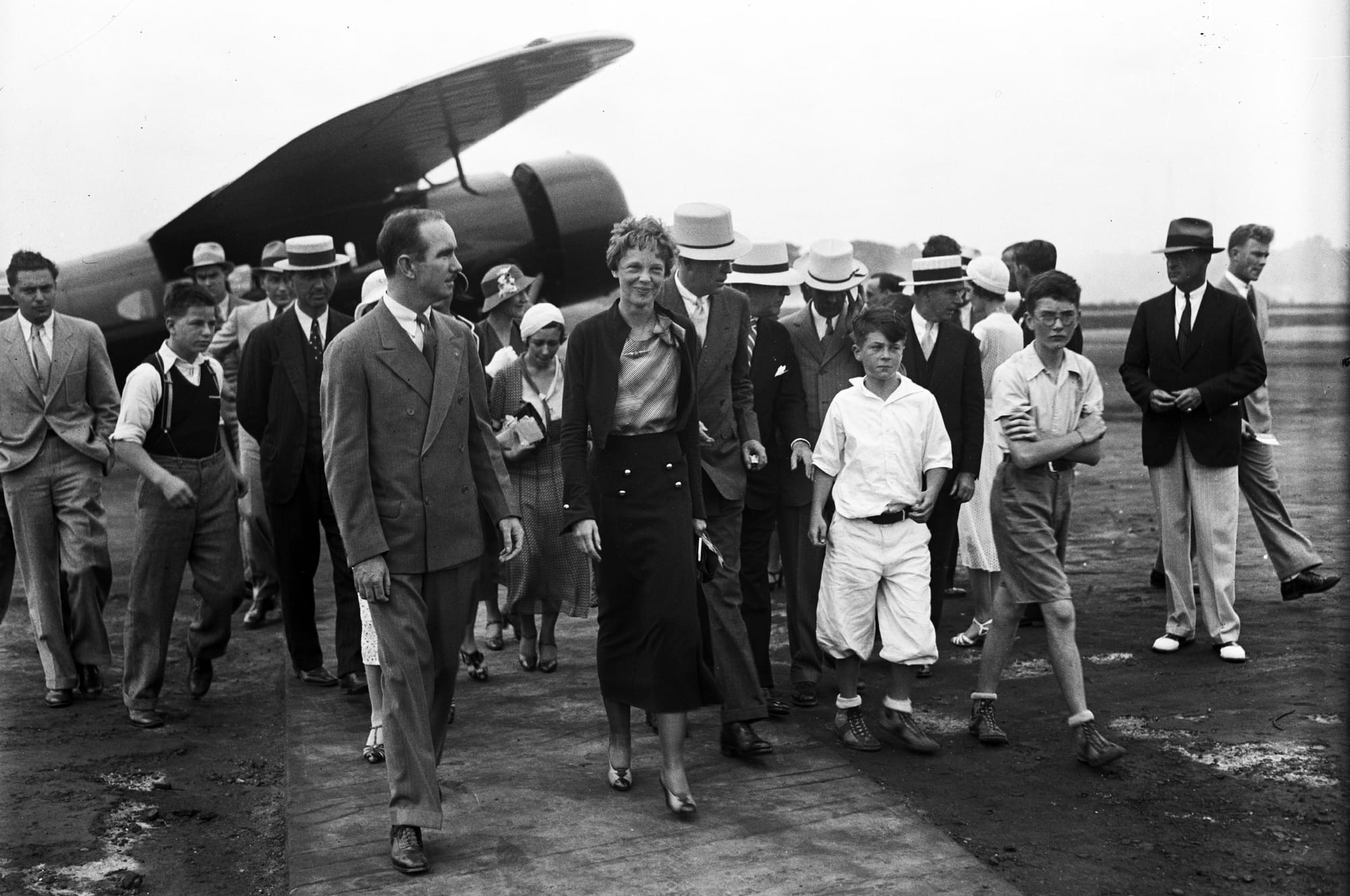
In 2020 a satellite image emerged that promised to solve one of the great mysteries in the history of aviation. The so-called ‘Taraia Object was sighted in the shallows off the coast of Nikumaroro, a remote Pacific atoll to the north of Samoa. This tallied with a theory that Nikumaroro was one of the last known locations for Amelia Earhart and her navigator Fred Noonan when they vanished in 1937 during an attempt to fly around the world. This month a team reached the atoll with their aim of determining whether the image showed the lost Lockheed Electra. The results were disappointing. The image seems to have shown just a cluster of fallen trees. Read more: BBC.
Who was born? Theodore Roosevelt, 27 October 1858
Who died? Harry Houdini, 31 October 1926
What famous work was published? Jonathan Swift's Gulliver’s Travels, 28 October 1726
“’Tis now the very witching time of night,
When churchyards yawn and hell itself breathes out
Contagion to this world.” – William Shakespeare, Hamlet
Ancient musical instrument plucked from the ruins of Troy
An exciting find has been recorded during work at the UNESCO-listed site at Tevfikiye in Çanakkale in northern Turkey. A ‘bone flute’ – a prehistoric wind instrument manufactured from an animal bone – has been found in an eighth century layer of excavations. This is the first find of its type at the site and provides archaeologists with a rare insight into the kinds of sound that would have been heard at the site at roughly the time of Homer’s Odyssey. Announcing the find, Professor Dr Rüstem Aslan commented: ‘Although artistic representations and historical sources have documented musical instruments from antiquity, the discovery provides the first physical evidence of a musical instrument recovered during excavations at Troy.’ Read more: Heritage Daily •
📸 Dive into our Features
🎤 Read Interviews
🎧 Listen to Podcasts
🖼️ Buy fine art prints & more at our Store



