
Who Was The Venerable Bede and Why Does He Matter?
The Venerable Bede is one of the most significant figures in Anglo Saxon history. As Edoardo Albert explains, he was a scholar, an historian and a visionary


Almost a millennia and a half ago, in the mists of time, a man called Bede lived in the north of England. Remembered today primarily as an historian, the 'Venerable Bede' was also a poet, a teacher and an innovative theorist.
Edoardo Albert is the author of a new biographical study of this beguiling figure in English history. Here he tells us who the Venerable Bede was and why we should take notice of him today.

He died 1291 years ago. He lived in Jarrow. All he did was pray, write, teach and sing. So why should anyone today care about Bede?
How about our dating system? The fact that, when someone says he was born in a particular year, we know which year he means. That’s down to Bede.
Or what about the fact that there is a country called 'England', inhabited by 'English' people? That was Bede’s idea.
Then there’s the 656 year gap between the Romans leaving and the Normans arriving. That we know anything about the first three hundred years of that time is almost entirely down to Bede.
So, yes, Bede does matter.
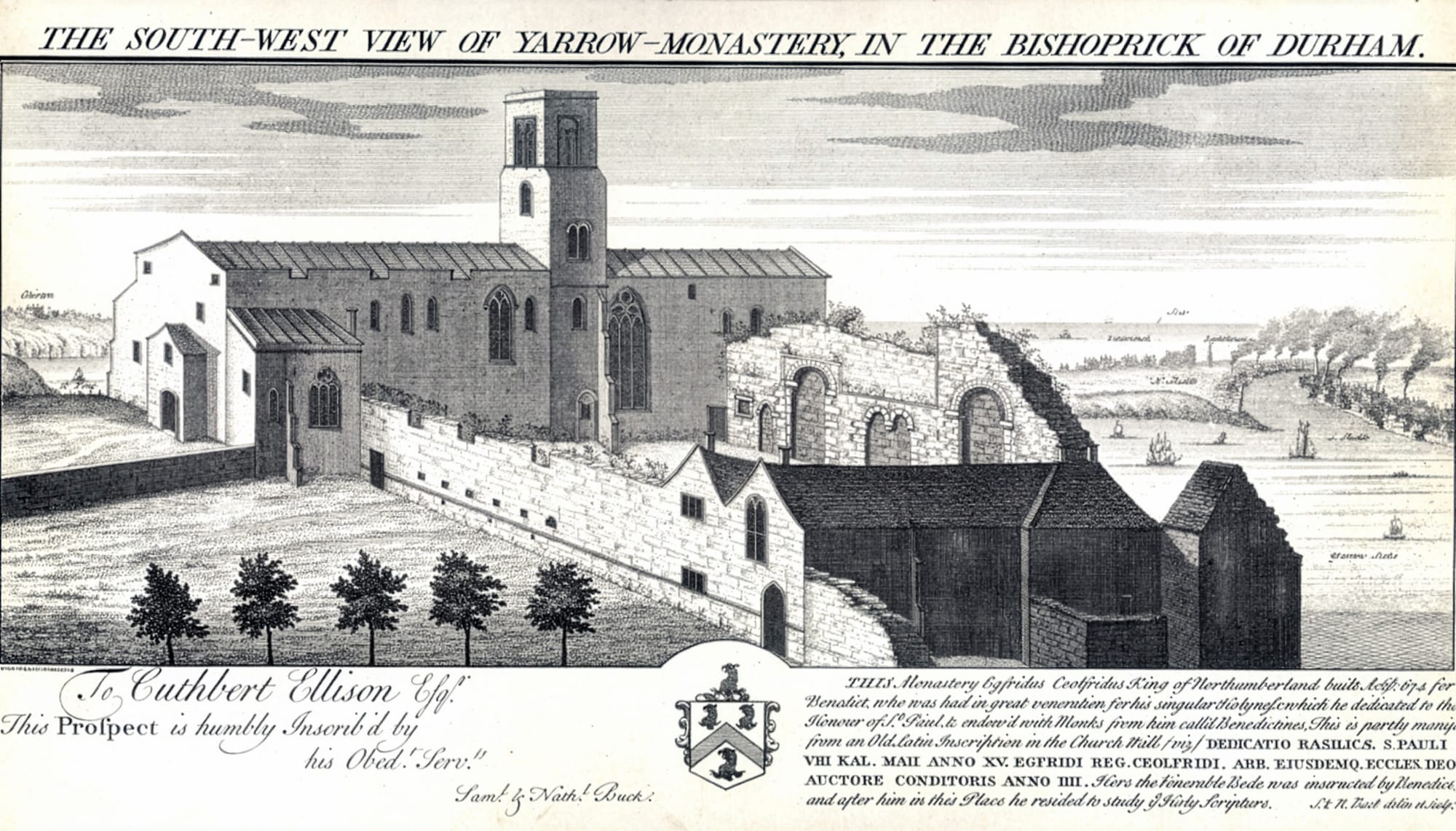
Bede was a Northumbrian. He was born somewhere near modern-day Jarrow, then a windswept plain between the Cheviot Hills and the North Sea.
At the age of seven, he was given, as an oblate (a sort of junior trial monk) to the monastery of St Paul at Jarrow, which lies tucked into a bend of the River Don just before it empties into the Tyne. He arrived there not long after the monastery was established and, extraordinarily, you can see the original dedication stone in the church of St Paul which still stands there.
This stone is set into the arch above the entrance to the chancel and it reads, translated into English,
The dedication of the basilica of St. Paul on the 9th day before the Kalends of May in the 15th year of King Ecgfrith and in the fourth year of Abbot Ceolfrith founder, by God’s guidance, of the same church.
In other words, the church was dedicated on 23 April 685. Bede, who was 12 or 13 at the time, was there, standing with the monks of the monastery, as the dedication took place. By that time he had already spent five years on site helping to build the monastery.

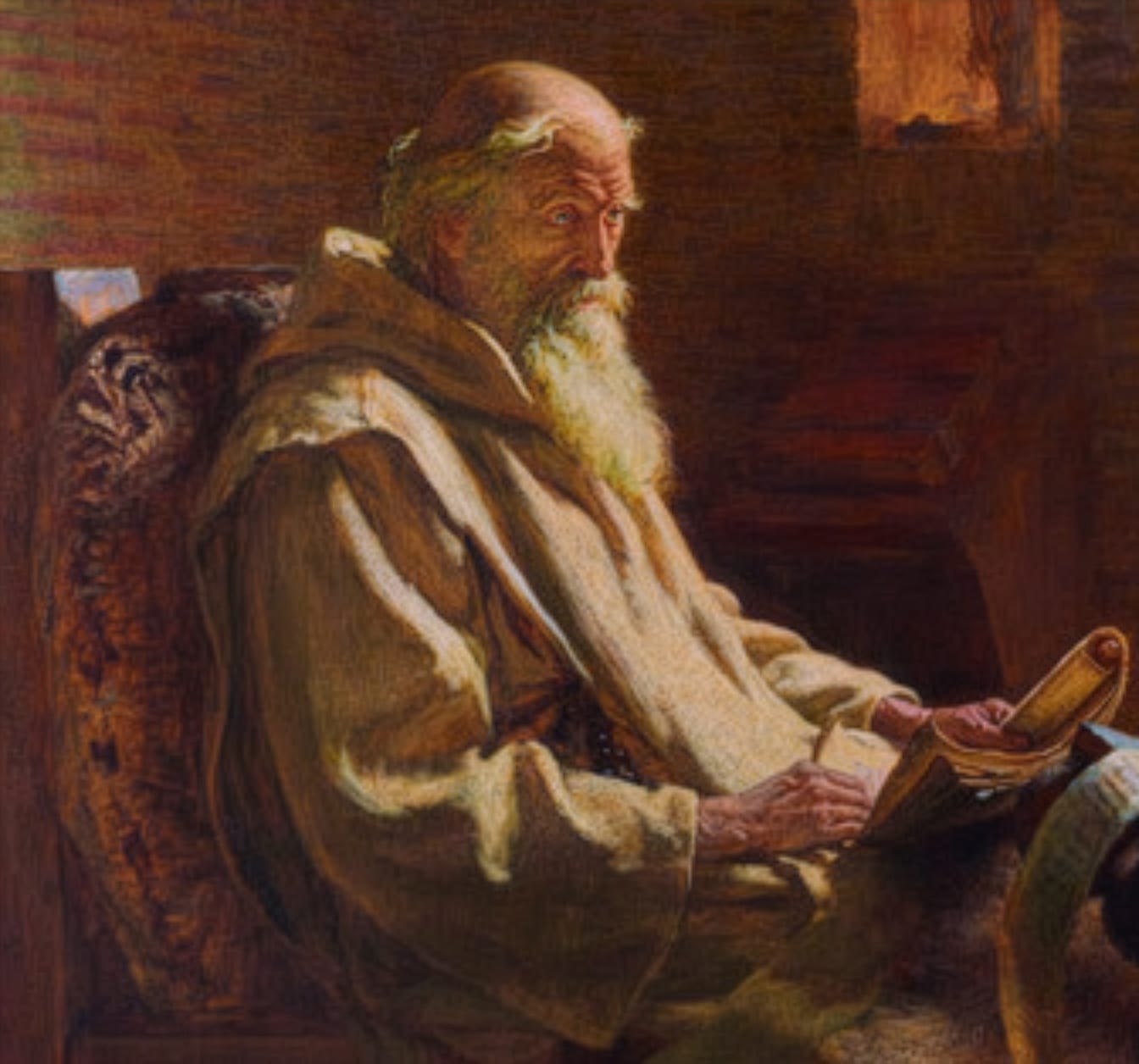
Bede spent the rest of his life at the monastery, splitting his time between its two sites in Jarrow and, seven miles south, St Peter’s at Wearmouth. These two churches were the first stone buildings to be constructed in Britain since the Romans left around AD 410. This was possible because the monastery’s founder, Benedict Biscop, imported stonemasons from Europe to build the churches.
The Anglo-Saxons who had settled in Britain after the Romans’ departure were master carpenters and incredibly skilled metalworkers but they didn’t know how to work stone. Biscop, who was a great traveller, used contacts forged abroad to build buildings in the style he had seen during his many visits to Rome.
But it wasn’t just stonemasons Biscop imported, he also brought back books. The Anglo-Saxons were pagan and illiterate. But their conversion to Christianity coincided with their learning to read and write, and this change brought a new found fascination with the magic of the written word.
No one was more intoxicated by books than Bede. Monks at that time had to sing the Daily Office, the work of prayer that constituted their vocation. This Office was in Latin.
Latin, as a language, was very different from the Old English that was Bede’s native tongue but he was compelled to learn it. The monastery had gifted teachers, men who thought hard about how and what to teach. In Bede they had a perfect pupil: his Latin was as flawless as a Cicero.
Knowing Latin meant that Bede, and the other monks at St Paul’s, were part of the conversation that was going on throughout the Catholic Church. This was a conversation of theology, pastoral practice and practical necessity that connected the Roman Empire to the new kingdoms of Europe: as such, Britain was no longer at the edge of the world but embraced within it.
An ardent book collector, Benedict Biscop had assembled the best library in western Europe at his monastery and Bede took full advantage of it. These books were, of course, all written in Latin but Bede was fluent in the language. His fellow monks quickly recognised his skill as a teacher and a scholar, allowing Bede to concentrate on what he did best.
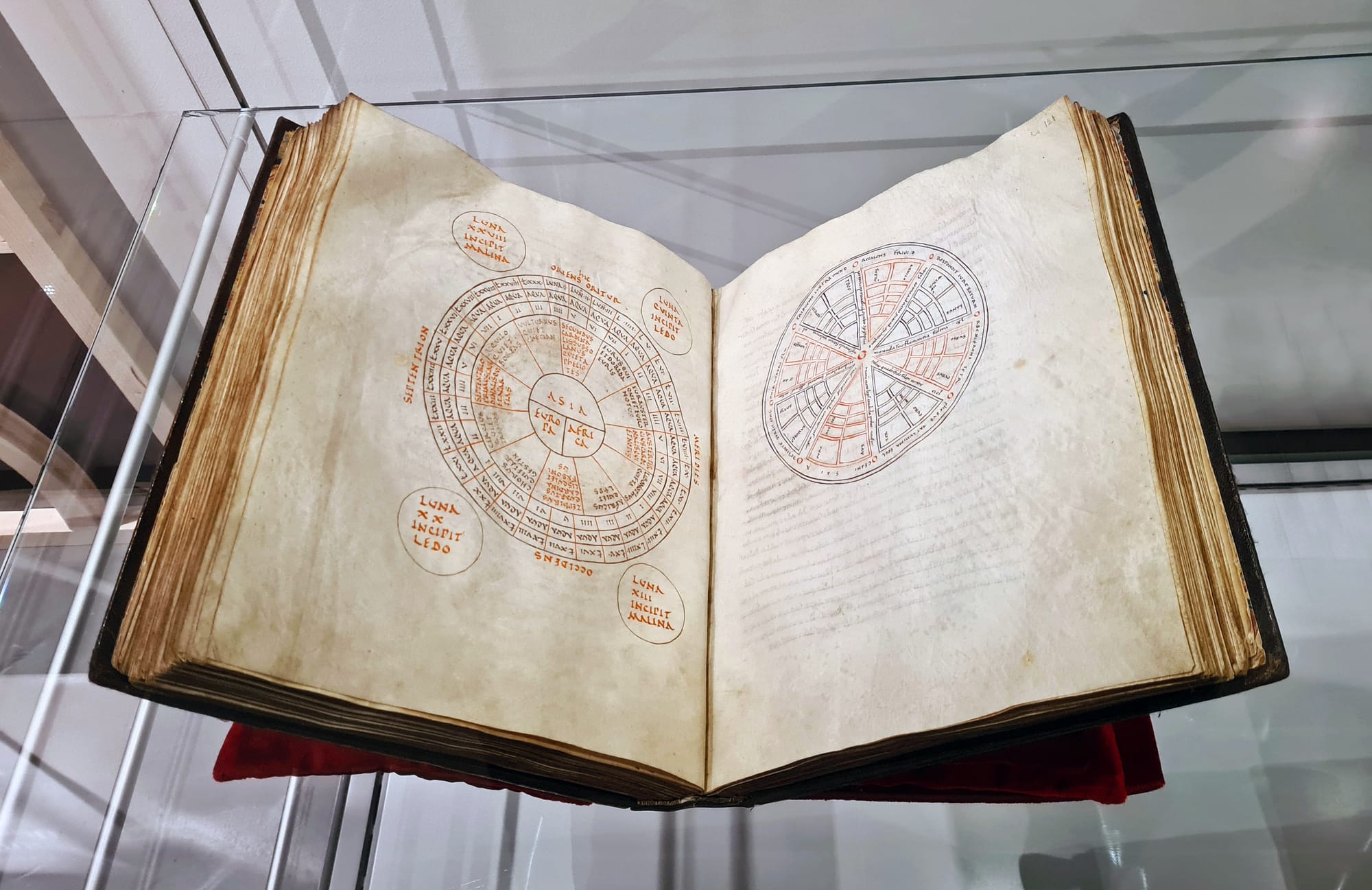
Recognition followed, as he produced a stream of biblical commentaries and scientific works. These show that Bede knew perfectly well that the earth was round and there is evidence of his practicality too. He established that tide times were different in different places by getting the monks at Lindisfarne and Whitby to record the high and low tides beside their monasteries.
But it is as a historian that Bede is best remembered. His magnum opus was the Ecclesiastical History of the English People and it did exactly what he said it would: it told the story of the conversion of the pagan Anglo-Saxons to Christianity.
To write his history, Bede corresponded with other religious scholars throughout Britain and beyond. He even dispatched a priest to Rome to scour the papal archives for the letters the popes had sent to their missionaries in Britain.
Born: 673/4, Northern Northumbria
Died: 26 May, 735, Jarrow, Northumbria
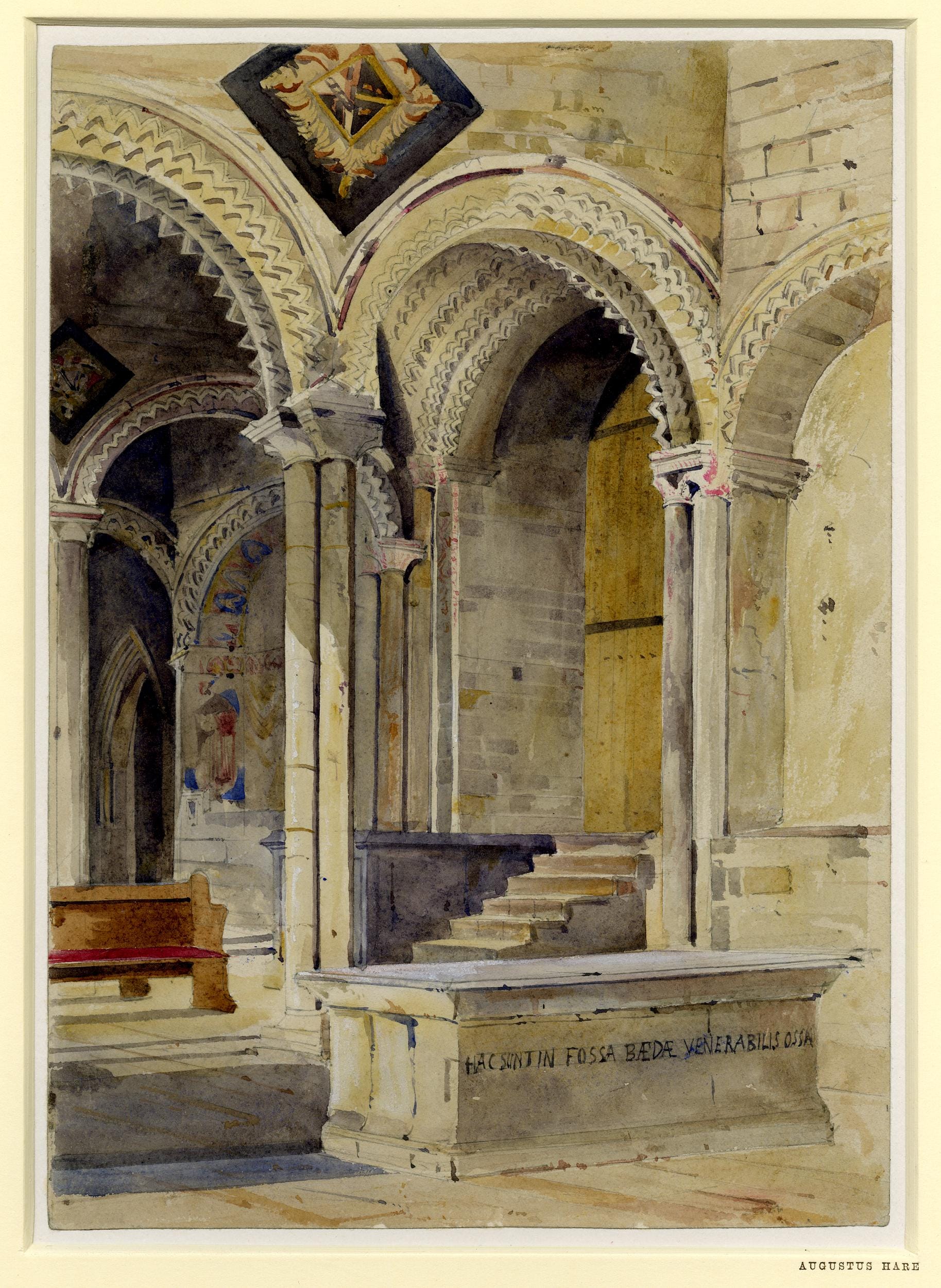
Resting Place: Galilee Chapel, Durham Cathedral
Notable works: De Metrica Ratione, De Schematibus et Tropis Sacrae Scripturae, De orthographia, Historia Ecclesiastica Gentis Anglorum
Quote: 'It has ever been my delight to learn and teach and write'
However, as all this information was coming in to him, Bede faced a problem. When his correspondents gave him dates, they came in a bewildering variety of formats, like the one given for the dedication of his own church.
It was all very well saying that St Paul’s was dedicated in the 15th year of King Ecgfrith’s reign and the fourth year of Ceolfrith’s abbacy. But when you had lots of other dates coming in from the reigns of different kings, abbots, bishops, not to mention consulships and from the foundation of Rome and the start of the reign of the Emperor Diocletian, it became impossible to make sense of them all.
What was required was a benchmark, a single date in history from which all other dates could be derived as happening so many years after or before that date.
A monk named Dionysius Exiguus had come up with a new dating system when working on the complicated calculations for Easter: the birth of Christ. Bede was familiar with this from his own research. Dionysius, however, had only used this system for his Easter calculations. Bede decided to apply it to history.
It was a long and laborious process, with much cross checking, but he slowly converted all the different dates he had been given into this new system of before (BC) and after (AD) the birth of Christ.
Bede’s history became very popular, with many copies being made. His new dating system was so obviously practical that it was adopted elsewhere, becoming the universal calendar that we all use today.
So the fact that, when we say the year is 2026, everyone everywhere in the world knows what we mean is down to Bede.
But it wasn’t just dates. In his history, Bede wrote about the English people as one people.
This wasn’t how they saw themselves at the time. Loyalties at that time were local, personal, familial and tribal. Warriors swore loyalty to their lord, not to the throne. Peasants were bound to their lord. Everyone knew family relationships out to distant cousins many times removed. The Anglo-Saxon kings fought each other just as enthusiastically as they fought the Britons, the Picts, the Scots and the Irish.
This was where identity and loyalties lay. But Bede had a vision that transcended that. He had a vision of the English as a Christian people, called by God when they were still pagans to a new, promised land, where they had settled and where they had accepted the true faith.
In accepting the new faith, they became a new people under God: the English, as opposed to the many tribes and clans that had come over the North Sea in their boats generations earlier.
It was a vision that didn’t really match the realities of his time but it was an idea that would inspire Alfred the Great when he needed a vision to unite his people, and the remaining Anglo-Saxon kingdoms, against the onslaught of Norse invaders a hundred and fifty years later.
Bede invented the idea of the English people in a land of their own, England. But it was Alfred, and his children and his grandson, who brought this vision about, creating England through Bede’s inspiration and their own courage and bravery.
We still live with the fruits of that vision, from the tensions and rivalry that divide the English from the Welsh and the Scots, to the sublime poetic vision of William Blake seeing the holy Lamb of God walking England’s green mountains and pleasant pastures. Not bad for a man who lived all his life in Jarrow •
Bede: The Man Who Invented England by Edoardo Albert
Birlinn Ltd, 4 June 2026
RRP: £17.95 | 320 pages | ISBN: 978-1780278391
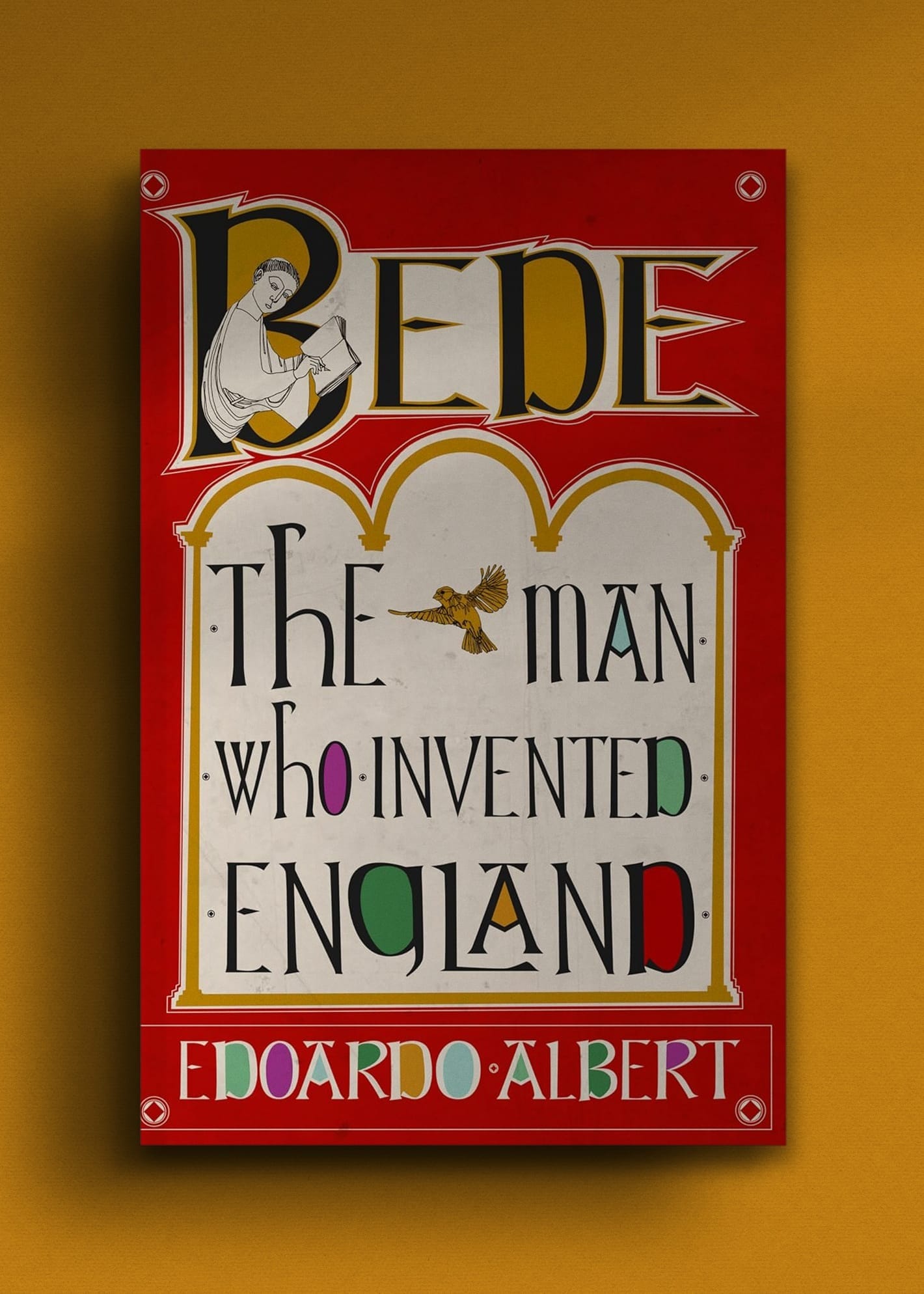
What is England and who are the English?
The man who first posed and answered these questions lived 1,200 years ago in Northumberland. The Venerable Bede spent almost his whole life in two monasteries looking over the North Sea, far from the centres of civilisation. Yet he became the foremost scholar of the first millennium, writing a history that continues to illuminate the Dark Ages, while also popularising our modern dating scheme.
Faced with a Britain of competing kingdoms and peoples, it was Bede who first wrote of the English as a single people. It was his vision that created the story that has united and divided Britain ever since: an island divided into three countries.
Based on the most up-to-date research and historical and archaeological evidence, this book pieces together Bede’s life and those of the monks and nuns, warriors and kings, farmers and merchants who made up the kingdoms in the contested realm of Britain.
📸 Dive into our Features
🎤 Read Interviews
🎧 Listen to Podcasts
🖼️ Buy fine art prints & more at our Store


.jpg?ref=unseenhistories.com)
