
The Mysterious Origins of Antonio Vivaldi's Four Seasons
Vivaldi's 'The Four Seasons' is one of the most recognisable and beloved of all pieces of classical music. The author Hannah French investigates its origins


It is Midsummer Day in England – an appropriate moment in the natural year to listen to a performance of Antonio Vivaldi's The Four Seasons.
Vivaldi's composition is one of the most familiar of all classical music pieces. But when it comes to its early eighteenth century origins all clarity disappears.
Recently we spoke to the broadcaster Hannah French who told us more about the genesis of a masterpiece.
Words by Peter Moore

The Golden Age of Classical Music
Antonio Vivaldi’s The Four Seasons has a very strong claim to being the most recognisable of all classical musical pieces. It begins, clear as a bell, with the jaunty opening bars of Spring, evolves into the high drama of Summer, flits through the merry Autumn and ends with the elegance of Winter. Each season is distinct, evocative and enchanting when performed live by an orchestra in what the author and broadcaster Hannah French calls ‘the frosted tones of that era’.
The era that she is talking about is the early eighteenth century. It is to this golden moment in the history of music that Vivaldi’s Four Seasons belongs. This is the age of Stradivari, of Bach, of Handel, when great audiences were experiencing the thrill of music from mighty instruments on a grander scale than ever before.
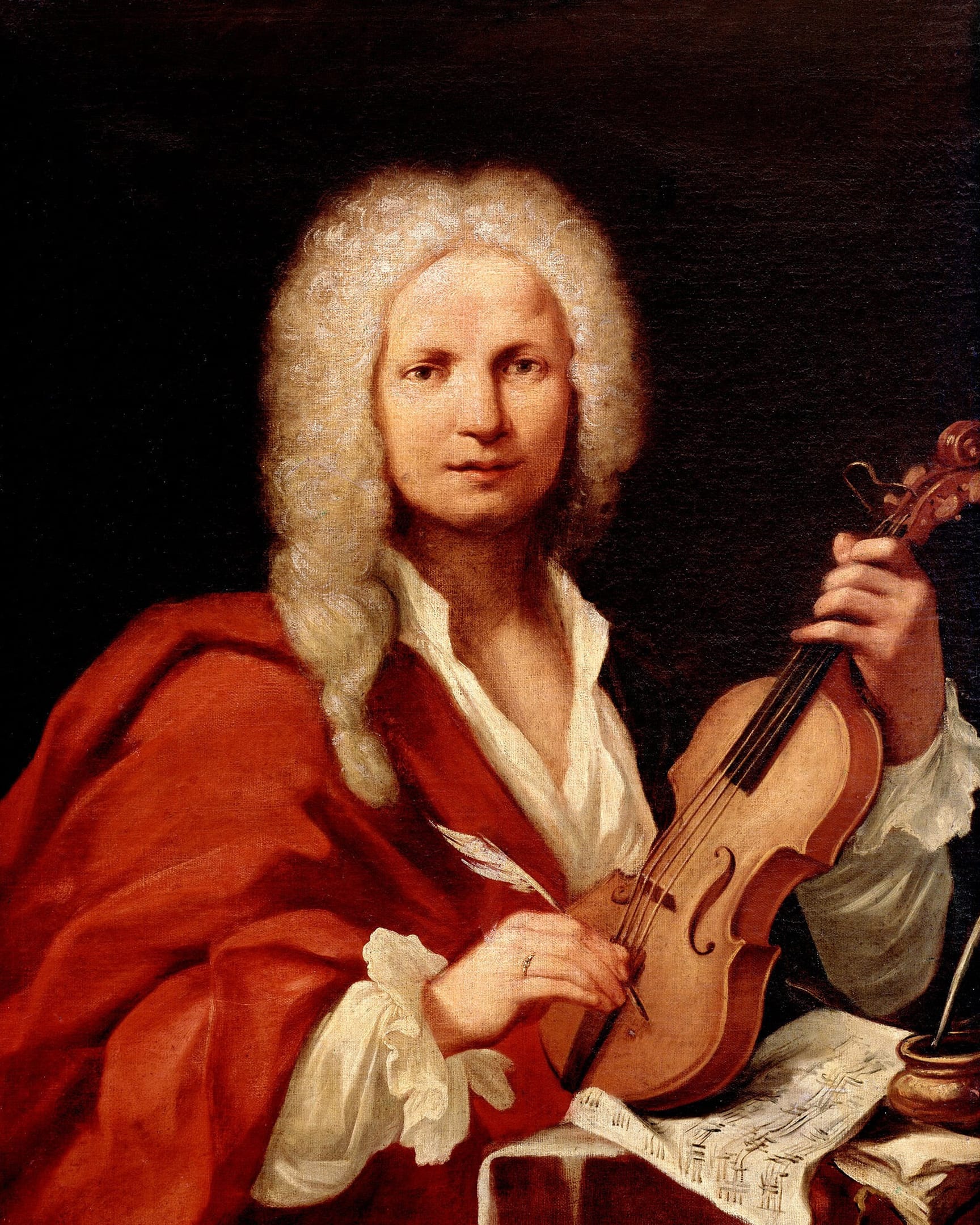
Vivaldi and Mantua
But while we know the Four Seasons intimately today, there is much about the work’s genesis and early history that remains obscure. Why was Vivaldi prompted to write it? What were his chief influences? Which parts of Vivaldi’s own life story can be detected in the music today? Where did the original manuscript for the music, the one in Vivaldi’s own hand, actually end up?
A few years ago the BBC Radio 3 presenter Hannah French started to investigate questions like these as she started research on a new book, one centred around listening to music seasonally. The Four Seasons provided French with a natural starting point but the questions she encountered as she sought to make sense of the music’s history grew increasingly profound.
It is commonly held that Vivaldi wrote The Four Seasons in the years 1718–23, when he was in his early to mid-forties and working as the court chapel master at Mantua in Lombardy. Mantua is around 100 miles inland from Venice and historically it had been the seat of the princely House of Gonzaga.
Born: 4 March 1678
Died: 28 July 1741
Period: Baroque
Known for: The Four Seasons, L’estro armonico’ Concertos, Gloria in D Major, L’Olimpiade
‘Assuming Vivaldi was living in Mantua when he wrote The Four Seasons, it stands to reason that the concertos were played there. Even though they could not have featured at Prince Philip's aborted wedding to Princess Elenora in 1719, they may have been played between acts at the opera during Carnevale.' – Hannah French, The Rolling Year, p. 76
Arriving for his new job from his old home in Venice, in 1718, Vivaldi found a place that had a similar geographic charm. A series of shallow, artificial lakes had been created as a line of defence some centuries before, creating a distinctive landscape of dreamy blue water, green fields and narrow causeways.
This change of environment had a stirring effect on Vivaldi who was put in charge of a talented group of local musicians. Over the next few years he wrote four operas, scores of cantatas and various concertos that were most likely performed in the old Gonzaga Palace.
Like Vivaldi himself this building had been recently refreshed. With the Gonzagas having left for Venice a decade before, Prince Philip of Hesse-Darmstadt had taken possession of the old ducal palace. By the mid-1710s it was being expensively refurbished with new paintings, sculptures and furnishings.
Vivaldi’s job at Mantua was connected with Prince Philip’s renovations, and it was this historical moment that French began to investigate as she researched the history of The Four Seasons. It was a powerful mix. Vivaldi, the talented musician; the refreshing change of environment to Mantua; the brisk injection of funds from Prince Philip; the peculiar geography of the region with its charming lakes and grand views.
Classical Music and the Little Ice Age
Nature played a heightened role in human life at the beginning of the eighteenth century. Much of the work was still agricultural and performed in the fields. Kind weather and a good harvest was the dearest wish of every heart. But the weather was capricious and came without warning, a reality that made it seem more than a supernatural force than a natural one. Summer storms – like the one in The Four Seasons – were truly terrifying events that not only brought drama to the fields but were also a grave threat to future happiness.
It was much colder, too, in the early 1700s, than it is today. At that point people were living in the final phase of what historians now call the ‘Little Ice Age’ – a period when there were frost fairs on the Thames and the hills and mountains were always blanketed in snow. All this, French points out in her book, The Rolling Year, can be detected in Vivaldi’s music.
But it was inside the Ducal Palace in Mantua where French found some of the best clues about The Four Seasons’ composition. ‘I turned up in Mantua, really looking for where Vivaldi could have performed’, she explained, ‘Was there any evidence that The Four Seasons might have been inspired by this place?’
The ‘Palazzo Ducale di Mantova’, to give it its formal name, is, in French’s estimation, ‘a real, and I say this with love, higgledy piggledy palace: very old bits, newer bits, and when I say newer I mean sixteenth century, and they are all kind of interconnected.’ There are gardens and theatres and a yard to exercise horses and corridors linking everything in magnificent disorder.
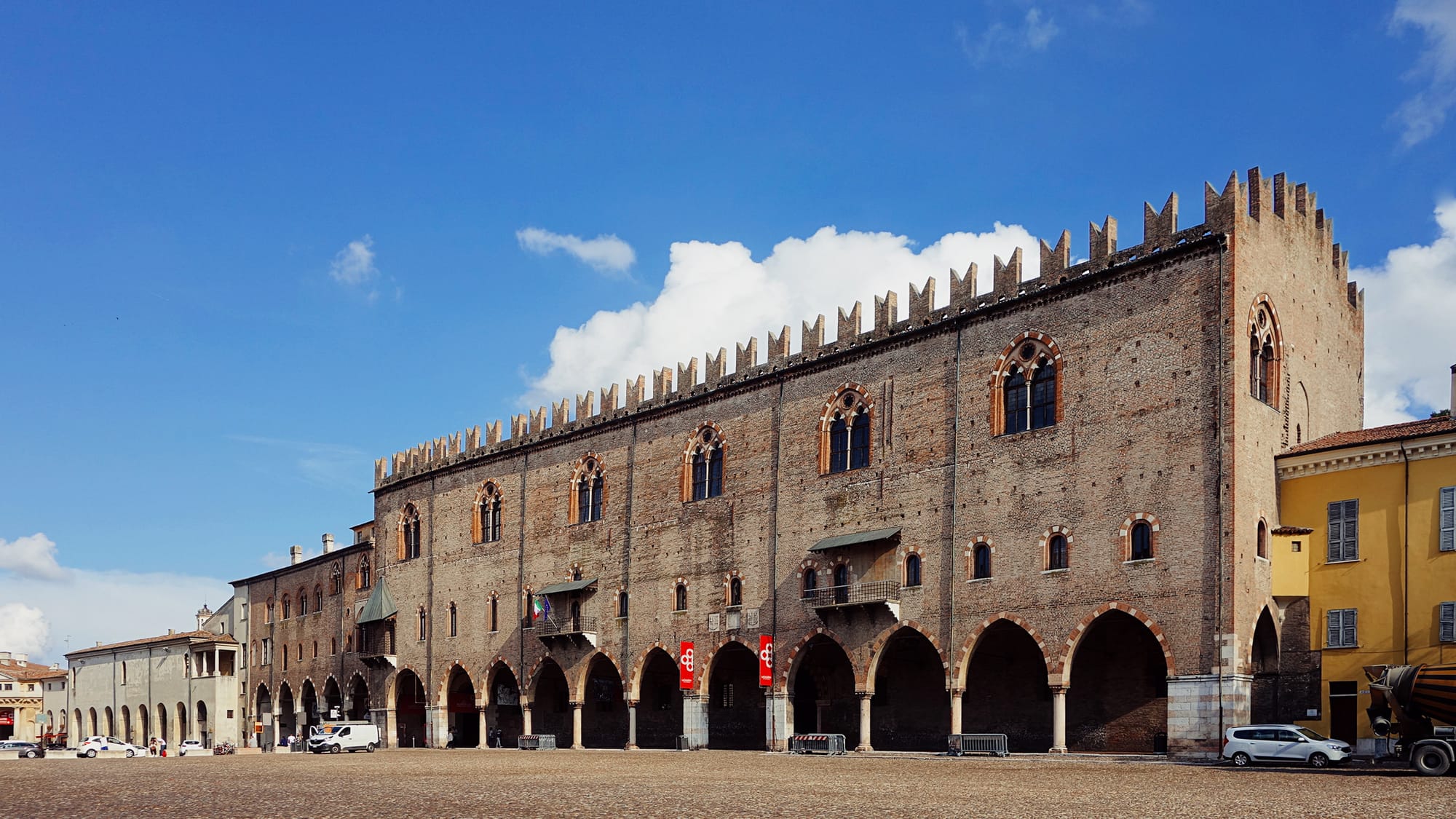
It was inside the palace that French encountered a provoking clue about The Four Seasons’s creation. Down a passage and through an old entertaining space known as the Apartment of Troy, is a ‘long, thin hall called the Hall of Months’.
Like much of the palace the Hall of Months is decorated with paintings and, tantalisingly, the ones here are themed around the concept of time. This is a space that Vivaldi would have known and, as he was likely to have been drawing inspiration from his new surroundings, the paintings that French noticed above a portico outside, called Elenora’s Lodge, are significant. Turning and looking up ‘under the cornices in the roofline’ she saw four frescoes depicting the four seasons of the year.
French describes this encounter – one of nature and art in a place that was once used for musical performances – in one of our recent podcast episodes with her. It was a moment that emphasises the importance for historians to be active and empirical in their pursuit of stories – visiting the places where events played out, scanning the surroundings for telling clues.
In this instance, the frescos in the ducal palace in Mantua are tantalising glimpses into the early life of a famous piece of music. When it comes to The Four Seasons, after all, the documentary trail only really begins in 1725 when the first printed manuscript was published in Amsterdam. What happened during the seven years that predated this moment is elusive but compelling.
Could it have been that an energised Vivaldi, strolling the corridors of the Palazzo Ducale di Mantova and pondering the theme for his next composition allowed his eyes to rest, for a moment on the frescos outside the concert hall? They were certainly there at that time – having been painted around a century before by one of the court painters of the Gonzaga family.
‘We can look’, French tells us, ‘we can squint at this and see what Vivaldi saw, we can hear the acoustics of a room, and we're suddenly at this meeting point of art and nature. And then you just feel like things are really falling into place.’ •
The Rolling Year: Listening to the Seasons with Vivaldi
Faber, 6 November, 2025
RRP: £20 | 368 pages | ISBN: 978-0571391998
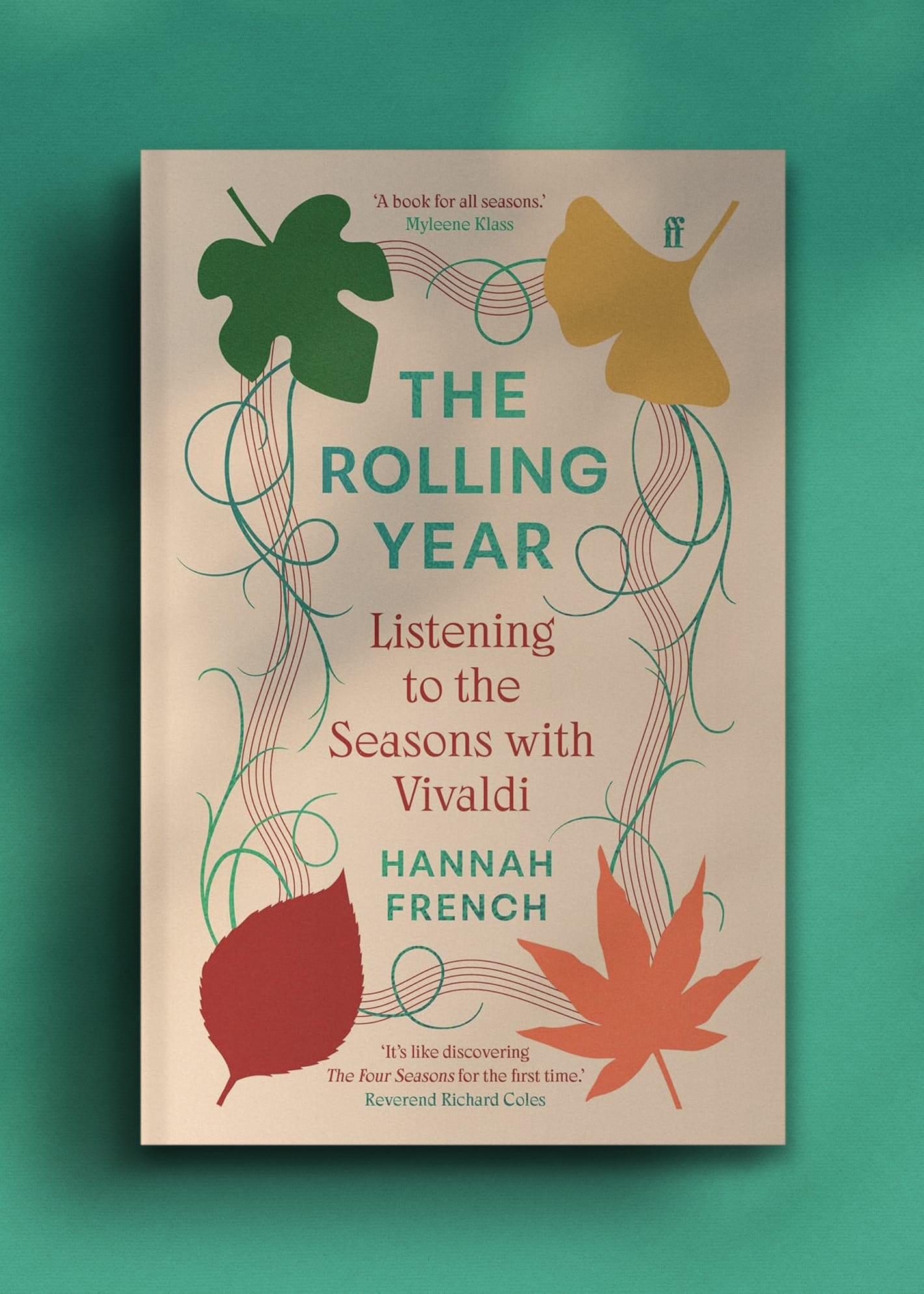
Embrace the art of listening seasonally with BBC Radio 3 presenter Dr Hannah French as she explores Antonio Vivaldi's evergreen work: The Four Seasons.
'The Four Seasons', Antonio Vivaldi's famous set of highly descriptive violin concertos, was published 300 years ago, but the themes it contains continue to reveal new truths to listeners today.
Through the rich imagery of each concerto and its accompanying poetry, Dr Hannah French uncovers the details of Vivaldi's personal and creative life. In conversation with fellow musicians and experts in health, nature, food, wine, and science, she helps bring a new perspective to the music through our shared experiences of the joys and fears of the ever-evolving seasons.
To spend a year in the company of Vivaldi is to witness the sounds of both ancient festivals and the beauty and brutality of the natural world – a rolling year that enhances our sensory experience of the seasons today.
Travels Through Time – Vivaldi Special: Hannah French on The Four Seasons
📸 Dive into our Features
🎤 Read Interviews
🎧 Listen to Podcasts
🖼️ Buy fine art prints & more at our Store



.jpg)

