
'Strange Shaped Beasts & Glorious Feathered Birds': The Tudor and Stuart Craze for American Animals
From Anne Boleyn's South American monkey to jaguar claws and parrots, Lauren Working explains how the Early Modern England sought to import the treasures of America.


Over the century and a half after Columbus's voyages of the 1490s, those in England learned about an ever-expanding list of magnificent American creatures.
Very soon they were able to see many of these animals for themselves as they were carried home by collecting networks that stretched deep into North and South America.
In this extract from her book, A Golden World, Lauren Working investigates the meaning and symbolism of animals such as monkeys and crocodiles, parrots and guinea pigs, in Early Modern England.

For references please consult the finished book.
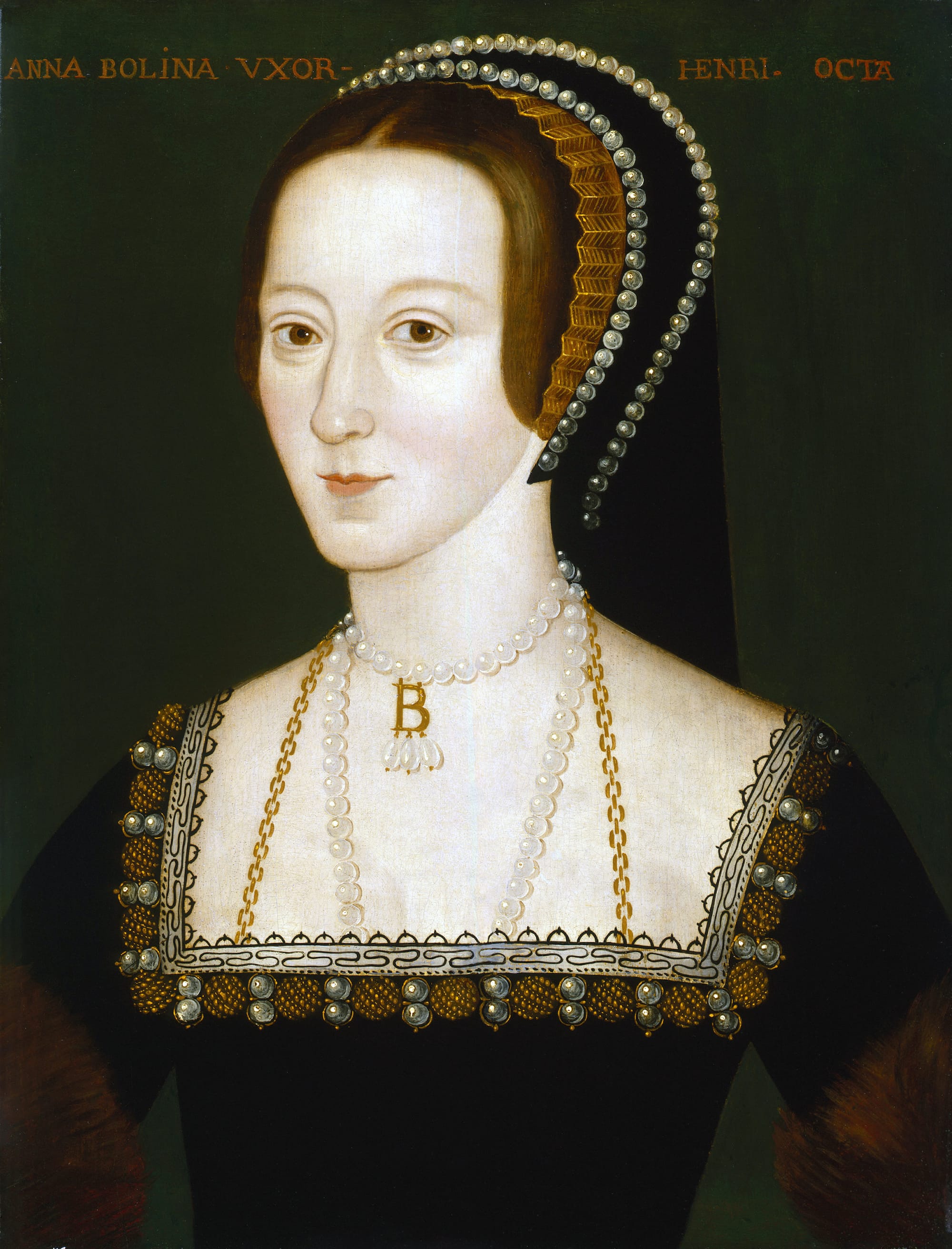
In 1535, the Cornish lady Honor Grenville, Viscountess Lisle, received a humiliating letter from one of Henry VIII’s ministers, informing her that Anne Boleyn had rejected her gift of a South American monkey. ‘Of a truth, madam, the Queen loveth no such beasts nor can scarce abide the sight of them,’ he wrote.
The animal had been in Lady Lisle’s care since the previous year, when she had received three Brazilian animals as gifts: two marmosets and a long-tailed monkey, ‘a pretty beast and gentle’, who liked to be kept near the fireplace.
Urbane travellers to the Continent in the time of Henry VIII could purchase Atlantic animals from cities such as Lisbon or Seville. In Antwerp, where many Tudor merchants spent their time, agents of the Fugger bank kept foreign creatures caged in a large garden near their offices, selling them to prosperous clients.
When the vindictive Jewish merchant Barabas surveys the piles of treasure he has amassed, in Christopher Marlowe’s Jew of Malta (1590), he celebrates the transoceanic traffic that makes it possible to ‘inclose / Infinite riches in a little roome’. But, sometimes, what the English collected weren’t things at all.
By the early seventeenth century, collections such as John Tradescant’s famous ‘Ark’ in Lambeth contained beaver and otter skins, a muskrat and wildcat from Virginia, an armadillo, the skeleton of a monkey, a hummingbird, a variety of necklaces made from the teeth of wild animals, and a woodpecker from the West Indies. Atlantic animals were admired for their rarity, but they were also vividly, vitally present in a range of spaces in Renaissance England.
Merchants’ houses were inhabited by feathered and furred bodies that had long held important places in Native communities. American creatures – kin, guardians, knowledge-sharers alongside humans – found themselves trying to adjust to life on a cold little island, clambering on the stone lions and unicorns that flanked stately stairs and fireplaces. Birds and marmosets occupied the interiors of middling and aristocratic chambers, often tended to and cared for by a host of less wealthy keepers and tenants.
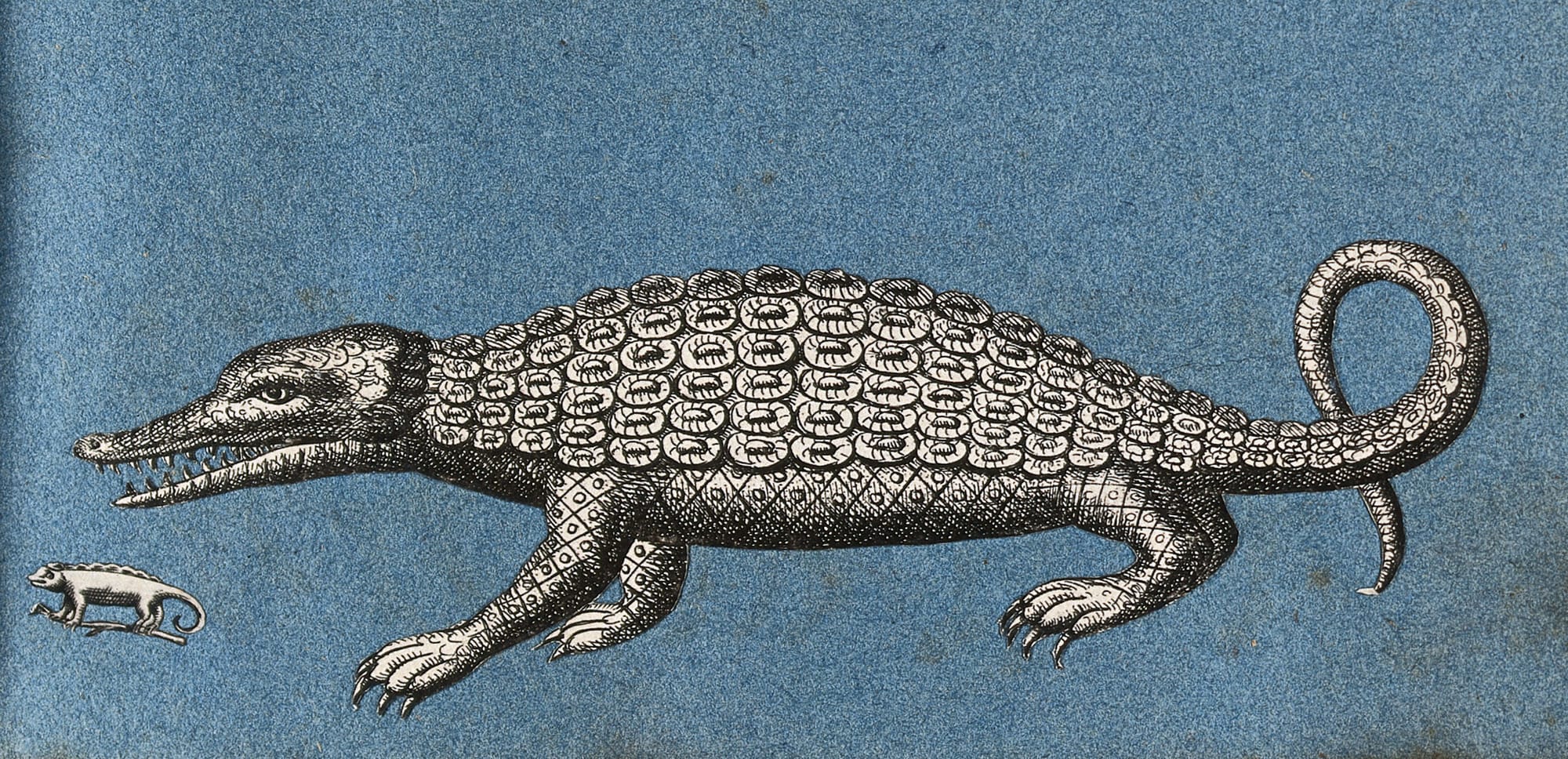
The captain Christopher Newport gave James two baby crocodiles and a ‘wild boar’, likely a peccary, from Hispaniola (now Haiti and the Dominican Republic) for the king’s zoo in St James’s Park. Before these crocodiles roamed St James’s, they had been part of an interconnected ecosystem in Taíno lands, two apex predators on the rise, their young ridged skin flecked by the shadows of ferns. Other animals, viewed less as individual marvels than as comestibles, were baked into pies and crystallised in sugar.
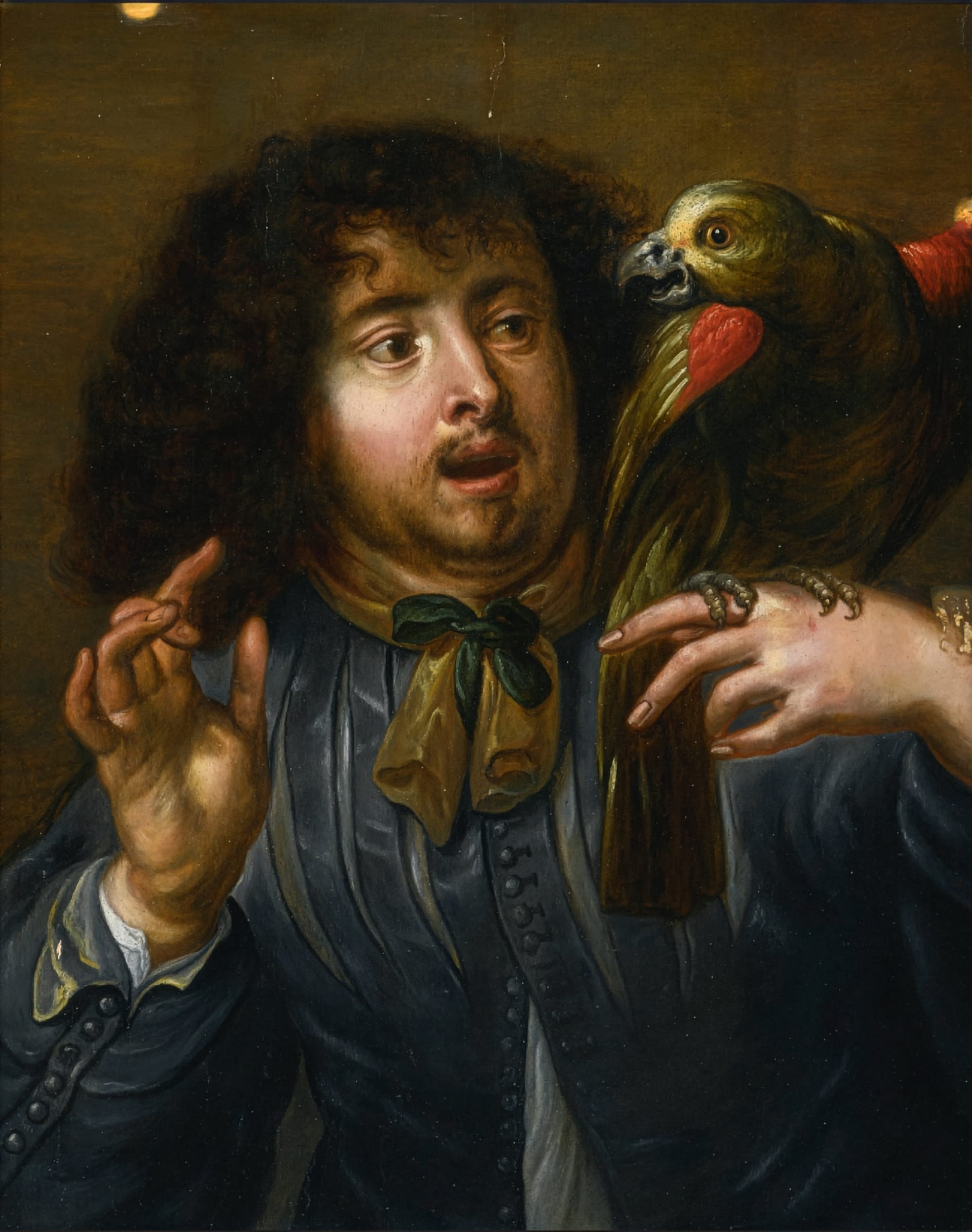
Unlike Anne Boleyn, other Tudors rather liked receiving tropical pets. Parrots were presented to family members and patrons and passed down in wills. In 1596, Elizabeth’s Secretary, Robert Cecil, wrote to John Gilbert, Ralegh’s half-brother, to ask why Gilbert hadn’t sent his parrot to the queen after she had expressed an interest in it. A rather stressed Gilbert vowed that he had received no such request, but that Her Majesty could have anything he possessed, from the parrot to his very life, and made arrangements to send it immediately.
When Europeans invaded Mesoamerica and the Caribbean in the late fifteenth century, they found the multicoloured brilliance of American species beyond anything they had seen before. The Italian navigator Amerigo Vespucci commented on the immense number of birds he witnessed, with their emerald-and lemon-coloured feathers.
In their earliest initial exchanges, Europeans met diverse societies that had captured, tamed, and cared for these birds for centuries. Vespucci received countless birds from local inhabitants – ‘a generosity of parrots’, as the Taíno-descended José Barreiro puts it.
Most royal women in England had lavish aviaries with live birds that included species from the Americas. They also collected bird parts. Mary, Queen of Scots had that beak from a Brazilian bird. Red cardinals, known as ‘Virginia night[in]gales’, flitted in Anna of Denmark’s green and white aviary in Greenwich, their chirping met with the pleasing sound of an elaborate hydraulics system.
The household accounts of Princess Elizabeth Stuart, James and Anna’s daughter, include payments to maintain ‘her grace’s monkeys’, and to a joiner for mending her parrot cages. In 1613, Elizabeth received a parrot from her friend, the ambassador Thomas Roe, who had travelled to the Amazon several years before in the employ of her brother, Henry.
In December 1609, the Earl of Southampton wrote to James’s Secretary of State, Robert Cecil, about the king’s wish to obtain a flying squirrel from the Chesapeake. He had told the king of ‘the Virginia Squirrills which they saw will fly, wherof there are now divers brought into England’, Southampton wrote, after which James ‘was sure [your Lordship] would gett him one’.
Southampton was an active member of the Virginia Company, busy garnering support for its endeavours after the initial flush of enthusiasm in the venture had begun to wane. He had better things to do than to chase down a flying squirrel, and he knew Cecil did, too. ‘I would not have troubled you with this but that you know so well how [the king] is affected to these toyes,’ he wrote.
Southampton alluded to the presence of Virginia squirrels in London already, fluffy rodents that had left the branches of sugar-maple trees to leap through foliage in a very different environment, gliding against the backdrop of London’s chapels and cathedrals.
In Essex, a guinea pig lived in the manor house of the courtier and diplomat Thomas Smith. Remnants of its bones were found among fragments of glassware and ceramics in a pit dating to 1574–5. In one of the greatest gifts of Elizabethan portraiture to come down to us from an anonymous artist, a painting of three unknown children from around 1580 depicts a seven-year-old girl standing between her brothers, cradling a guinea pig with lustrous black, white, and auburn fur. When animals came from rainforests and grasslands to reside in English households, children had access to them, too.
Guinea pigs appeared as ‘the Indian little Pig-Cony’ in Edward Topsell’s The Historie of Foure-Footed Beastes (1607), accompanied by an explanation of their colourful coat varieties and their love of nibbling a wide assortment of herbs and fruit. Their gentle, unassuming presence appeared in devotional and secular paintings, fitting companions for Venus and Cupid or the Virgin and Christ.
Wealthy Stuart patrons collected paintings by Brueghel and Rubens, and the guinea pigs, monkeys, and parrots in these works hung in aristocratic galleries alongside other works of art. These creatures came alive again through paint, for ‘pictures serve them, whose active fancy give / Spirit to paint, and make dead Colours live’.
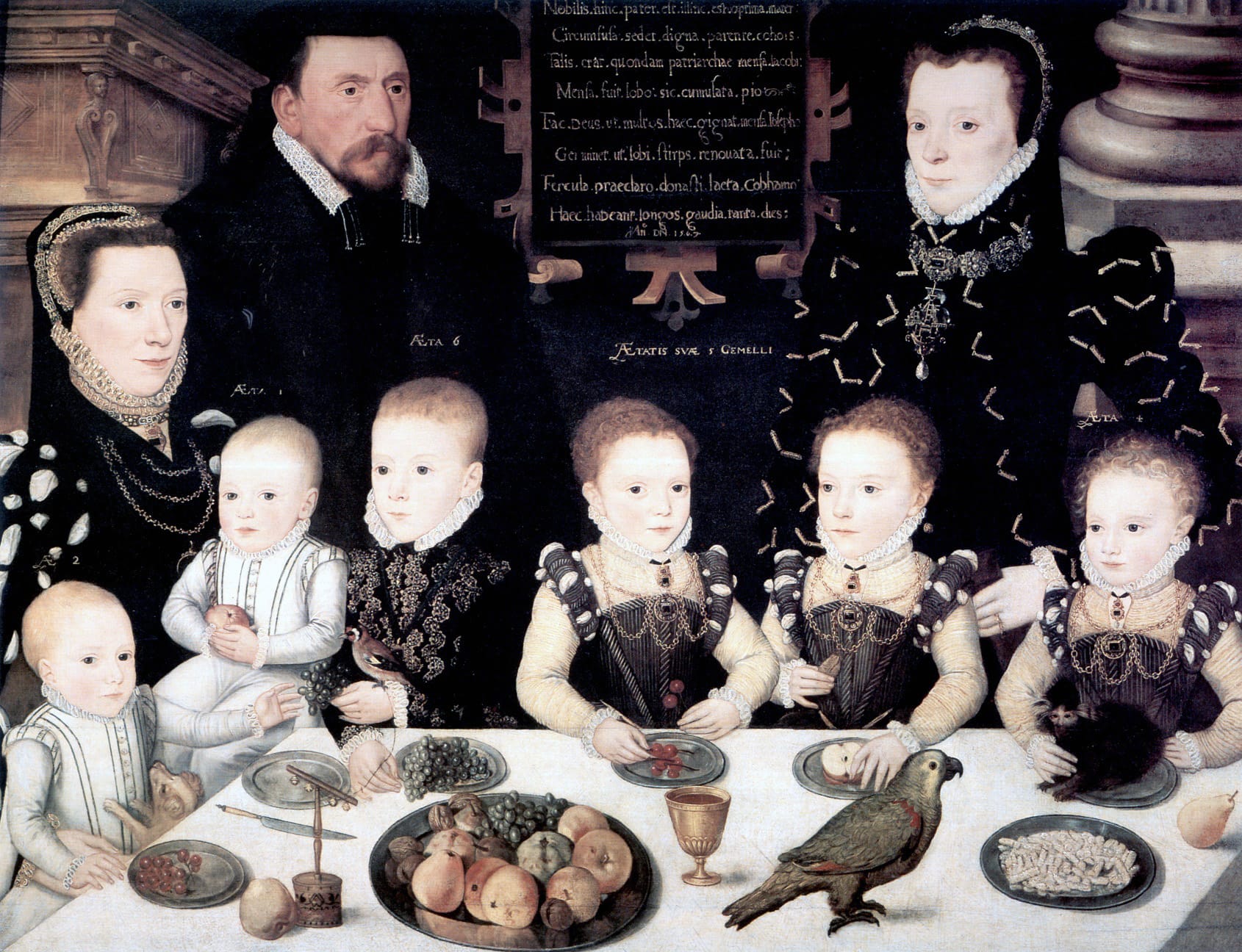
Beyond these painted menageries, animals from the Americas were found, alive or dead, in kitchens and dining rooms. In the 1567 Cobham family portrait, six children sit around a table with several Atlantic companions. A yellow-shouldered Amazonian parrot walks across the table, past the fruit, nuts, and sugared comfits that rest on polished silver plates. The youngest daughter holds a marmoset, who sits tuftily on a plate.
Animals were symbolic presences in art, and the portrait cannot be taken as straightforward evidence that the Cobhams owned such pets. Dogs evoked fidelity, monkeys vice (in this case, vice brought under control), and goldfinches Christ or the devoted soul.
But in using such imagery, whether from life or inspired by emblems and artistic practice, this composition appropriates a certain tropical flair, bringing the denizens of Central and South America to the Tudor dining table. Lady Cobham even wears a large, jewel-encrusted ship pendant.
For prosperous Tudors and Stuarts, ideas about gentility and nobility had a lot to do with hospitality – with displaying, sharing, and distributing food. Less advantaged members of society, frequently forced to travel to find work, waited at the gates of country estates, hoping for kitchen scraps and leftovers. Civility manuals and travel books praised the English custom of keeping tables furnished, ‘not onely prepared for the family, but for strangers and reliefe of the poore’.
Charity aside, the English liked their dainties. The Elizabethan clergyman William Harrison described how a host of banqueting delicacies were seasoned with sugar – marmalades, sugar bread, florentines, and ‘sundry [other] outlandish confections’, sometimes sprinkled with edible gold leaf.
By this time, banquets had emerged as a special category of meal – not the large feast itself, but the offering of sweet meats and liquor after the main courses, often in a separate, purpose-built room or ‘house’. In 1591, Queen Elizabeth attended a banquet at Eltham where hundreds of sweet dishes, shaped like castles and mythical creatures, were presented on glass and silver platters.
The quantities of sugar for these elaborate displays of wealth and culinary skill were immense, increasingly supplied by sugar exported from Portuguese plantations in Brazil. Potatoes from the West Indies, coming into English ports from Seville or Lisbon, were also used ‘to furnish up our banquets’, roasted with sugar and added to pies, or turned into comfits.
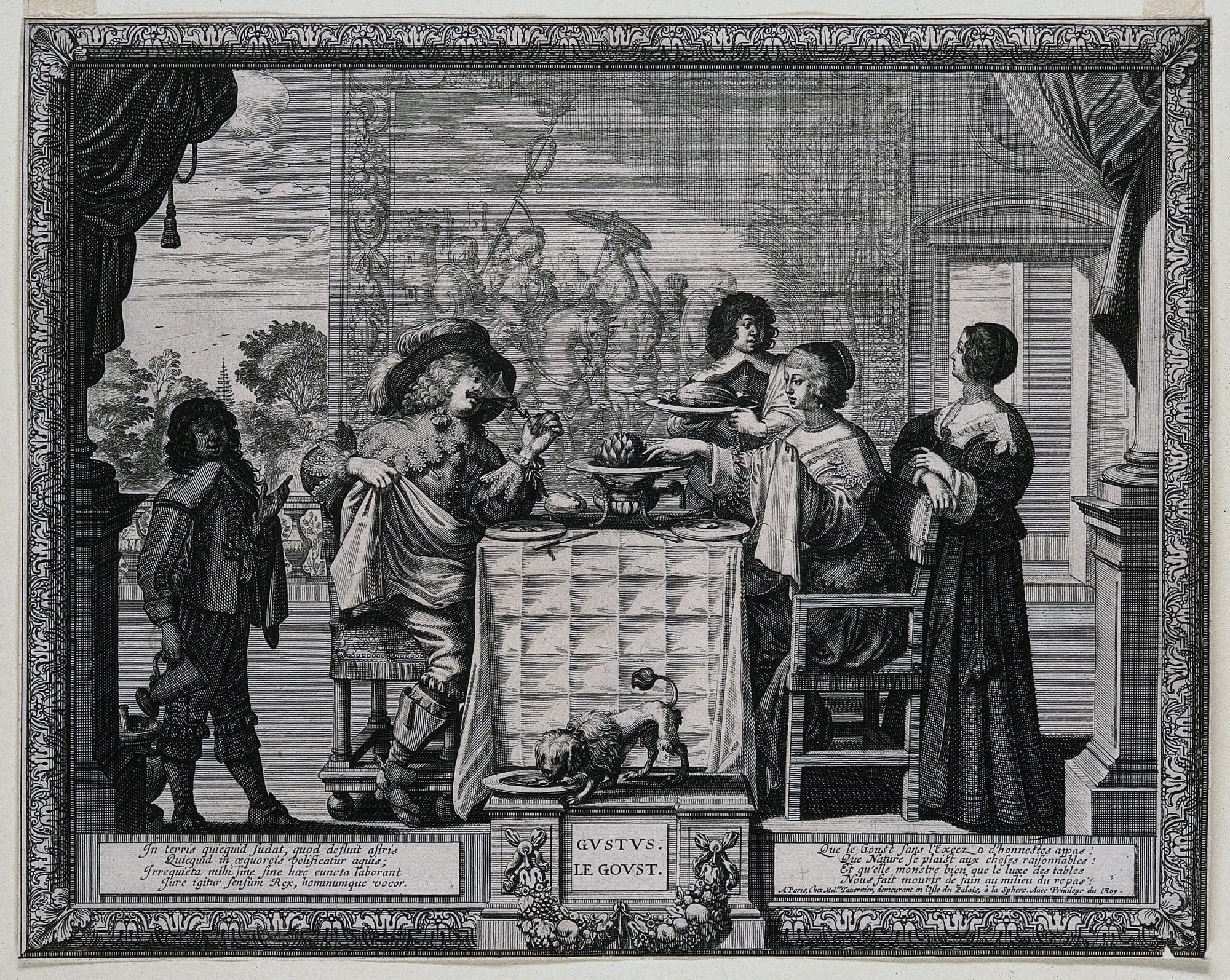
Status-conscious hosts sought to outdo each other in their banqueting displays. The rarer and more expensive, the better. These events were extravagant in their excess and in their ephemerality. Resources and time were poured into breathtaking displays that were then deliberately thrown away or destroyed.
By the early Stuart era, potatoes were out of fashion in such meals. These tubers were ‘growne to be so common here with us at London,’ the Royal Gardener John Parkinson wrote in 1629, ‘that even the most vulgar begin to despise them, whereas when they were first received among us, they were dainties for a Queene.’
The heads of sunflowers were roasted and eaten like artichokes, but Parkinson found them too strong for his liking. Sprigs of ‘Indian basil’ were used to flavour meats, and roots and walnuts from the Chesapeake were candied, their leaves distilled into liquids. In addition to enjoying the tart and tender fruit of a pineapple, their ‘shells’ or ‘cones’ were used by apothecaries, cooks, and bakers in their concoctions, and repurposed by City vintners for interior decoration, painted to resemble bunches of grapes.
In the sparkle of sugared dainties and sprawling fruits, peacocks and turkeys made lavish set pieces. The West and East Indies were brought together on the table through these large, ostentatious birds acquired through trade, the former with Asia, the latter with Mexico and eastern North America. As they came to be acquired and bred in larger numbers, turkeys became permanent fixtures in pies and less formal dining.
Civic banquets, from feasts at the Inns of Court to the dinners enjoyed by justices of the Star Chamber, included substantial numbers of turkeys along with oysters, partridges, rabbits, cream, and apple tarts.
In Ben Jonson’s play Bartholomew Fair (1614), the hypocritical Puritan Zeal-of-the-Land Busy is caught raiding a pantry with a cold turkey pie between his teeth. Recipes for such pies abounded in seventeenth-century cookbooks, which also warned readers of turkeys’ propensity for ravaging gardens in their hunt for leeks and corn.
Some animals were coddled, others bred for consumption. Others still were valued in parts. From jaguar claws to bezoar stones taken from the insides of llamas, animal matter frequently appeared in English cabinets.
Like banquets, curiosity collections allowed influential patrons to exhibit their access to networks of colonial trade and plunder. A row of silver-gilt cabinets lined the chambers of Anna of Denmark’s residence at Somerset House. They were made of marble, crystal, ebony, and walnut, often gilded with precious metals and decorated with flora and fauna. One contained jars of apothecary drugs, another a mirror and a panoply of silver boxes next to a globe, reinforcing the connections between collected objects and transoceanic trade. Merchants and agents were the go-betweens who connected faraway treasures and curiosities with those little rooms, stuffed with all things wonderful and strange.
Literature of the time poked fun at ‘the Indies in . . . mouldy Cabinets’, but they were more than storage spaces. Francis Bacon loosely described cabinets as containing ‘whatsoever the hand of man by exquisite art or engine has made rare in stuff, form or motion; whatsoever singularity, chance, and the shuffle of things hath produced’, revealing human craft and the wonders of God’s creation.
In addition to purpose-built furniture, cabinets could also apply to closets, private rooms or chambers, and even small lodgings such as summer houses or cabins, influenced by princely fashions and architectural innovations in Italy, Spain, the Netherlands, and France.
Entire rooms became repositories of reverie and pleasure, where tropical shells, feathers, and fossilised teeth delighted the senses.
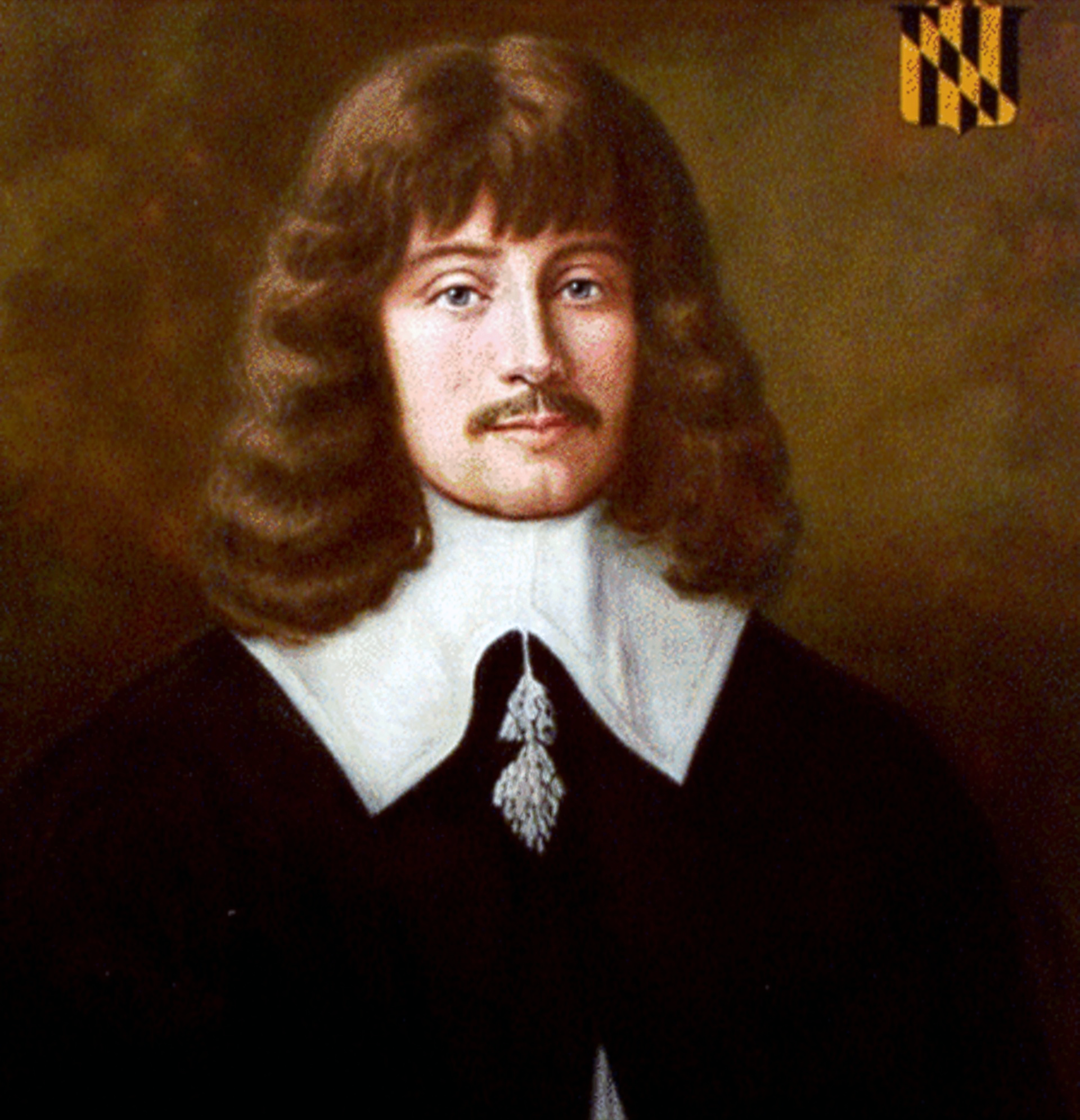
In 1638, Leonard Calvert wrote to his brother Cecil from Maryland about the possibilities and perils of acquiring local birds, beavers, and wildcats to send to England.
Leonard had procured a red-plumed bird, but a servant had accidentally let it out of its cage. Cecil had received the beavers, but the ‘lion’ (a bobcat or mountain lion) had died – though ‘if I can get another I will send it you’. Catching local animals was difficult for colonists who lacked the resources and specialist knowledge. ‘I have no cage to put [the birds] in when they be taken,’ one of Calvert’s agents insisted, ‘nor none about me dextrous in the taking of them, nor feeding of them’; and anyway, he was too busy trying to survive.
The patrons in England who scrambled to acquire a spotted bobcat or crested cardinal from their agents in Maryland were ultimately reliant on the Indigenous inhabitants in and around colonial settlements. The English Jesuit Andrew White wrote about his attempts to learn Algonquian after he arrived, which would help him to establish relations with the communities around him, furthering his project of conversion.
Rivalries, alliances, and diplomatic exchanges with different groups, including the powerful Piscataways and Susquehannocks, influenced whether beavers and birds were transported across the Atlantic. Before a canoe came to hang in a cabinet of curiosities, English settlers went into Indigenous villages, conducting exchanges on Native terms.
Because the colony was Catholic, treatises about Maryland circulated among prominent Catholics at Charles and Henrietta Maria’s court; others were translated into Latin and sent to Rome. In Latin versions, colonial promoters highlighted their pious aims of creating a multicultural settlement founded on the Catholic faith. For investors in London, the emphasis fell on the hickory nuts, fox coats, and crested, ruby-red birds that could be sent to fill those little rooms back home.
For many English people, the parrots, marmosets, guinea pigs, and squirrels that survived transatlantic voyages were viewed as exotic animals. In Indigenous environments, however, animals were not property or mere curiosities. Their distinct roles and contributions to Indigenous life depended on place, on the lands they came from.
In the stories of some Eastern Woodland groups, such as the Haudenosaunee and Lenape, North America was formed when water animals such as Muskrat put some earth on the back of a turtle who grew and grew, giving Turtle Island its name. In Mesoamerican, Caribbean, and Amazonian societies, notions of kinship and predation structured human attitudes towards a range of different species.
The particular qualities of animal matter had a ‘transforming capacity’, as when elite jaguar and eagle warriors in Mexica society wore the pelts of animals to absorb their individual prowess and access desirable essences, such as courage. Regalia used in community events incorporated parts of other-than-human animals that could not be eaten, such as feathers, bone, or quills, enabling absorption in other ways.
The activist Manari Ushigua (Sápara) recalled his father teaching him about the red-eyed spirit that dwelled among the arao, a species of parrot, in the Ecuadorian Amazon. This ‘lord of all the species of arao’ moved through the mountains while protected by ‘thousands, thousands and thousands of birds, thousands and thousands of parrots’; birds were guardians with special access to travelling spirits.
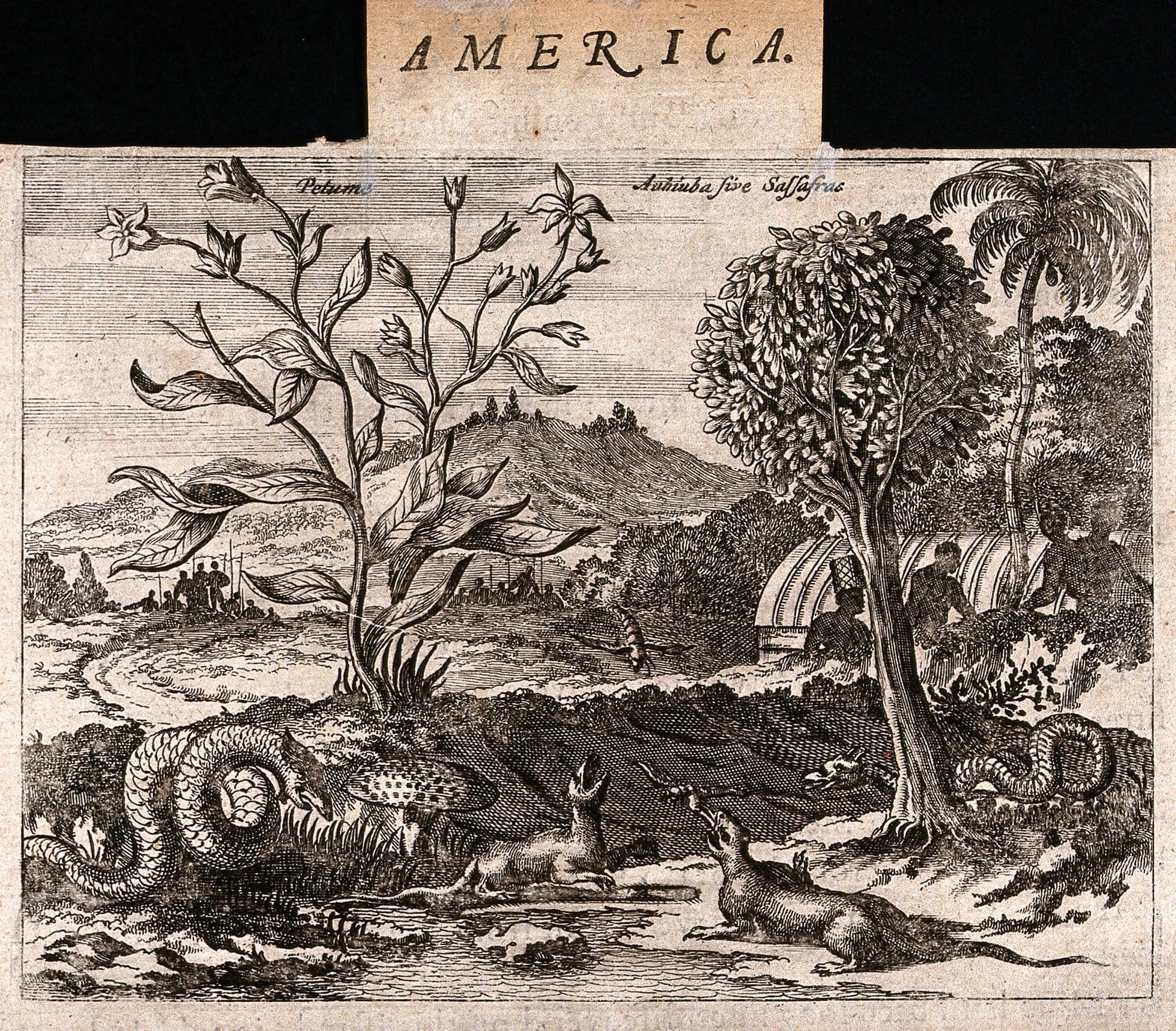
While wearing raptors’ feathers or claws was a means of manifesting predatory qualities, Mesoamerican communities adopted parrots as beloved pets. Their feathers were used to access other avian qualities, such as beauty and transcendence.
Europeans’ emerging interest in acquiring parrots as pets might owe something to Native practices of adopting birds as kin. European travellers mostly obtained parrots through Indigenous assistance and trade, relying on technologies and practices of capture and taming that had been developed over centuries by those who knew the environments best. As one historian has put it, parrots crossed the Atlantic with ‘elements of the [Indigenous] mode of incorporation in tow . . . not just as tabula rasa animals, ready to be made over into European pets, but rather already tamed and trained, already made into kin’.
The Atlantic animals in Tudor and Stuart England were evidence of the disjuncture that had taken place when Europeans disturbed ecosystems for their own profit, taking more than they needed.
When visitors entered Tradescant’s Ark to witness its global curiosities, they were encountering the world in a room – but at a cost, having disrupted the equilibrium of the communities from which such flora and fauna had been taken.
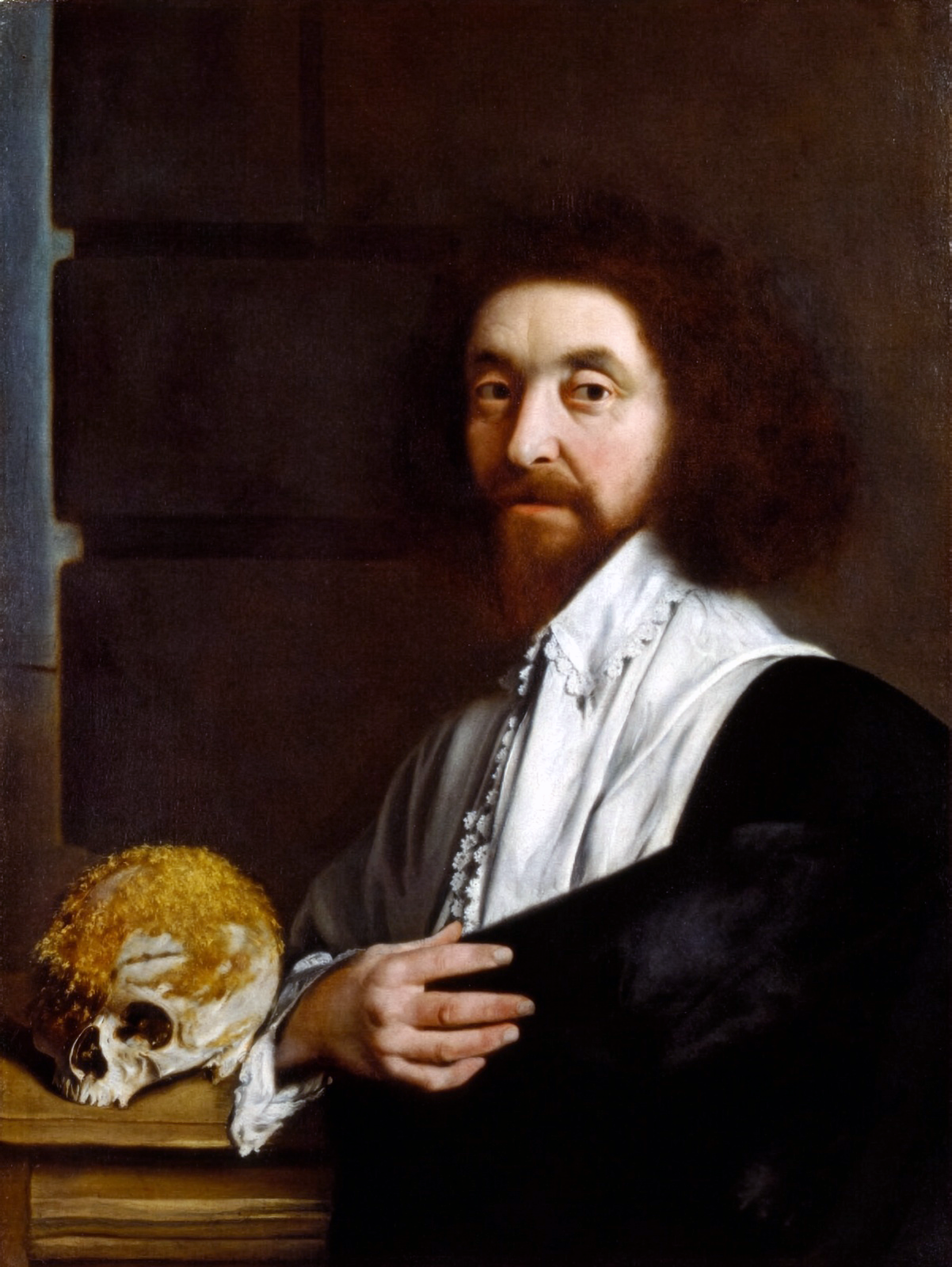
Not long after Charles I’s accession to the throne in 1625, the Ferrars, a family of prosperous merchants entrenched in Virginia Company affairs, moved to a manor in Huntingdonshire, pursuing lives of rigorous study and religious contemplation. At their ‘Little Academy’, family members – women and men, children and grandparents – engaged in lengthy debates, coming together to discuss topics they had researched in advance.
On one such occasion, John Ferrar’s niece, Mary Collett, argued that the European invasion of the Americas had become a Pandora’s box, unleashing an assortment of evils despite intentions for good. To her, the desire to possess and acquire lay at the heart of the whole debacle.
‘We receive only strange shaped beasts & glorious feathered Birds,’ Collett insisted, all at a terrible cost, for Europeans had ‘compassed the whole Circumference of this Earthly Globe, & ransacked every obscure & hidden corner thereof ’, all for the sake of ‘Commodities’ – here we can imagine her pausing with a rhetorical flourish – ‘or rather Calamities’.
The worst example of all, she stressed, was tobacco, which the English took ‘with a kind of Absolute Necessitie, as though Life & Livelines[s] were depending thereon’.
Collett knew that the European fascination for collecting the Americas permeated more than princely cabinets. Those who could afford it now sought an everyday reality augmented by dizzying colours, foreign intoxicants, and gloriously feathered birds.
The search for life and liveliness itself was not rooted in spiritual matters, but dependent on colonial intervention. Meanwhile, alongside the opulence and glitter of the most valued luxury assemblages, turkeys, tobacco leaves, and Algonquian earthenware trickled into Tudor and Stuart chambers. From Jamestown in 1608, Francis Perkins sent home turtle doves, two Algonquian ‘pots of our ordinary earth’, an ‘ear of the native wheat’ (a corncob), and twelve pounds of sassafras ‘to use in medicines or between linnens’.
Little by little, whole realms of Native practice and knowledge contributed to colours, scents, and movements in domestic spaces. Iridescent parrots, having been taken and adopted by Indigenous communities before they entered into English households, were dressed in ruffs.
In medicine cabinets and closets where servants stored linens, sprigs of Chesapeake sassafras wafted through, mixing the scent of sugary spice with oak, lingering on the fabrics that people wore to bed •
A Golden World: How the Americas Transformed Renaissance England
Faber, 4 June, 2026
RRP: £22 | ISBN:979-8897100248
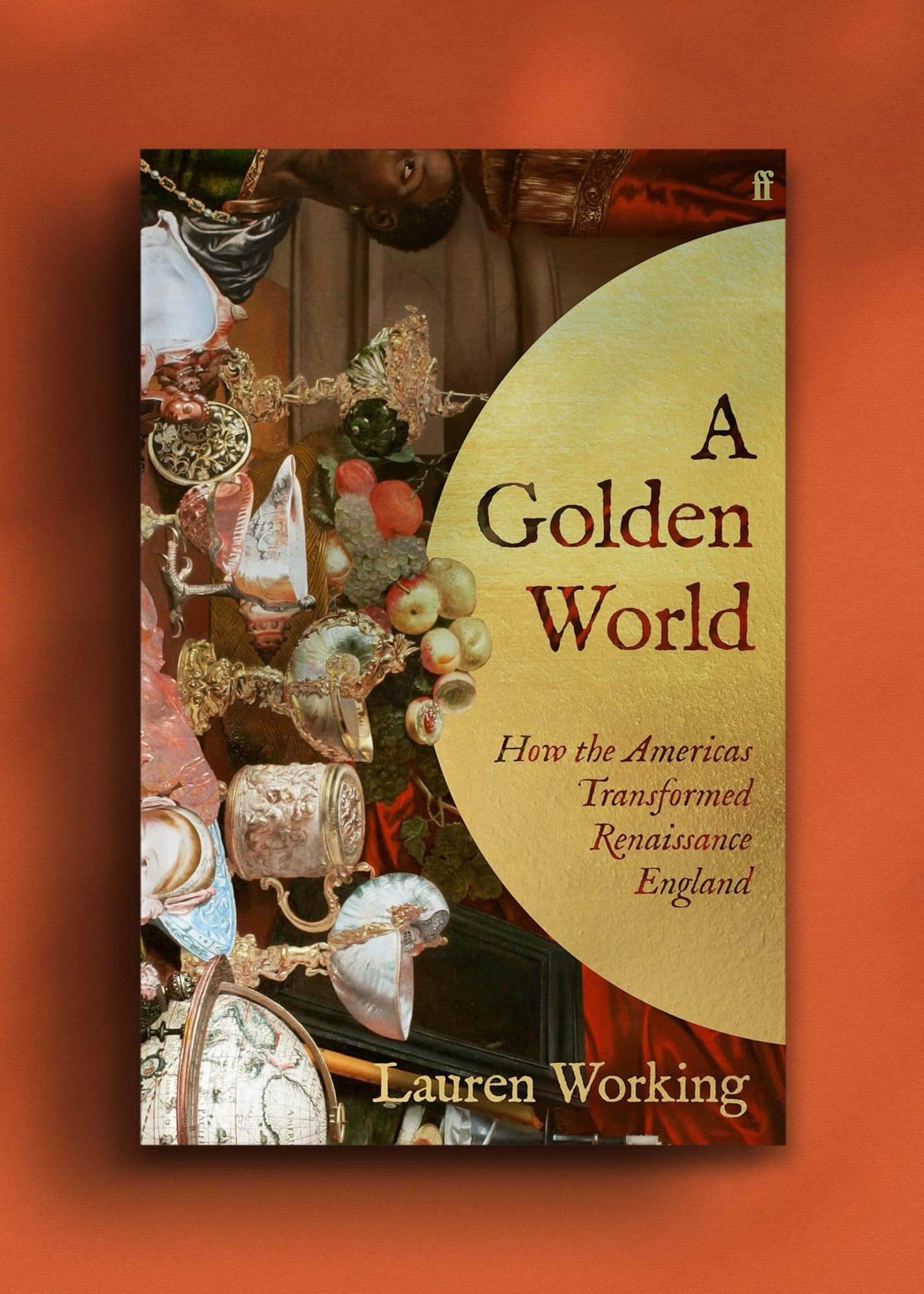
A glittering new history of how the Americas transformed the Tudors and Stuarts that provides a fresh understanding the cultural exchange between the 'Old' and 'New' worlds.
From rumors of lost Amazonian cities of gold to the silver running through the mountains of Bolivia, hopes for dazzling wealth fueled the imperial fantasies of the Tudors and Stuarts. Stories of treasure ships and the feats of privateers from Francis Drake to Walter Raleigh have become entrenched in myth and legend – but what did Elizabethans actually know about Mexico, the Amazon Rainforest or the Chesapeake? How did Indigenous people and their knowledge enter the art, fashion, and literature of Shakespeare's time--and at what cost?
From tobacco leaves strewn in playhouses on the Thames to a bejeweled 'Indian hat' carried on the back of a wandering peddler in the English countryside, A Golden World uses tangible history and artefacts to illuminate the unexpected ways that the Americas and its people became a visible and material presence in English culture in the first era of colonization.
Showcasing Indigenous perspectives through texts and materials created by Native writers, elders, and artists, and bringing Aztec jaguars, blue-green Colombian emeralds, and feathered garments knotted by Indigenous hands in conversation with love poetry, baroque portraits, and plays about shipwrecks, this award-winning historian presents an altogether new history of the 'golden age' of the Tudors and Stuarts, shedding light on the craft and labor of those in the Americas who contributed to the English Renaissance as we know it, and investigating what this means for heritage today.
While England's fascination with eastern powers has been more readily acknowledged, A Golden World focuses on how Atlantic colonization provides a distinct and crucial part of this cultural history. From sight and sound to touch and taste in the 'golden age' of Shakespeare, Lauren Working gives new insight into the dynamics of power and desire for lands and resources in the Americas and how it changed the course of history.
With thanks to Raminta Uselytė.
📸 Dive into our Features
🎤 Read Interviews
🎧 Listen to Podcasts
🖼️ Buy fine art prints & more at our Store



