
Napoleon III and the Disastrous Battle of Sedan in 1870
Edward Shawcross traces the course of the Battle of Sedan in September 1870, a defeat that would spell the end for the Second Empire.


September 1870 brought one of the bleakest moments in the history of France, when the forces of Emperor Napoleon III were routed at Sedan in the Ardennes during the Franco-Prussian War.
In this excerpt from his book, The People's Emperor: The Unlikely Rise and Spectacular Fall of Napoleon III, the author Edward Shawcross revisits this dramatic moment.

Louis-Napoléon, the nephew of Napoléon Bonaparte, became, age forty, the first directly elected president of France in 1848. In power, he outmanoeuvred his opponents to rise higher still. He launched a coup d’état on 2 December 1851 against the French Republic he had sworn to defend.
Exactly one year later, he realised his oft-mocked dream and proclaimed himself Emperor of the French – Louis-Napoléon became Napoléon III. The first time as tragedy, the second time as farce, or so Karl Marx put it. But for millions of French people, there was nothing farcical about the Second Empire, the name of the regime Louis-Napoléon created. As one of the most powerful men in the world, the emperor transformed France and reigned longer than his uncle – longer than any French ruler since Louis XV, who died in 1774.
It was not domestic policy that led to Louis-Napoléon’s downfall, but rather foreign affairs. In 1870, France declared war on Prussia and its German allies, beginning the Franco-Prussian War. Though old beyond his years and suffering from a legion of agonising ailments, Louis-Napoléon insisted on commanding the army in person.
It was a disaster. The Germans invaded and the French lost one battle after another. Relinquishing command, but staying with the army, the emperor found himself and his forces at the small town of Sedan, in northeastern France, about to be encircled and outnumbered two to one by Prussia and its allies.
As one of the emperor’s generals, Auguste-Alexandre Ducrot, noted with Gallic charm, ‘We are in a chamber pot, about to be shat upon’.
– Edward Shawcross
For references please consult the finished book.
An ambush in Bazeilles
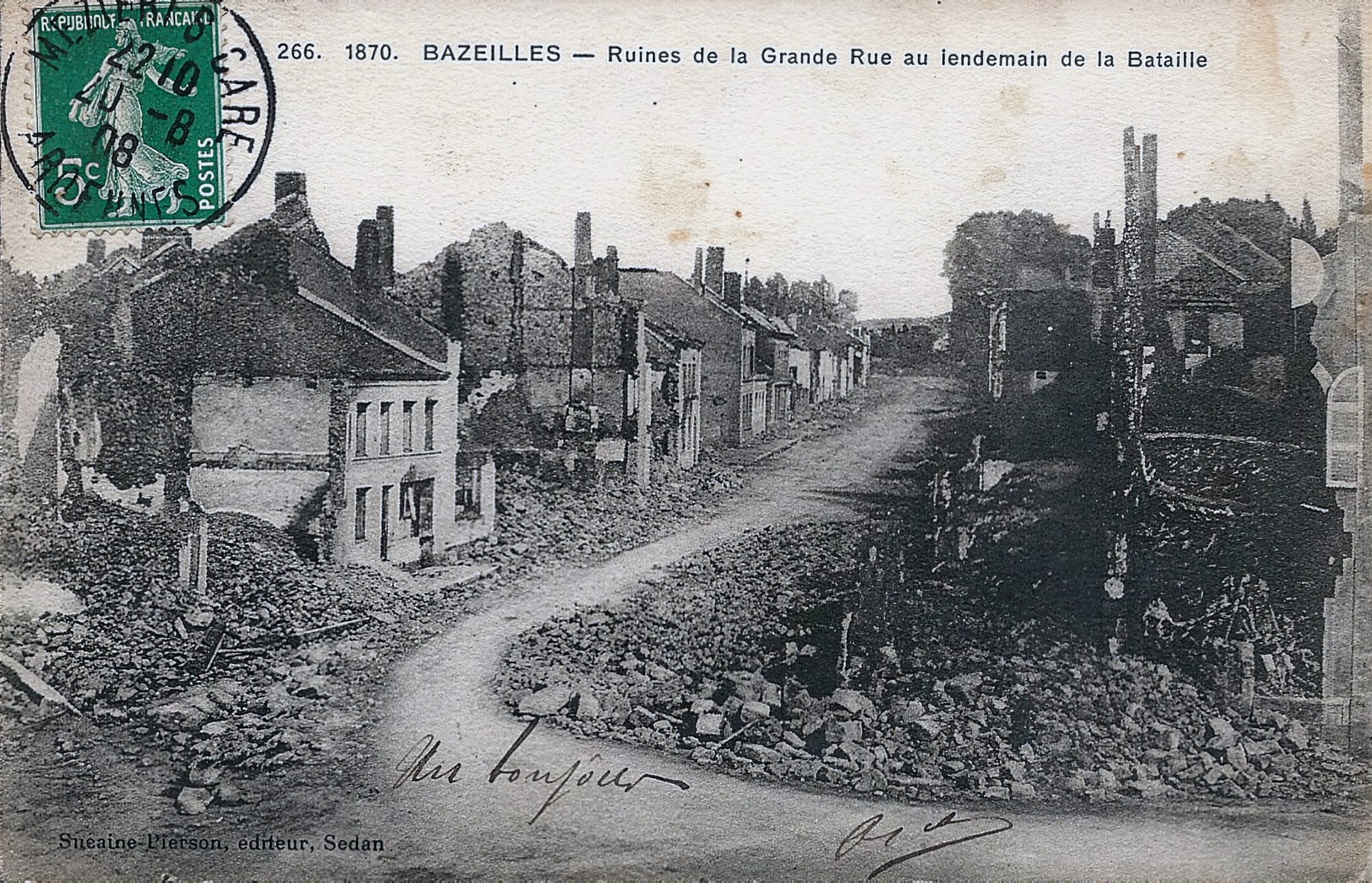
Before dawn on 1 September 1870, under cover of darkness and thick fog, Bavarian troops rushed unseen along the main street leading into the small village of Bazeilles, to the south-east of Sedan. Believing they had taken their objective without a struggle, some of the Bavarians cheered. Then came rifle fire from fortified stone buildings. Half of the first Bavarian platoon fell dead or wounded. The Bavarians had blundered into crossfire laid down by experienced, highly trained French marines drafted into the army.
They were not the only defenders. Many inhabitants were armed and, as one Bavarian officer noted with disgust, had the temerity to protect their homes: ‘even women took part in the battle and brazenly brandished shotguns’. Shells smashed into the houses and streets, setting much of the village ablaze.
Other fires were started deliberately as Bavarians smoked out the enemy in house-to-house fighting. After the attackers stormed one home, a civilian surrendered; a Bavarian raised his weapon and executed him. Fighting their way into another, the Bavarians found the stairs blocked by a woman with a child in her arms. She swore there was no one on the floor above. After hearing a noise, the soldiers barged past and ran into a room littered with rifle cartridges just in time to see men escaping over rooftops. By the time they got downstairs, the woman had gone, which was just as well, as one Bavarian soldier noted, ‘because the murder of a woman could probably not have been ruled out’.
When he heard there was fighting at Bazeilles, the French commander, Marshal Patrice de Mac Mahon, mounted his horse and galloped towards the sound of the guns. Amid the rubble, fire and smoke, the marshal saw that the marines were holding the village; then a shell exploded near him, a fragment flying into his leg.
As he dismounted his horse, the pain made him lose consciousness. When he regained it, he was in no state to command and designated General Ducrot in his place. Not that Mac Mahon shared with Ducrot what his plan was, possibly because he did not have one.
Determined not to be shat upon, Ducrot ordered a breakout towards the west, abandoning Bazeilles. When the marines heard they were pulling out, they could not believe it. Not only had they held the enemy, inflicting devastating casualties, but they were taking back positions lost earlier.
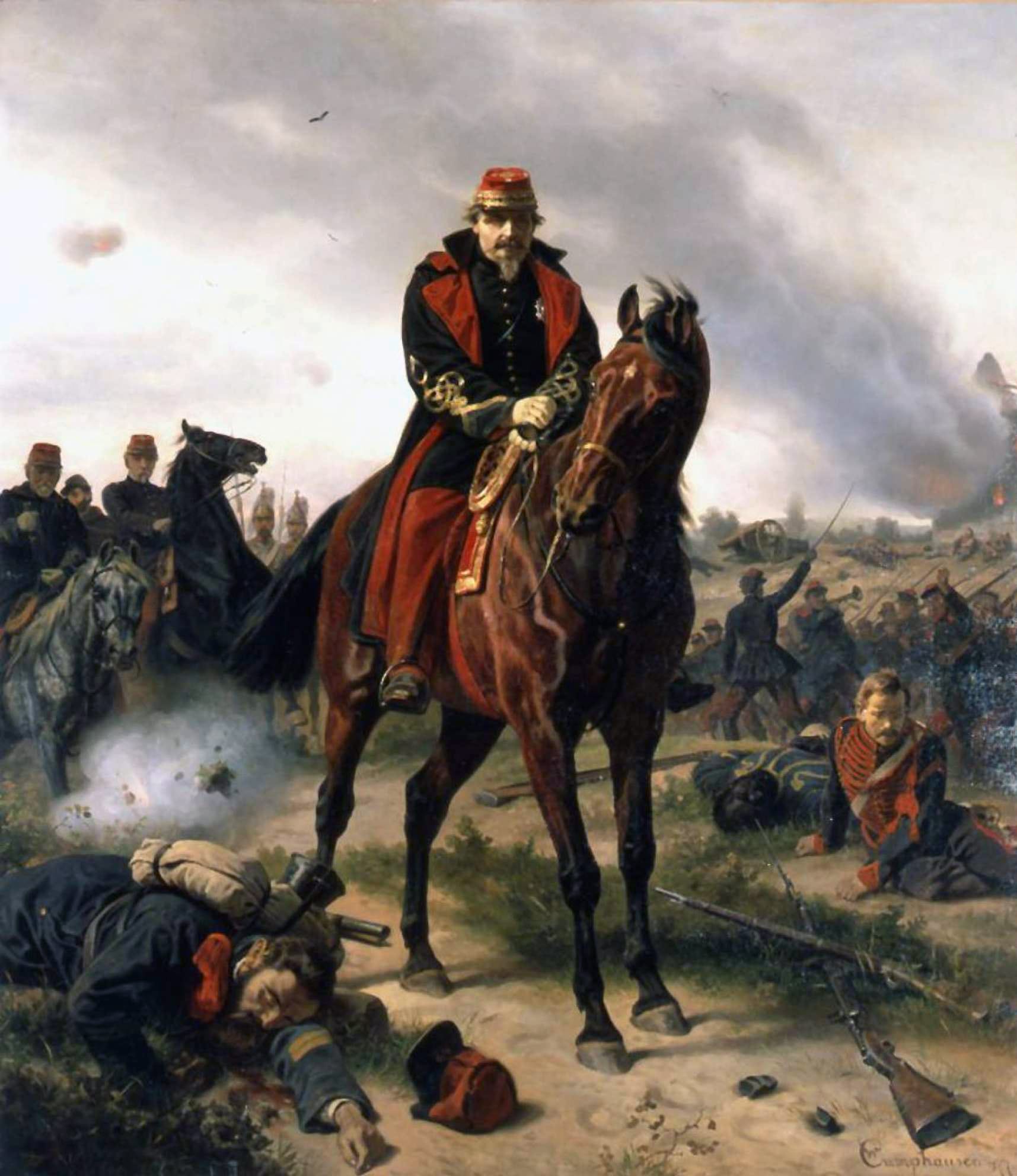
When Louis-Napoléon heard that Marshal Mac Mahon had been wounded, he was getting dressed. As the officer explained what had happened, two large tears rolled down the cheeks of the emperor’s pale face.
What came next was even more painful: he mounted his horse. Knowing the discomfort this would cause, he had towels stuffed into his underwear to ease the distress and soak up the blood from his haemorrhoids. Riding stiffly, he led his entourage towards the fighting to rally his troops.
As he made his way, he passed Mac Mahon as he lay wounded in a wagon coming in the other direction. After a brief exchange, the emperor rode on. Beyond the city walls, sheltering by a brickworks with his entourage, Louis Napoléon watched the fighting retreat. Bullets hissed past, smashing into a wall behind them; shells exploded all around. Then the emperor turned to his staff, commanding them to shelter in a narrow lane nearby. He wanted to ride to high ground and survey the battlefield.
With cool resignation, and chain-smoking, Louis-Napoléon advanced through the storm of iron and lead towards an exposed artillery battery. The weather was now splendid, with a bright sun replacing the morning mist. Below, the emperor could see the enveloping movements of the German armies, bayonets glistening and forests of spiked Prussian helmets on the move, rushing into positions to encircle the French.
Whatever his qualities as a general, Louis-Napoléon could see that soon there would be no escape and he was astonished that the order had been given to retreat from the one direction where it looked like a breakout might be possible. He sent an aide to Ducrot, asking the general to explain what he was doing – but not only did it no longer matter what the emperor thought, now it did not matter what Ducrot thought either.
In Paris, the minister of war could not understand Mac Mahon’s dithering and defeatist talk. Convinced that enemy forces were only a small advanced guard rather than massive numbers, the regency in Paris sent General Emmanuel Félix de Wimpffen to Sedan.
A warrior of the old school, Wimpffen could be relied upon for an impetuous attack whatever the circumstances. Unbeknown to anyone else, he had in his pocket a piece of paper naming him commander in the event of anything happening to Mac Mahon.
Just before 9 a.m., Ducrot received word that Wimpffen had taken over – the third commander in as many hours – and was countermanding the orders the army had been following. Instead of moving west, Wimpffen wanted to exploit the Bavarians’ weakness at Bazeilles and press an attack eastwards.
Ducrot was furious. He galloped across the battlefield to find Wimpffen. ‘In the name of the salvation of the army,’ pleaded Ducrot, ‘I implore you to allow the retreat to continue. In two hours it will be too late.’ An unedifying argument ensued, but Wimpffen held firm. ‘What is needed’, he said, ‘is not a retreat, but a victory!’
‘Ah! You need a victory?’ retorted Ducrot. ‘We will be very lucky if we even have a retreat by this evening.’ With that, he rode off.
Once again, Louis-Napoléon was worried. Though he thought breaking out through Bazeilles the better plan, he was somewhat alarmed, to say the least, that after trying to carry out the exact opposite manoeuvre, the order of battle had now been completely changed. ‘Don’t worry about it, your Majesty,’ replied Wimpffen after the emperor had voiced doubts; in two hours, the general insisted, the enemy would be thrown into the river.
‘Please God’, murmured an officer in the imperial retinue, loud enough to be heard, ‘that it is not we who are thrown there!’
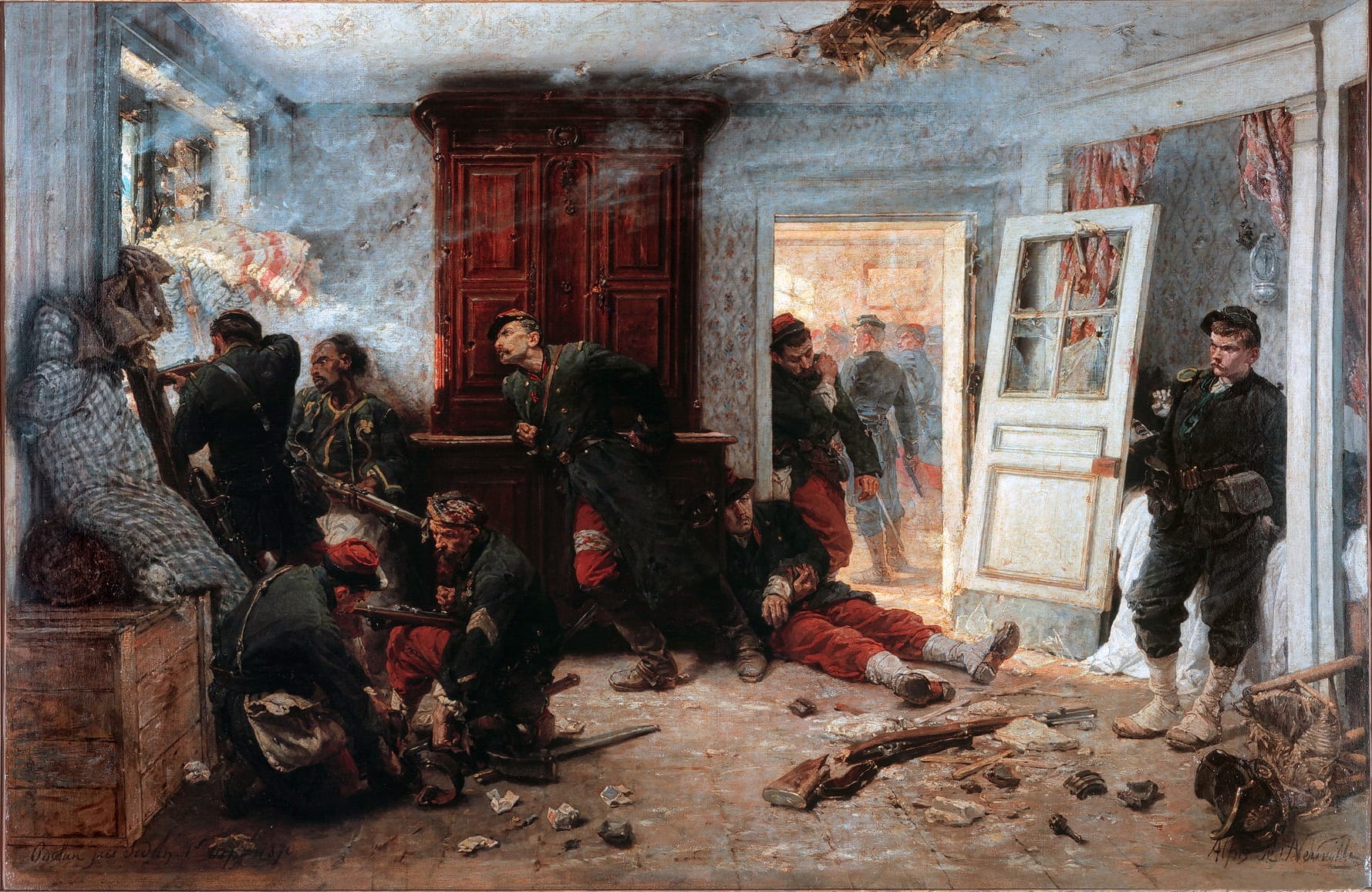
Fire, rubble, dead bodies: Bazeilles was an inferno. Most of the French soldiers had got out, but some were still holed up, fighting against overwhelming odds. In one fortified mansion, marines held back swarms of Germans with bayonets and rifle fire.
But as soon as one enemy soldier fell, another clambered over the dead body and charged at the house. Inside, sabres and bayonets clashed, bullets pounded into masonry and walls collapsed under artillery fire, though this cacophony did little to drown out the screams.
Seeing they could no longer hold on, a few surviving Frenchmen dashed onto the main road. As comrades laid down covering fire, they fell back on the last remaining house in the village held by the French.
Here, they beat off wave after wave of attack. After four hours, and having rummaged through the packs of the wounded and dead, the French were out of ammunition. A captain symbolically fired the last round at the enemy before the beleaguered men emerged under a white flag. Only the presence of a Bavarian officer prevented executions.
Others were not so lucky. With the French gone, the Bavarians unleashed their fury. They torched the few remaining buildings not on fire – asphyxiating, among others, a father and his thirteen-year-old daughter, who were hiding in their cellar. Those who came out of their houses were beaten, tied up and marched off to the train station.
One Bavarian recounted the fate of a woman caught with a weapon in hand. ‘She was seized by a patrol and forcibly led towards the woods. A circle formed around [her]. Within it the soldiers worked.’ What the soldiers’ ‘work’ consisted of was left unsaid, but ‘after several minutes the circle opened; white clouds of smoke announced an execution’.
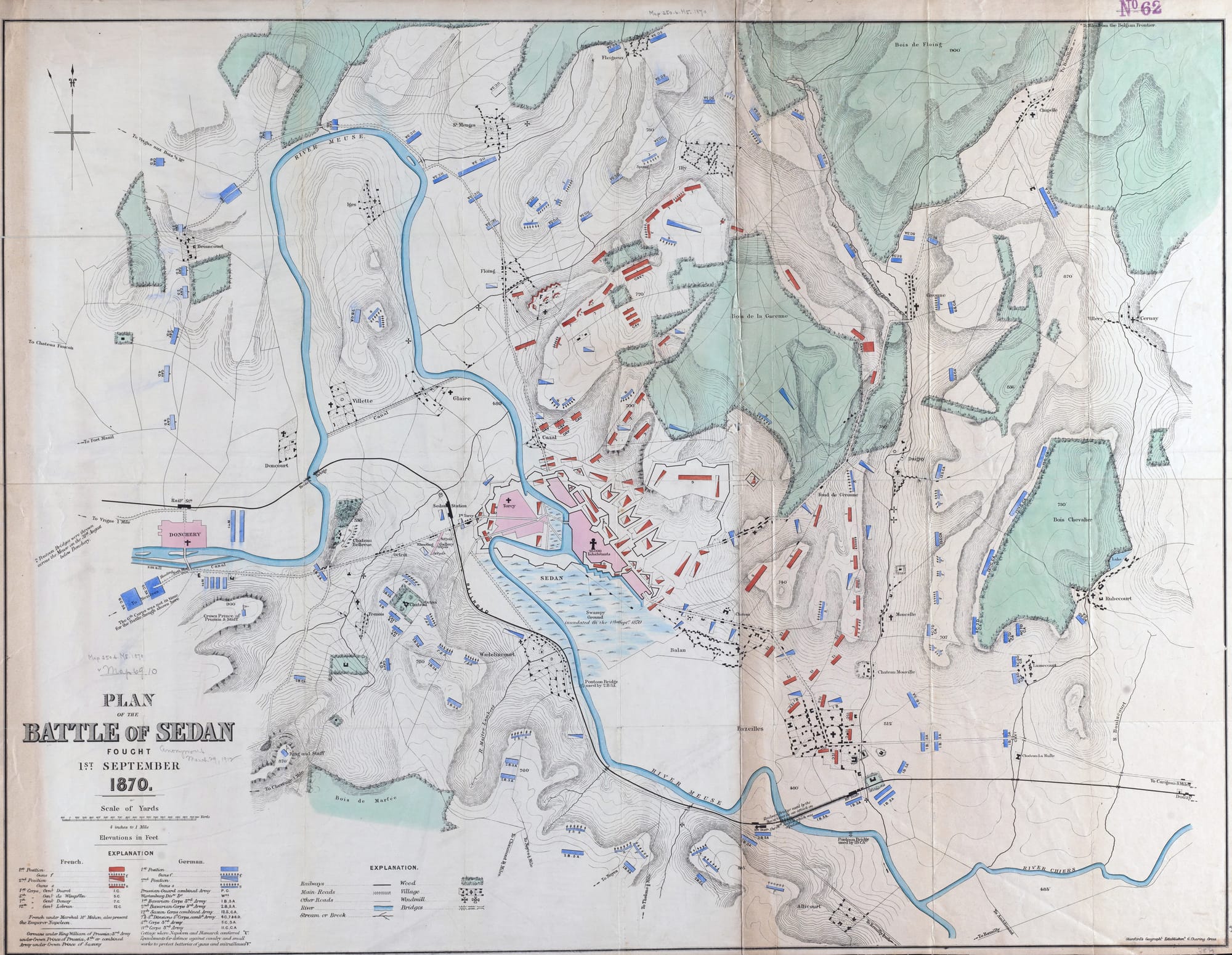
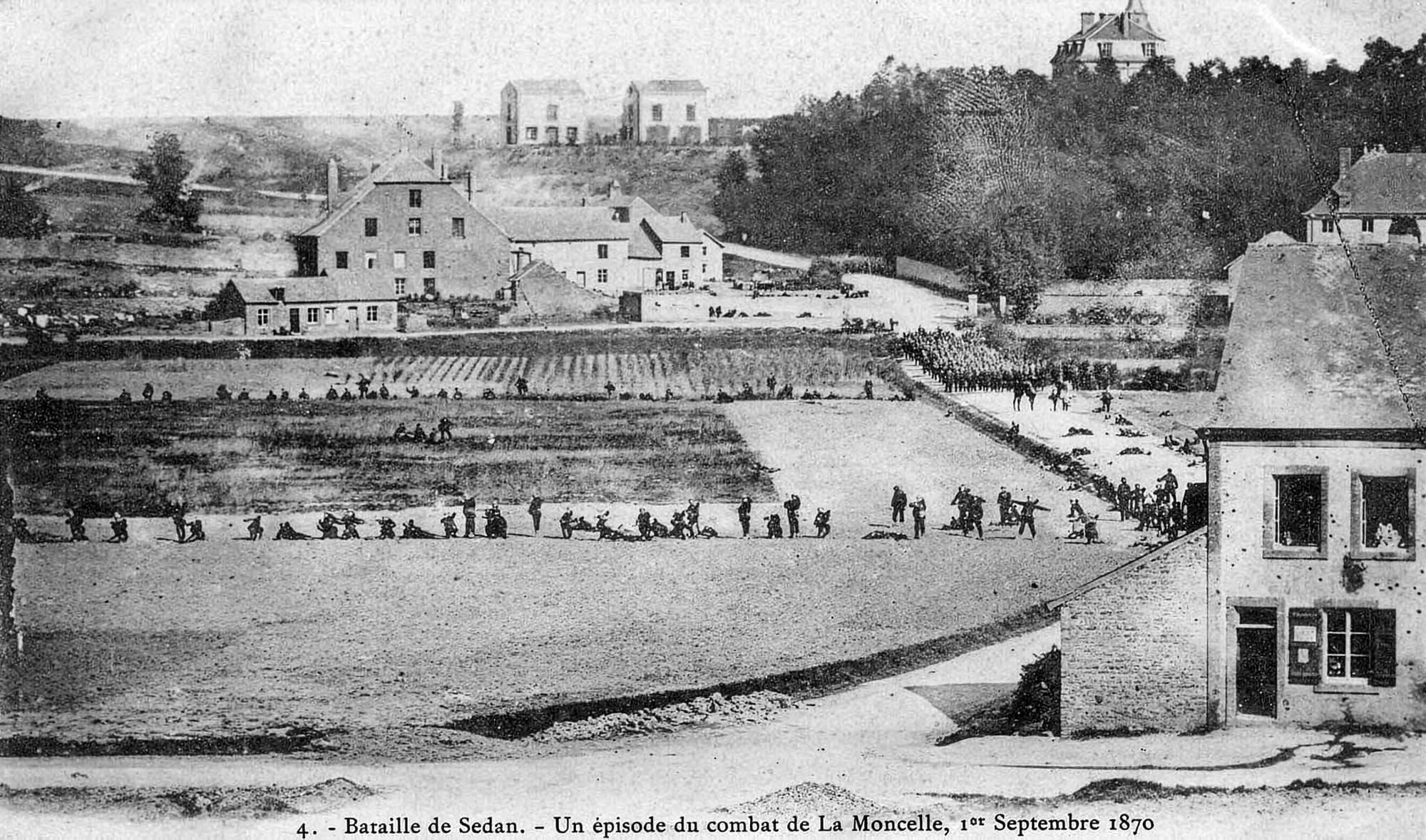
While the Bavarians were taking Bazeilles, the rest of the German forces completed the encirclement of the French army. With Mac Mahon’s, Ducrot’s and Wimpffen’s dithering, the day had turned into exactly what all three wanted to avoid: a defensive battle. Ordered to hold the triangle around Sedan, German artillery deployed on the surrounding hills pulverised the French infantry beyond the range of any reply.
Under this barrage, French infantry were supremely brave, lying down to minimise casualties, listening to the whistle of incoming fire and wondering if they were next to die. In one regiment undergoing this torture, the commander was stretchered away immediately when the first shells landed, barely breathing after shrapnel blasted a hole through his neck; another soldier died instantly, most of his skull removed, what remained of his head lying in a pool of blood.
Dreadful high-pitched screeches that hurt the ears were heard, before each earth-shattering detonation killed many more. After one such impact, a trembling officer opened his eyes to see his tunic stained with gore, brains and blood from the mutilated men next to him. Turning away from the horror, he saw his lieutenant colonel, who stood throughout the bombardment, grimacing with every explosion.
A captain screamed for help after a blast crushed his knee and tore open his thigh from top to bottom; his orderly was disembowelled by shrapnel. Others had heads, limbs, entire torsos blown away, resembling little more than a mass of flesh held together with their torn uniforms, which dripped with blood.
One young lieutenant stood up to order his men to stay lying down. Grapeshot smashed into him; he sank to one knee, then fell gracefully backwards without a word. His face was peaceful, as if dreaming, and his blond moustache glistened in the sun. If it had not been for the blood seeping out of two large wounds on his left side, he might have been asleep.
Finally ordered to fall back into a nearby wood after hours of bombardment, the regiment lost hundreds of men without firing a shot. With no further orders, surrounded on all sides, men headed for wherever seemed safest. By early afternoon, with defensive positions everywhere crumbling, the only place that seemed to offer shelter was Sedan.
With infantry melting away, Ducrot ordered a cavalry charge to hold what remained of the line. The officer charged with galloping downhill into massed ranks of Prussian infantry supported by artillery surveyed the hellscape below and saluted without saying a word.
While he was reconnoitring the terrain, a bullet hit the cavalry commander in the jaw. Somehow staying on his horse, with two aides supporting him on either side, blood streaming down his face, the general trotted back to his men, weakly raised one arm and pointed at the enemy.
‘Avenge him!’ came the cry as eighteen hundred magnificent battle horses with riders in resplendent uniforms, sabres raised, breastplates shimmering in the sunshine, started down the slopes towards the Prussians. An avalanche swept across the hill as the charge reached full speed in what looked like an unstoppable mass of men and horses. Facing it, the Prussians held their fire until the charge was two hundred yards away.
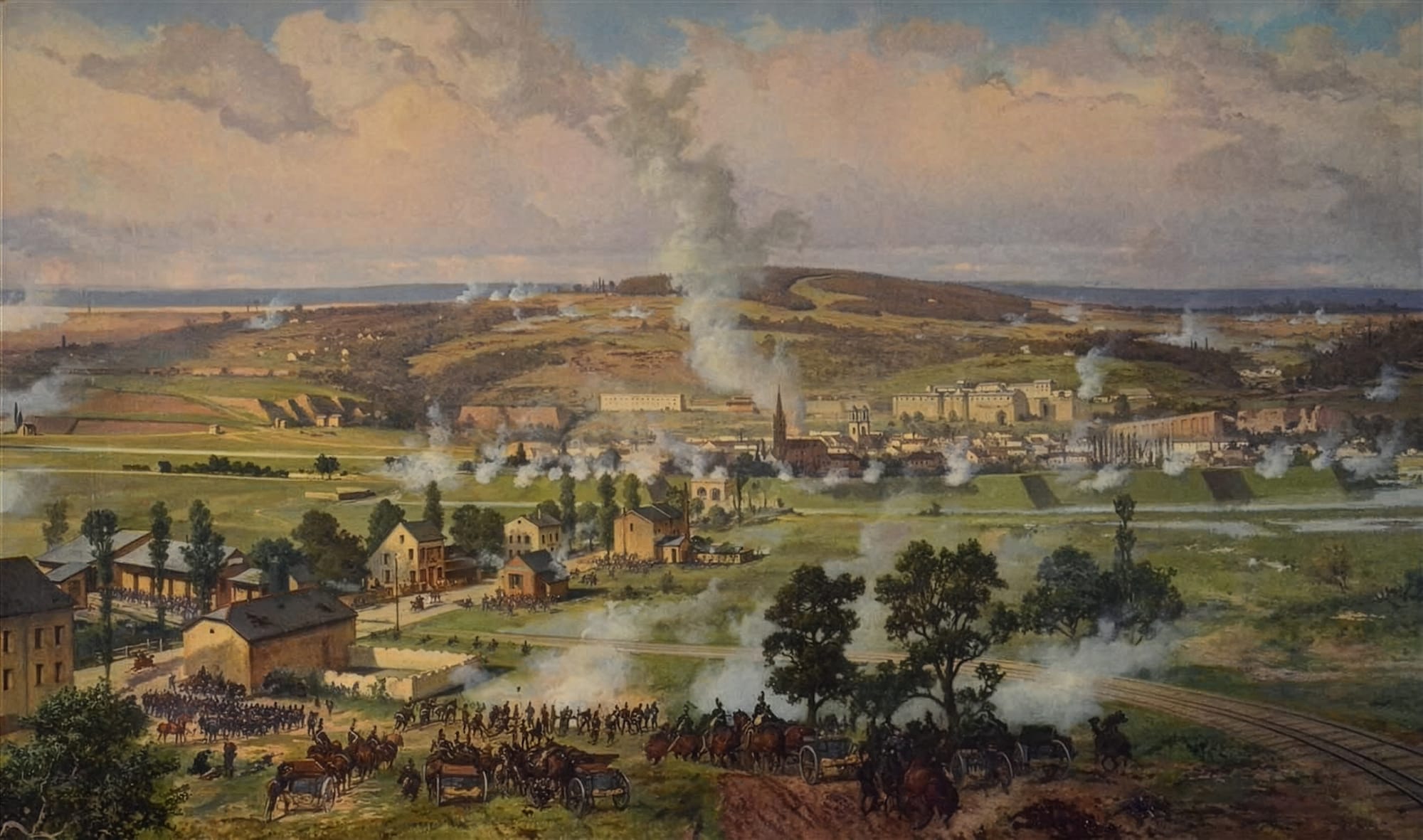
Shots rang out, and the front ranks of the cavalry collapsed, horses falling, men screaming, the rows behind tripping over the ones in front. Those who could rode off to the left and the right, leaving the Prussian infantry barely touched.
More charges followed, meeting the same fate. Rallying the returning survivors of what had been a massacre, Ducrot asked an officer whether they might try again. ‘As often as you like, mon général,’ came the cheerful response; but the courage of each attempt was matched only by its pointlessness.
One man who had not given up the fight, however, was General Wimpffen. Hastily, he penned a note to the emperor while under fire. Rather than be taken prisoner, the general wrote, he would break out through Bazeilles. ‘Let your Majesty come and place himself in the middle of his troops. They will be honoured to open a passage for him.’
The streets of Sedan were carnage as panicked soldiers poured into the town. Wagons, horses and men blocked the roads; shells exploded among them, setting buildings on fire. The wounded and the dead lay in the streets, skulls shattered, legs blown off bodies, disembowelled corpses barely held together with the red and blue rags that were once pristine uniforms.
Through this, Louis-Napoléon rode back to headquarters. A few paces away, a shell exploded, covering him in a shower of dirt. Another blast knocked several of his aides and their horses to the ground, leaving two dead. An abandoned wagon and its horse blocked the way across a bridge, forcing the emperor to stop.
Moments later, a shell landed in front of the wagon where the emperor would have passed, killing the animal. Despite constant danger, Louis-Napoléon had to go on foot several times, so painful was it to remain in the saddle. Finally, he made it to his headquarters.
Inside, Louis-Napoléon remembered that he was emperor. Ill, in mental anguish and broken by the enormity of events, he had doubted his judgement over the last few weeks. Now, though, he had had enough. He made a decision, a brave one, braver than his uncle in similar circumstances. After all, when faced with defeat, Napoléon Bonaparte ran away: from Egypt, from Russia and finally from Waterloo. Not the nephew: he would stay with his army and ensure what remained of his men would survive. Louis-Napoléon was going to surrender.
The emperor’s decision, however, went against the code of honour that ran deep in the French army officer corps. For many, it was cowardice. Explosions all around him, picking his way through the debris of a routed army and terrified civilians, as shells crashed into buildings, the man charged with taking the white flag to the citadel stumbled on, crying with shame, ‘Me! Me! The grandson of a marshal of France!’
But when raised, the flag did not stop the murderous Prussian artillery. Inside the emperor’s headquarters, the army’s generals congregated. ‘I don’t understand’, said a bewildered Louis-Napoléon as shells landed in the garden outside, ‘why the enemy continues to fire.’
‘Under the laws of war,’ explained a kindly officer, ‘it is not, in fact, by raising a white flag that one requests an armistice.’
‘How’, asked the emperor dejectedly, ‘is it done, then?’
A formal request for a ceasefire, explained the officer, had to be sent to the enemy by the French commander-in-chief, Wimpffen, and he was nowhere to be seen. This was not, reasoned Louis-Napoléon, the time for labyrinthine military niceties. In desperation, he implored the generals who were there to sign in Wimpffen’s place.
‘Oh no, Sire, I cannot sign,’ came the repeated refrain from commanders who preferred to let their men die rather than affix their name to what they knew would be one of the greatest humiliations in French history. They were adamant: Wimpffen must sign.
Wimpffen, however, was on the front line, trying, almost single handedly, to win the battle. After sending his missive to the emperor asking him to join a glorious charge, the French commander-in-chief was going about his business with suicidal vigour, scraping together what men he could and throwing them into costly counterattacks.
It came as a surprise, then, when not only did the emperor not come, but one of his aides arrived and explained that he carried a message asking Wimpffen to surrender. ‘I will not read the letter, I refuse to negotiate,’ said Wimpffen before storming off. Not long afterwards, a general accompanied by a cavalryman carrying a white flag galloped up to him. Seeing the flag, Wimpffen flew into a rage. ‘No, no,’ he shouted, ‘I do not want a capitulation.’ Then he disappeared into the fray, beseeching men to join him.
Most refused, pointing to the white flag fluttering over the citadel, but he somehow managed to convince two thousand to fling themselves at the Germans. ‘Could we not still’, Wimpffen said with grim determination to an officer, having led his ragtag band down the road out of Sedan, ‘try to make a breakthrough?’
‘We certainly can,’ replied the officer. He pointed out, though, that it would end in failure and the sacrifice of more men. Still, ‘since you’ve suggested it, let’s march’. By now, nearly half the men Wimpffen had brought with him had disappeared. The orders were given and what remained of the Army of Châlons – an army that when it marched out of camp was over a hundred thousand men– and was willing to fight lurched in disorder down the road towards the thick, black smoke which spread like an immense cloud over the rubble that was Bazeilles.
Rifle fire from three sides cut into the ragged column. Men fell, the wounded crawled to the side of the road, others flung themselves into doorways or behind houses. Turning to look behind him, Wimpffen, with the weary resignation of a late-night drinker realising that everyone else has gone home, saw that no one was following him.
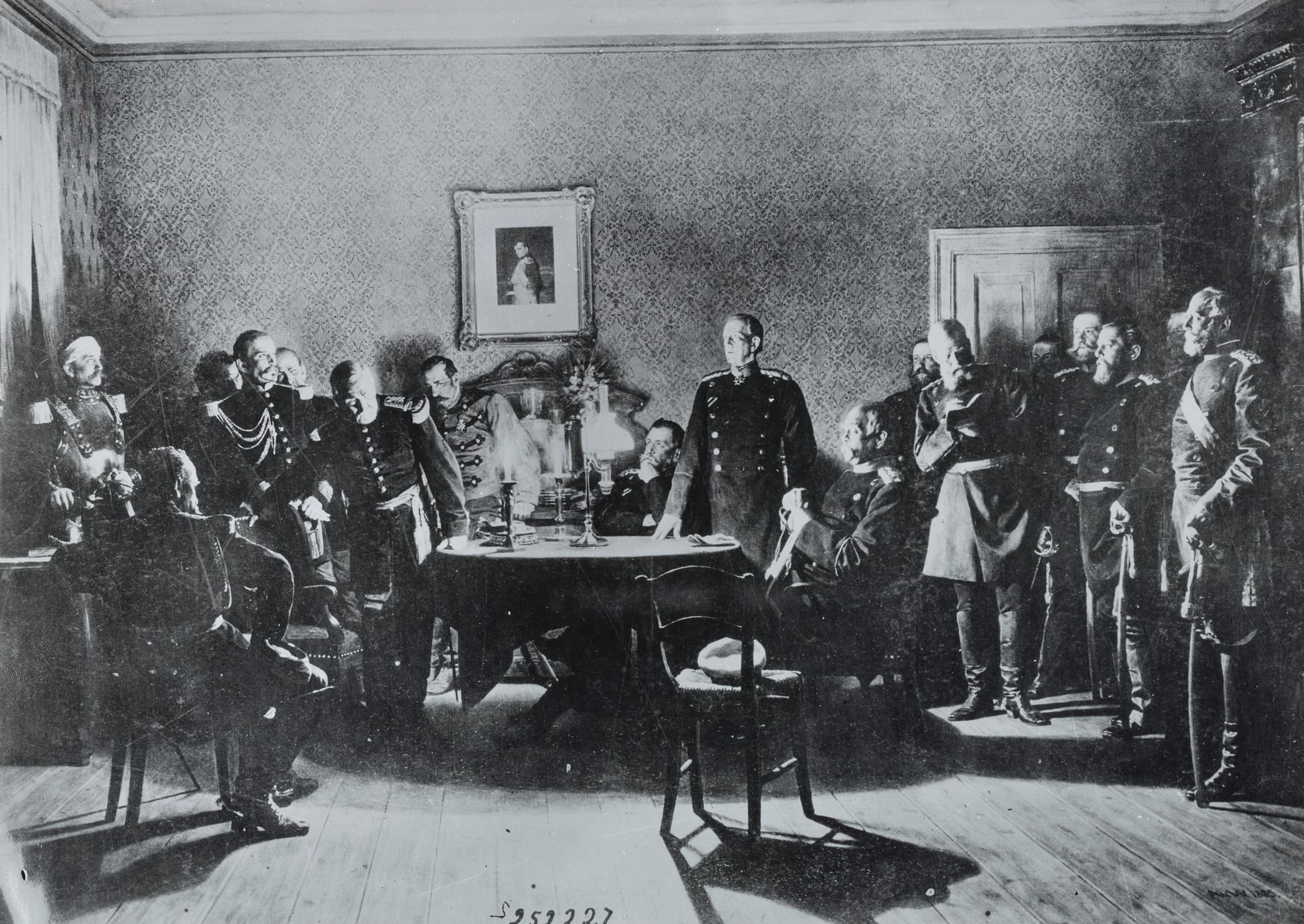
As the bullets whistled past, at 5.30 p.m. – over three hours after Louis-Napoléon first tried to surrender – Wimpffen finally accepted that he could not defeat two German armies on his own. He would not, though, put his name to the request for a ceasefire. Instead, he resigned. Louis-Napoléon then asked Ducrot to sign his name. He refused. As did all the other generals. Finally, Wimpffen was dragged into headquarters.
‘Sire, if I lost the battle, if I was defeated, it is because my orders were not carried out, it is because your generals refused to obey me,’ he exclaimed, striding towards the emperor, gesticulating wildly. Ducrot, who had been sitting in the corner, jumped up. ‘Alas!’ he shouted. ‘Your orders have been executed only too well. If we have suffered a dreadful disaster, more dreadful than anything that could have been dreamed, it is to your foolish presumption that we owe it.’
‘Well!’ said Wimpffen with the flourish of a man who sees a way out. ‘Since I am incapable, all the more reason for me not to retain the command.’ There then followed a furious argument, which nearly came to blows; other officers held the two men back while they screamed at each other.
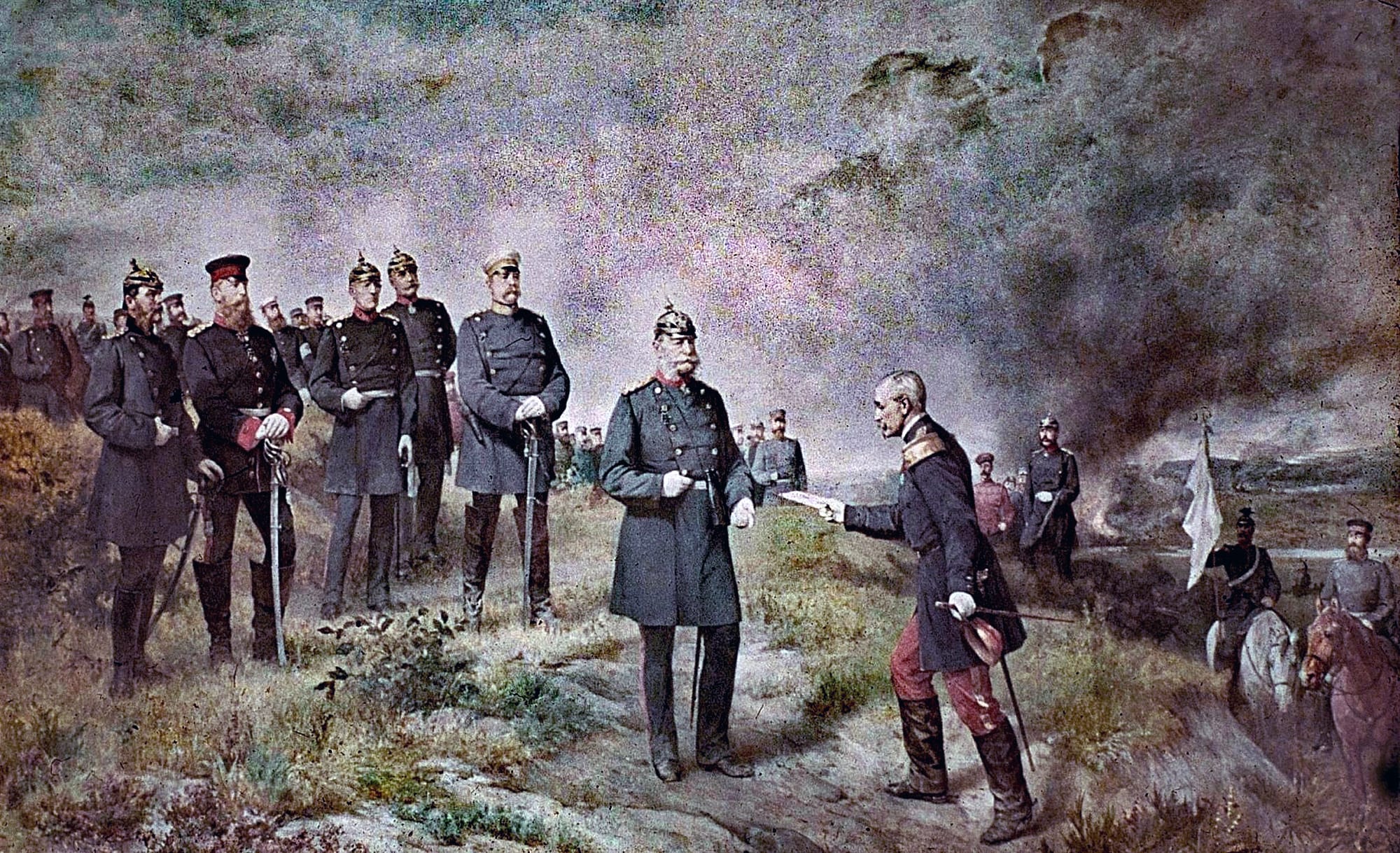
In fact, seeing that his generals were, if anything, worse at surrendering than they were at fighting, the emperor had gone direct to the King of Prussia. Noticing the white flag flying above the citadel, Wilhelm had sent an envoy to discover what it meant. ‘Having been unable to die amongst my troops,’ Louis-Napoléon explained in a letter given to the envoy for Wilhelm, ‘it only remains for me to place my sword in your Majesty’s hands' •
The People's Emperor: The Unlikely Rise and Spectacular Fall of Napoleon III by Edward Shawcross
Faber, 2 July 2026
RRP: £25 | ISBN: 978-0571361304
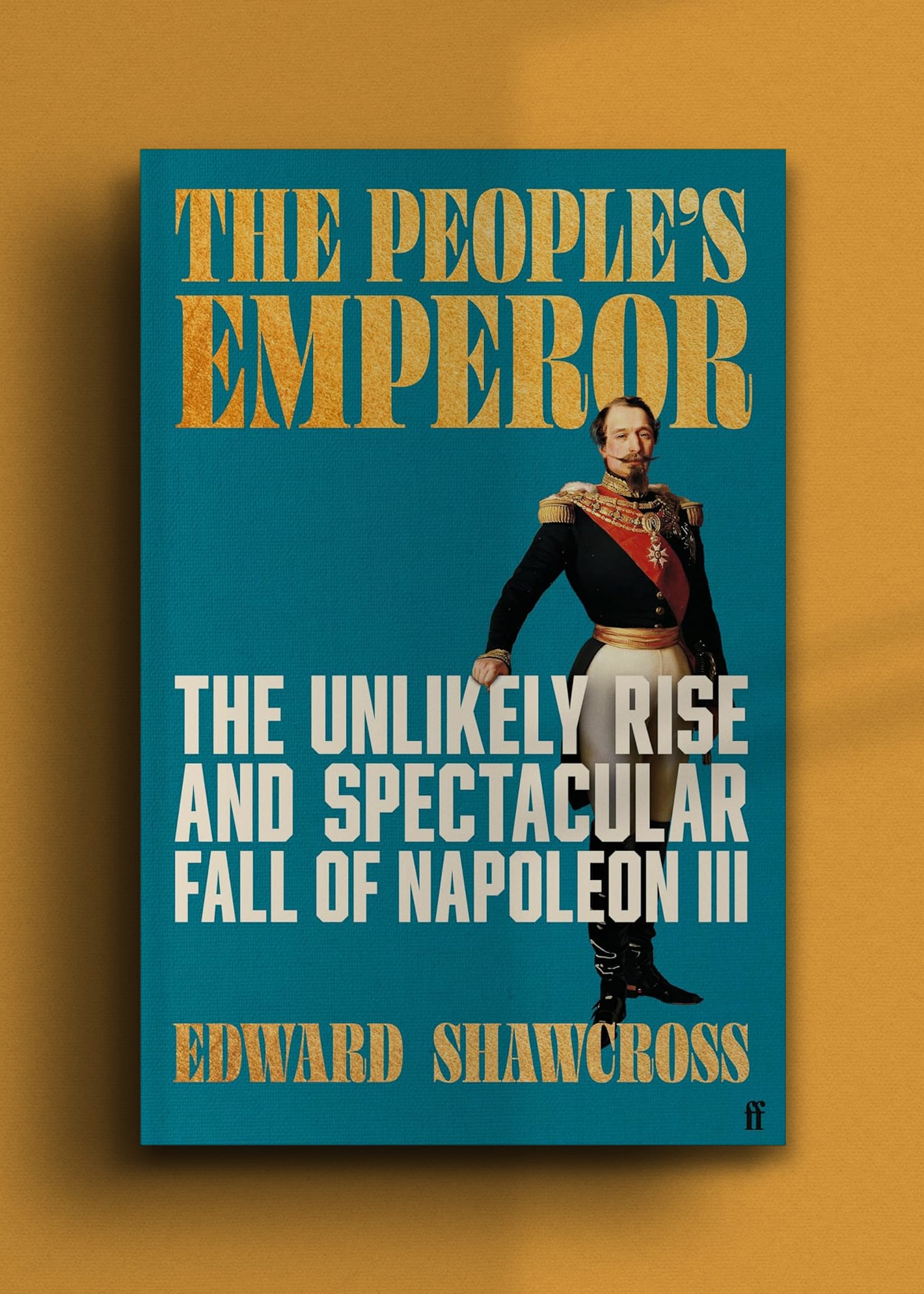
“Bold, brilliant and often bonkers, The People's Emperor is a thunderously good read” – Justin Marozzi
Born into imperial splendour, Louis-Napoléon - the nephew of Napoléon Bonaparte - grew up far from power after the defeat at Waterloo. In exile, he repeatedly plotted, unsuccessfully, to restore his uncle's empire. Few took him seriously.
But what followed is one of the most astonishing, impossible stories in history. Aged 40, Louis-Napoléon would be elected president of France. Three years later, he seized power to become emperor.
Napoleon III's story is one of self-belief, political skill and radical innovation - the first person to master mass democratic politics and populism. Yet, despite being one of the most important trailblazers of the nineteenth century, he is largely misunderstood today, if not totally forgotten.
His strange rise and catastrophic fall is a story of both tragedy and farce, set during some of France's most tumultuous decades.
With thanks to Raminta Uselytė.
📸 Dive into our Features
🎤 Read Interviews
🎧 Listen to Podcasts
🖼️ Buy fine art prints & more at our Store



.jpg?ref=unseenhistories.com)

.jpg?ref=unseenhistories.com)

