
The Chain Tower, the Siege of Damietta and the Fifth Crusade
Thomas Smith revisits a dramatic moment from the Fifth Crusade when the Christians besieged the port of Damietta.


In one of his last acts before his sudden death in 1216, Pope Innocent III oversaw preparations for the Fifth Crusade.
As ever the ultimate goal of this expedition remained the capture of Jerusalem and the possession of the True Cross. But this Crusade had an initial objective. It was first to capture Egypt, the breadbasket of Muslim power, before progressing to the Holy Land.
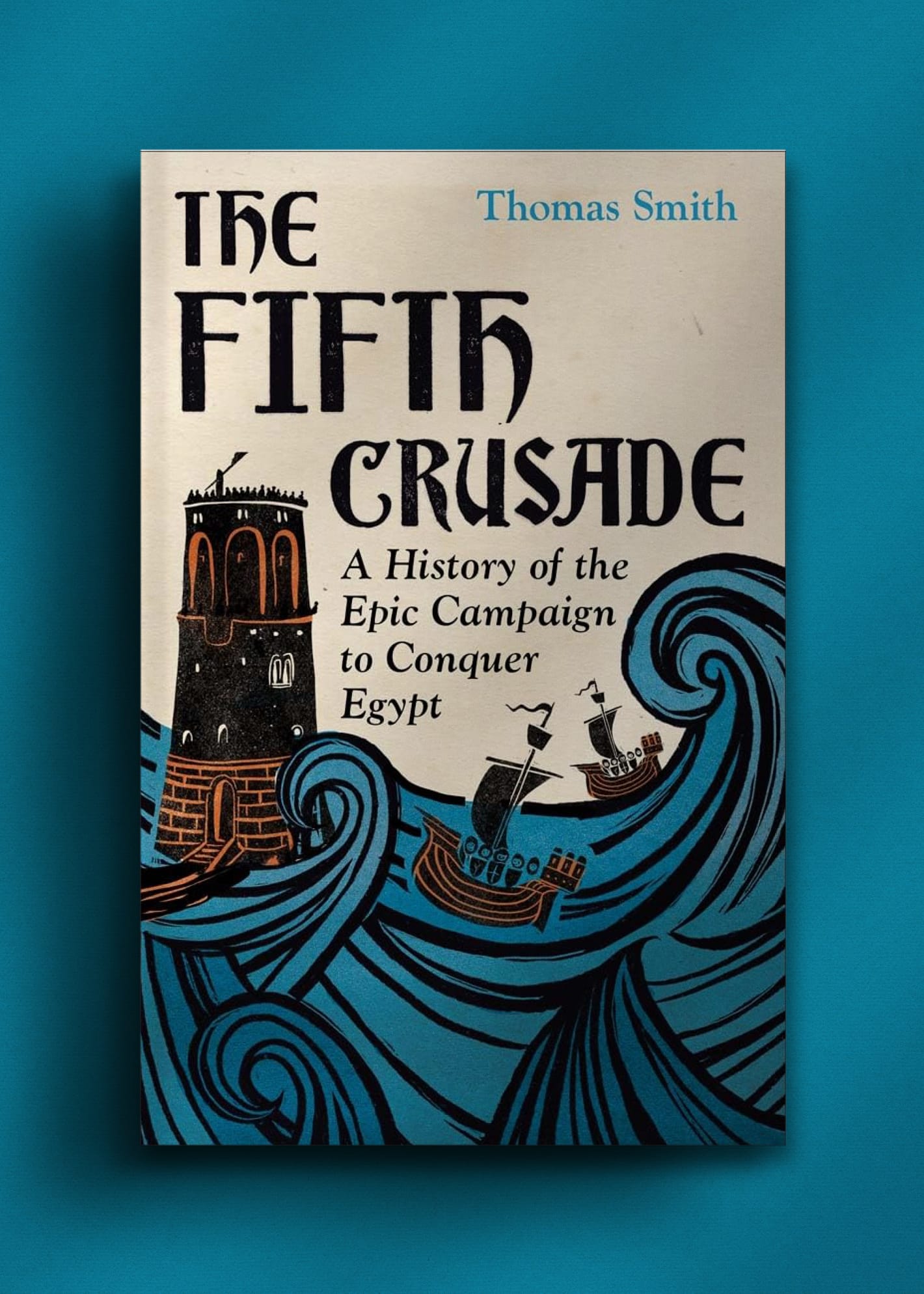
Thomas Smith is the author of a new study of this history, The Fifth Crusade: A History of the Epic Campaign to Conquer Egypt.
Here he explains the dramatic confrontation that took place when the Christian army reached the port of Damietta.

For references please consult the finished book.
Damietta, Egypt, 24 August 1218
A modified agricultural flail was a bizarre weapon for a European crusader to be wielding in Egypt. But then this was a bizarre situation.
It was a burning summer day and the young crusader was balancing atop a floating siege engine on the River Nile. Although he was used to navigating the waterways that criss-crossed his native Frisia (on a modern map, a region roughly equivalent to northern Holland and north-western Germany), none of his previous experience could possibly have prepared him for this.
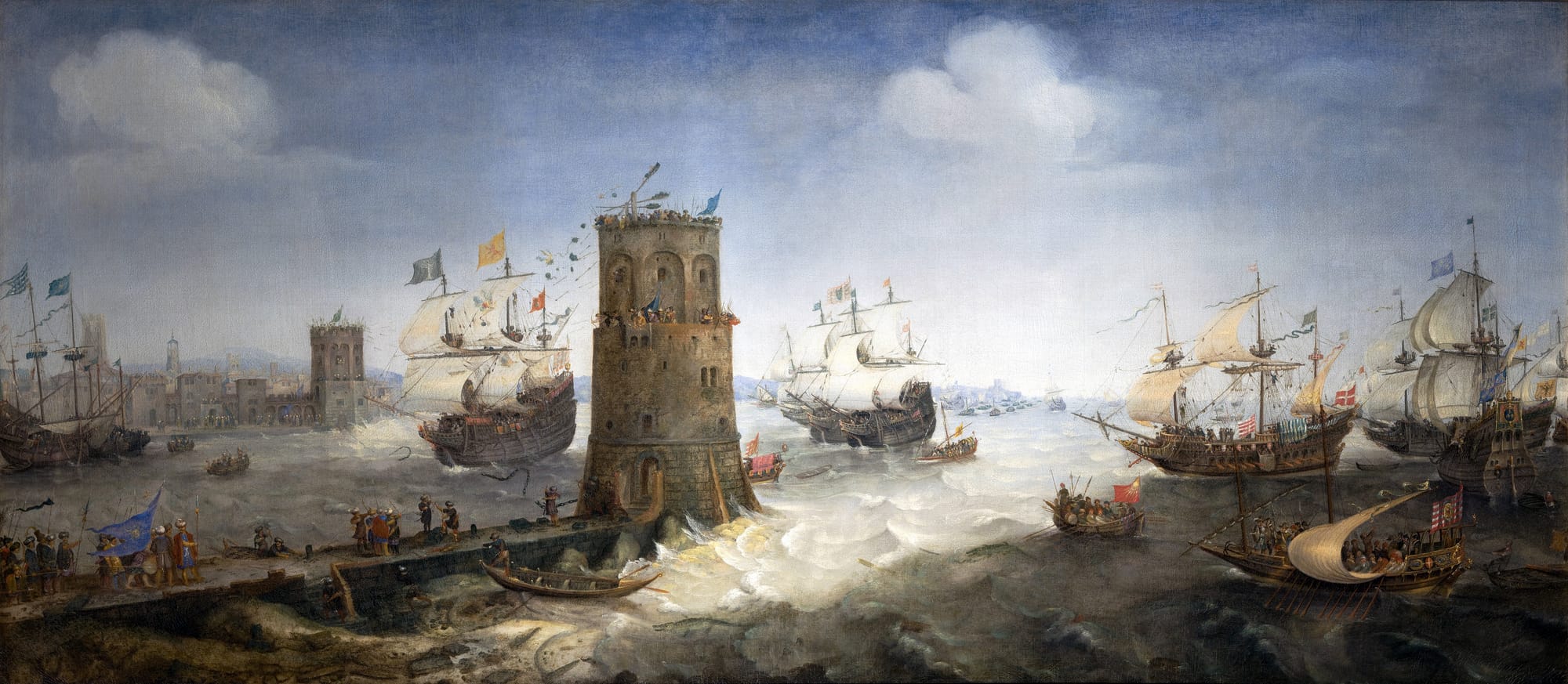
The Christians were besieging a fortified stone tower in the middle of the Nile. The tower controlled access to the Egyptian interior upstream and the vital port city of Damietta: the key to Cairo and the rest of Egypt.
Between the tower and the wall of the city, a heavy iron chain stretched across the river to prevent the passage of ships. This barrier gave the stronghold its name: the ‘chain tower’. While it stood in their way, the crusaders could not capture Damietta, and their holy war could not succeed.
After battering the tower using large, stone-throwing siege catapults called petraries for a month, the crusaders had made little headway. The tower was of stout construction and defended by 300 hardened Egyptian troops who had enough food to last a year. There was no other way to take the tower: the crusaders would have to storm it in an amphibious assault.
The conditions for such a special operation, however, were inauspicious. At the end of August 1218, the Nile was in full flood. According to an eyewitness, the river was overflowing violently, and the raging waters greatly hindered the Christians’ work. The Frisian crusader could feel the surging currents as the sailors on deck wrenched at the floating siege machine, struggling to control it. The marines were desperately trying to manoeuvre the vessel into position against the chain tower to a soundtrack of creaking timbers and tensing ropes, while ‘the force of the flooding waters strove to drive it back’.
Brightly coloured crusader and Egyptian standards fluttered and flapped in the breeze, including the ‘saffron standard of the sultan’, al-Kāmil. Heavy stones ripped through the air, as both sides exchanged fire from siege weapons positioned on top of the tower and the floating siege engine alike. Deadly Egyptian arrows and javelins rained down from the tower onto the vulnerable crusaders below.
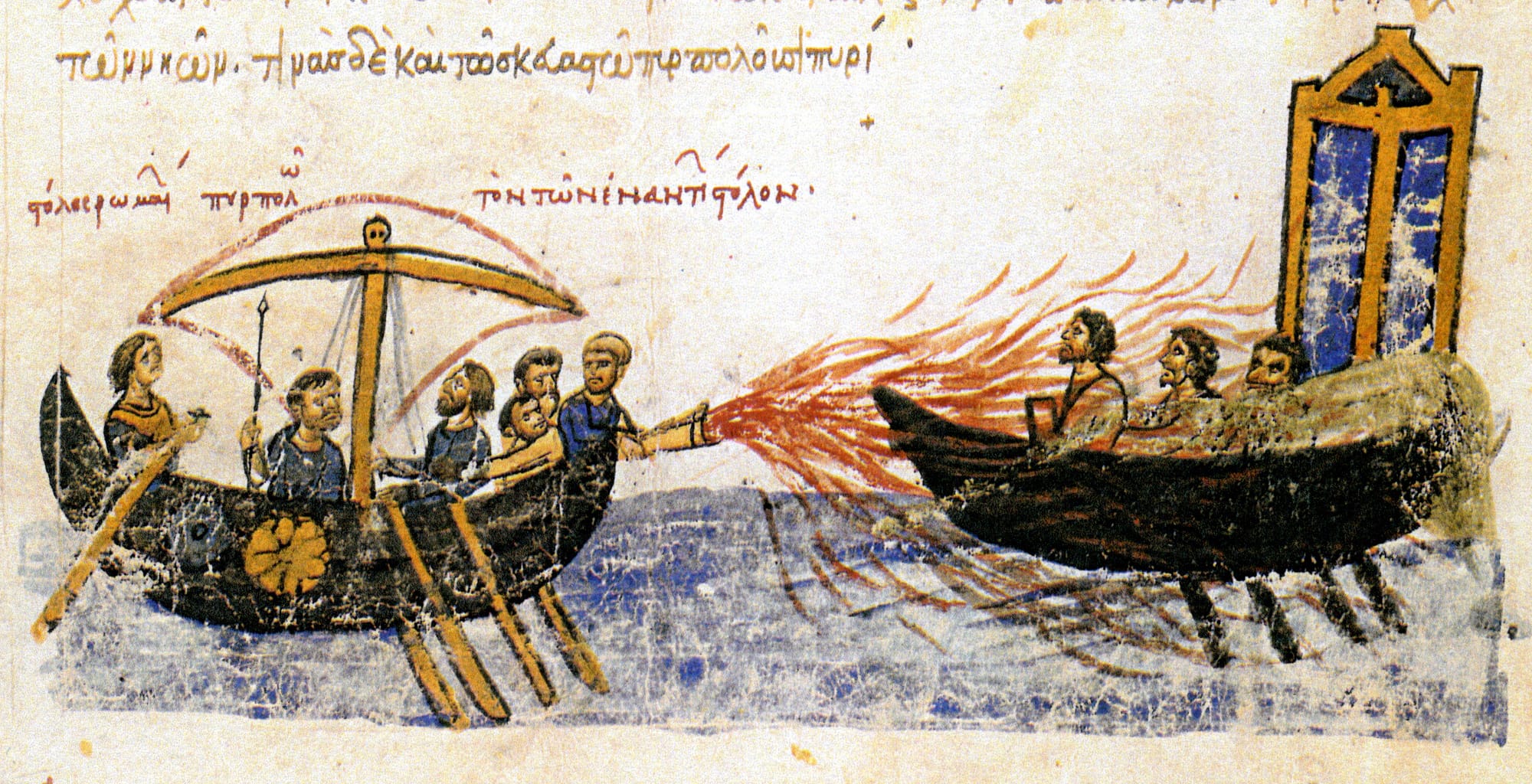
Arrows and javelins, however, were the least of the crusaders’ worries. Even more terrifyingly, the defenders were trying to set fire to the structures of the siege-ship – as well as their foes – using Greek fire. This was an incendiary chemical weapon, akin to napalm, delivered either in a medieval version of a flamethrower or ceramic hand grenades.
Of all the weapons being deployed against them, this was the one the Christians feared the most. The eyewitness account of the action described the Greek fire as striking from above ‘like lightning’. The crusaders, however, had come prepared with ‘sour liquid and gravel’ effective at dousing the flames.
There were only a few types of ‘sour liquid’ acidic enough to work, and the crusaders were therefore carrying large, stinking vessels of vinegar and stale urine on board, which slopped around on deck.
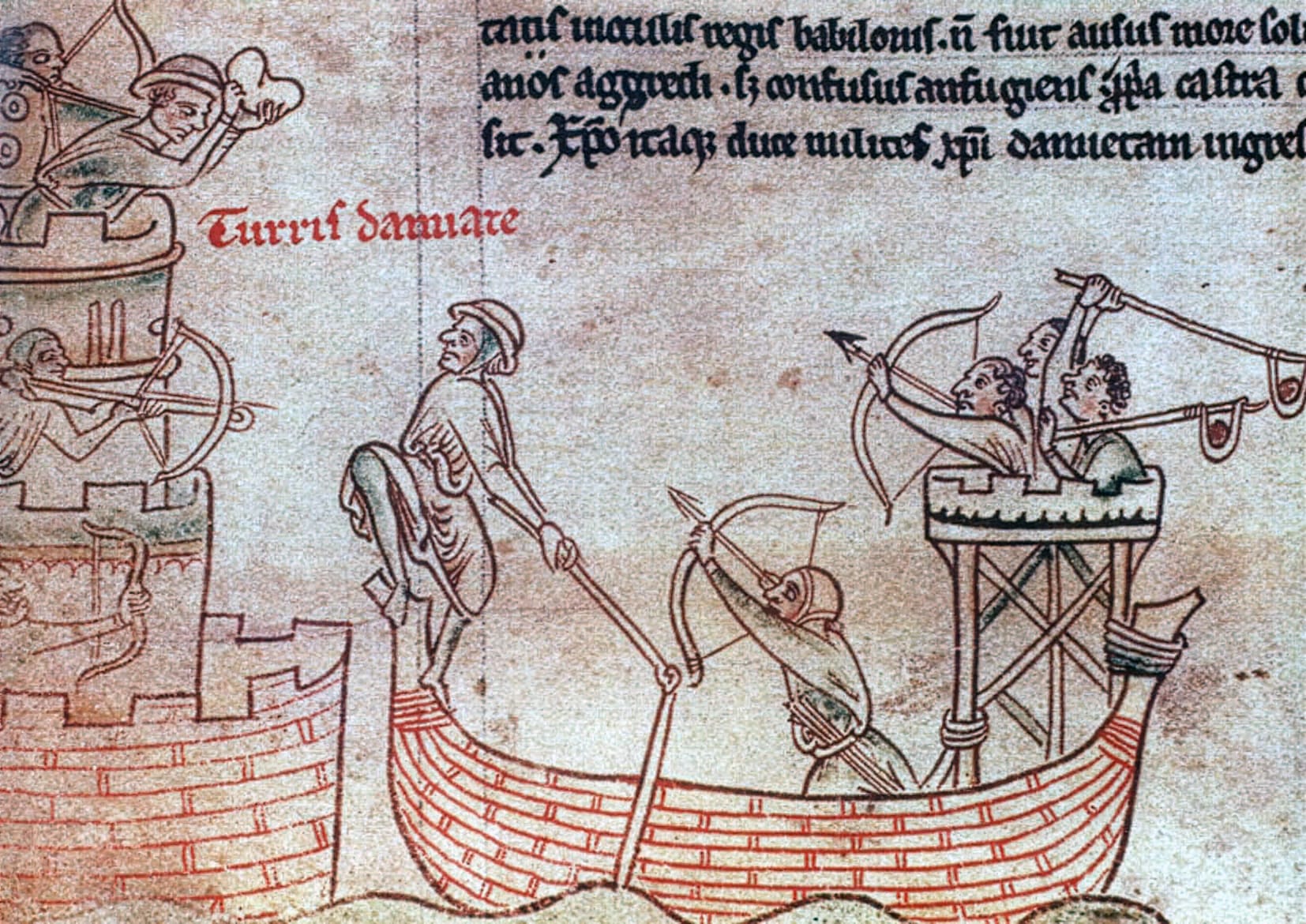
The crusaders’ floating siege engine was unique; indeed, it had been specially invented for this mission. It was a strange structure. The machine consisted of two ships, lashed together with ropes and fixed with beams.
On the decks of the ships, builders had erected four masts – effectively a wooden tower – supporting a platform that resembled a miniature fort. To defend against the dreaded Greek fire and the stone-throwing siege machines, this siege fort had a barrier curtain constructed from wood and animal skins.
A huge ladder was attached to the front of the platform. When – if – the sailors wrestled the siege engine into position on the river, the assault party would lift this ladder onto their target and storm the tower. Or, at least, that was the theory. None of the combatants had ever seen something like this before.
Perhaps the most surprising thing about this innovative floating siege engine, though, was not its peculiar appearance, but rather who had built it: a schoolmaster from Germany named Oliver.
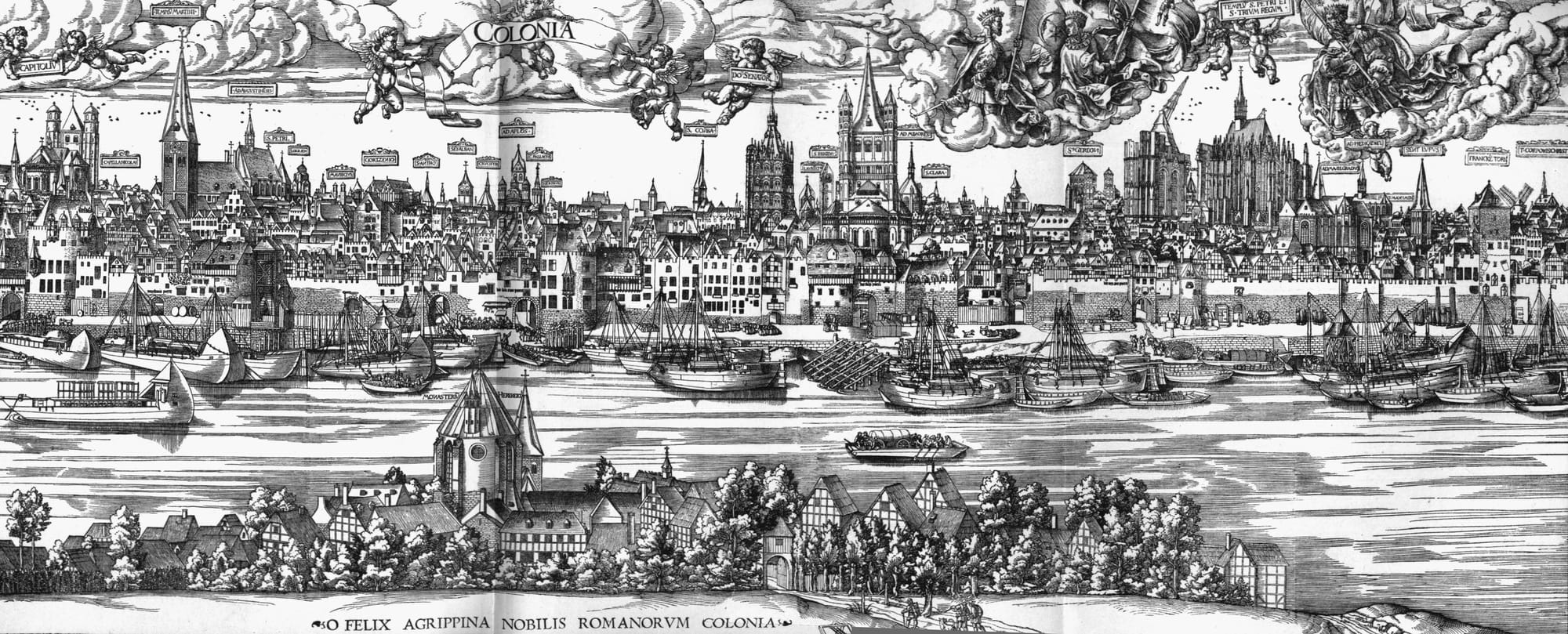
Before the war, Oliver had been head of the cathedral school at Cologne. It may seem odd to find a figure such as Oliver here, but, as one of the leading churchmen involved in preaching and recruiting for the Egyptian crusade, he was deeply invested in the expedition – enough to design and pay for this invention, as well as to give up his life of books and teaching and risk everything on campaign.
As the machine’s architect, Oliver of Cologne had more at stake than most in this assault. He watched anxiously from the riverbank. Like the other members of the clergy standing around him, he was ‘barefoot, garbed in liturgical robes’.
But while the other churchmen conducted their religious ceremony in aid of the attack, and the patriarch of Jerusalem lay face-down in the dirt, begging God to allow them to overcome their enemies, Oliver was transfixed by the scene he had helped to bring into being (and which he would recreate in writing later).
He clutched a narrow bronze stylus (about the same size as a small modern computer stylus) which he used to take notes. He did this on two wax tablets, encased in wooden frames bound together with straps. As a writing medium, parchment – made from animal skin – was too expensive for making notes, especially in a crusade camp. Oliver would write his scribblings up in a neater form later in the camp, when he prepared his narrative to be despatched back home to Europe, first as letters and then as a chronicle.
Indeed, it is through the ephemeral wax notes Oliver made that we can follow the siege of the chain tower more than eight hundred years later. In time, his work came to be known by historians as the Historia Damiatina (which we might translate into English as ‘The Damietta History’) but when Oliver was writing, it didn’t have a title.
Oliver looked at the warrior-pilgrims on his machine, preparing to assault the tower. One stood out. While the other crusaders were armed with ‘swords, pikes, clubs and other weapons’, the weapon the Frisian carried was especially distinctive.
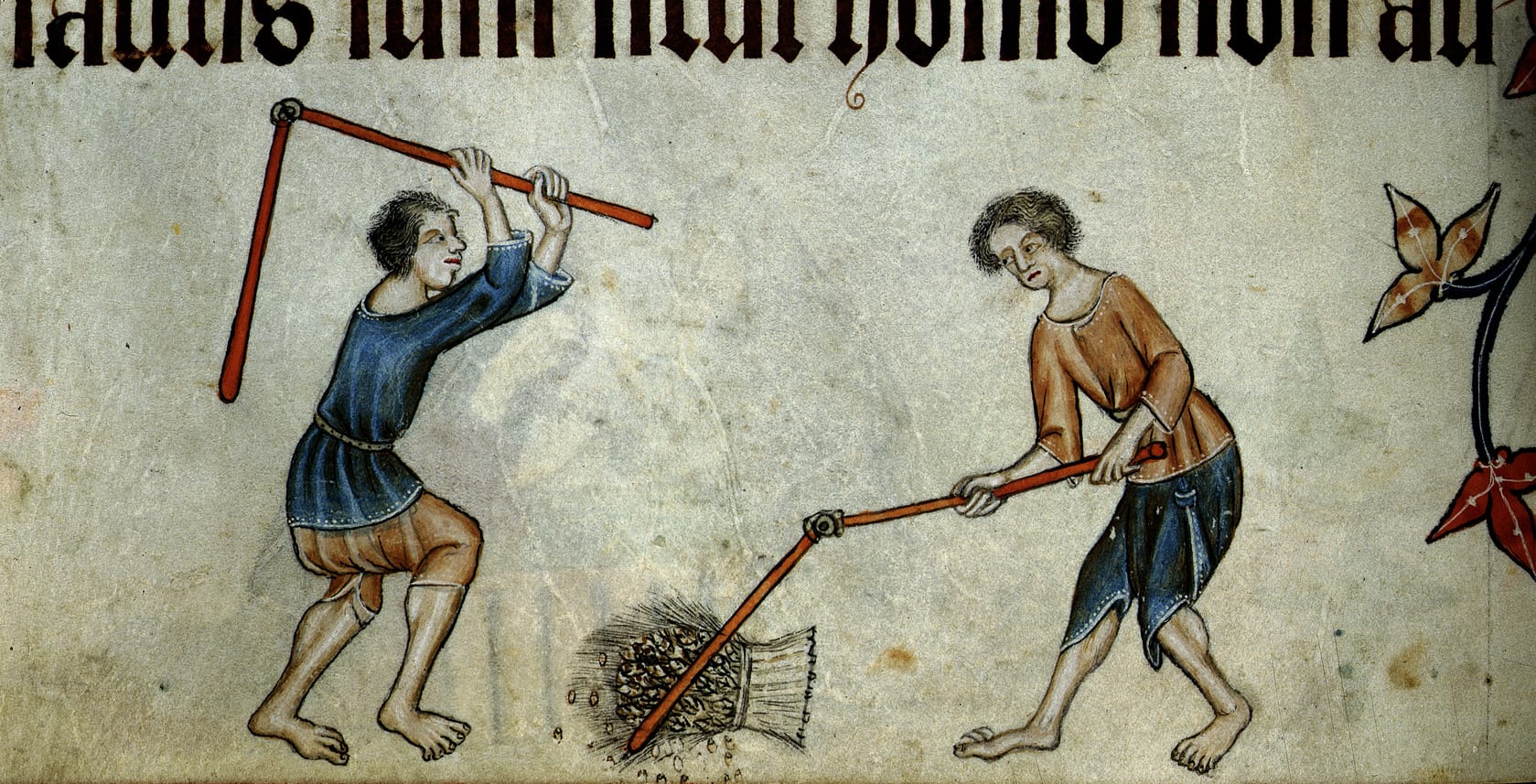
Oliver made special mention of the ‘certain young Frisian, holding a flail by which grain is usually threshed but which was prepared for fighting by an interweaving with chains’.
This agricultural tool, originally designed for pulverising grain on a threshing floor, consisted of two large sticks connected with a metal chain. The Frisian had modified this flail by adding chains to make it even more deadly. It looked and functioned exactly like a nunchuk. This was a fast, easy-handling weapon fashioned for close-quarters combat, and it was highly effective, as Oliver was about to witness.
As the sailors finally managed to steer the unwieldy floating siege engine into position against the tower, the Egyptians concentrated their defence on destroying the ladder which the crusaders would use to storm their position. The defenders smeared ‘the front of the ladder with oil’, before setting fire to it, causing it ‘to burst into flames’.
To put out the flames with their pungent vats of acidic liquid and gravel, the crusaders rushed up the ladder, causing it to bend. The erratic wobbling motion made the standard-bearer of the Duke of Austria lose his footing. He slipped from the ladder and tumbled head-first into the churning waters of the Nile. His heavy mail coat pulled him down quickly into the depths of the river, where he disappeared.
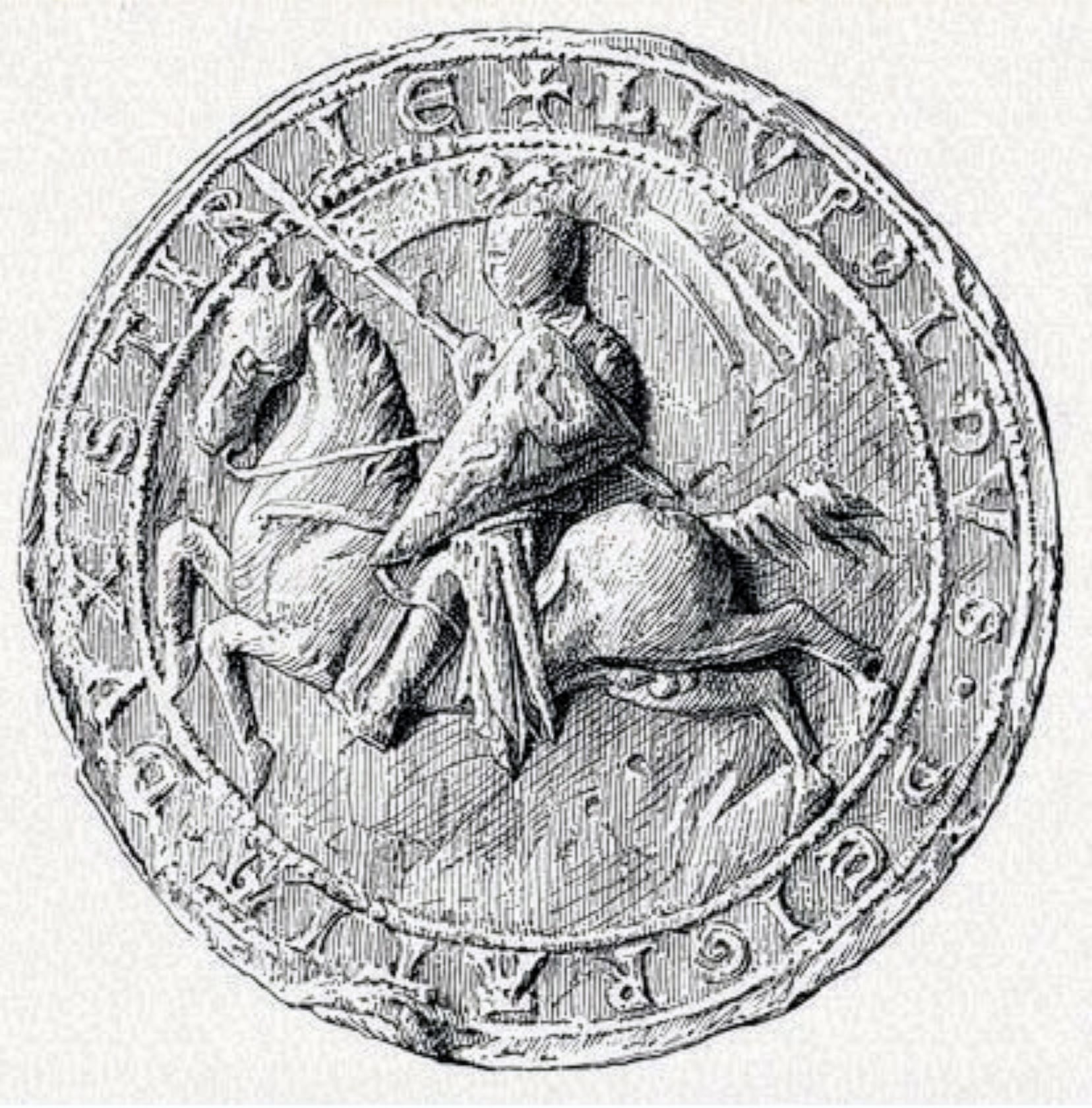
In the process, the defenders captured the Austrian duke’s banner, and Oliver stated, with xenophobic undertones, that ‘the Babylonians’, thinking themselves victorious, shouted ‘madly, disturbing the air with their clamour’. Diametrically opposed to this scene, Christian knights watching from the land were aghast. They threw themselves down from their horses and beat their hands on the ground, tears streaming down their faces.
Things were not going well for the Christians. Suddenly – miraculously – however, the battery of prayers from the clergy on the riverbank appeared to take effect, and the crusaders managed to lift the heavy ladder onto the chain tower.
The crusaders seized their chance and began to storm the turret. A young knight from Liège won the honour of being the first over the battlements. The flail-wielding Frisian was a close second.
Swinging his modified flail to violent effect, the young Frisian lashed out ‘bravely to the right and to the left’. He felled ‘a certain man holding the saffron standard of the sultan’ and took ‘the banner away from him.’ Oliver noted this all down carefully. He did not know their names. He would ask them later, if they survived.
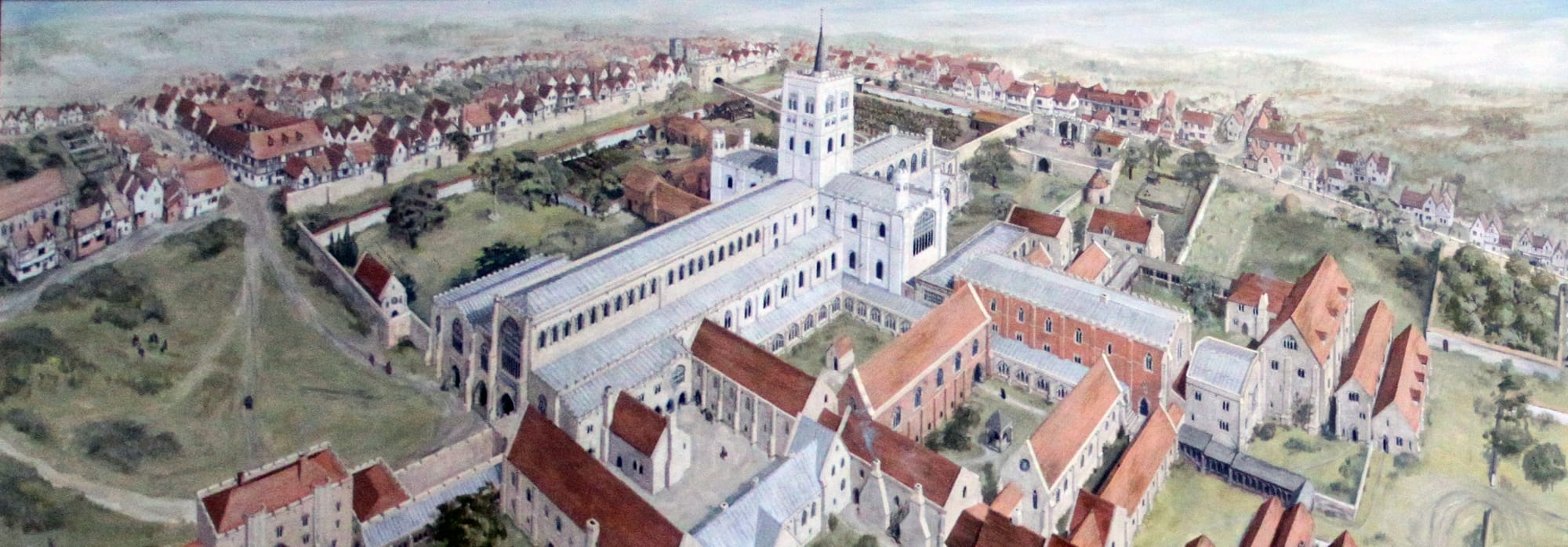
St Albans Abbey, England, twenty-five years later
In the stone cloisters of St Albans Abbey, a tall, middle-aged man was moving quickly, his steps echoing around the cloisters as he made his way to the scriptorium.
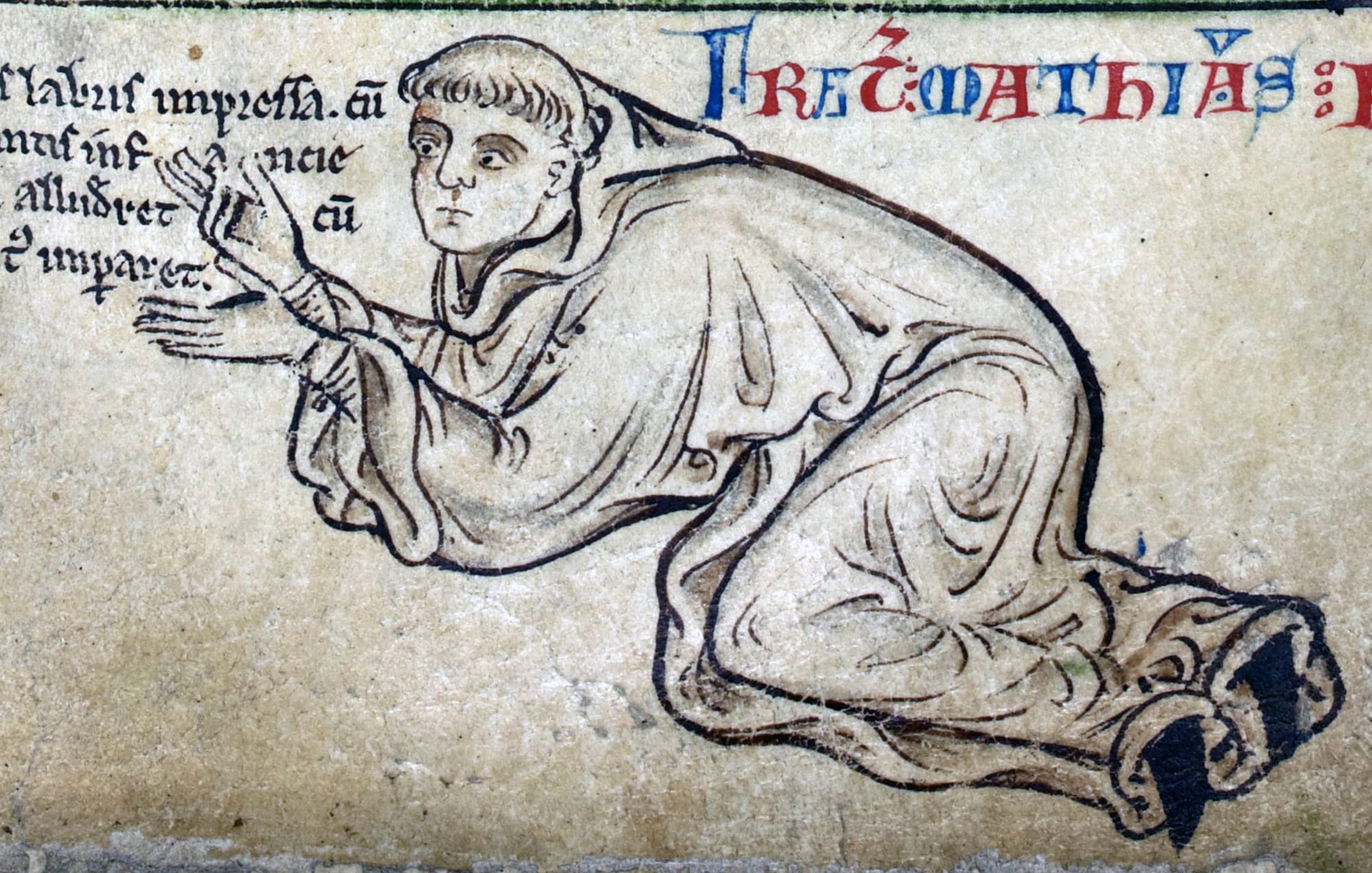
His tonsured hair marked him out as a monk: a halo of brown hair crowning an otherwise bald head. The monk’s face was rounded, with large eyes under long, thin eyebrows and a prominent, flat nose, flanked by ears like conch shells. His mouth was narrow and thin, with a creased dimple under his lower lip. He wore a brown woollen robe that marked him out as a Benedictine – the richest and most widespread monastic order in medieval Europe.
He may seem quite unremarkable to us – exactly how we envisage most medieval monks looked – but his unprepossessing appearance is deceptive. We are face-to-face, in fact, with one of the greatest chroniclers and contemporary critics of the thirteenth century: Matthew Paris.
Matthew is counted among the most industrious single-handed producers of books and histories of the Middle Ages. He not only wrote these himself, but also illustrated them with engaging images, full of life and human interest, which still speak to us today, the best part of a millennium later.
Much of our knowledge of thirteenth-century European history we owe to him. He was one of the great figures of monastic history-writing. But he also had his flaws. He was a scandalous gossip. He didn’t like foreigners, or the pope (for Matthew, the pope was doubly suspect for being both foreign and powerful, as head of the western Church). The monk of St Albans saw them as unwelcome intruders and meddlers in English affairs.
The scriptorium at St Albans was where its books were produced. It was famed throughout the country as one of the most productive and St Albans books were valued highly for their quality. Writing desks were arrayed around the windows of the scriptorium to provide enough light and Matthew hurried to take full advantage of it.
In the mid-thirteenth century, there were four to five scribes, chosen from among the monks, and the same number of professional artists from outside the community, working collaboratively to produce all kinds of books here. This was a hive of activity. Numerous quill pens scratched at parchment (sheep or goat skin) prepared for writing. Although this was a collaborative space for scribes and illuminators, Matthew was skilled at both writing and drawing and so worked on his manuscript alone.
The monk sat down at his desk, where he picked up his pen and began drawing. Matthew was toiling over his Chronica maiora (‘Great Chronicles’), an extensive work of history, and his magnum opus. At the base of the page on which he was working, he illustrated a chaotic and violent scene to enhance the Latin text about the crusade that took place some twenty-five years before.
The Egyptian theatre of war made the campaign especially interesting. Drawing upon his book-learning from texts including Oliver of Cologne’s famous Historia Damiatina, Matthew conjured up images of sandy vistas, Egyptian warriors, and great sandstone-coloured fortresses on the Nile.
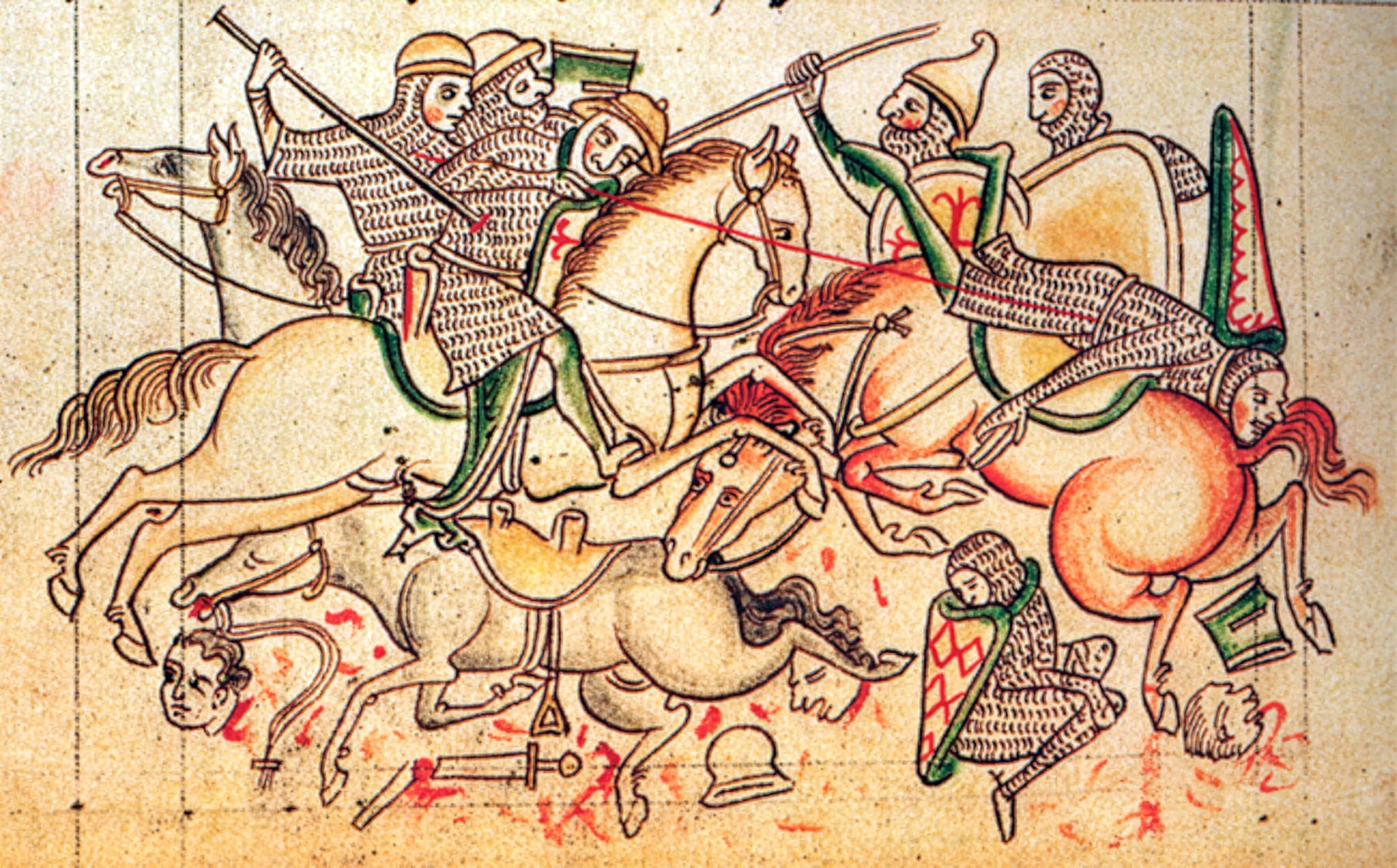
He began to sketch: the clash of a group of mounted knights fighting with lances, all wearing mail hauberks to protect their upper bodies. On the left of the scene are the Christian crusaders. Two are depicted wearing kettle helmets and another has a great helm with narrow eye slits.
They are fighting against Muslim warriors on the right of the scene, who are difficult to tell apart from the crusaders, except for one with a deliberately exoticised foreign helmet, the cone of which curls upwards and forwards. A Christian knight in the foreground leans into his saddle, putting his full weight behind a charge. He spears one of his opponents in the flank, driving him from his horse.
Simultaneously and unexpectedly, another Muslim warrior penetrates the Christian ranks. The Egyptian horseman sticks the same crusader in his side with a lance. The crusader knight is about to die, but this realisation is not yet apparent from the knight’s concentrated facial expression. The artist has caught him in a moment simultaneously victorious and vanquished.
Next, Matthew’s pen moved to fill in the soldiers fighting in the background and the gory human and animal detritus littering the battlefield. Over a broken sword and a discarded helmet, a dead horse lies prostrate, blood dripping from its mouth.
Matthew then depicted a defeated soldier in mail sitting slumped against his shield, his head dangling lifelessly. There are three decapitated heads, gushing blood onto the earth. One’s eyes are still open, staring ahead, a surprised expression on his face. The other two have their eyes closed, Matthew decided, as he used red ink to paint blood spraying out of one’s mouth in a grisly fountain of gore.
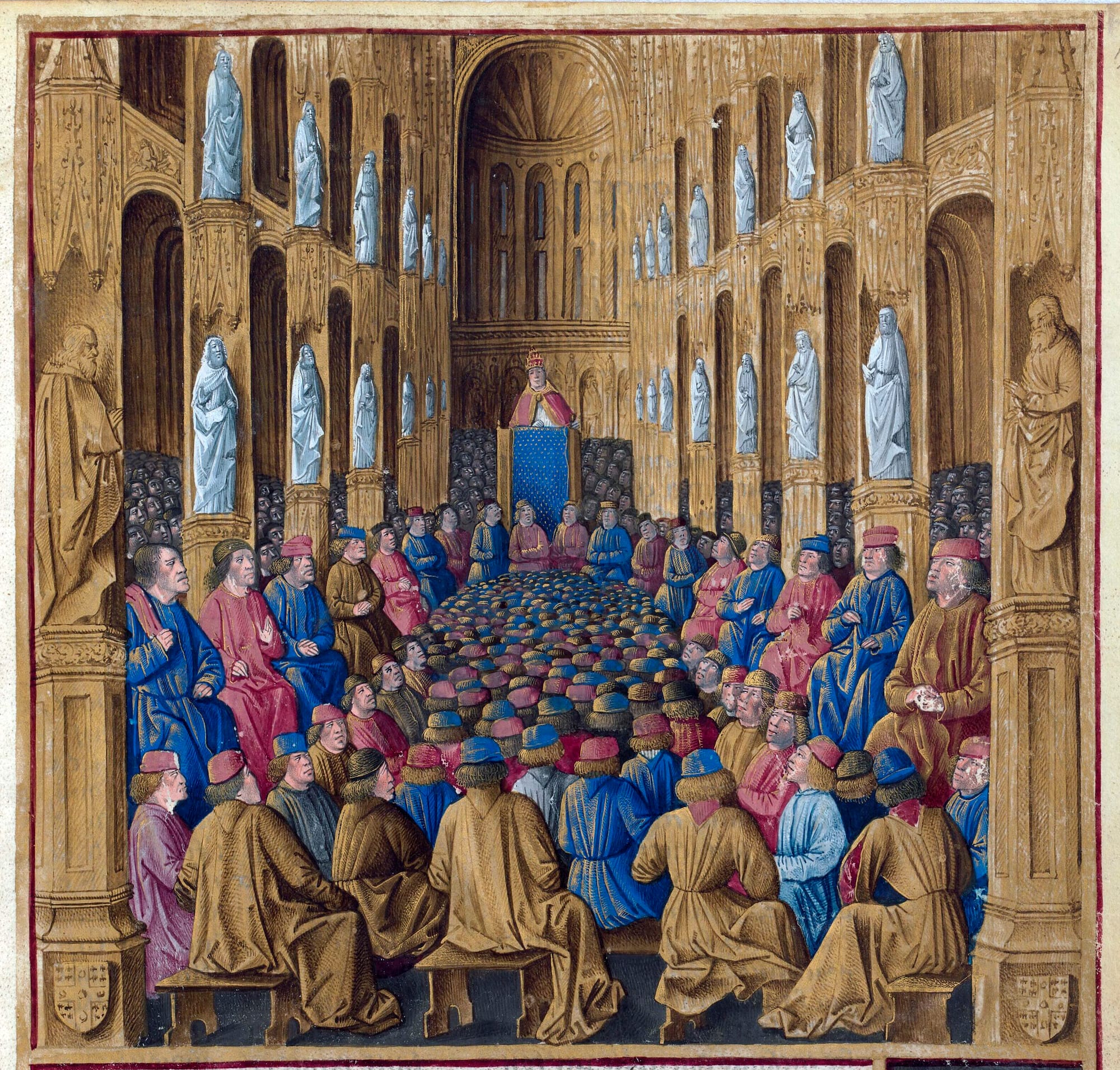
These two vignettes beg numerous questions: why did medieval people care so much about the crusade to Egypt? Why were so many Christians willing to give up everything and leave their homes to travel across the world and fight for their faith in a holy war, probably never to return?
Why did Oliver of Cologne abandon his student charges and risk his life supporting the expedition? Why did he devote a significant part of his life to chronicling the crusade? Why did the story still resonate so strongly a quarter of a century later that Matthew Paris expended so much effort on his detailed illustrated account? And why should we still care about it today?
Medieval Europeans saw the crusading movement as a duty that belonged to the whole of Christian society and it represented a central plank of their religious lives. In a society obsessed with the impact of sin on one’s chances of entering heaven (or, alternatively, being tortured in hell by demons), the crusade served as a litmus test of communal spiritual purity.
When the papacy promoted crusades, it offered pilgrims the indulgence of remission of sins, wiping their spiritual slate clean of any confessed transgressions and clearing their path to heaven. This was of considerable importance in a martial society where the knightly classes fought and oppressed fellow Christians in Europe as part of their day-to-day activities.
There were also other motivations to crusade. Some sought adventure and the opportunity to travel. Others wanted to visit the pilgrim sites. There were also opportunities to acquire relics, plunder, and trading privileges, though very few became fabulously rich as a result. A few intrepid First Crusaders carved out their own principalities in the East. Some crusaders, far from being chivalrous ‘knights in shining armour’, were criminals forced to go on crusade as a punishment.
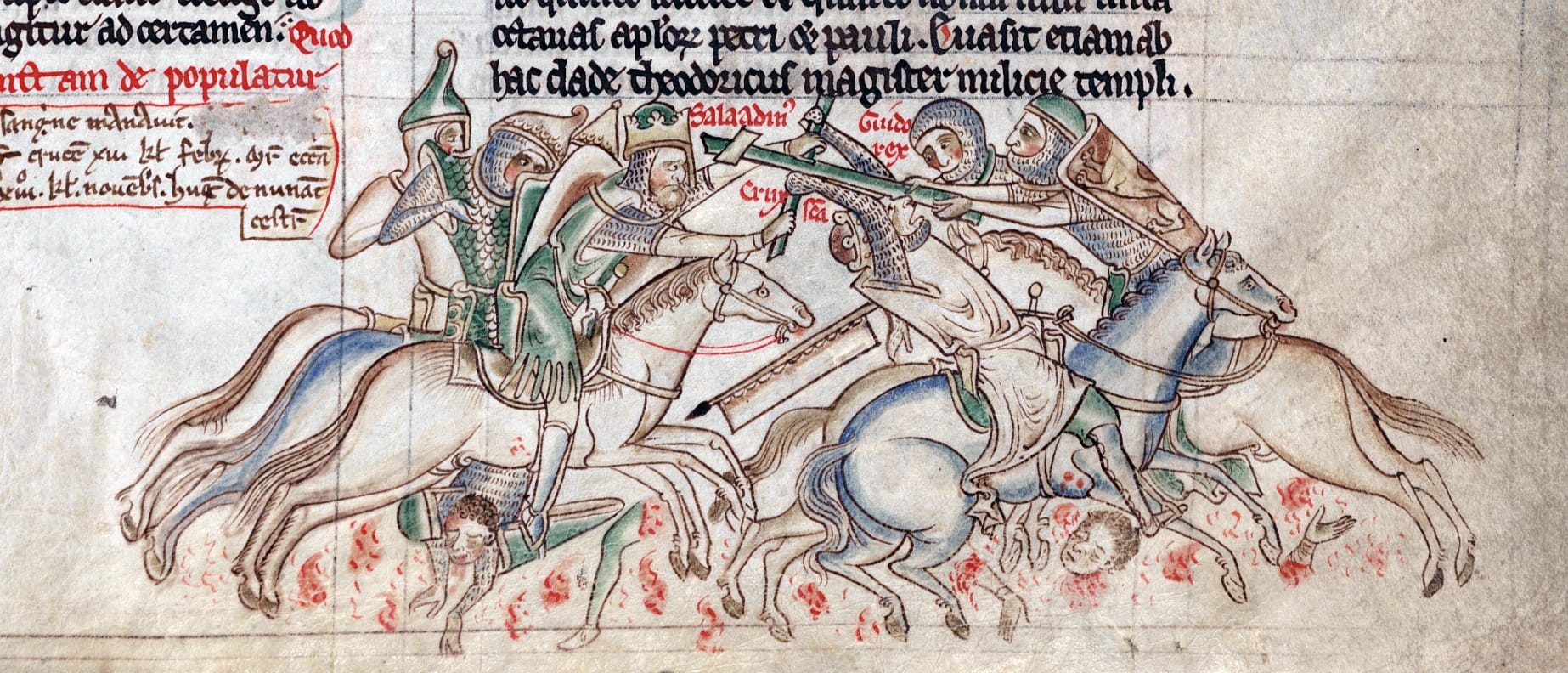
These are the main reasons why crusades mattered to people in the Middle Ages. But why should they matter to us today? The first reason is that it was important to, and directly involved, swathes of medieval society across Europe and the Near East.
The story of the crusade on the Nile is a history of an epic war for Egypt and the Holy Land which touched countless lives and dramatically reshaped the geopolitical situation in the eastern Mediterranean. Put simply, it represents a major disruptive event in world history that is little known today outside of academic circles.
The second reason is that the history of the crusades should not be just a parade of kings and knights. That is another reason why this history remains relevant today: it is about people, identities, and belief-systems which spanned continents and united communities to do extraordinary – and sometimes terrible – things on both sides.
The third reason that the crusades retain contemporary relevance is that, often for the worse, they continue to resonate as an idea and a cultural force in modern society. The crusades are often misunderstood as a binary and monolithic conflict between the Christian and Muslim worlds: the so-called ‘clash of civilisations’ model.
This popular concept, though, does not stand up to scrutiny. The situation on the ground in the Near East was much more complex. For a start, the crusades took part in a broad political landscape of many different powers and factions which were not always split along religious lines. Rulers in the eastern Mediterranean fought over land, power, and resources more often than they did over religion.
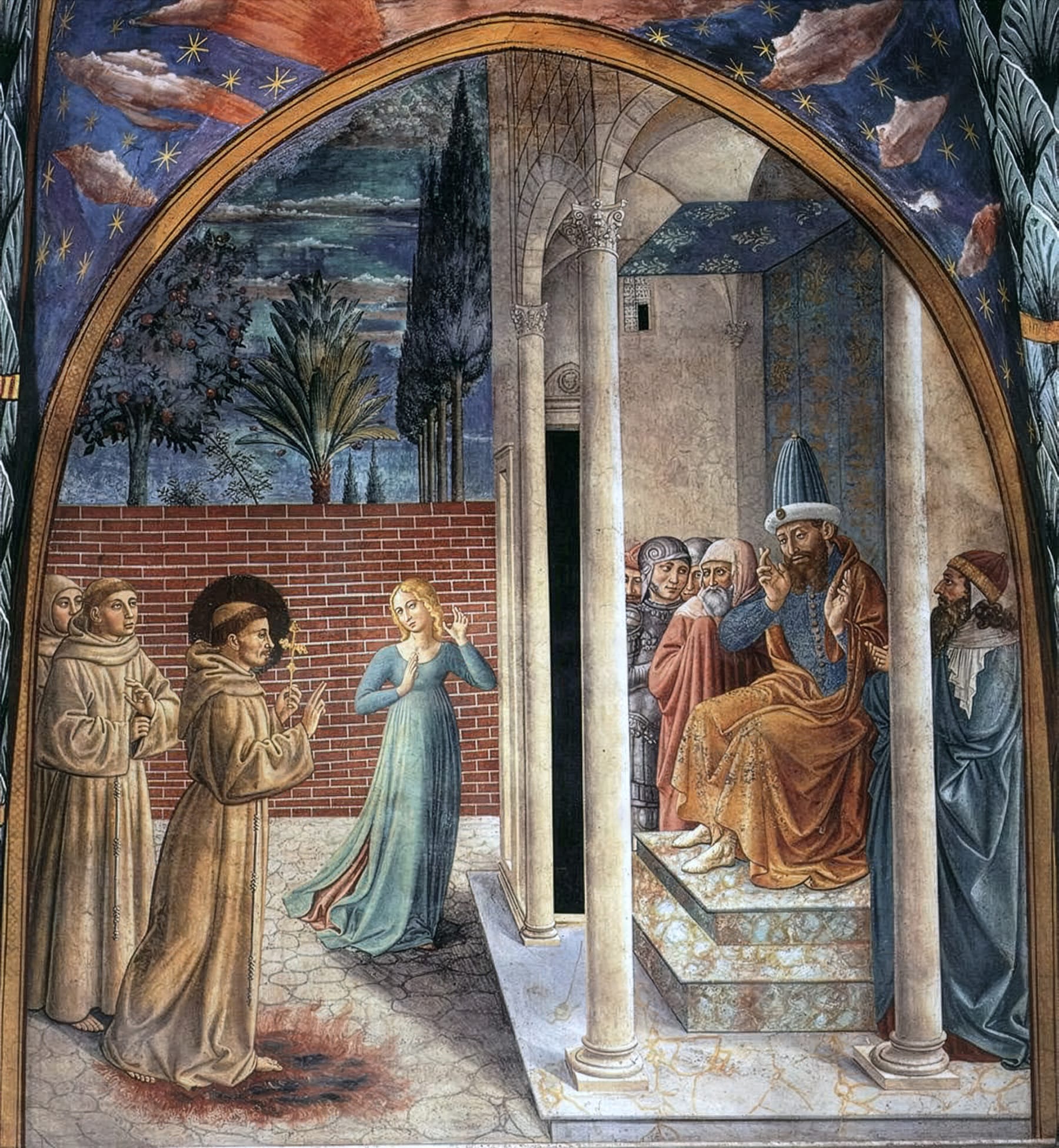
From the very beginning, the crusaders made alliances with some Islamic powers to fight against other Muslim rulers, and periods of crusading warfare were interspersed with times of tolerance and trade.
Similarly, during the Fifth Crusade, the Coptic Christians of Egypt fought alongside their Muslim overlords against the crusaders with whom they shared the same basic religious beliefs. Connected to this, ‘crusader’ armies were often composed of Arabs, Syrians, and Armenians, and ‘Muslim’ armies were not exclusively made up of Muslim troops.
It remains important to understand the complexities and nuances of the crusades, especially when their history is frequently misappropriated, distorted, and weaponised in popular discourse •
The Fifth Crusade: A History of the Epic Campaign to Conquer Egypt by Thomas Smith
Yale University Press, 14 July, 2026
RRP: £25 | ISBN: 978-0300283952
“Vivid, dynamic and thought-provoking” – Helen Castor
A fascinating account of the Fifth Crusade, the campaign to conquer Egypt and regain the Holy Land
In 1217, the crusader states were in a highly fragile condition. The Fourth Crusade had failed, and Jerusalem had not been recovered. The crusaders now set their sights on Egypt. If the breadbasket of the Mediterranean could be conquered, long-term Christian control of the Holy Land could be ensured. Led by the rulers of Hungary and Austria, and backed by the Knights Templar and Hospitaller, the Fifth Crusade was launched.
Thomas Smith tells the gripping story of the crusade for Egypt. Looking at a wide range of Christian and Muslim sources, Smith sheds new light on the brutal reality of medieval combat on land and water. We see a dramatic beach landing, the invention of a unique floating siege engine, and the conquest of the crucial port city of Damietta—one of the most famous and successful sieges of the crusades. Smith provides fresh insights into strategy, showing how, despite early victories, foolish decision making meant that the crusaders ultimately snatched defeat from the jaws of victory.
“Vivid, dynamic and thought-provoking, The Fifth Crusade tells the complex story of holy war in Egypt between 1218 and 1221 with deep insight and compelling drama.”
– Helen Castor, author of The Eagle and the Hart
With thanks to Chloe Foster.
📸 Dive into our Features
🎤 Read Interviews
🎧 Listen to Podcasts
🖼️ Buy fine art prints & more at our Store


,_f.74v_-_BL_Add_MS_42130.jpg?ref=unseenhistories.com)


