
A United England? – King Æthelstan's Eamont Meeting
In AD 927 King Æthelstan attended a political gathering at a place called 'Eamont'. Here Ryan Lavelle, author of Border Land, looks back to this foundational moment.


Pinpointing the origins of 'England' is not a simple task. But the year AD 927 is certainly a significant one in that story. It was then that a memorable gathering 'of all the kings' took place at a mysterious northern location.
Ryan Lavelle is the author of a new book Border Land: Frontiers of Early England. Here he outlines the importance of this meeting and suggests where it took place.


King Æthelstan (924–39), grandson of King Alfred the Great, is rarely given the recognition he deserves. His reign was characterised by a shift from the 'kingdoms' of the Anglo-Saxons to the kingship of the ‘English’.
While it might be a stretch to say that under Æthelstan we see the birth of England, a relationship between territory and its control was nonetheless at the heart of his sense of an expansive English kingship. And if a single moment in this story is to be pinpointed, it is a gathering in the summer of 927 that has the greatest claim to importance.
This was a meeting with ‘all the kings who were in this island’, and it played a crucial role in determining the northern edges of English authority. It saw Æthelstan capitalising on his direct rule of the Viking-held territory of York following the death earlier that year of his brother-in-law Sihtric.
According to the ‘D’ version of the Anglo-Saxon Chronicle (the Chronicle is a work which survives in various manuscripts), the meeting ended with an agreement between Æthelstan, the rulers of the Welsh kingdoms of Deheubarth and Gwent, the Scots, and the Lord of Bamburgh. While these rulers were not at that point in direct conflict with Æthelstan, the ‘peace’ that the Chronicle refers to implies that there was disquiet with the extent of his power at this time. It states:
‘[W]ith pledges and with oaths they established a peace at the place which is named Eamont on 12 July: they renounced every idolatry, and afterwards departed in peace.’
The Old English reference to the place, æt Eamōt, meant ‘at the meeting(-place) of the rivers’. Using typically triumphal language with the verb ‘ġewealdan’ – meaning ‘to bring under one’s rule’ – the Chronicler relates that Æthelstan ġewylde the different Insular rulers.
The most likely candidate for the site of this is the confluence of the rivers Lowther and Eamont at Eamont Bridge, near Penrith (Cumberland), which creates an area of land that, while technically a peninsula, is an island when the rivers flood. It would have made a fitting site for a geographically diverse range of groups to gather.


The Anglo-Saxon Chronicle provides us with more detail about this agreement. It claims that the various rulers renounced ‘every idolatry’ (even devil-worship, deofolgeld) – a line that smacks of the sort of righteousness that St Augustine took with him to the West Country conference with British bishops some 300 years earlier. With the influence of Norse beliefs present across Britain and Ireland, including in the customs of recent Scandinavian converts, at this meeting Æthelstan had the opportunity to present himself as leading the way in the right form of Christianity. This probably served as a warning to the Scottish king Constantine to end his developing alliance with the Viking ruler of Dublin.
More details come from a surviving poem. This was seemingly composed at this time by a certain Petrus (Peter) to vaunt Æthelstan’s achievements, in creating ‘Perfecta Saxonia’ – making ‘Saxonland’ complete. ‘Letter, direct your steps’, Carta, dirige gressus, the first line reads (a line by which the poem is known). It proceeds to lead the audience across land and sea to the king’s palacio where news of the events could be declared.
The unusual appearance of a Petrus in the witness list of a New Minster charter of Æthelstan’s reign led the poem’s editor to suggest that it was written by someone associated with that community, who ‘might have accompanied Athelstan on his northern expedition and been charged with drafting the poetic report of its successful outcome’.
Given that versions of the poem survive independently in manuscripts written in the North and South-West, ‘at opposite ends of the country’, perhaps this itself said something about the attainment of Perfecta Saxonia. Like the transmission of the Anglo-Saxon Chronicle in different parts of Alfred’s Wessex and beyond, projecting a message through creative forms of narrative shows us one way in which Æthelstan’s ambitions were pushing the limits of his territorial control.
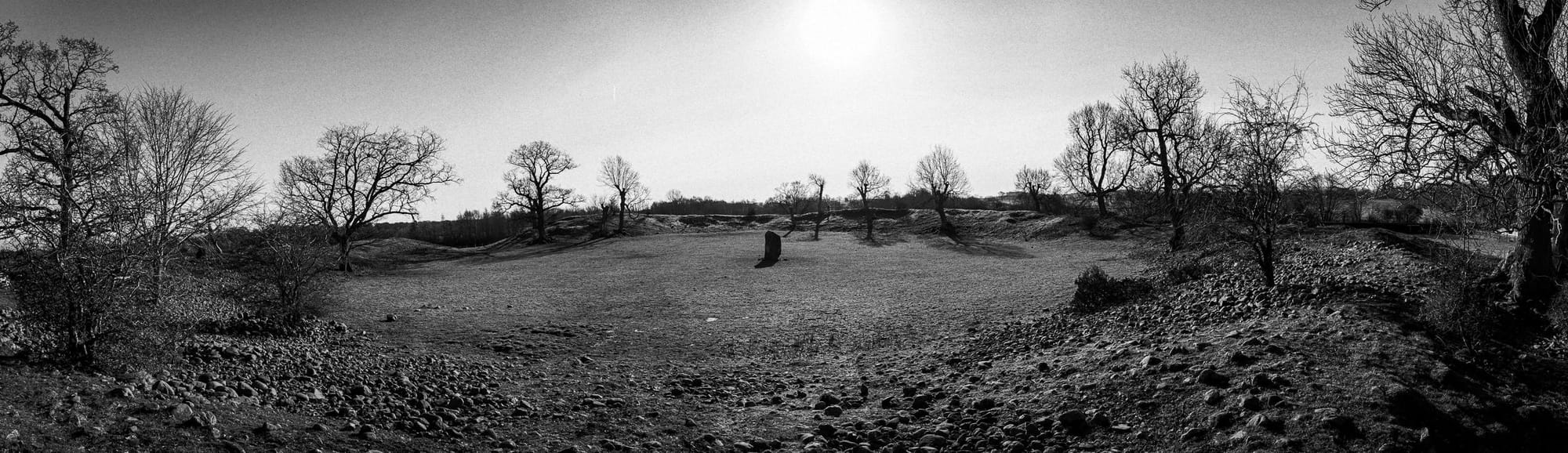
However, Æthelstan and his mobile court also had to contend with political reality. As with many early medieval peace conferences, careful diplomacy was probably the order of the day at Eamont. The island between rivers could have provided middle ground which allowed all parties to enter what was essentially neutral space. Æthelstan may have been the dominant lord with aspirations to be yet more dominant but the edges of the nascent kingdom of England needed negotiation above all, and there was some way yet to go.
What precipitated the Eamont meeting was the death of Sihtric, whose career had ranged across Britain and Ireland, and who, as ruler of the Viking kingdom of York, had married one of Æthelstan’s sisters in the previous year. Æthelstan’s alliance with Sihtric had probably been informed by Mercian experience. Before becoming king, Æthelstan may have campaigned in northern Mercia during the de facto reign of his aunt, Æthelflæd, ‘Lady of the Mercians’ (911–18).
For most of his first regnal year, during part of which his half-brother Ælfweard ruled in Wessex, Æthelstan presented himself in Mercian terms, perhaps even as a Mercian king. In the aftermath of Sihtric’s death, a Hiberno-Norse ruler, Guthfrith, evidently had other ideas. But the ‘E’ manuscript of the Anglo-Saxon Chronicle notes that Æthelstan drove him back to Dublin (the Annals of Ulster indicate that this all happened ‘within six months’).
Now, using language exuding legitimacy, the ‘D’ version of the Chronicle could report that ‘King Æthelstan succeeded [feng] to the kingdom of the Northumbrians’. This was, as has been recently observed, a major development for a king in Britain, meaning that Æthelstan now worked with both of the archbishops of the island.

From a northern perspective, however, these were potentially dangerous times, and perhaps the fiery skies reported by the ‘D’ Chronicler were read as portentous. A recent archaeological find reveals something of this uncertainty.
In 927, 928 or 929, somebody (or some people) buried a valuable treasure hoard in a field somewhere near York. Known as the Vale of York Hoard, it consisted of some 600 coins, including Arabic silver dirhams, along with a gold arm ring and silver bars, all placed into an ornately decorated Frankish cup.
Whoever put these different types of coins together with other precious metal items (and, for whatever reason, never collected it all) wasn’t thinking of the face value of the coins but considered them bullion. These were the economic habits of Vikings. Perhaps the hoard’s owner had departed to Dublin with Guthfrith, or simply feared the consequences of Æthelstan’s declarations. Alfred, Edward, and, for a while, Æthelstan had ruled a ‘Kingdom of the Anglo-Saxons’ consisting principally of an affiliation of the West Saxons and Mercians. Now ruling Northumbria, Æthelstan could redefine his power, even augment it. There was a lot to play for at Eamont.
What took place there could thus be presented in terms of the northern – or at least north-western – limits of the Northumbrian territory claimed by Æthelstan. Eamont, on the boundary of the historic counties of Cumberland and Westmorland, was in an area which the rulers of both Northumbria and the kingdom of Strathclyde could claim.
It was – and remains – on a comparatively low-lying plain between the heights of the North Pennines to the east and the uplands of the English Lakes to the west, a fact lost on neither the Romans, who linked the nearby fort of Brougham (Brocavum) to their road network, nor the twentieth-century builders of the nearby M6 motorway.

Eamont certainly had the potential to be important but did it represent the establishment of a frontier? Was the 927 meeting a defining moment in the making of England’s northern border?
The answer is, as so often when dealing with these liminal topics, both yes and no. Eamont provides an example of why a search for defining moments in a ‘border story’ is fraught with difficulties. Impressions of the northern limits of English authority are often framed by the later medieval Anglo-Scottish treaty of 1237 and versions of a borderline which have existed since then. But even there, where it is evident that a line was settled, regular negotiation and conflict still blurred English edgelands for centuries afterwards.
Even in 1237 with just two principal political powers – the English and Scottish crowns – at large, the interests of various noble factions still had to be accounted for. That made it more than a simple bilateral treaty. Whatever the intention in 927, there were many interests at play, even perhaps those of the two Welsh kings recorded in the Chronicle.
Hywel Dda, king of Deheubarth, was a prominent figure, which made his (perhaps reluctant) acknowledgement of Anglo-Saxon overlordship all the more significant. Although control of much of what is now north-western England by the Northumbrian and Mercian kingdoms during the course of the seventh century had effectively cut off Welsh-speaking Britons from their Cumbric language cousins in the Solway Firth area, it is likely that comparatively recent historical memory provided inspiration for some of the anti-English sentiments in the Welsh Armes Prydein Vawr (the ‘Great Prophecy of Britain’).
While probably from later than 927, this was a poem written in response to the consequences of Æthelstan’s empire-building, a counterweight to the Anglo-Latin poem Carta, dirige gressus; its very existence hints at the sort of tightrope that Hywel had to walk when dealing with his own nobility, other Welsh kings, and a powerful eastern neighbour •
This is a modified extract from Ryan Lavelle, Border Land: Frontiers of Early England (Yale University Press, 2026), pp. 161–166
Border Land: Frontiers of Early England by Ryan Lavelle
Yale University Press, 10 November 2026
RRP: £30 | ISBN: 978-0300259582

An innovative and thought-provoking exploration of the edges of England from their earliest days to the Norman Conquest
The earliest written record of a political boundary in England dates from around 880, when King Alfred and Danish warlord Guthrum formalised a legal treaty to divide lands between them. How did Alfred and his descendants think about the borders of ‘English’ territory? And what can these markers tell us about the English kingdom itself?
Ryan Lavelle takes readers on a journey around the borders and edges of early medieval England. From an oak tree used as a marker by St Augustine, through Alfred's famous treaty, to 1066 and beyond, Lavelle explores how land was divided and the ways in which boundaries were perceived. He argues that there was no one unified ‘England’ until after the Norman Conquest – and in fact the lands were divided several times between the death of Æthelstan and the invasion of William the Conqueror. This is a fascinating account that reshapes our thinking about the origins of the ‘lands of the English’.
With thanks to Katherine Powell.
📸 Dive into our Features
🎤 Read Interviews
🎧 Listen to Podcasts
🖼️ Buy fine art prints & more at our Store



