
Teddy Boys and Teenage Dreams: The 1950s Youth Club
Emma Warren explains how the British youth club became an exciting and revolutionary place in the years after the Second World War.


By the mid-twentieth century youth clubs had spread across the length and breadth of Britain. Traditionally founded in old Victorian ideals, the 1950s was to bring a wave of change.
Here Emma Warren, author of Up The Youth Club, explains how a new generation of young Britons embraced a new kind of daring, liberating culture in the run up to the Sixties.

For references please consult the finished book.
Mid-twentieth century youth clubs across Britain and Northern Ireland continued to be built upon a patchwork of benevolence and volunteering. In England especially, these often replicated public school values and beliefs.
A 1954 short film, Youth Club, appears to show what it describes as ‘the youth club movement’ in the context of self-improvement for young workers. Aspirational apprentice Jerry is shown spending his evenings at physics classes, unlike his mechanic friend Peter, who prefers the pinball tables at the amusement arcades. Jerry’s hair is neat. Peter’s is slicked with Brylcreem and suggests a Teddy Boy quiff. Jerry, holding books, shepherds his wayward friend down to the youth club.
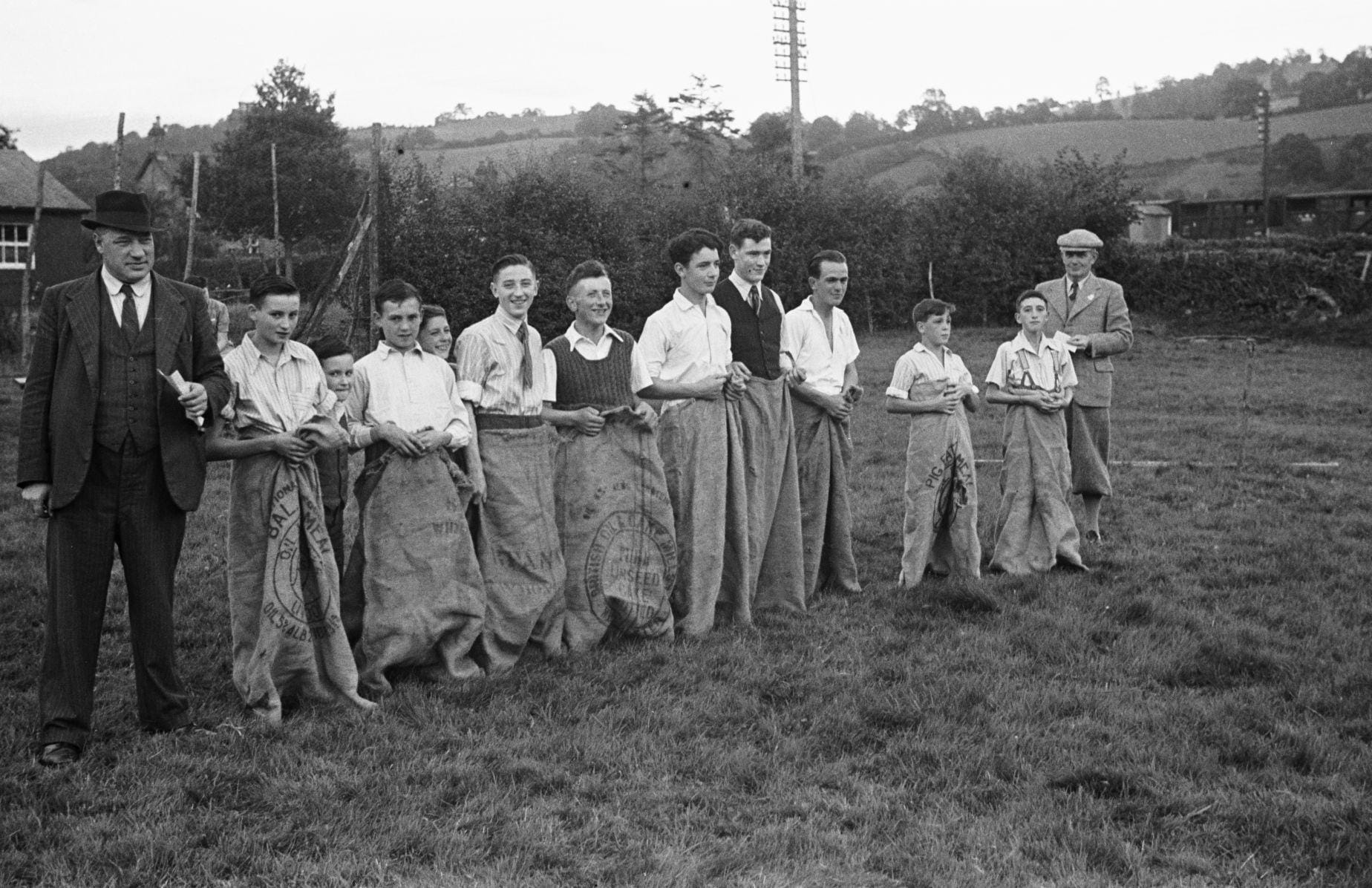
Inside the village hall, there’s a drum kit, table tennis and a pool table. A chalked list includes boxing, drama, carpentry, cycling, painting, modelling, gymnastics and music, alongside weekend rambles in the country. Additionally, there’s the first aid group, and a rota to cover club cleaning and repairs, as well as a self-governing club committee.
‘No single club can provide for everyone, and so there has grown up in Britain a wide variety of different types of club,’ says the voiceover, which is performed by an actor using received pronunciation, the preferred accent of the landed and wealthy. Club life, explains the film, is designed to socialise young people: ‘They all endeavour, through their leaders, to help the youngsters develop desirable qualities, such as self-reliance, self-discipline and willingness to serve the community.’
In the middle of the twentieth century, youth clubs were being described as useful for everyone, especially if ‘everyone’ came from a low-income background.
The film is not exactly what it seems, however. Produced by Verity Films for the Central Office of Communication, which was the successor entity to the wartime Ministry of Information, it was dubbed into languages including Indonesian and Urdu, and UK distribution was forbidden. Youth clubs were a potent way to communicate Britishness.
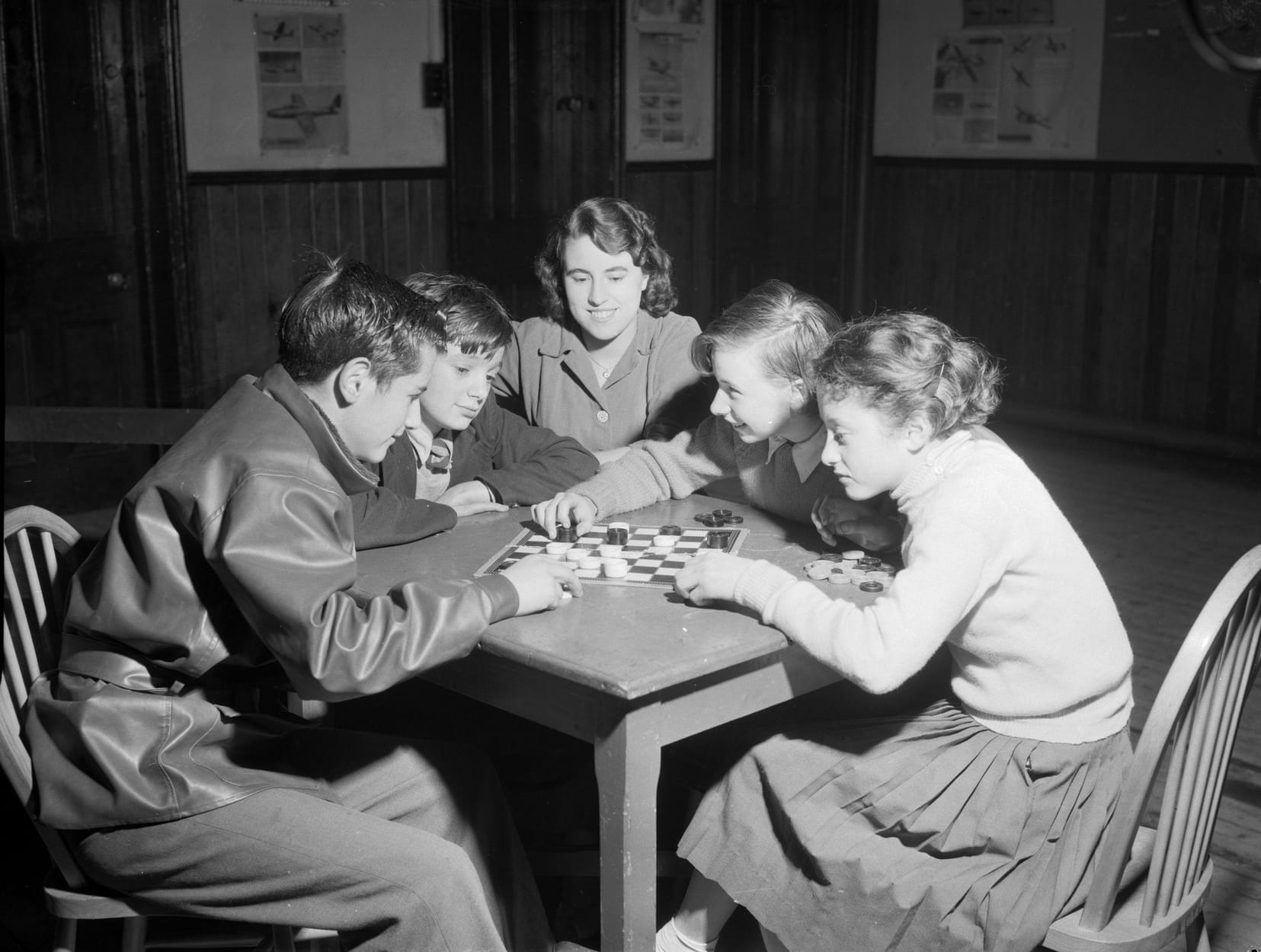
Away from the cameras, most youth organisations in Britain operated on an independent and voluntary basis, albeit with a growing number organised by local authorities. An NAYC leaflet from the era shows a wholesome-looking girl in a headscarf and a bonny teenage boy somewhere windswept, both looking off into the distance.
The cover claims there are 122,612 boys and girls attending 2,140 clubs, and leads with a bold and very recognisable statement: ‘It is vital that this country should have more clubs and more club leaders – NOW!’ The stated aims of the NAYC help us understand what people thought youth clubs were for in the immediate post-war period: ‘to help young people through leisure time activities to develop their physical, mental and spiritual capacities so that they may grow to full maturity as individuals and members of society’.
Definitions of youth work, youth services and clubs themselves ebb and flow with societal changes, and, in this moment, the overarching impression is that it was about knitting society back together again. Togetherness, in the face of divisive forces, is a recurring theme in the youth club story, one that remains relevant today.
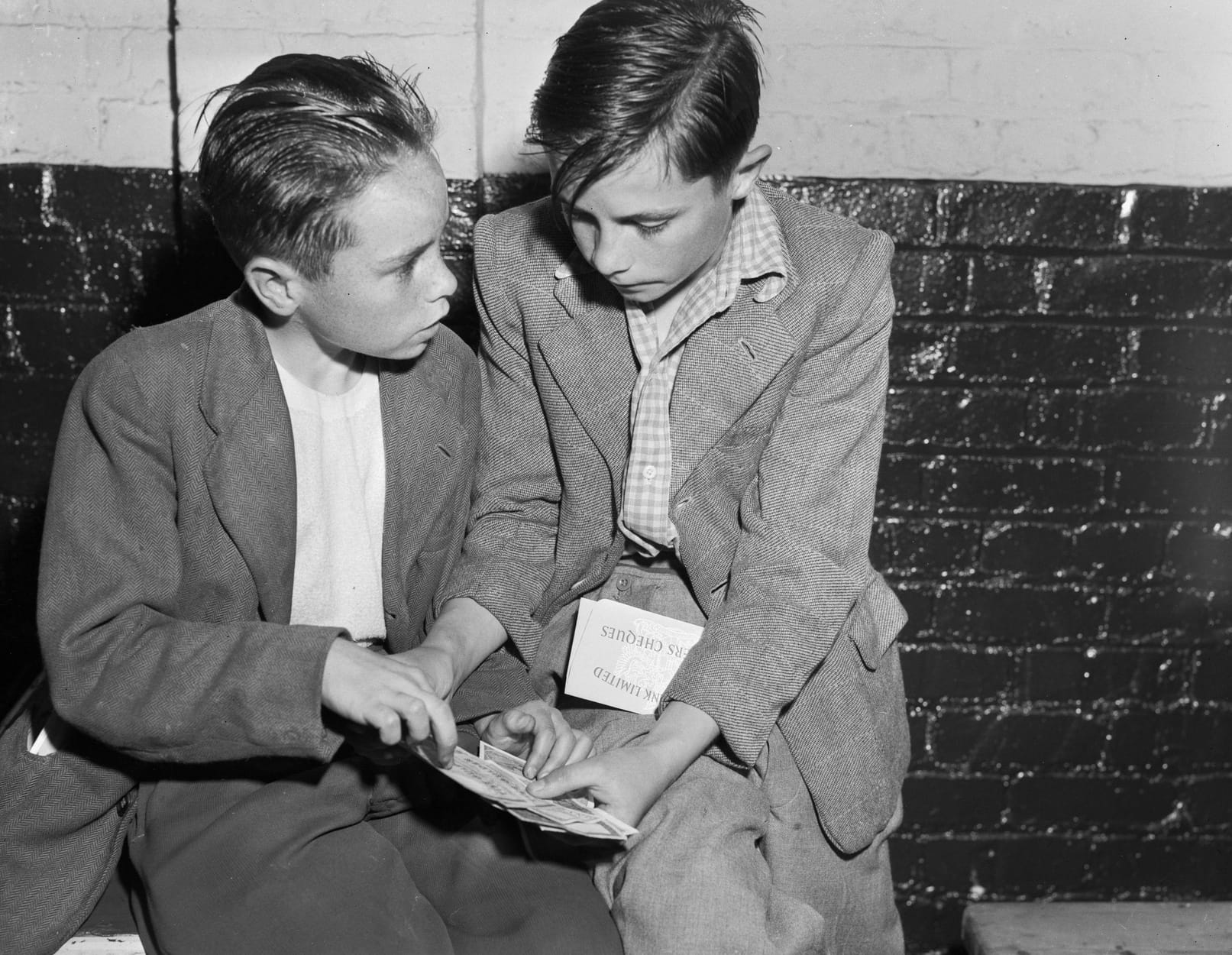
Newspaper cuttings compiled by the NAYC show changes as they were happening. Glued into a huge maroon-and-black book, there’s a particularly full section covering autumn 1955. Pages are crammed with articles that relate to the demonised teenagers of the day, the Teddy Boys. Editorials attempt to explain the appeal of draped Edwardian suits and dramatic hairstyles, with headlines such as ‘Young Gangsters’ and ‘Do Girls Really Like Teddy Boys?’
Teenagers’ post-war love of music and dancing generated panic from above. Working youth had more money than their parents and some of them channelled it into clothing that drew from both Edwardian dandies and American rock ’n’ roll. Youth culture pushed a new phase of the youth club into existence – by, once again, creating the feeling in adults that the kids needed to be contained, and by offering spaces that young people actually wanted to hang out in.
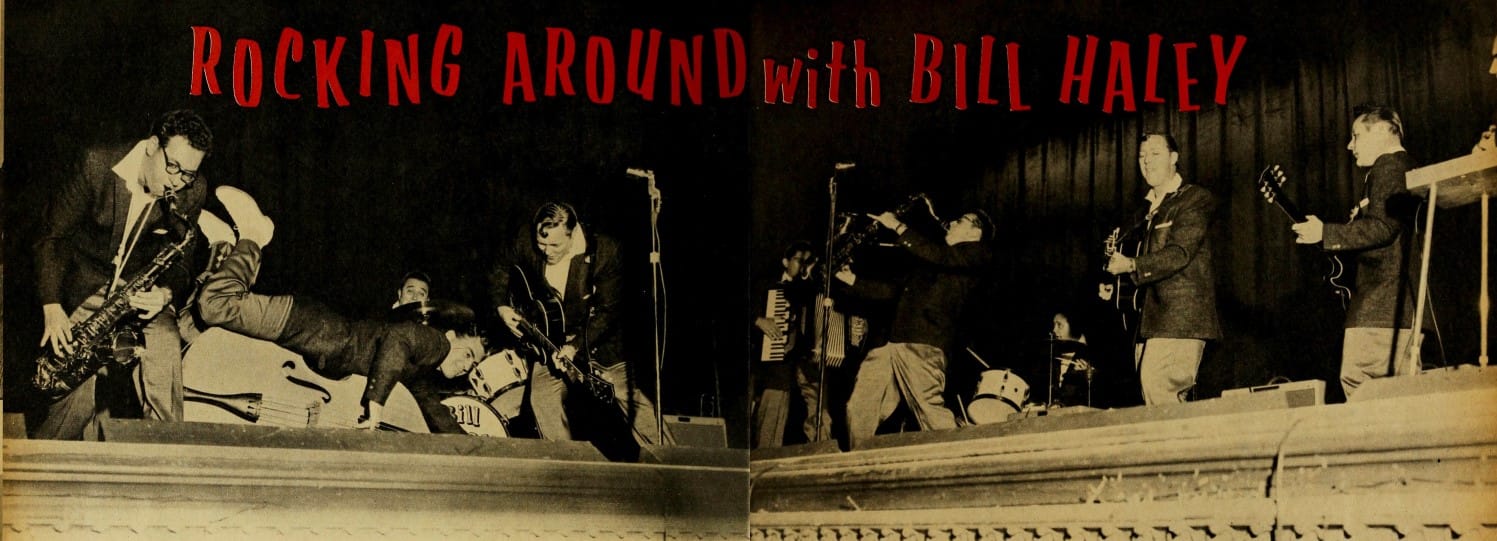
Societal anxieties about contemporary life wrapped themselves around Teddy Boys. The film Rock Around the Clock, featuring Bill Haley and His Comets and the multimillion-selling song of the same name, came out in 1956, and was famously controversial.
Youth-oriented spaces have long fed and nourished undercurrents of music, art and sport, in the same way that public schools feed politics and captaincy culture. Teddy Boys were shaping youth culture and they would also remake the youth club.
Karl Reinz’s documentary We Are the Lambeth Boys was filmed in the summer of 1958 at Kennington’s Alford House, which was open throughout the week and remains open today. The voiceover gives a sense of the overall picture: ‘Alford House is not a typical London youth club. It is a very good one – friendly and alive and enjoyed by 350 members. More like it are needed.’
Most of the Alford House youth club members were working, with only a couple still at school. One teenager has an admin job in the Post Office, another is a butcher, while others are dressmakers or secretaries. Beryl, who says very little but expresses herself with great seriousness on the youth club dancefloor, works on a factory production line putting pastry lids on pies.
The Alford House crew represented the majority: most youth club attendees in the 1950s were in full-time employment. The school-leaving age had been raised to fifteen in 1947 and wouldn’t be raised again until 1972. These teenagers were also workers, coming to the club for communal down time at the end of a shift.
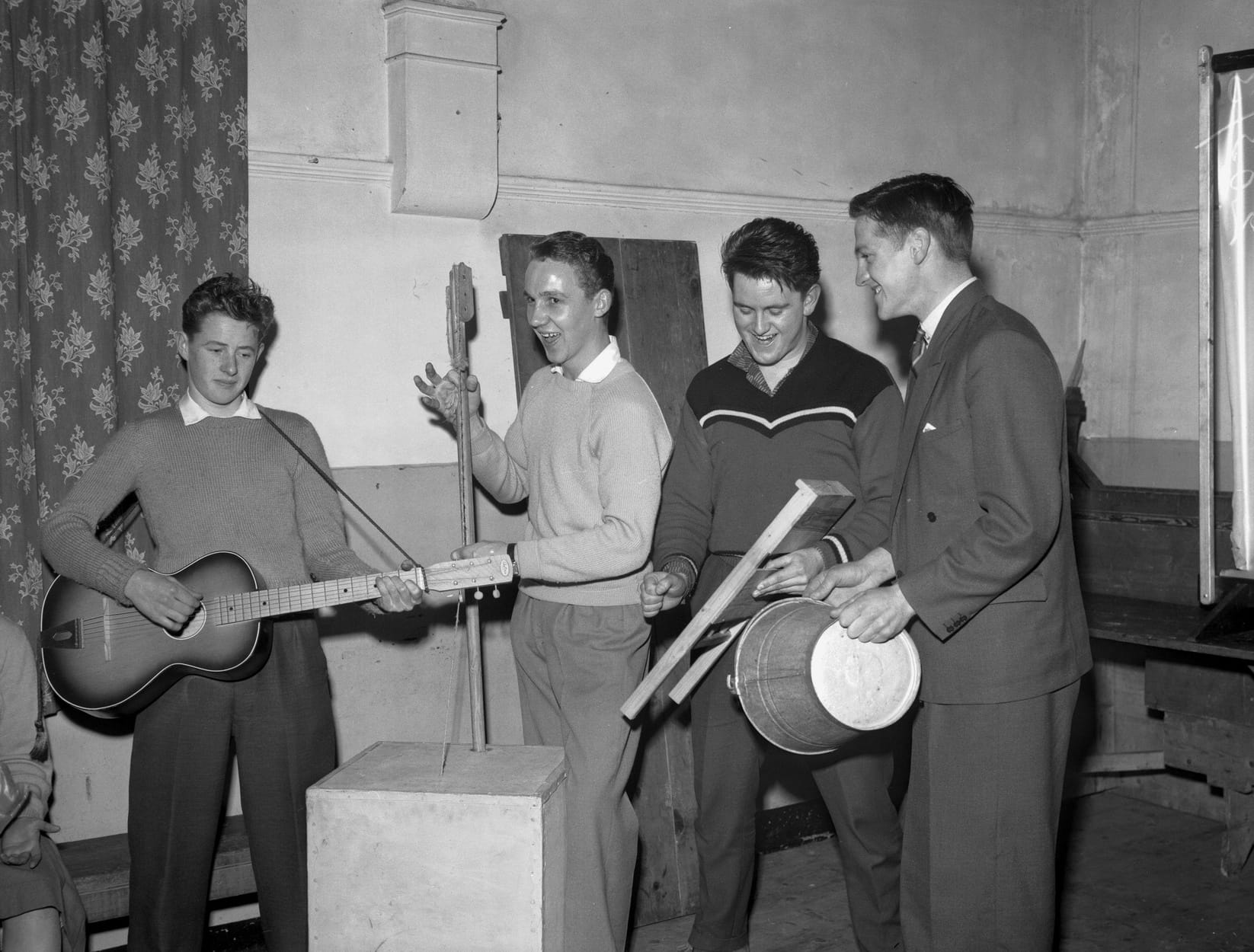
At Alford House there’s cricket, drawing, discussion and, of course, dancing. Trips to the chippie after the club ends at 10 p.m. look like a right laugh. A club visit for the annual cricket match against private boarding school Mill Hill in north London, which had been supporting Alford House since 1923, feels less cosy.
The Kennington cricketers need borrowed whites to take part in the match and, afterwards, they lounge about, smoking, not saying much and looking either surly or stressed, depending on your perspective. They chant, cheer and catcall on the journey home through central London, including a very lairy moment inspired by a stationary policeman: ‘I’ll sing you a song, it’s not very long, all coppers are bastards,’ followed by a new version for the next constable, in which the insult was swapped out for ‘handsome’.
The voiceover gives some sideways context a few beats later. ‘When the boys pass through the West End, the West End remembers for a while that they have passed through. And that’s how the boys want it.’ As soon as their open-backed Army-style jeep crosses the river, over Westminster Bridge and away from Big Ben, they break out into the titular song, the bare bones of which can still be heard on football terraces across England and Scotland to this day.
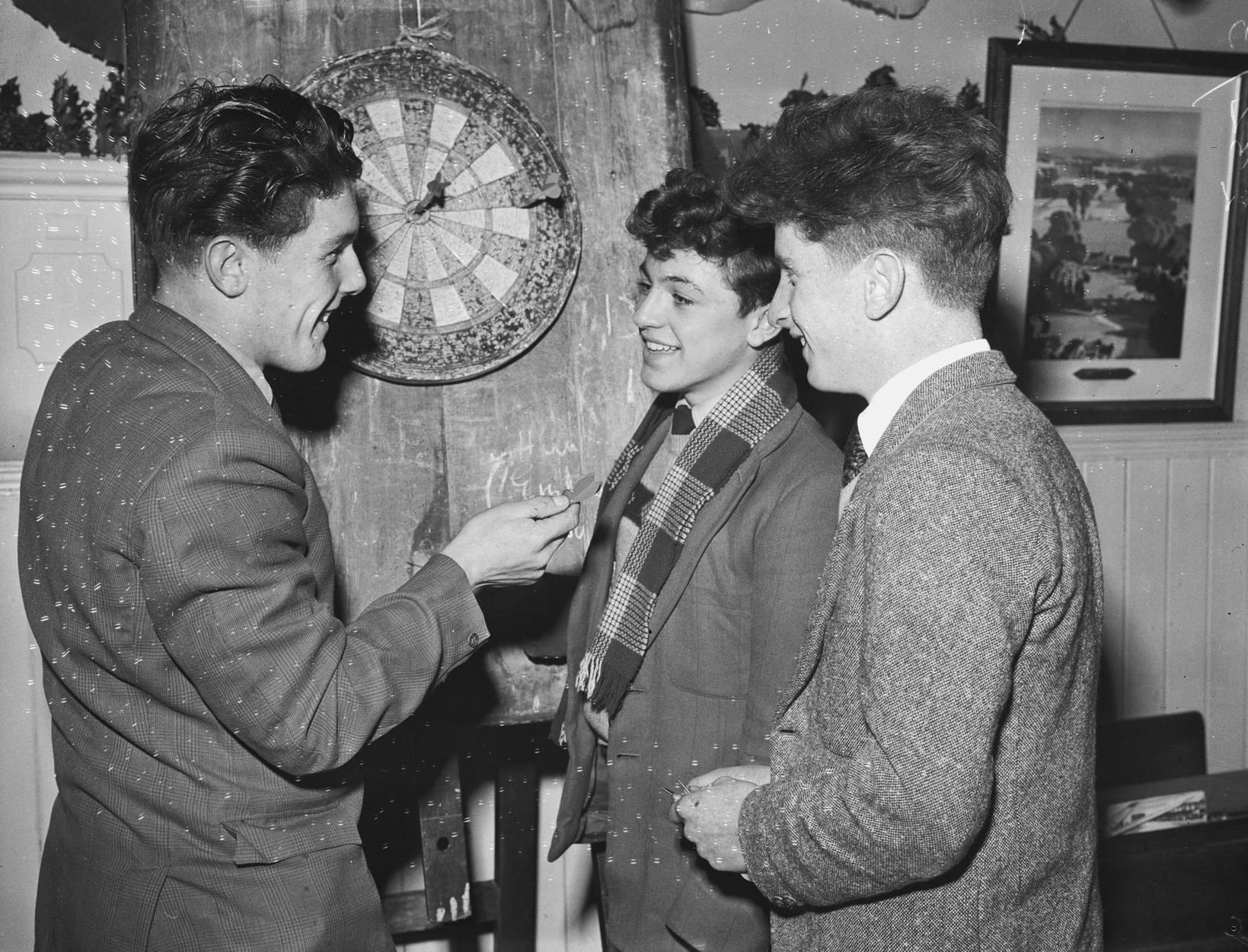
We Are the Lambeth Boys was sponsored by Ford Motor Company as part of their Look at Britain series, which feels like a useful antecedent for any youth workers currently pondering the ethics of taking corporate money. The soundtrack was written by British jazz instrumentalist and composer Johnny Dankworth, whose orchestra was the first British band to be invited to the Newport Jazz Festival, and who played with certified greats including the Duke Ellington Orchestra and Louis Armstrong. Top Rank records recognised the potential appeal, and released the Lambeth Boys soundtrack.
Dankworth’s involvement with youth clubs would continue. Over the August bank holiday in 1958, white mobs in Notting Dale and Notting Hill violently attacked newly arrived British citizens and their homes. Teddy Boys were prominently involved.
In response, Dankworth became a founding member of the Stars Campaign for Interracial Friendship (SCIF), using music and culture to combat racism and the ‘colour bar’, which created legal space for segregation in the UK until the introduction of the Race Relations Act in 1965. Actor Laurence Olivier became chairman, with members including multimillion-selling British–Trinidadian pianist Winifred Atwell, who had multiple Top Ten hits in the 1950s, Absolute Beginners author Colin MacInnes and jazz musician and critic George Melly.
Rick Blackman’s history of SCIF, Forty Miles of Bad Road, describes fundraising gigs in Soho cellars with guest appearances from national celebrities, and a SCIF Christmas party for over 250 children ‘of all races’ from three west London schools. The event was televised by the BBC.
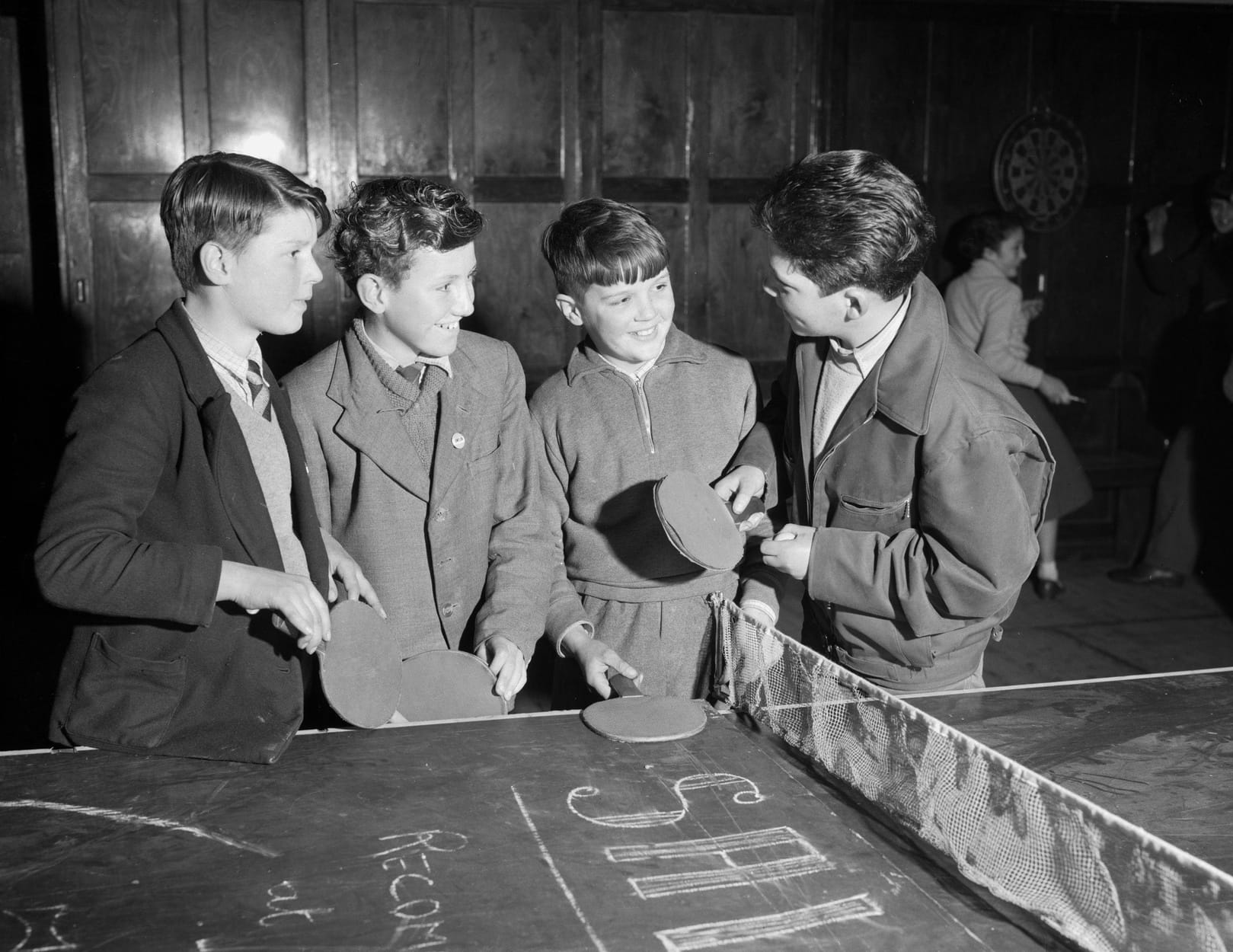
In January 1959, the group opened a youth club at St Mark’s Church Hall in Notting Hill. ‘SCIF’s first permanent initiative was to found a club to promote interracial mixing and openly oppose the colour bar,’ wrote Blackman, describing a ‘young people’s youth club’ with a jukebox and live music from artists including Dankworth and his wife, the singer Cleo Laine. Club chairman, actor Harvey Hall, told the Kensington Post that there would be weekly meetings, adding a detail that puts this underage club night firmly into the youth club lineage.
‘The youngsters will have a say in the running of the club,’ said Hall. ‘And they will be asked to bring their friends in. But this will not be a select club, we do want to bring the rougher element in. Teddy boys will be welcomed.’ The Harmony Club was situated on Blenheim Crescent, where extreme street-level violence had taken place only six months earlier.
SCIF’s intention for a ‘chain of Harmony Clubs’ did not materialise. In fact, the celebrity-organised youth club lasted only six weeks, before closing after an acrimonious split between two organisers, Six-Five Special BBC TV presenter Josephine ‘Jo’ Douglas and blues musician Alexis Korner.
The latter cited the pressures of success: the club had space for only fifty or so members and yet attracted hundreds. The SCIF youth club would be a flash in the pan, albeit alongside other powerful sparks.
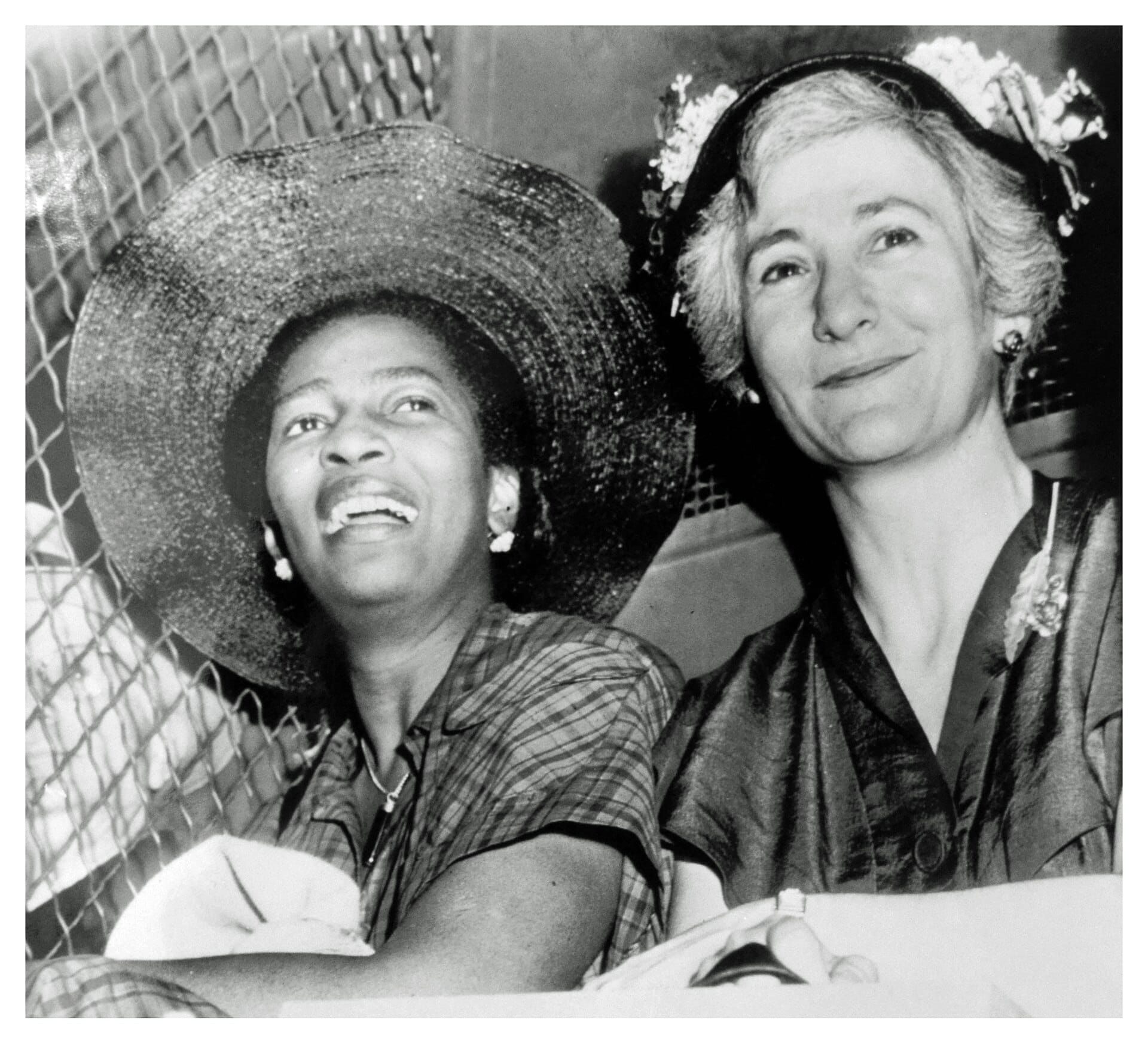
Notting Hill Carnival founder Claudia Jones was working in west London at the time, setting up the West Indian Gazette and Afro-Asian Caribbean News (WIG) and joining SCIF. At the end of January 1959, she organised the first Notting Hill Carnival, which took place in St Pancras Town Hall and was a huge success. It is now, of course, the largest free event in Europe.
Later in life, Johnny Dankworth would write a score, Tom Sawyer’s Saturday, which was designed for young musicians and could be played by ‘most reasonably competent youth orchestras’. From 1970 onwards, he and Cleo Laine ran a jazz education summer school in their back garden near Milton Keynes. A venue evolved – The Stables – which continues to host concerts and National Youth Music Camps to this day •
Up The Youth Club: A Love Letter
Faber, 2 July, 2026
RRP: £10.99 | ISBN:978-0571389223
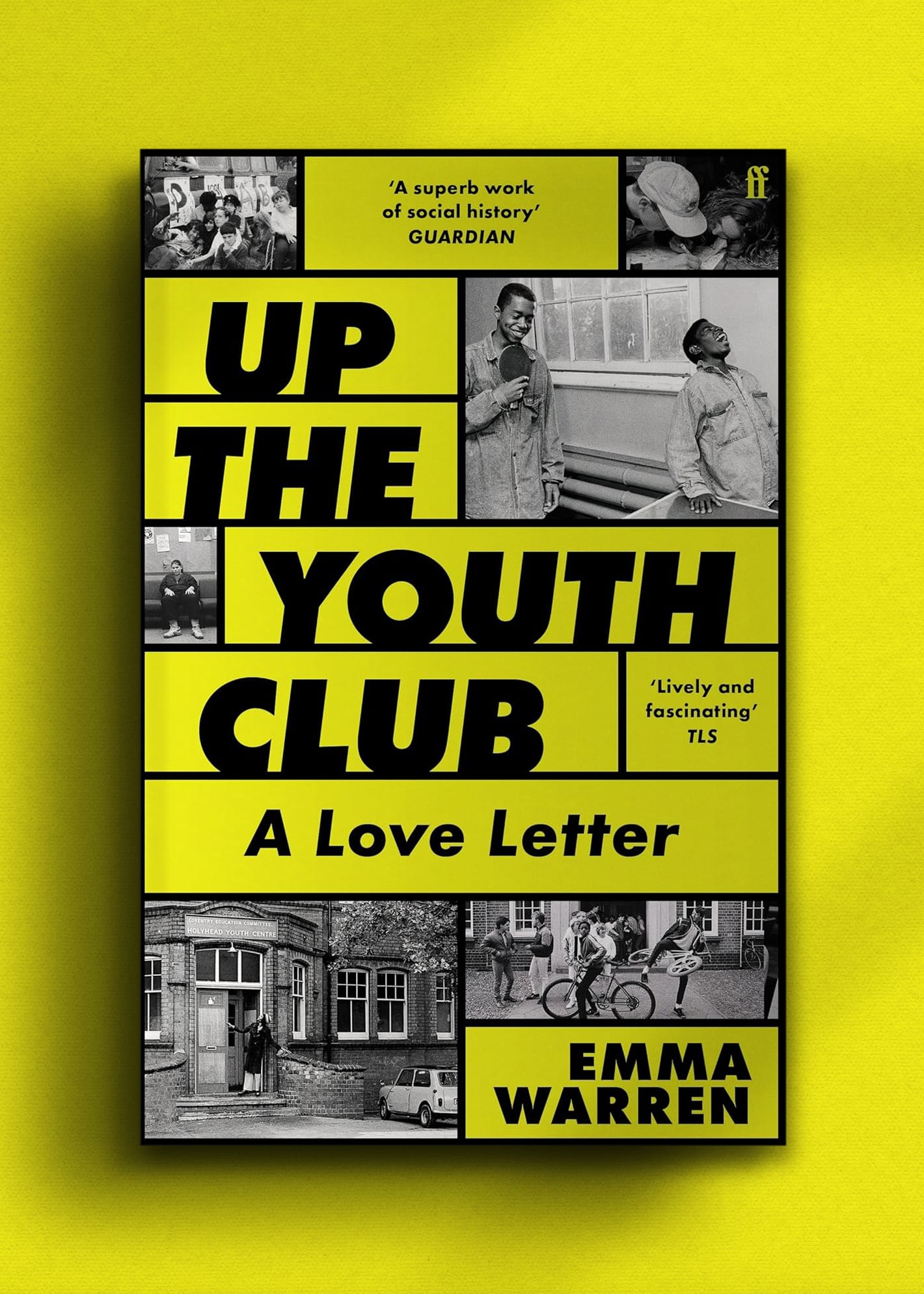
A searching look at the rise and fall of the youth club by renowned cultural documentarian Emma Warren, highlighting the seismic impact they have had on UK culture and why we need to ensure their existence for future generations.
'Youth clubs have always existed. They always will, because there will always be young people. How we care for our youth, and what we owe them, is a question for all of us.'
In Up the Youth Club, Emma Warren maps the shifting story of youth clubs in the UK and Northern Ireland, from factory workers in Victorian Boys' and Girls' clubs to renegade self-emancipatory spaces in the 1970s and the music-generating youth clubs of more recent decades. With a mixed lineage in church evangelism, the patronage of the upper classes, grassroots' DIY, and erratic state funding, the youth club has had a huge, yet almost invisible, effect on music, sport, culture and society.
Arguing that we cannot advocate for what we do not understand, Warren positions youth clubs as a kind of engine room - from the famous success stories to come out of their doors, such as The Specials or Stormzy, to the untold stories of young people finding shelter, sustenance and stimulation for over a century - and why their dwindling numbers, largely due to austerity and funding cuts, is of serious concern for us all.
With this impassioned history, Warren invites us to pick up the torch and play an active part in protecting and re-igniting this vital part of UK society.
With thanks to Lauren Nicoll.
📸 Dive into our Features
🎤 Read Interviews
🎧 Listen to Podcasts
🖼️ Buy fine art prints & more at our Store



.jpg?ref=unseenhistories.com)
.jpg?ref=unseenhistories.com)
.jpg?ref=unseenhistories.com)

.jpg?ref=unseenhistories.com)
.jpg?ref=unseenhistories.com)
.jpg?ref=unseenhistories.com)
