
Frederick Banting and the Discovery of Insulin
Dr Saira Hameed tells the story of Frederick Banting's transformative research on insulin – work that would save the lives of tens of millions of diabetics


Until the 1920s there was no cure for the disease we call 'Type 1 Diabetes'. Unable to regulate its blood sugar levels, a human body would pass beyond the help of medicine into terminal decline.
Then, one night in 1920, a Canadian doctor called Frederick Banting was struck by an idea that would save the lives of millions.
Here Dr Saira Hameed, author of the book Signals: The Inside Story of Our Hormones, tells the story of Banting and his pioneering work on insulin.

For references please consult the finished book.
Frederick Banting was a medical student at the University of Toronto when, on 4 August 1914, Britain declared war on Germany. A fierce patriot, Canada was then a dominion of the British Empire, Banting volunteered for the army the very next day but was rejected because of his weak eyesight. Two months later, he attempted to join up again, and once more he was rejected. The following year, he tried a third time, and with the Allies now in dire need of medics, he was finally enlisted.
After serving in hospitals for injured troops in both Canada and England, in June 1918 Captain Banting was deployed to the Western Front as a field ambulance medical officer. Three months later, during the Second Battle of Cambrai, ‘he immediately proceeded forward through intense shell fire to reach the battalion. Several of his men were wounded and he, neglecting his own safety, stopped to attend to them. While doing this he was wounded himself and was sent out notwithstanding his plea to be left at the front.’ So read Banting’s Military Cross citation, which concluded that ‘His energy and pluck were of a very high order.’
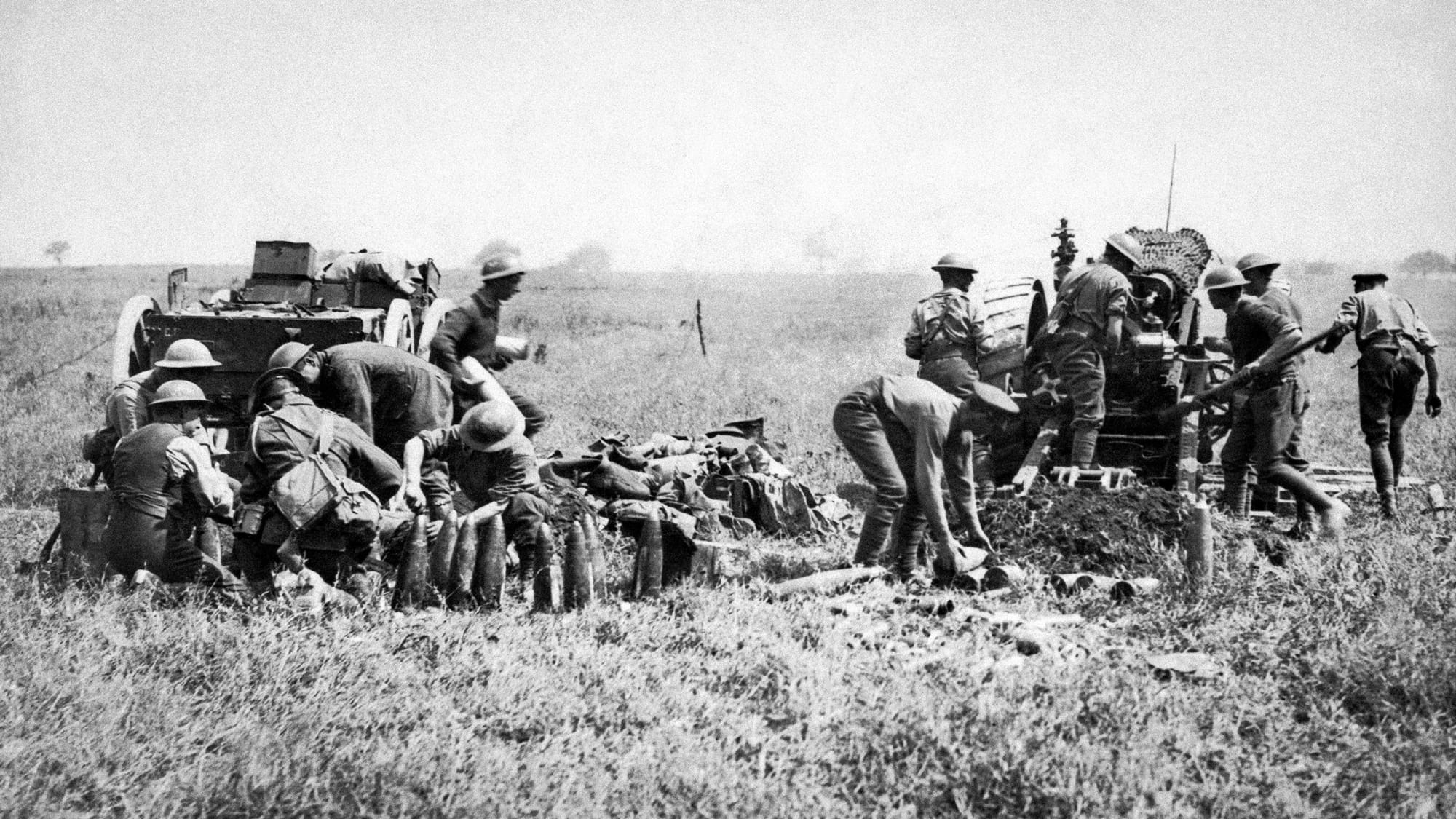
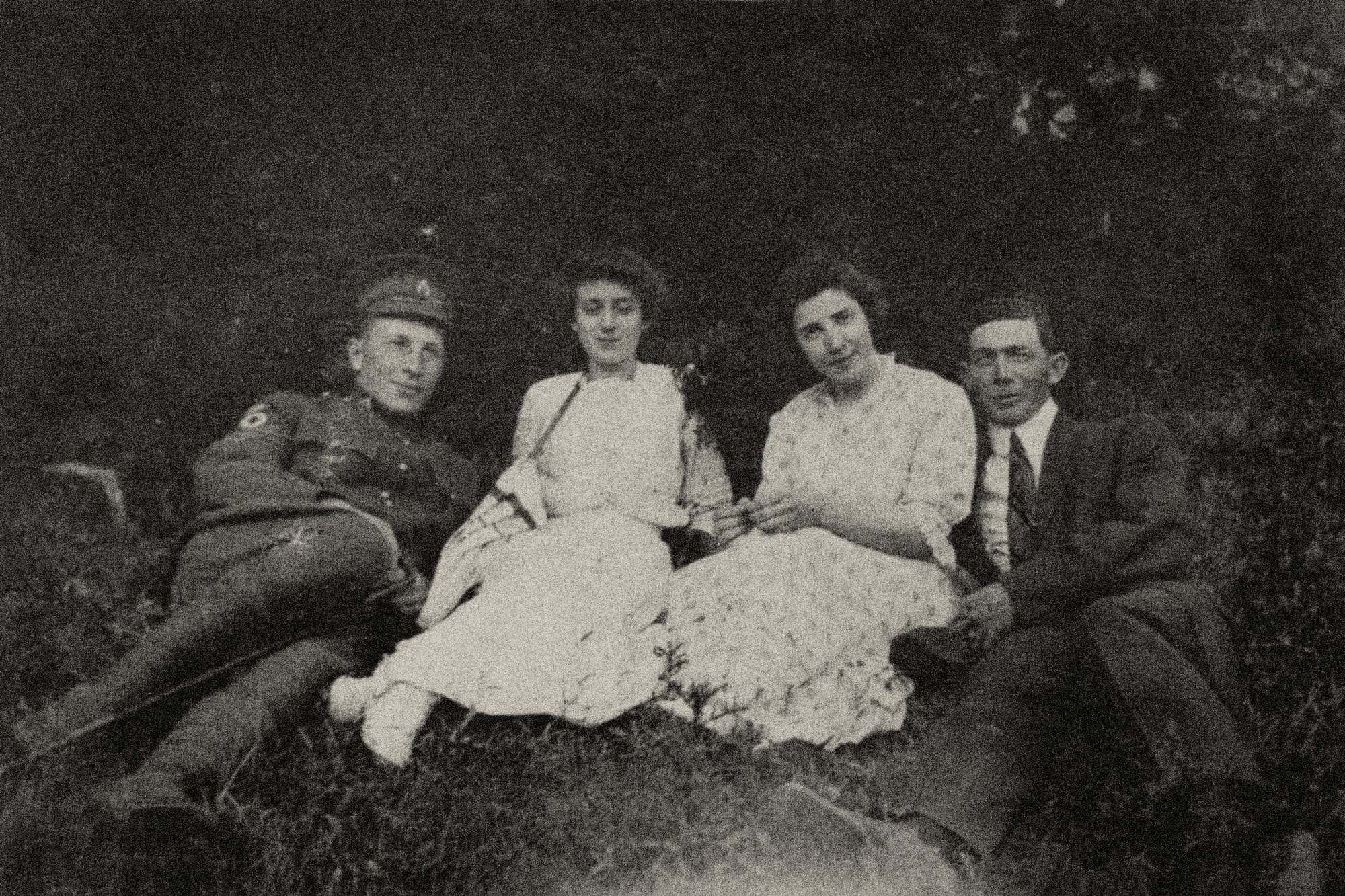
It was this ‘pluck’ that he would need to call upon again, lying in bed two years later, restless and unable to sleep, because as for many of the eventual giants of endocrinology – the medical specialty concerned with these diseases of the body’s hormones – things were not going at all well for Fred Banting. He had been a forgettable and distinctly average medical student, and following his convalescence from his shrapnel injury, he returned to Toronto, his ‘greatest ambition’ to be appointed to the surgical staff at Sick Children’s. But after failing to win a place at the teaching hospital, he moved to London, Ontario, where he set himself up in private practice. Business was slow, and some days Banting had no patients at all. Soon, money was so short he resorted to cooking on his dispensary’s Bunsen burner, and he put off plans to marry his schoolteacher sweetheart, believing it unconscionable for a man to live off his wife’s salary.
With his prospects looking increasingly threadbare, Banting had recently taken a part-time teaching job at the University of Western Ontario to make ends meet and spent the evening of 30 October 1920 drafting a lecture on the pancreas and carbohydrate metabolism. Now, consumed by insomnia, he began leafing through a medical journal, and with the earlier teaching preparation still on his mind, an article on the pancreas caught his attention.
‘It was one of those nights’, Banting later recalled, ‘when I was disturbed and could not sleep. I thought about the lecture and about the article and I thought about my miseries and how I would like to get out of debt and away from worry.’ He had only been reading the journal to soothe himself to sleep, but as he lay awake, his mind racing, an idea began to take shape. The clock was coming up to two o’clock. Finally, he got out of bed, wrote the date in his notebook – Halloween night, 1920 – and then jotted down a plan that would go on to save tens of millions of lives.
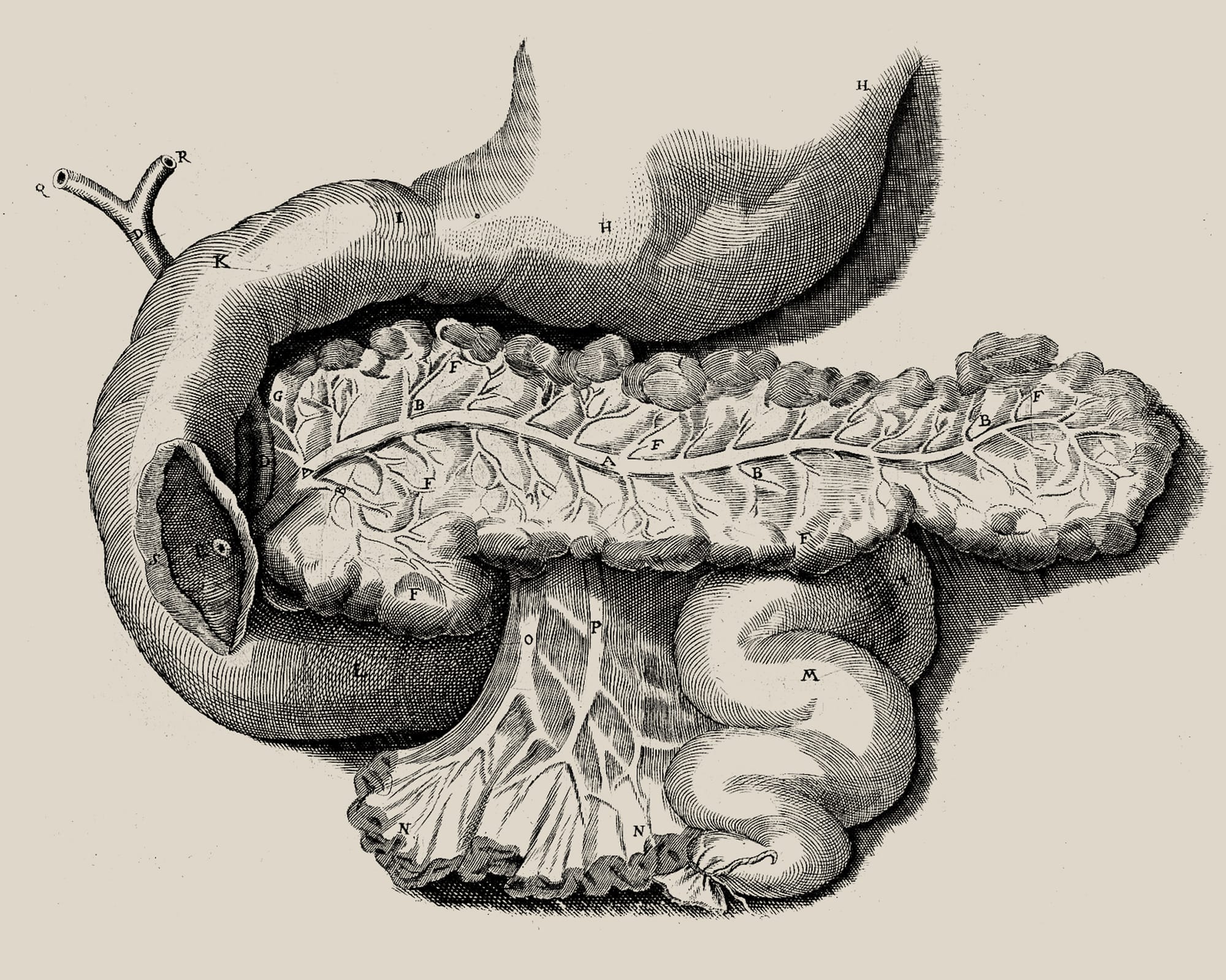

Scientists had known for three decades before Banting’s sleepless night that the pancreas controls the blood sugar level through a substance produced by cells that resemble islets, so in time the hormone was named insulin, from insula, the Latin for ‘island’. Since children with diabetes lack insulin, it was thought that all that was needed was to extract insulin from animal pancreases and then give the hormone to diabetic children to make good their deficiency – except that obtaining the hormone was proving devilishly difficult. Numerous researchers – up to four hundred in one estimate – had tried and failed. The conundrum led some scientists to question whether this grail of a pancreatic hormone existed at all, while others proposed that it did, but it was simply too chemically unstable to be extracted.
The problem, it would turn out, is that the pancreas has two functions: one, the production of hormones; the other, the release of enzymes. The pancreas releases its enzymes into the gut, where, like a kitchen blender, they macerate food during digestion, and it was these enzymes that had continually outfoxed the researchers. The scientists’ aim had been to break open the hormone-producing cells of the pancreas and liberate their insulin. But they were finding this to be as impossible as smashing a bottle of salad dressing and trying to collect the oil but not the vinegar, when of course both will come gushing out. The same holds true with the pancreas: in attempting to extract insulin, inevitably the enzyme-producing cells were broken too, releasing their enzyme ‘blenders’, which would then efficiently pulp the rest of the pancreas, including the insulin-producing cells.
Fred Banting, though, saw a solution. The journal article he read that night described a post-mortem in which the cadaver was found to have a blockage in the pipe (or duct) through which the pancreas sends its digestive enzymes to the gut. With the outflow blocked, the enzymes had remained stuck in the pancreas, where the autopsy showed they had macerated and destroyed the cells that had produced them. But – and this was Banting’s revelation –the insulin-producing islet cells had survived intact.
What if, Banting wondered, this could be repeated in the laboratory using experimental dogs? Perhaps the young surgeon could tie off the pancreatic duct, and the stopped-up digestive enzymes would obliterate the cells that contained them. This would leave behind a pancreas that could now do only one thing: produce insulin. The dogs’ pancreases could then be removed, and their precious insulin extracted.
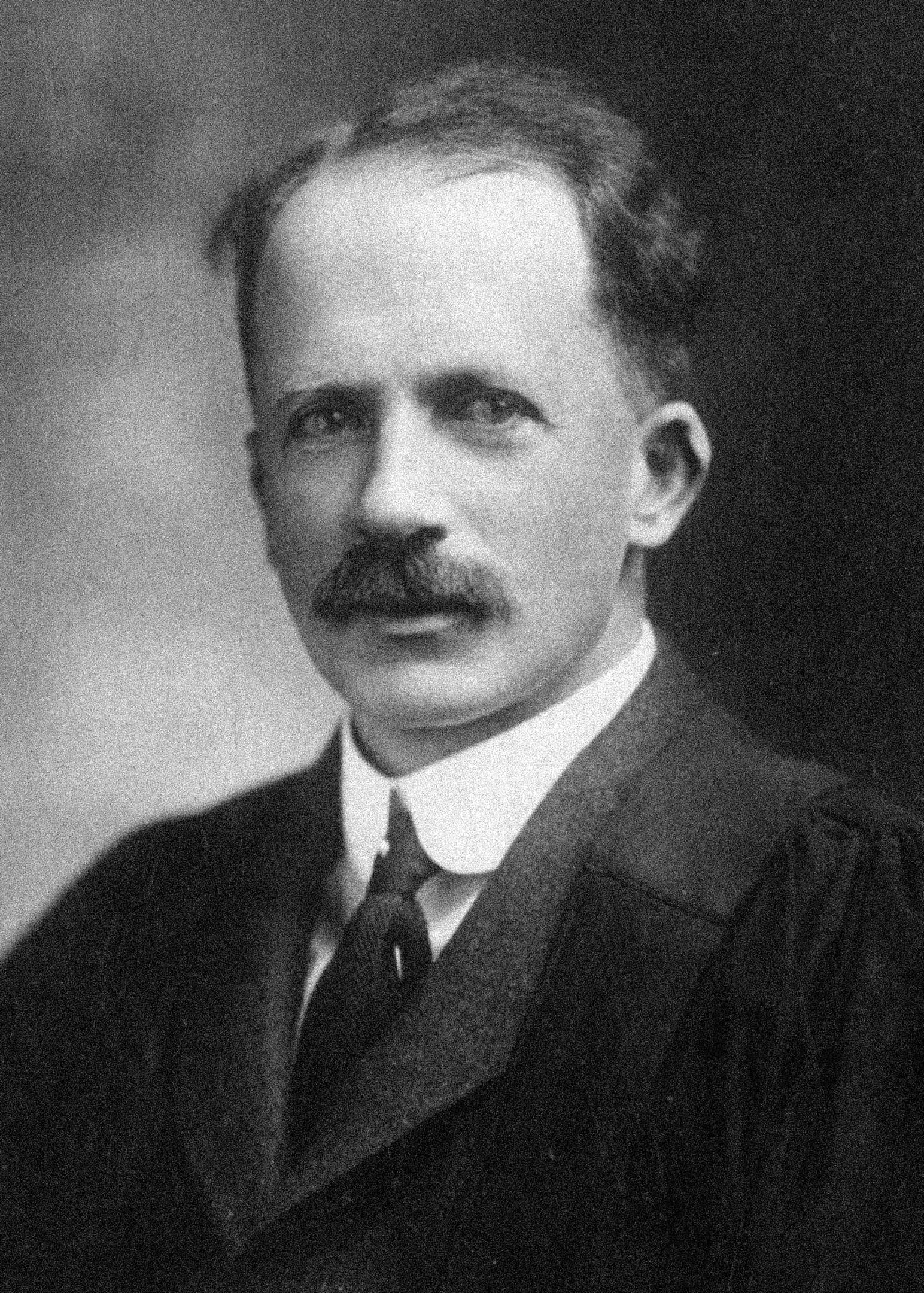
A week later, Banting was pitching the proposal to John Macleod, a Scotsman and eminent professor of physiology at the University of Toronto. He had been granted an audience by the great man out of courtesy to a Toronto alumnus, albeit a decidedly mediocre one. Now, as an unknown provincial surgeon with no research track record, Banting was sketching out his Halloween night epiphany to the academic grandee.
Although unconvinced that Banting would succeed, there was something in his idea that caught Macleod’s imagination. Four months later, he wrote a letter to Banting, agreeing to the plan, and with this professorial dispensation came a makeshift laboratory in a disused operating theatre, some experimental dogs and a fourth-year medical student assistant called Charles Best.
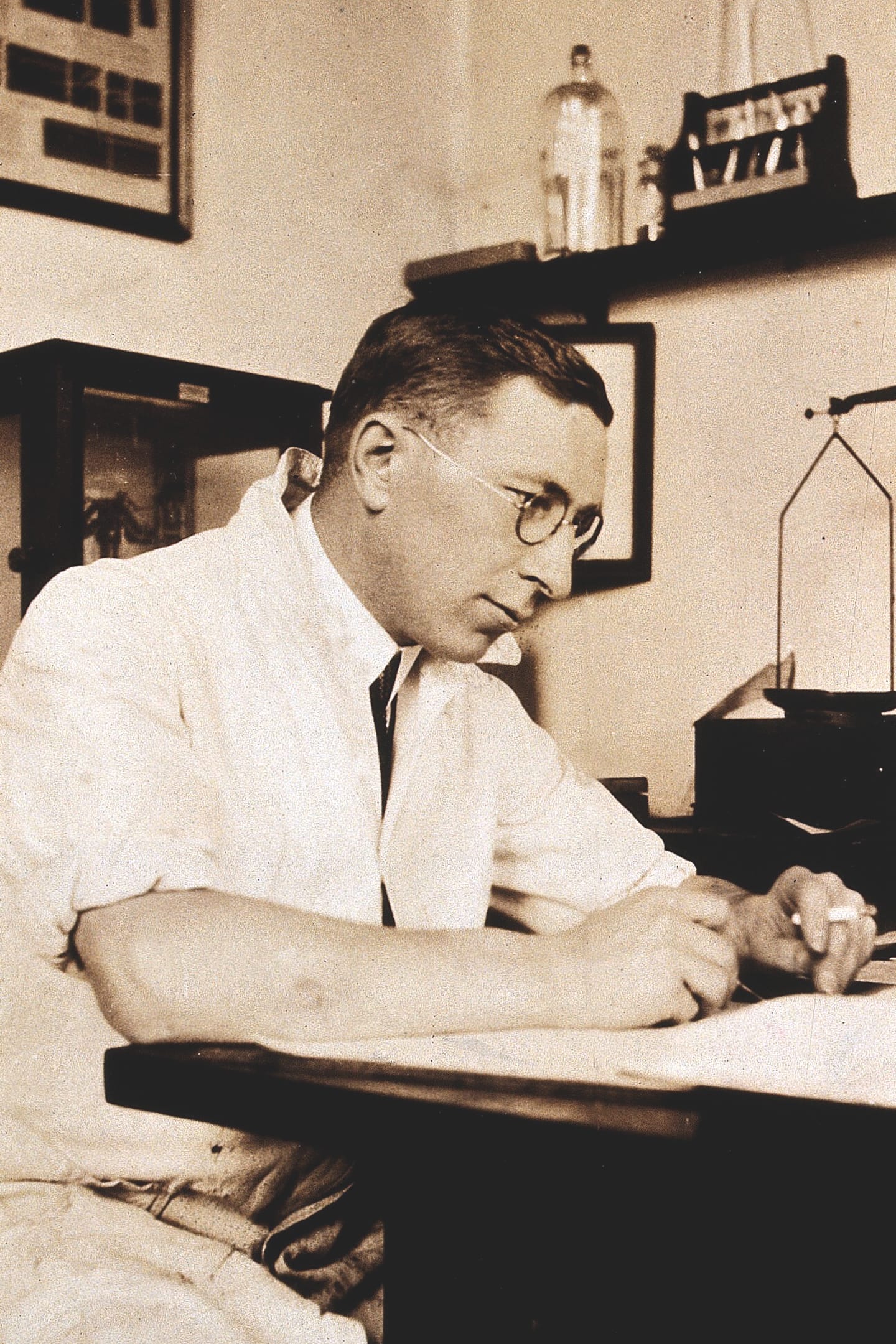
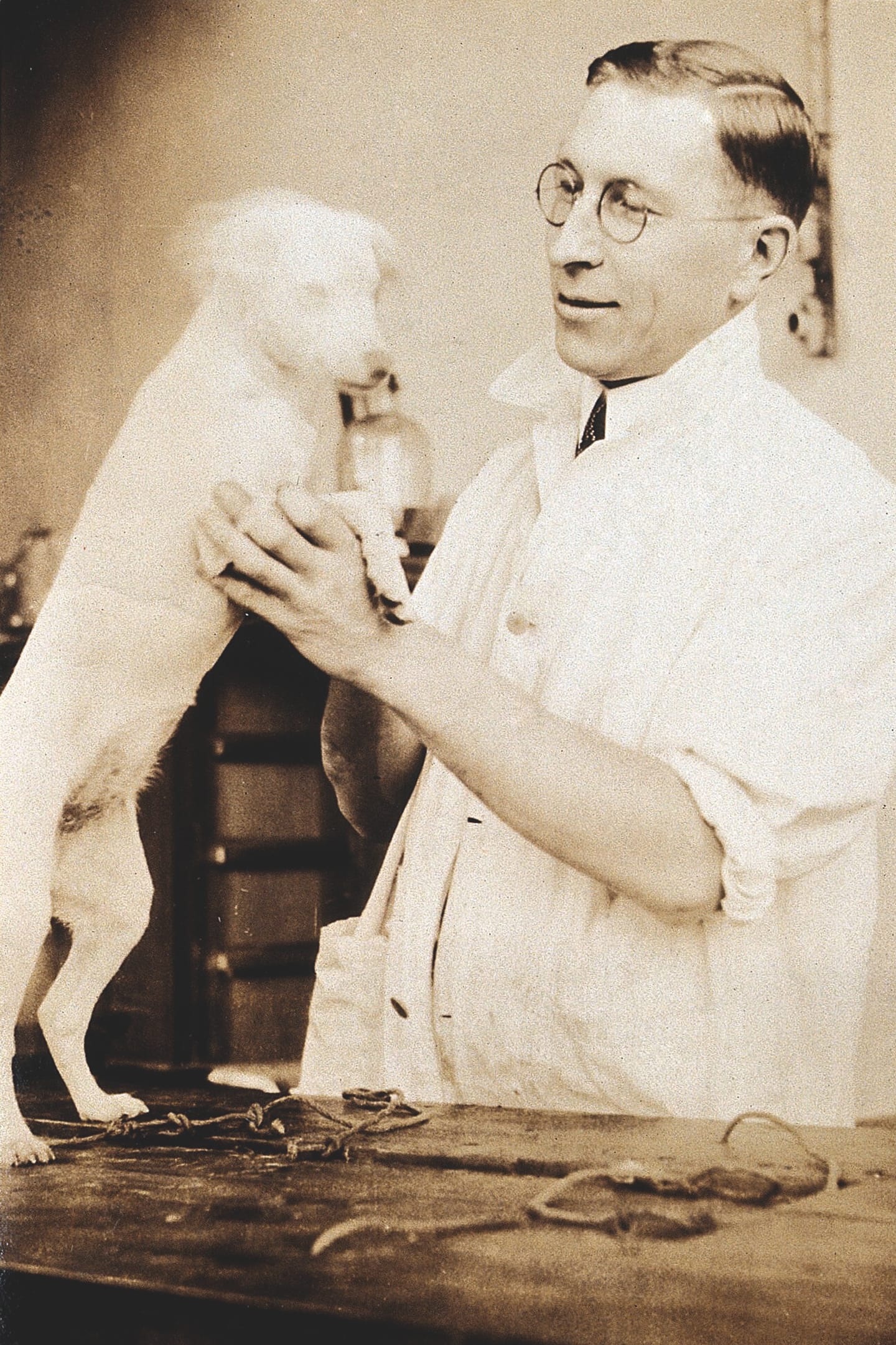
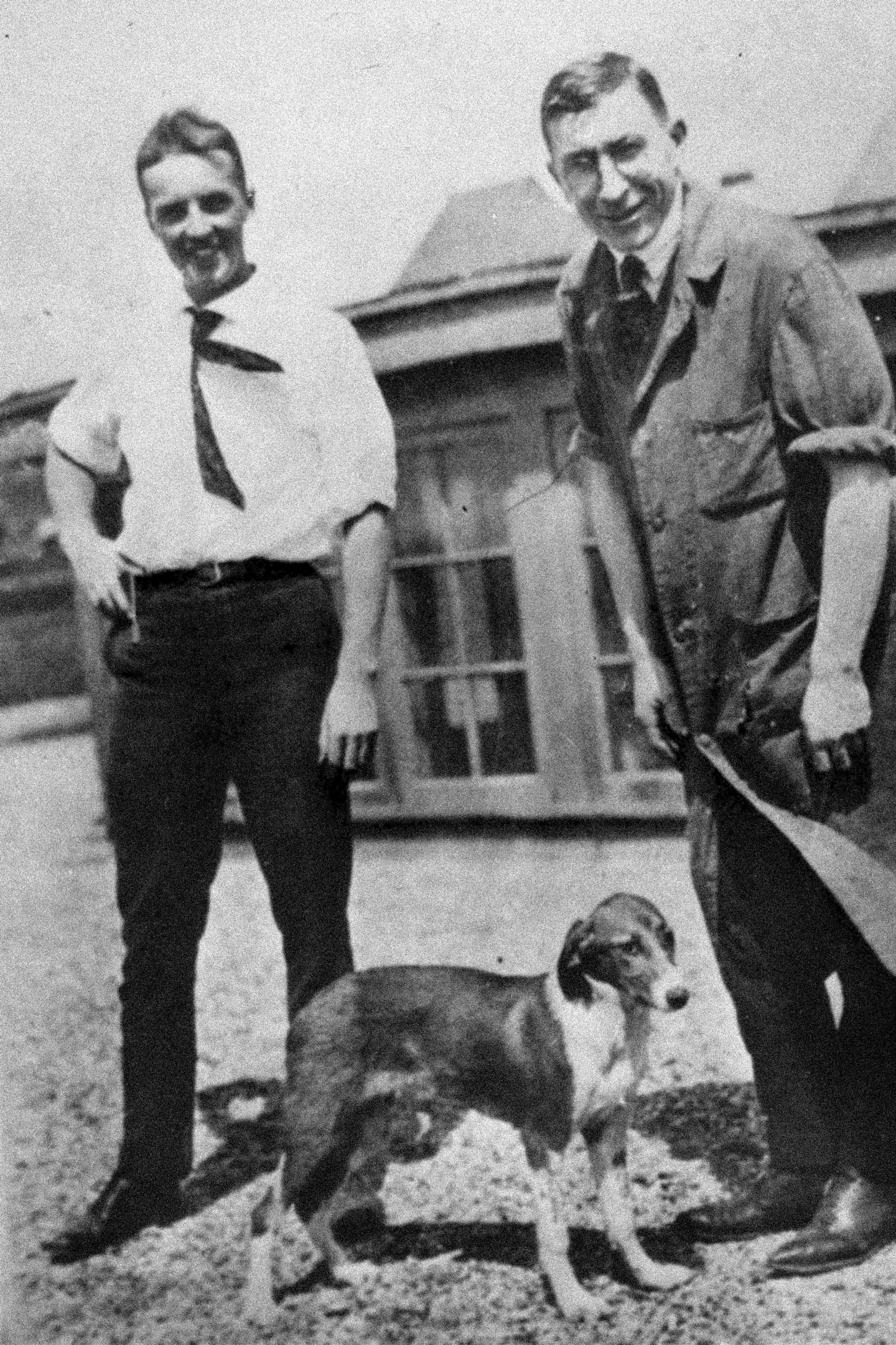
Two views of Banting at work at around the time of his medical research into the use of insulin. (⇲ Wellcome Collection) Photograph Unknown, c.1922 / (⇲ Wellcome Collection)
Like Banting, Best was a veteran of the Great War who had failed his army medical but had been determined to serve anyway. Having been rejected due to his heart murmur, Best, then eighteen years old, had refused the suggestion that he wear an A.R. badge – Applied for Service but Rejected – and instead found a homeopathic doctor who had certified him fit. Initially, both Best and another student, Clark Noble, were assigned to the pancreas project. But the experiments were due to run over the summer vacation, and one of the two students would need to stay back at the university and work through the holiday. They tossed a coin. Noble won: the summer break was his. Best lost the coin toss, but two years later, he would go on to share the Nobel Prize with Banting.
Work on the hormone extraction experiments began in the spring of 1921, the day after Best finished his end-of-year exams. Banting had come to Toronto with his own surgical instruments, but all the other equipment had to be borrowed. The decommissioned operating theatre-cum-laboratory had not been used in over a decade and was so filthy that Banting and Best had to scrub it clean themselves before their experiments could start.
Once the lab was ready, they set to work on the research plan that Macleod, though still pessimistic about the project’s potential, had drawn up for them. One group of experimental dogs would have their pancreases’ outflow ducts tied and then be kept alive to allow the enzyme-producing cells to self-macerate. The animals would then be killed to yield the surviving islet cells, from which the glucose-lowering substance would be purified. This extract would be used to treat a second set of experimental dogs, which had been rendered diabetic by removing their pancreases. With the experiments up and running, Macleod left Banting and Best with his ‘parting instructions’, before departing Canada for his annual summer holiday to Scotland.
‘In those days’, Best later recalled, ‘most of our time was spent in the laboratory where we frequently slept and prepared our meals.’ Sometimes during that long, hot Toronto summer of 1921, the lab thermometer’s mercury would rise to almost a hundred degrees Fahrenheit, and Banting would operate with a towel tied around his head to prevent his sweat dripping into the surgical field. By midsummer, after many long days of operating, with sometimes just a few hours’ sleep in between, Banting and Best had isolated the pancreatic extract. They injected it into one of their diabetic dogs, and its blood sugar fell – the first case to be successfully treated with the long-searched-for islet secretion.
‘I have so much to tell you and ask you about that I scarcely know where to begin,’ Banting breathlessly wrote to Macleod in Scotland. A month later came Macleod’s reply. He was pleased to hear things were progressing well, but the professor cautioned the two novices against hubris, and implored Banting that there must be ‘no possibility of mistake’. ‘It is very easy often in science to satisfy one’s own self about some point but it’s very hard to build up a stronghold of proof which others cannot pull down.’ In other words, proving that the extract lowered the blood sugar was not the same as Banting and Best wanting it to do so.
Macleod’s response angered Banting. He and Best had been working all summer in the heat, the stench and the filth of the dilapidated operating room. Rather than congratulating them, it seemed all Macleod, still thousands of miles away on his Scottish holiday, had to say was: be careful, repeat the experiments, check your results.
As work progressed, the project continued to show promise, but by the autumn, relations between Banting and Macleod had soured. Macleod had returned to find Banting sullen and recalcitrant. Fed up with working unpaid, Banting raged at the professor for his lack of salary and the dirty, third-rate lab facilities, with not so much as a lab boy to look after the dogs. He felt unvalued by the University of Toronto, he said. Surely the institution needed to recognise the importance of his work and give him the support he was asking for? ‘As far as you are concerned,’ Macleod shot back, ‘I am the University of Toronto.’ Later, as Banting recounted the fight to Best, he vowed, ‘I’ll show that little son of a bitch that he is not the University of Toronto.’
Although the argument had been bitter, Macleod, a pragmatic and experienced scientist, recognised the validity of Banting’s complaints and arranged for improved laboratory facilities. Soon after, Banting was also granted a lecturer’s salary, although it was paid by another department in exchange for some light academic duties. Nevertheless, the quarrelling continued into the winter, and by then the research was faltering too, because after their initial summer triumph, Banting and Best had been unable to successfully purify the canine pancreatic extract for medical-grade use.
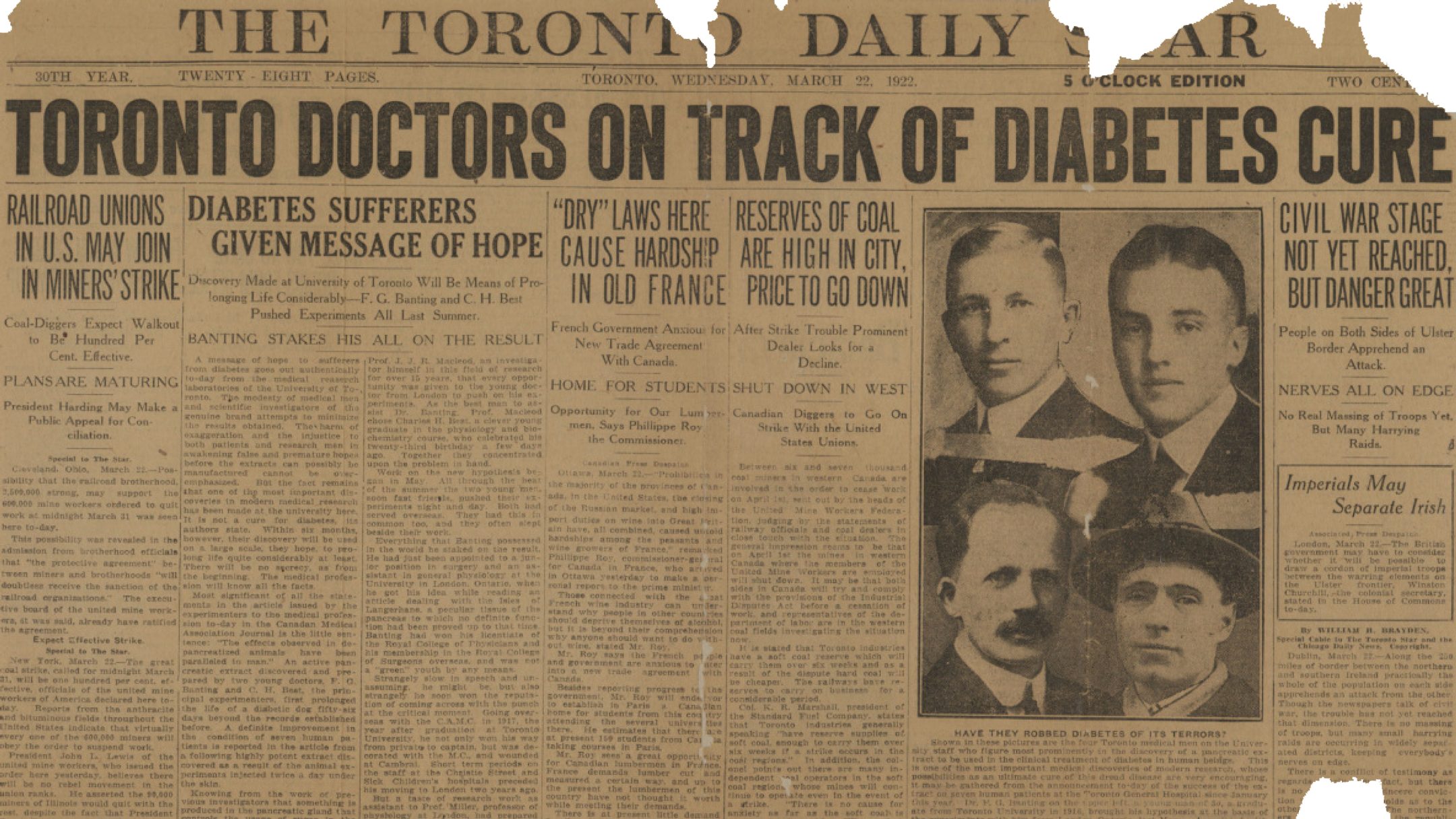
It was another scientist, James Collip, who cleared the purification hurdle. Collip was a brilliant twenty-nine-year-old biochemist from the University of Alberta who, in 1921, happened to be on a Rockefeller Travelling Fellowship in Toronto. While Banting and Best’s method had produced an extract described as a ‘thick brown muck’, and only in small quantities, Collip had the expertise to improve on their technique. Within weeks, his ingenuity had yielded a purified ‘mysterious something which when injected into totally diabetic dogs completely removes all the cardinal symptoms of the disease’.
But Collip’s joining also fractured the group into two camps, with Banting and Best pitched against Macleod and the newcomer. Communication between the two factions started to break down, and covert parallel experiments were set up. Banting even resorted to self-injecting the extract, and after asking Best to record the results, pinned an apology to his parents on the front of his lab coat in case things took a fatal turn. The extract had no effect. On the other side, Collip and Macleod started to lunch together most days. That he and Best were not invited led an increasingly paranoid Banting to suspect that the pair were secretly conferring on the project.
Macleod’s use of ‘we’ when publicly discussing the research also enraged Banting, raising his suspicions that the professor was planning a coup, now that the results were looking encouraging. Macleod, however, reasoned that the inarticulate and inexperienced Banting was fluffing it when he presented the work to hawkish academic audiences, and his sage professorial interjections were necessary to protect the project’s reputation. Banting remained unconvinced, repeatedly raging on campus and beyond about Macleod’s supposed skulduggery.

Macleod himself never once publicly criticised Banting, the only broadsides occasionally coming from Macleod’s wife, when she would recall ‘that horrible Doctor Banting who made our life so miserable in Toronto’. Macleod’s sangfroid, however, failed to cool the academic arguments, and on more than one occasion the laboratory rancour became so heated that it threatened to consume the whole endeavour. ‘B[anting] and C[ollip] actually engaged in physical combat over some controversy,’ wrote Clark Noble, the medical student who lost the coin toss but went on to assist with the project a few months later, ‘and I recall doing a cartoon of B[anting] sitting astride C[ollip] with his hands about his neck, the caption being “The discovery of Insulin”.’
By Christmas 1921, despite the Toronto group’s distemper, the purified extract’s increasingly promising success in lowering the experimental dogs’ blood sugar had given the work an even greater urgency. Theirs was not theoretical research, but an endeavour to put a stop to young lives being cut short for want of a missing hormone. Best spoke of ‘the urgent need of our antidiabetic material for clinical use’, knowing that each day the extract was in the laboratory and not the hospital, even more children were dying of their diabetes. Banting, meanwhile, repeatedly pushed Macleod for the preparation to be tried in patients. If they could save the diabetic dogs, he argued, surely they could save the diabetic children too.
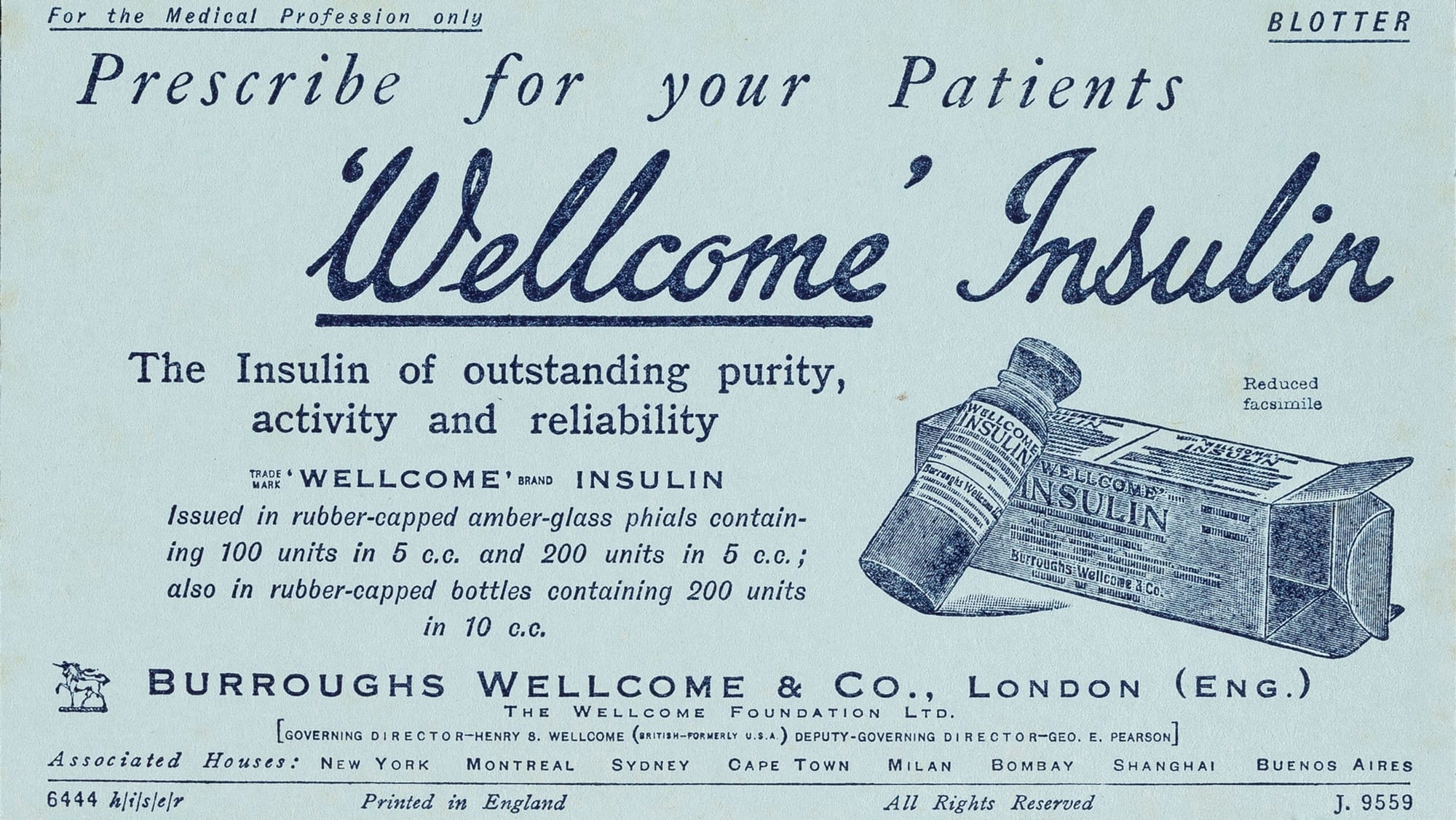
Against a backdrop of continued laboratory infighting, by the new year the pancreatic extract was ready to be tested in humans, and Leonard Thompson, a fourteen-year-old boy dying of diabetes, was chosen as the first recipient. Weighing just sixty-five pounds, Leonard had been admitted to Toronto General Hospital in the end stage of his illness, so weak and emaciated that he had to be carried to his hospital bed in his father’s arms. The child, who knew death was coming, agreed to try the experimental treatment.
On 11 January, an injection of an extract made by Banting and Best was given to him. It reduced the boy’s blood sugar, but the effect was marginal, and he remained terminally ill. Twelve days later, Leonard was treated with a second, purer and more potent extract, this time made by Collip. The result was almost magical: the next day, Leonard’s blood sugar had fallen back to normal. The pancreatic extract, the result of a revelation that had declared itself to Fred Banting just over a year earlier, had saved the boy’s life •
Signals: The Inside Story of Our Hormones
Faber, 4 June, 2026
RRP: £20 | ISBN:978-0571389773

“A doctor who has a gift for finding just the right words… compelling, affecting” – The Times
From cortisol to GLP-1, everyone is talking about hormones. Signals cuts through the noise and misinformation to help you finally understand yours. Dr Hameed reveals the workings of the miraculous hormone system and its far-reaching influence on men's and women's physical, emotional and mental health at every stage of life.
Dr Saira Hameed is one of the UK's leading endocrinologists with over twenty years experience treating patients. Here, she invites us into her clinic to see what happens when the body's signalling system – our network of endocrine glands and hormone signals – breaks down.
Sit beside Dr Hameed as she treats patients with crippling exhaustion, agonising infertility, absent libido and frenzied disorientation. Witness a young boy who can't stay awake and a teenage girl whose racing heart will not be able to keep going much longer...
Combining compassionately told patient stories with pioneering medical breakthroughs – and exposing common misconceptions along the way – Signals is a vital book for anyone who wants to understand their health and happiness.
“Signals is a special book, a witty, utterly fascinating guide to who you are and how you work. It's compassionate, humane and grounded in the author's deep clinical experience”
– Chris van Tulleken, Ultra-Processed People
“If you want to learn more about hormones, this is THE book to get”
– Davina McCall, Menopausing
With thanks to Lauren Nicoll.
📸 Dive into our Features
🎤 Read Interviews
🎧 Listen to Podcasts
🖼️ Buy fine art prints & more at our Store



