
Victorians Re-Dressed
Emily Sharmer presents an alternative glimpse into Victorian era fashion


The prevailing image of Victorian women and their dress has long been one of ladies trussed up in tight-laced corsets and heavy petticoats, swathed in black and morbid hair jewellery. Dress Historian Emily Sharma offers a more nuanced perspective of women's fashion during the Victorian era.

Ever since the era came to an end in 1901, the prevailing image of Victorian women and their dress has been one of ladies trussed up in tight-laced corsets and heavy petticoats, swathed in black and bedecked with morbid hair jewellery. We’ve been led to believe that Victorian women were ‘angels in the house’, restricted and inconvenienced by both the fashionable clothes they wore and the morals that governed them. Additionally, the marginalisation of Victorian working-class women’s sartorial experiences has led to the belief that Victorian women were homogeneous in their conformity to such styles, whereby the lower orders simply wore ‘watered-down versions’ of the dress of the rich.
Illustrated with colourised photographs, this article suggests new ways of imagining and looking at Victorian women’s fashions, presenting diverse narratives that challenge stereotypes of the period’s styles and fashions, beginning with the era's mascot, Queen Victoria.
Queen Victoria in Colour
Not amused, potato-like, dressed in dowdy widow’s weeds; such descriptions of Queen Victoria (1819-1901) still shape our perception of one of the world’s most recognisable figures. Images of Queen Victoria typically show her seated, clearly in mourning, dressed head-to-toe in black. When Prince Albert (b.1819) died in 1861 at the young age of 42 in Windsor Castle, Victoria - as is commonly documented - entered a deep state of mourning, wearing black for the rest of her life. Writing in 1865, Victoria claimed mourning dress as “the dress which I have adopted forever, for mine” (Queen Victoria in Fulford 1971, p.47). And forever hers it did become. In history books dedicated to Victorian mourning, Queen Victoria reigns as the leading trendsetter.
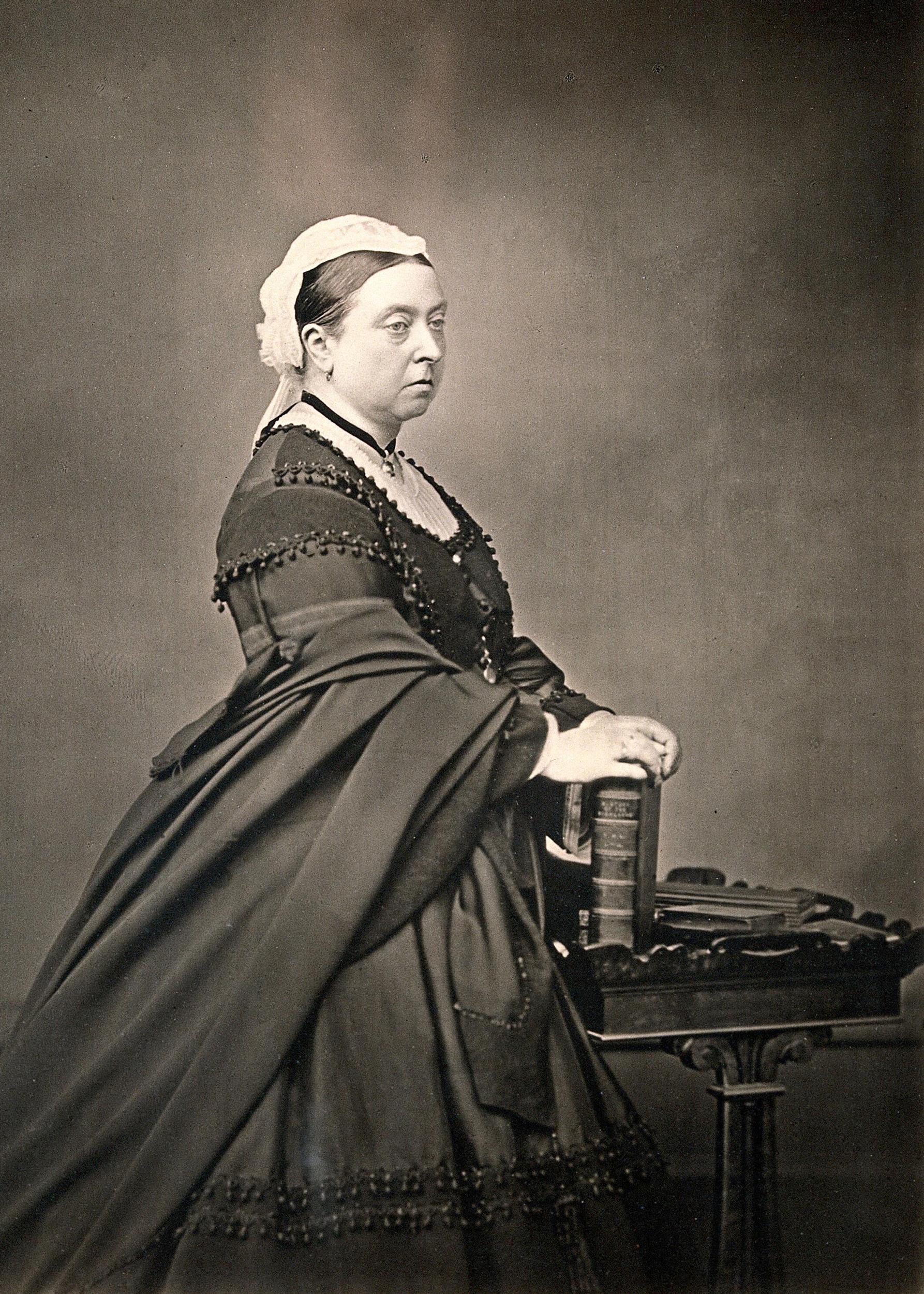
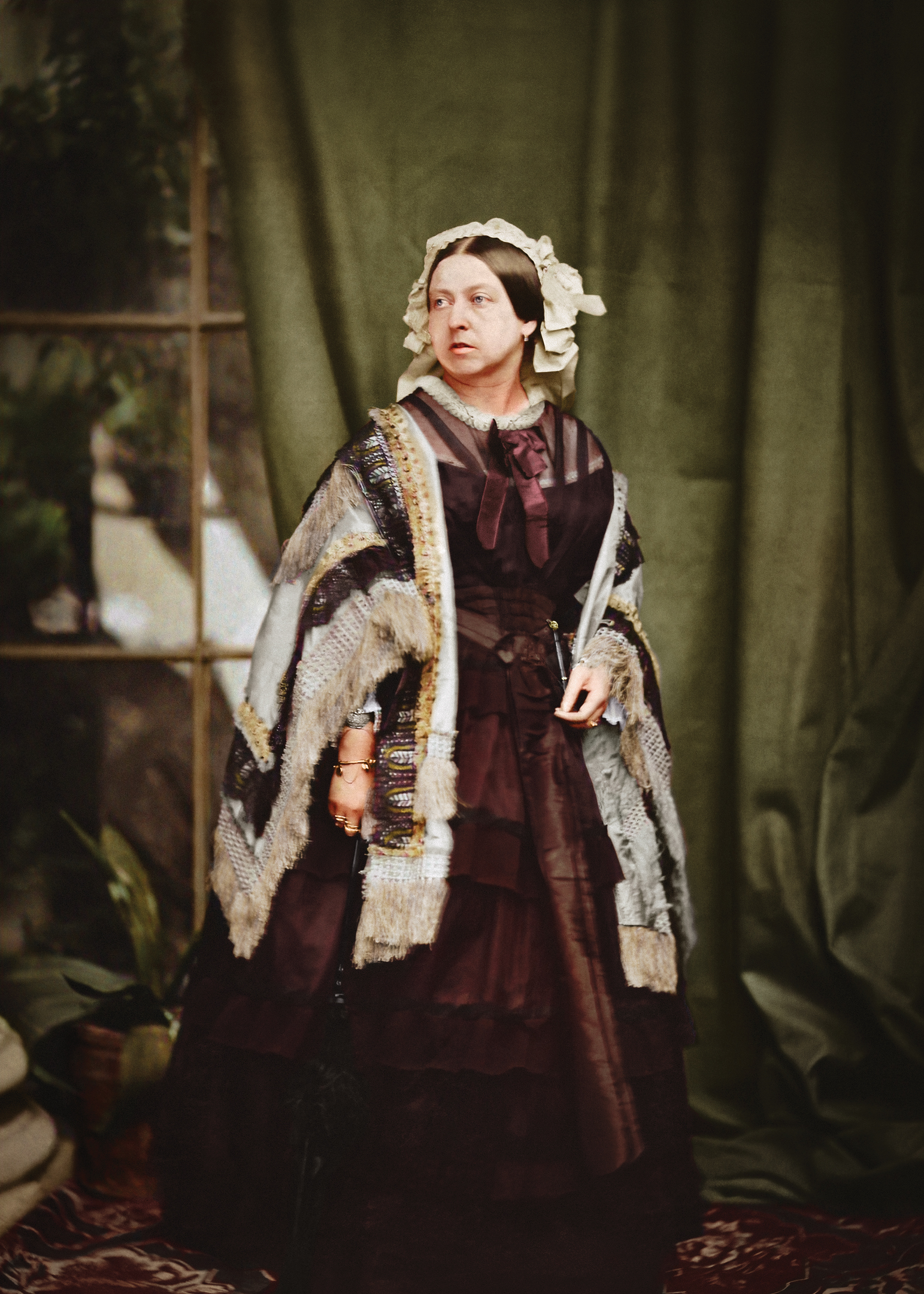
While it’s true that Queen Victoria solely wore black for more than half of her life, before 1861 the young queen was, in the words of curator and dress historian Madeleine Ginsburg, a “gay and fashion-conscious woman” (1969, p.43). Yet this alternative identity of Victoria has largely been dismissed and forgotten, due in no small part to the inability of early photographic techniques to capture colour. As a result, Victoria exists in the popular imagination as a black and white figure. In response, this article and the work of Unseen Histories presents an alternative image of Queen Victoria’s dressed appearance.
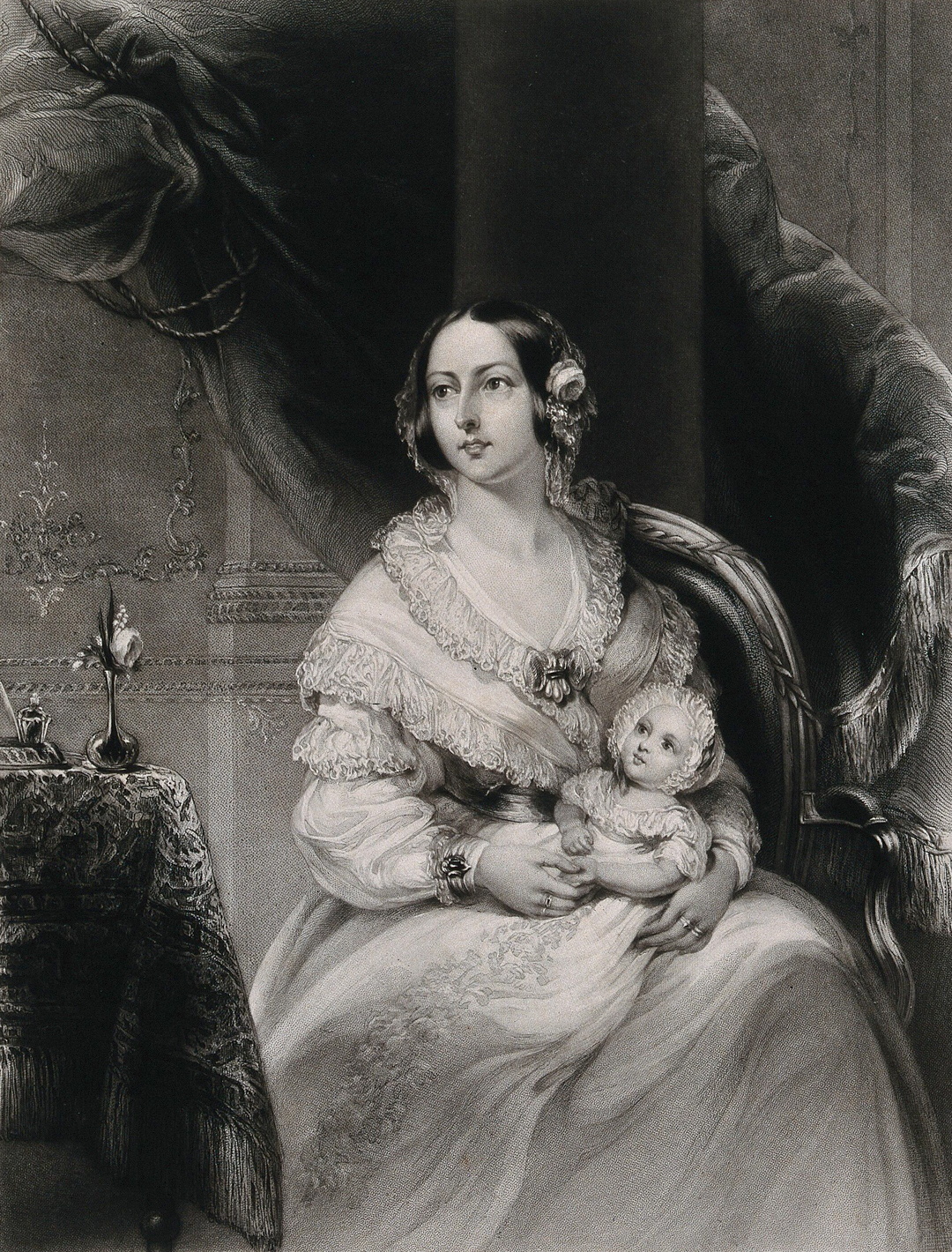
In her youth, Victoria adored feminine styles, pastel colours and floral trimmings. Surviving garments and accessories from her wardrobe show us as much1 and have been regarded as some of the prettiest originating from the period (Levitt 1999; Ginsburg 1969). Additionally, photographs2 and portraiture of the queen early in her reign, show her in fashions of the decade. Depicted by Ellen Cole, a mezzotint portrait of 1841 shows the young queen with her first born, Princess Victoria (later Victoria, Empress Frederick of Germany). Here Victoria appears without regalia, but instead in everyday dress - an alternative sartorial identity that seemingly has escaped our popular imagination. It contradicts the stereotypical perceptions of Queen Victoria, which project her as a regal, matriarchal and elderly figure with little interest in fashion and dress. Instead, we see Victoria as a young woman in feminine dress, adorned in lace and pearls.
Fashionable Working Women
For the working class in particular, photographs of Queen Victoria and other celebrities spread contemporary fashions, allowing people to compare their own styles with the sartorial identities of notable individuals. Unlike those of the upper-class who often commissioned painted portraits and miniatures of themselves and their families, before the inventio
n of the camera and photography, seeing one’s likeness was unavailable to the working-class. However, the introduction of carte de visites to Britain in 1857 revolutionised and democratised portrait photography. For the first time, working people had the opportunity to construct and capture their own identity.
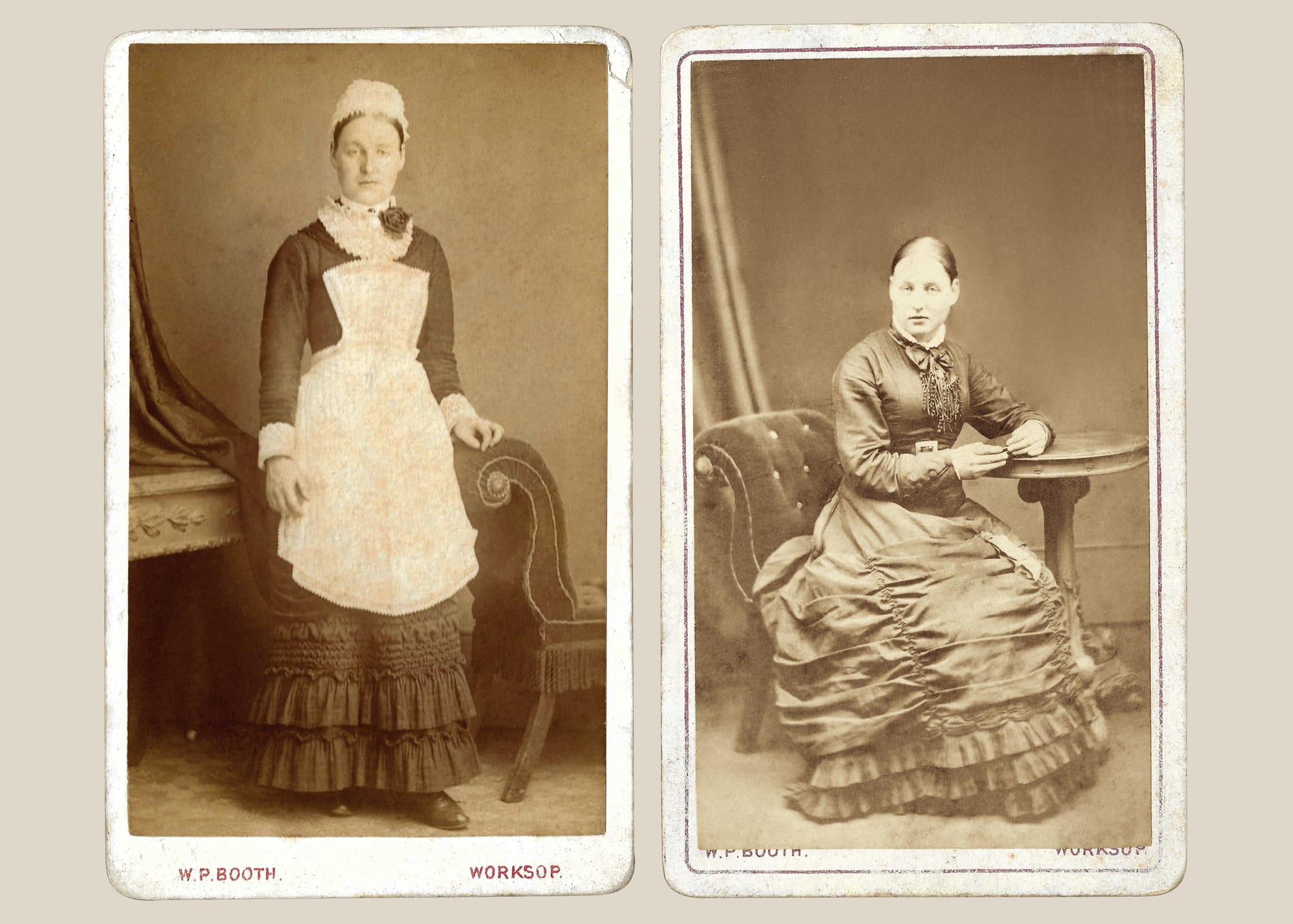
It has long been assumed that the Victorian working-class had little sartorial experiences and aspirations. However, a pair of carte de visites (c.1880s, above) that reveal the dual dressed appearance of one Victorian maidservant, suggest otherwise.
Unlike their predecessors, who wore basic everyday clothing topped with aprons, female servants of the late-nineteenth-century wore uniforms designed to separate a maid from her mistress and therefore denote class hierarchy. At the same time, the ‘new’ working-class of the nineteenth century helped define and consolidate the concept of the weekend. Servants, in particular, were among the working population with some disposable income, with which they could purchase clothes. Thus, at the weekend, servants were liberated from the homogeneous and impersonal occupational identity they represented on workdays when they put on their ‘Sunday best’. It was this which they wore on the occasion of being photographed.
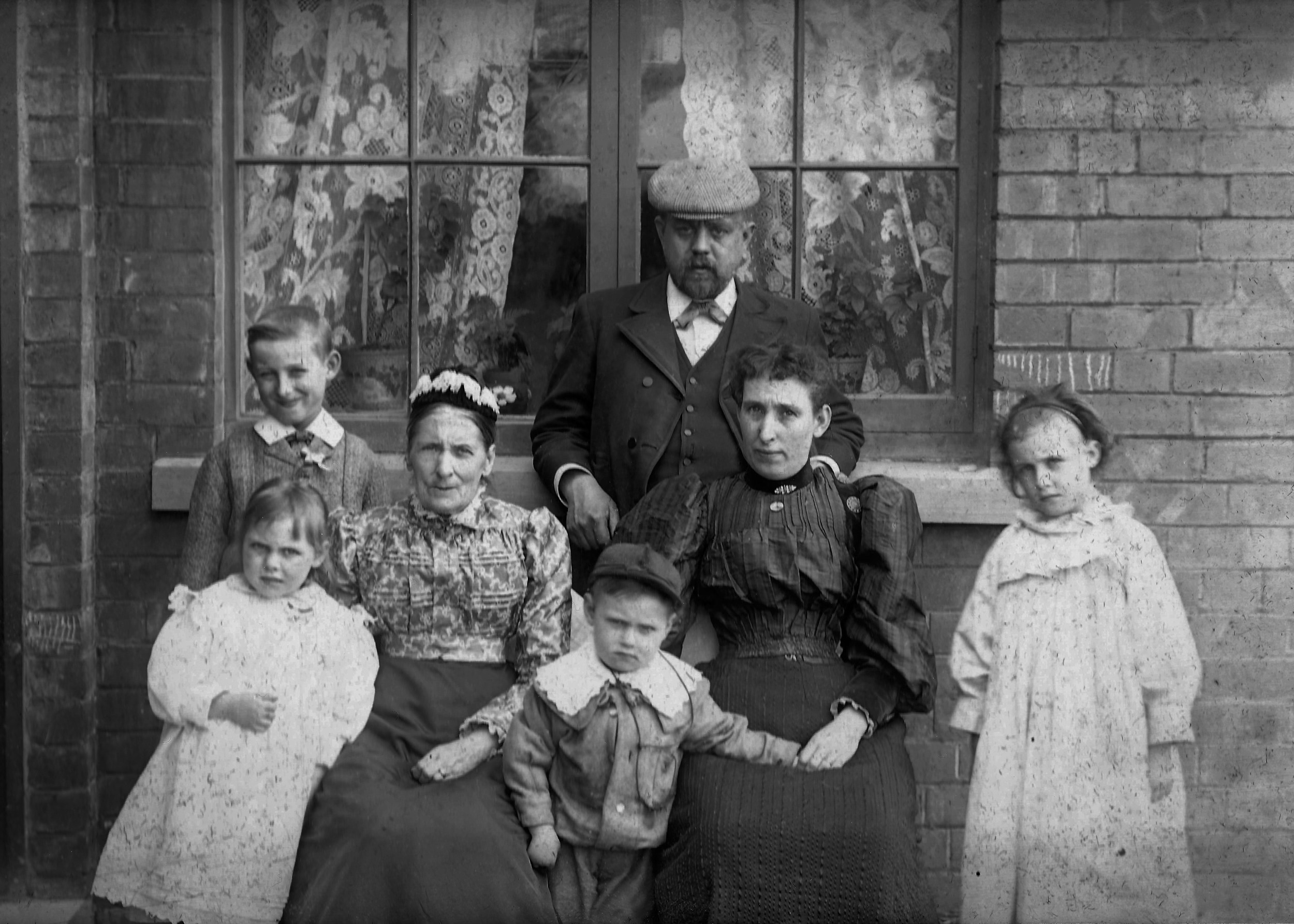
Without the uniformed portrait, the social class and occupation of the maidservant in her ‘best’ dress are almost impossible to guess. This was common too in Victorian public spheres. Contemporary sources reveal the frustration caused by working women dressing ‘above their station’ and thus being mistaken for ladies of the middle or upper classes. Often gifted cast-offs from their mistresses, female domestic servants had access to the fashions of the day3, while the second-hand clothes market offered working women the opportunity to fashion their own individual dressed appearances.
Unfortunately, few personal dresses owned by Victorian maids survive in our museums today. Regretfully, narratives concerning social hierarchy, oppression, manual labour and uniform tend to prevail in the histories of domestic servants, while their individual biographies and experiences are commonly overlooked. Thus, the photograph above is a valuable rarity in that it offers an insight into the personal dress possessions, individual identity and tastes of a Victorian working woman.

Women in Trousers
“We wear our breeches always, yo know, ‘cept Sundays” (Hiley 1979, p.87)
The diversity of Victorian women’s sartorial experiences is unparalleled, yet the Victorian woman is embedded in the twenty-first-century memory as a woman in tight, heavy and altogether inconvenient clothes. However, not all women conformed to the fashions of tight lacing and enormous metal underskirts. In fact, a particular few went so far as to reject women’s dress entirely as early as the 1850s.
On the brow (or edge) of Wigan’s collieries, women and girls separated stone from coal. Known as ‘pit-brow lasses’, they were unmistakable for their controversial workwear of flannel shirts, waistcoats, shawls, clogs, headscarves and - most shockingly - trousers, topped with aprons.
Unlike the Rational Dress Society who fashioned trousers especially for women in the 1880s, pit-brow lasses adopted men’s clothes as their own functional work attire. Unable to buy men’s trousers, the lasses salvaged and patched old, worn men’s breeches. Their unorthodox mode of dress garnered unprecedented national uproar, as before the mid-twentieth century, women in trousers were seen as immoral and thus forbidden in polite society.
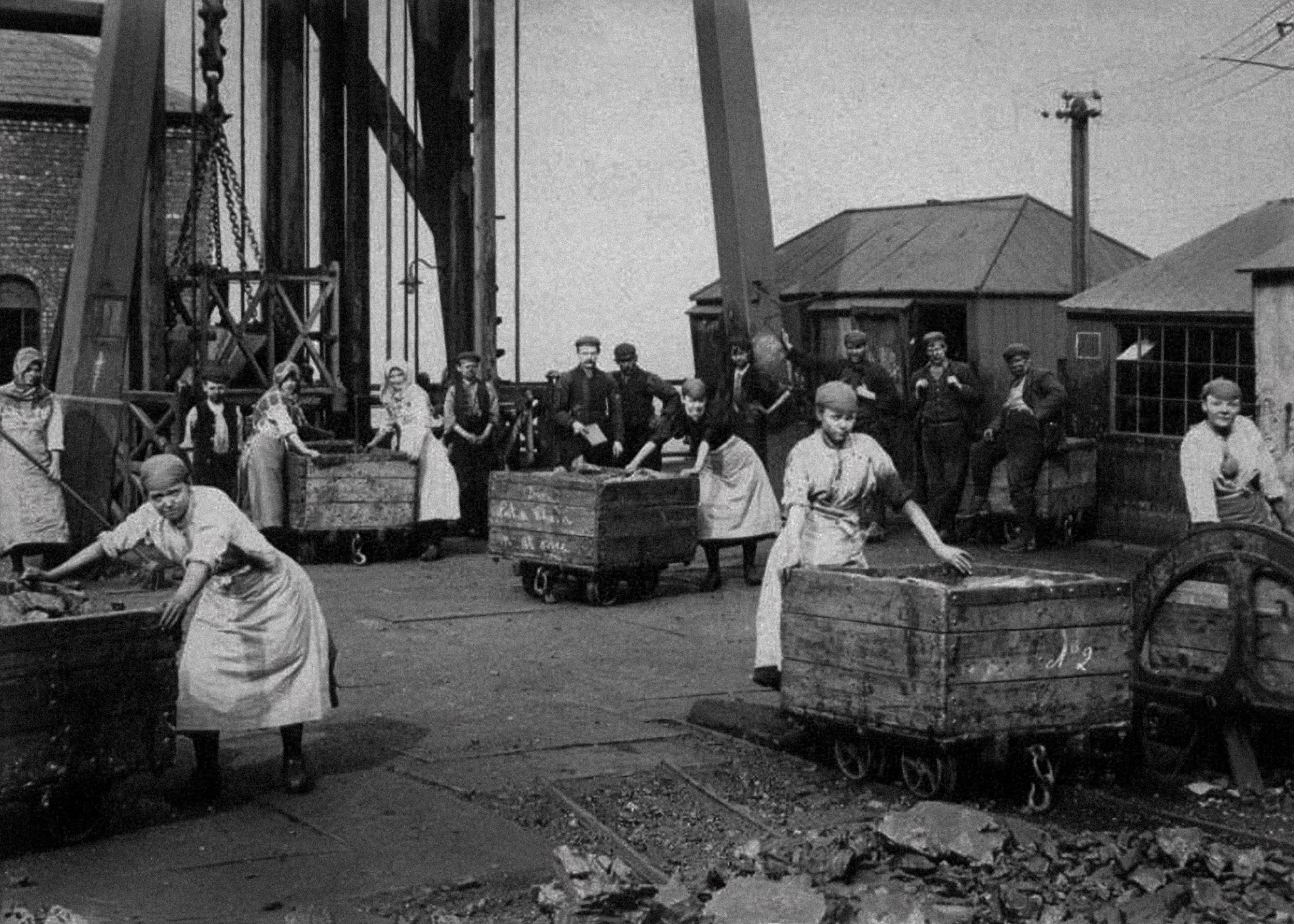
Yet, unfazed, pit-brow lasses wore their trousers with pride – often sitting for photographic portraits to send to amused distant friends. In addition, social reporters and philanthropists, such as Arthur Munby (1828–1910), commissioned photographs of the lasses while taking an interest in their unusual lifestyle. Thus, photographs of Wigan’s pit-brow lasses are plentiful - many of which survive in Munby’s collection, now stored at Trinity College, Cambridge. John Cooper was one of several photographers who recorded pit-brow lasses in their working dress between 1853 and 1892. Displayed in the windows of local photographers' studios, carte de visites of the lasses had a great commercial value and were often sold as curiosities to tourists.
The clothes of Victorian pit-brow lasses continue to captivate and shock, as they are far removed from the stereotypical Victorian woman ingrained in the twenty-first-century imagination. Sadly, as their clothes suffered immensely from the dusty and hardy work conditions and were thus worn until threadbare, the clothes of pit-brow lasses have not survived and are missing from museum collections of Victorian women’s dress. This absence only adds to their invisibility in the history of Victorian women’s diverse dressed appearances.
Together, these case studies go a long way towards refuting the sartorial stereotypes so often associated with Victorian women in the twenty-first century. In doing so, they each suggest new ways of imagining Victorian women and their clothes. Thanks to the Victorians and their conscious image-making, these photos survive today as records of the diversity of women’s dressed identities and experiences in the nineteenth century, and can help us re-present Victorian dress history •
This feature was originally published October 12, 2021.
Further Reading
Emily Sharma: The following books offer further information on the histories of Victorian dress, fashionable images and working-class women and their clothes. Some, while not explicitly exploring the dress in the photographs, include images that inform us about the way in which Victorian women dressed. Written by pioneering curators and collectors, taken together, the books demonstrate the diversity of Victorian women's lives:
⇲ Fashion in Photographs 1860 - 1880 by Miles Lambert (Pavilion Books, 1991)
⇲ Fashion in Photographs 1880 - 1900 by Sarah Levitt (Pavilion Books, 1991)
⇲ A Royal Passion: Queen Victoria and Photography by A. M. Lyden (Getty Trust Publications, 2014)
⇲ Mourning Dress: A Costume and Social History by Lou Taylor (Taylor & Francis Ltd Reissue, 2010)
References
Fulford, R. (1971) Your Dear Letter; Private Correspondence of Queen Victoria and the Crown Princess Of Prussia, 1865-1871. New York: Scribner.
Ginsburg, M. (1969) ‘The Young Queen and Her Clothes’, in Costume, 3, p.39-64.
Hiley, M. (1979) Victorian Working Women: Portraits from Life. London: Gordon Fraser Gallery.
Levitt, S. (1999) Fashion in Photographs 1880 - 1900. London: Batsford.
Storey, M. and Worsley, L. (2019) ‘Queen Victoria: An Anatomy in Dress’, in Costume, 53.2, p.256–279. UK: The Costume Society.
Footnotes
A dress of pink and silver, embellished with lace and satin bows worn by the queen to the opening of the Great Exhibition of 1851 survives in the Royal Collection. In addition, a petite tartan evening dress, belonging to the Royal Collections Trust and currently on display at the Palace of Holyroodhouse, manifests Victoria’s passion for all things Scottish. It is believed that Victoria - when Princess Victoria of Kent - may have worn this dress during her first meeting with Albert. Her love for tartan has been attributed to the popularity of the print in Victorian women’s everyday dress, as has the crinoline; ↩
A photograph taken of the queen and her ladies in 1854 captures Victoria in the fashion of the decade. Photographed by Dr Ernst Becker (1826–88) on the terrace at Osborne House, Isle of Wight, here Victoria’s pose and mannerisms are unlike those in later portraits, in that she appears with her back to the camera in fashionable dress. This alternative sartorial identity was one reserved for the queen’s private sphere (Ginsburg 1969). So too were Becker’s photographs, which were solely intended for Victoria’s friends and family. Thus, the photograph in question offers a glimpse into the private identity of Victoria and the way in which she constructed and perceived her own personal dressed appearance ↩
Albeit the clothes they received were slightly out-of-date by the time they received them ↩
📸 Dive into our Features
🎤 Read Interviews
🎧 Listen to Podcasts
🖼️ Buy fine art prints & more at our Store


