
The Hapsburgs and the French Revolution
Upon the outbreak of the French Revolution, Europe's first family, the Hapsburg, were propelled into a crisis that they struggled to contain.


When the Bastille was stormed in Paris in July 1789, the primary threat was to King Louis XVI and the Bourbon family who ruled with absolute power.
But as the pace of events accelerated and it became clear that France was in a state of revolution, the sense of tension rose at courts across Europe.
For the Hapsburgs in Vienna the situation was particularly acute. Bound by family to King Louis XVI – Marie Antoinette was a sister of the Holy Roman Emperor Joseph II – Europe’s first family were about to enter a period of tremendous peril.
This piece accompanies the Travels Through Time episode with Veronica Buckley.
Words by Peter Moore

The Storming of the Bastille
At the end of that dramatic month, July 1789, Joseph II, Holy Roman Emperor, wrote an emotionally charged note to his sister Marie Christine.
‘I’ve received your letter. The same courier brought me news of the unbelievable events in France. It’s incomprehensive how things could have gone so far. When they read it into the history books, they won’t believe it. We can only hope this example doesn’t turn the heads of our people.
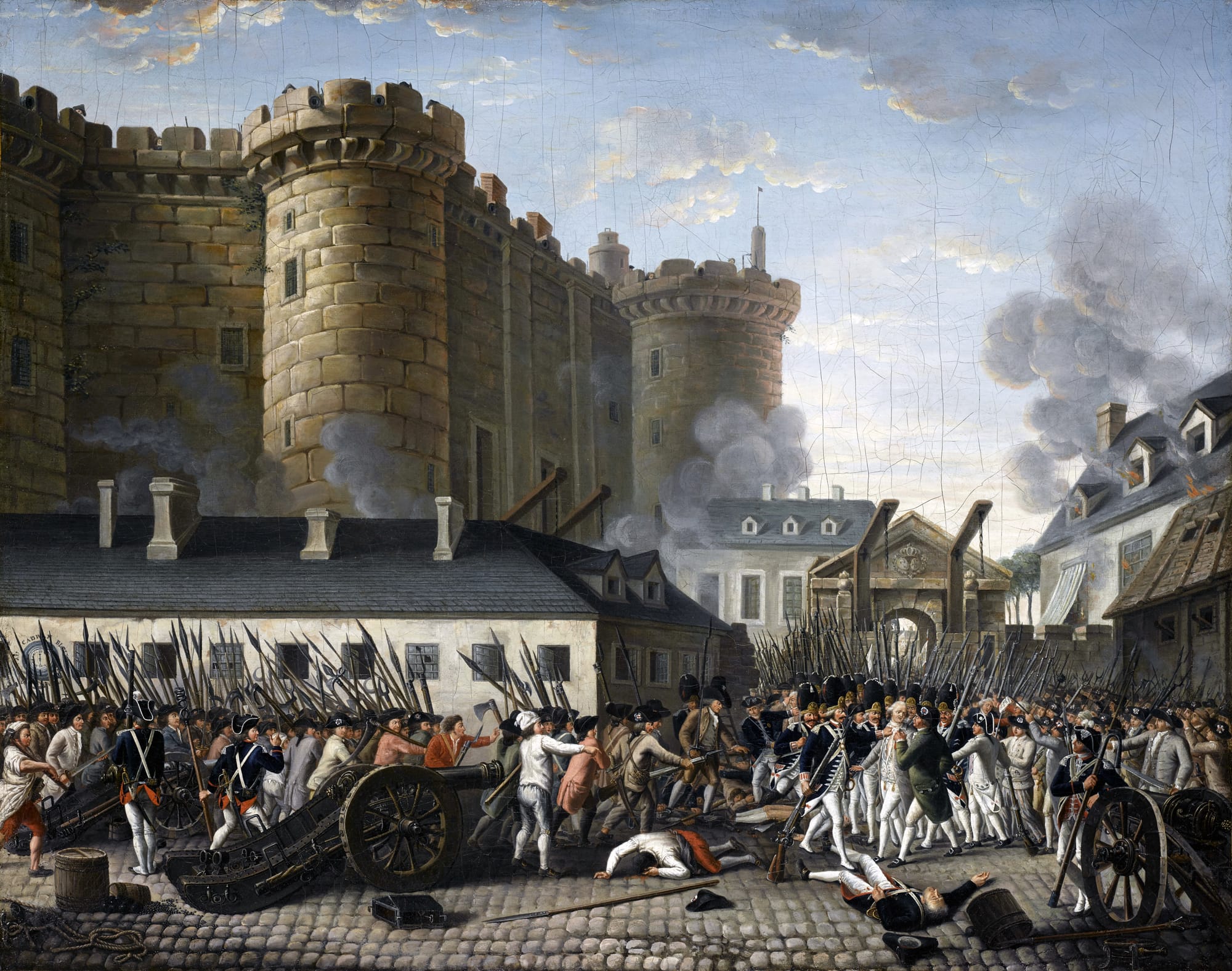
The news was certainly staggering. In Vienna Joseph learned that on the morning of 14 July a furious group of around a thousand 'stout men' had begun a march on the outskirts of the French capital. The last months had been filled with such fiery protests, but what happened that day was different.
As the men marched their numbers doubled, then tripled. They shouted out, ‘Vive le tiers etat’ – ‘Long Live the Third Class’ – with a force that gained the attention of more and more.
Having plundered weapons from a military store, the marchers finally reached the gates of the Bastille Prison ‘that mansion of sorrow’ to the north of the Seine. The prison governor, the Chevalier de Launay, had initially sought to resist the armed mass but passions had risen to such a pitch that they were not to be dampened.
The prison was stormed; de Launay was seized. Before he could be confined the loathed governor was stabbed and bayonetted. After he died de Launay's head was sawn off by a butcher. The event that would be known to history as the French Revolution was now underway.
An unexpected alliance
The Bourbon family who confronted such a catastrophic uprising in the summer of 1789 were old rivals of the Hapsburgs. Only a few generations earlier, at the turn of the eighteenth century, these two great royal houses had fought the War of the Spanish Succession when the Hapsburg King Charles II had been controversially replaced by the Bourbon Philip V.
For those who had fought in that conflict, the idea that an alliance would be made between the two families just half a century later was ludicrous. But in 1756, faced by the rising powers of Prussia and Great Britain, this is precisely what happened.
Over the years that followed this partnership was strengthened by a number of strategic marriages – the most significant being that of the French Dauphin, Louis, to the daughter of the Hapsburg Empress Maria Theresia: Marie Antoinette.
The enthusiasm with which this match was made is suggested by the couples' ages. He was 15 and she was 14. Watching, on that splendid day in 1770, onlookers were left with the picture of the golden chain that linked the Palace of Versailles with the Schönbrunn Palace in Vienna growing ever stronger.
Together the Bourbons and Hapsburgs were left to contend with the peculiar challenges of their times. Historians now refer to this period as the Age of Enlightenment – a time of scientific, mercantile and political progress, when new and bold questions were being asked about the nature of power, the condition of being human and the pursuit of happiness.
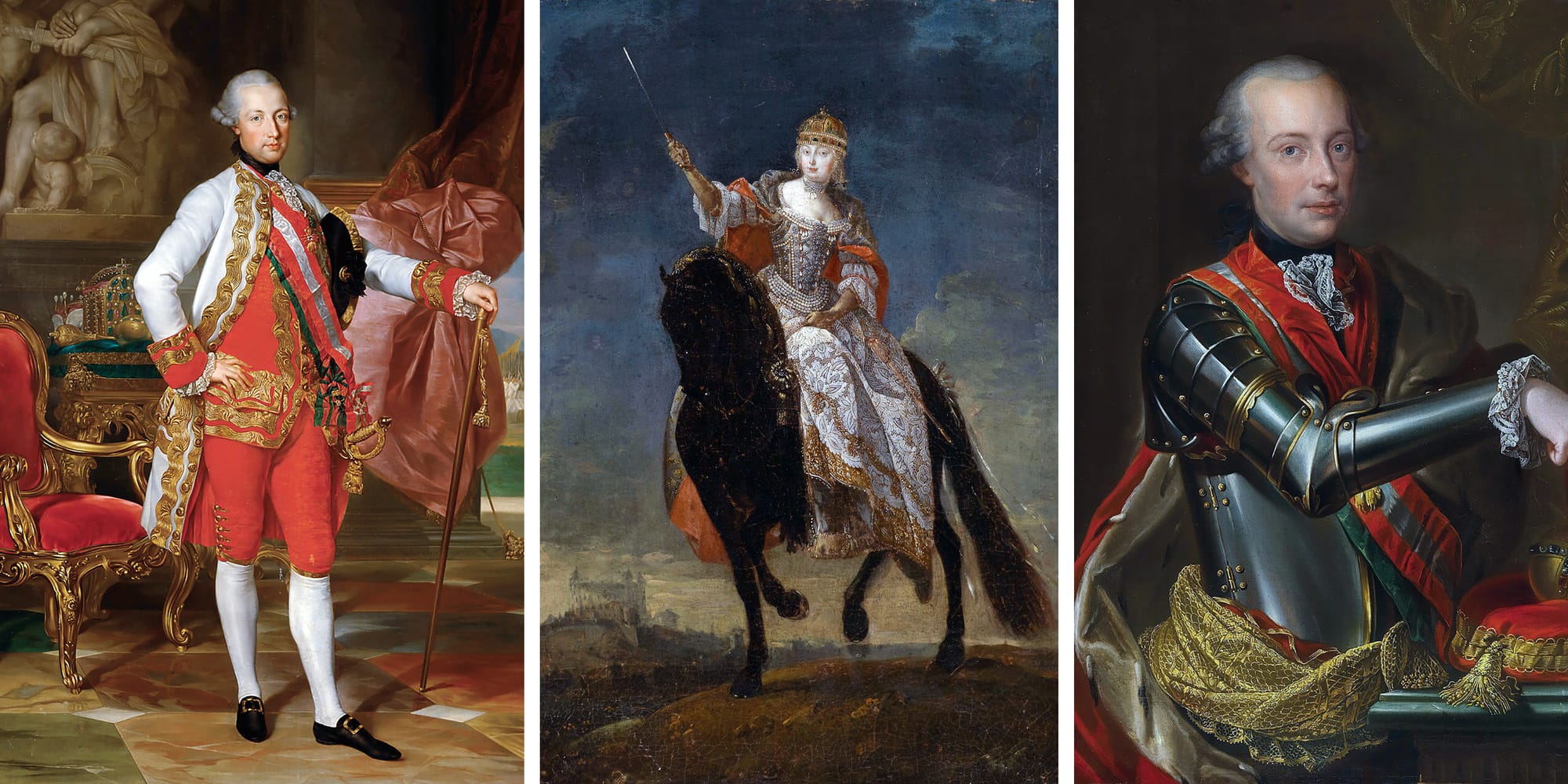
At the time of Marie Antoinette's marriage her mother, the Empress Maria Theresia, was the head of the Hapsburg family in Vienna. An active, skilful and determined ruler, Maria Theresia was also the mother to 16 children. Many of her daughters, like Marie Antoinette, had been placed into positions of power inside European courts like Naples and Palma.
It was her son, however, Joseph, who would succeed Maria Theresia as the highest ranking member of the Hapsburg family. After some years as joining her as the co regent, he assumed great power as Joseph II, Holy Roman Emperor and Archduke of Austria on his mother's death in 1780.
Joseph was a clever and committed political figure. He instantly saw the problems that were infecting the French court. In 1777, after a visit to Versailles, he scratched out a note to his younger brother Leopold, describing the ostentation and the foolish behaviour of his sister, 21 year-old Marie Antoinette:
The Queen is a pretty woman, but she’s a featherbrain who as yet cannot make use of her advantages. She spends every day going from one dissipation to the next, all of them perfectly permissible in themselves, but dangerous all the same since they prevent her from the serious reflection of which she is in such need.
When his chance came in the 1780s, Joseph was determined that the Hapsburgs should not replicate the Bourbons' mistakes. He passed thousands of edicts in a burst of energy during his first years of sole rule: reducing the number of court officials, stamping out extravagances, and centring the idea of 'service' as part of his monarchical vision. This approach would gain the name 'Josephinism'.
This was the reform that many of the subjects in the Hapsburg dominions sought, but Joseph, like his mother before him, was an 'enlightened despot'. Change was going to come, but it was going to come on his terms and it was going to come from the top. The new world he foresaw was rational, productive and uniform and it was governed from the very top – by him as the supreme autocrat in Vienna.
A clever, headstrong, serious character – he was also a great patron of the arts and is famous for his connection with Mozart – in the estimation of the biographer, Veronica Buckley, Joseph was an impressive but flawed character. His attempts to reform his dominions in the 1780s were laudable but they were carried out with a great 'inflexibility'. As Buckley explained, Joseph had ‘a strong, a too strong sense of his own righteousness’.
By the end of the decade, as revolution crept closer in France, unrest was sweeping across the Hapsburg lands. Many people in the Austrian Netherlands or Hungary viewed Josephinism as a direct threat to their old traditions. They did not want to be ironed out into neat uniformity and they resented his meddling into areas of life they considered their own.
It was to this blunt character, therefore, that the challenge of responding to events in 1789 fell. These were events that were, ultimately, too much for him to comprehend. As the violence radiated outwards from the French capital, out into the territory of the Austrian Netherlands, Joseph continued to blindly make plans for a state visit to Brussels.
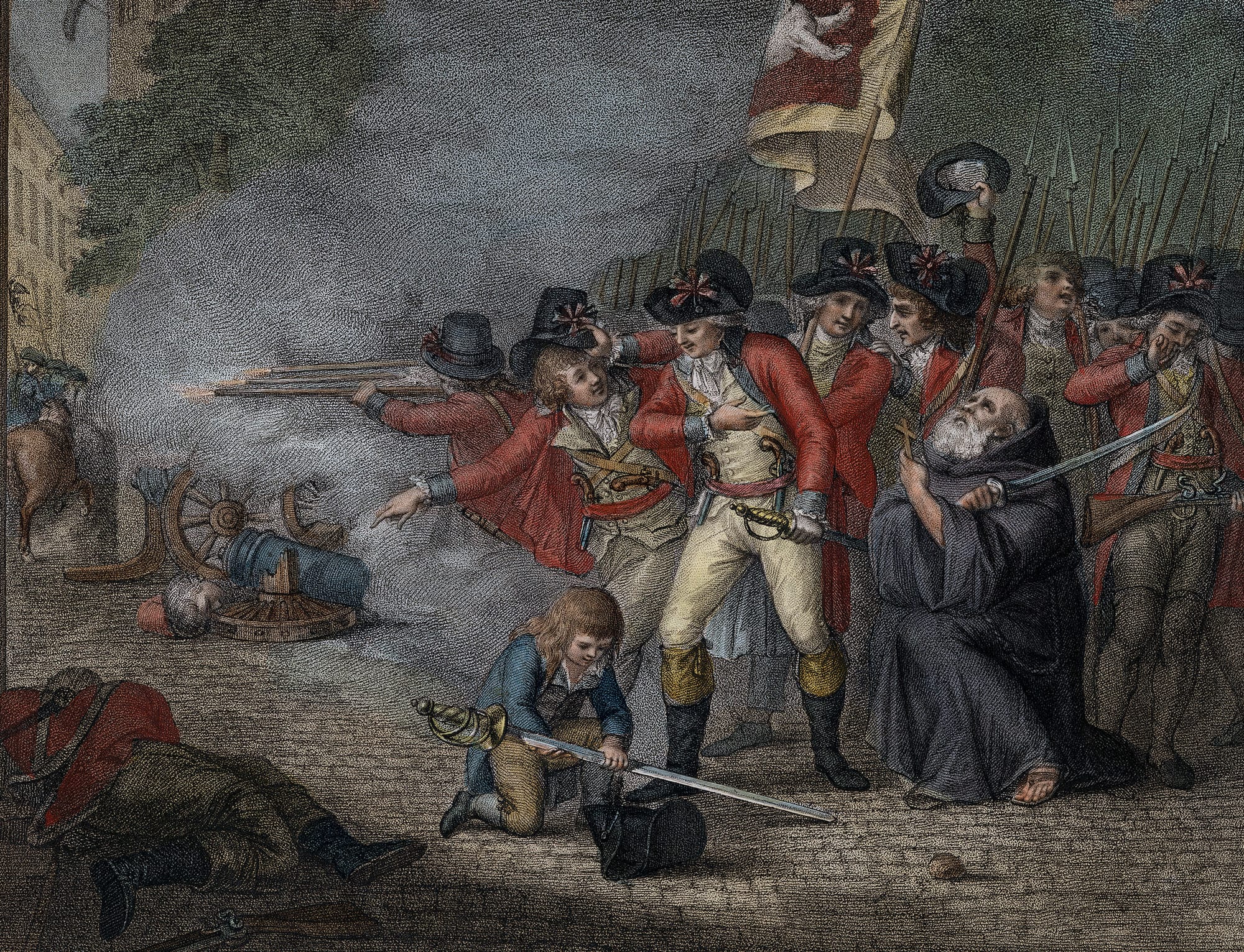
Rather than a state visit, however, the Austrian Netherlands got the Battle of Turnhout on 27 October 1789. By the new year of 1790 the rebel army were themselves in Brussels and proclaiming the birth of a new republic, the United States of Belgium.
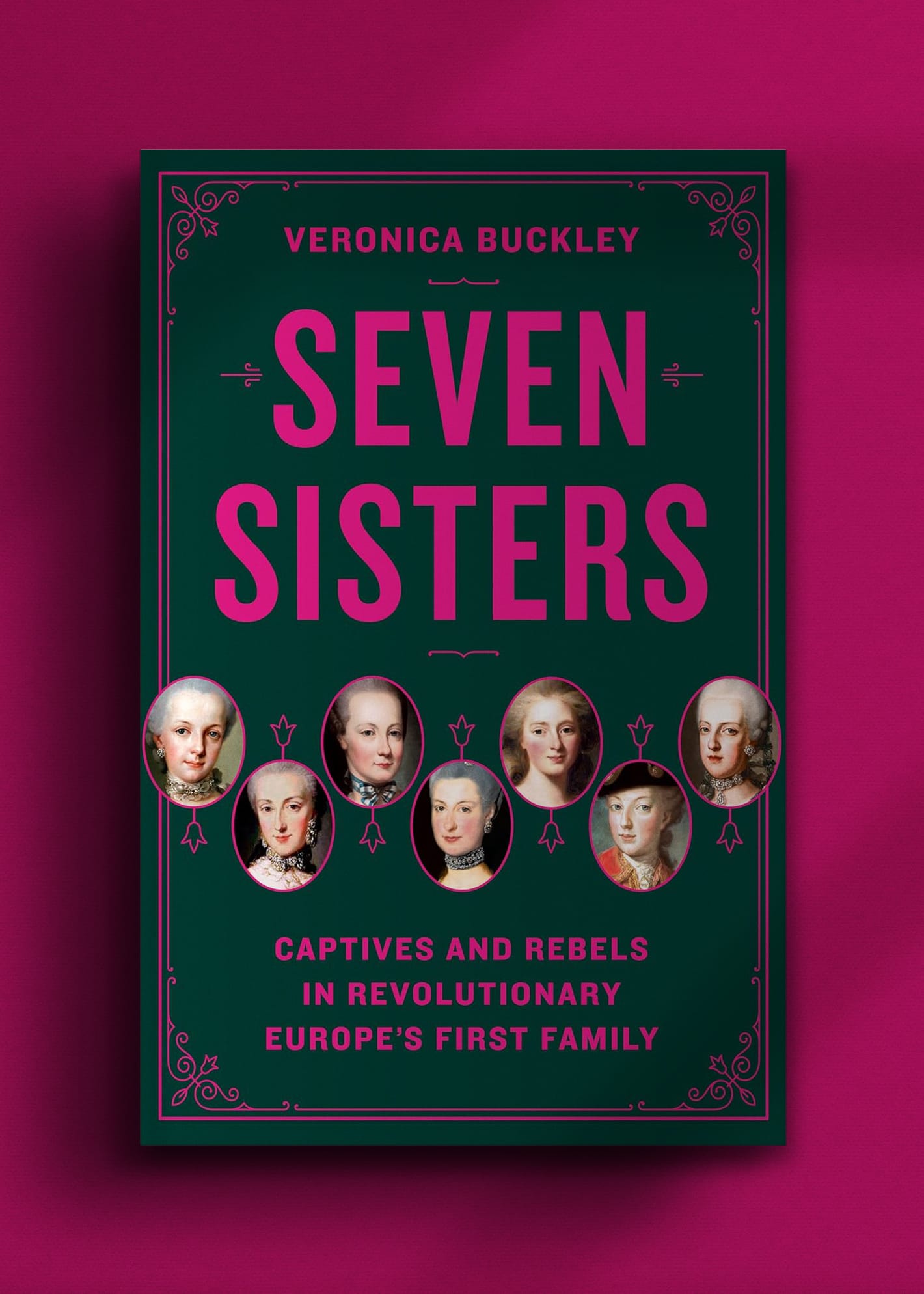
Joseph II’s idealism and myopia is one of the topics that has intrigued the biographer Veronica Buckley, whose new book Seven Sisters: Captives and Rebels in Revolutionary Europe's First Family charts the fortunes of the Hapsburg family in the years 1764–1814.
While Buckley's focus lies primarily on the seven daughters of Maria Theresia, her eldest boys – Joseph and Leopold – are also central characters in her narrative. She explains that the letter Joseph wrote to his sister, Marie Christine, at the end of July 1789 was characteristic of his inability to respond to events.
Bewildered by the pace of the revolution that was unfolding around him, coughing blood and worn out by years of overwork, and a spell of ill-judged military service, he died on the bitterly cold morning of 20 February 1790 in Vienna. It was a sorry end. When his chancellor heard the news, he remarked laconically: ‘that was good of him’.
The new emperor
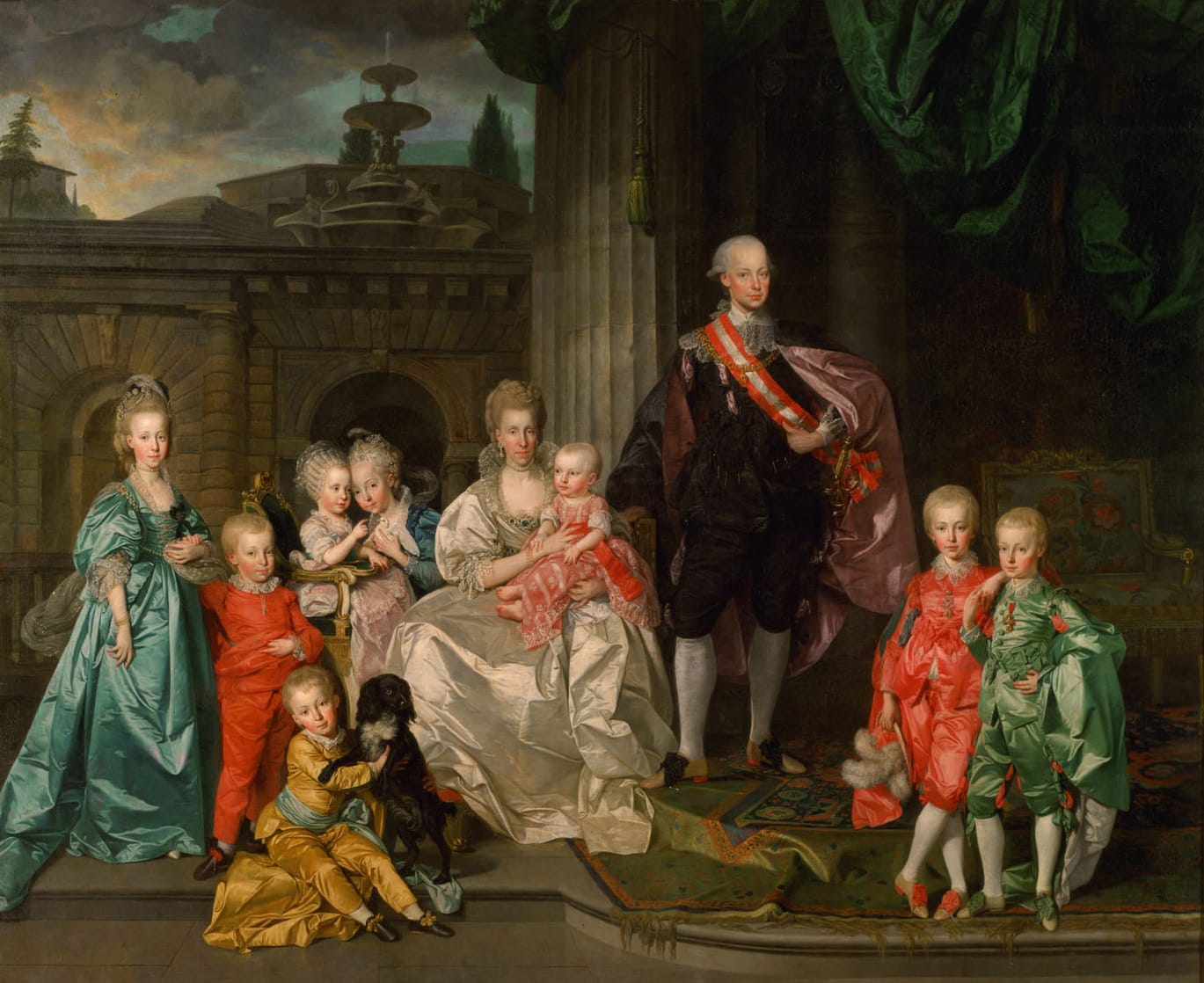
More hope was placed in the next in line to the Hapsburg throne. Peter Leopold, formerly the Grand Duke of Tuscany, was Joseph's younger brother and as Joseph had left no heir of his own, it was he who ascended in February 1790 as Leopold II.
Leopold was clever like his brother. But unlike him he had dexterity and emotional intelligence. A fine letter writer and astute observer, while Joseph had been aghast at the news from Paris, Leopold had seen it coming. ‘The state of the Monarchy is terrible’, he had written to his sister the previous year. ‘War, bad harvests, no end to the different innovations, it’s enough to make you dizzy.’
The succession of Leopold on Joseph’s death in 1790 marks a crucial moment in the long history of the Hapsburg family. It seemed, by sheer luck, that they were to be led through the most dangerous of times by a figure who had the aptitude and wisdom that was needed.
Throughout 1790 Leopold worked diligently. In October he met with the French revolutionary the Comte de Mirabeau in Frankfurt. Mirabeau, a great figure in the early stage of the revolution, brought Leopold news of Marie Antoinette. Together the two of them shared ideas to bring the fighting to an end in Paris.
The picture of Leopold and Mirabeau together in Frankfurt in 1790 is a powerful one. Both of them were capable characters but neither of them was to live long enough to fulfil their promise. Mirabeau would die in 1791 and Leopold the next year. To both of them historians have since ascribed the question: 'what if ...'
But even in October 1790 the two of them might have sensed that the flow of events was too brisk for them to control. Epochal change was coming in France and to the west, and also in Hapsburg controlled territories in the east.
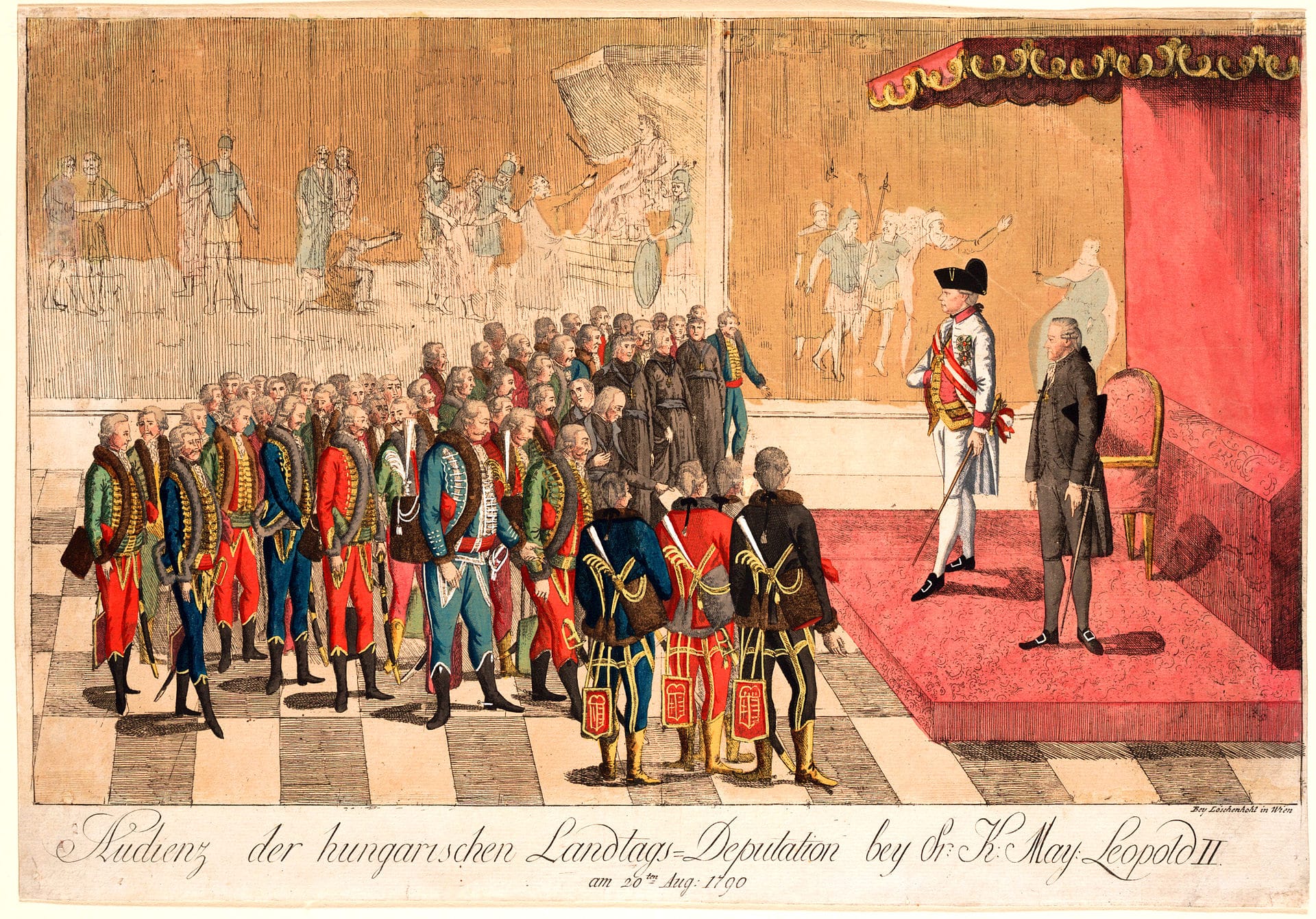
In November 1790 the Hapsburgs travelled to Pressburg (today Bratislava) to see the coronation of Leopold as the new King of Hungary. But what they found when they arrived was deeply unsettling. Marie Christine – Leopold’s sister – was startled to see the paradoxical effect of Josephinism.
As Veronica Buckley explains it in Seven Sisters, ‘his standardising mission for the Monarchy had produced, paradoxically, a surge of incipient nationalism.’ Everywhere people were wearing the old Hungarian folk costumes, speaking the Hungarian language and living under the terms of the old Hungarian constitution. An old dynasty, the Hapsburg, were, it seemed, for all their best intentions, being overtaken by history.
Much more about this story is contained in this Travels Through Time episode with Veronica Buckley •
Seven Sisters: Captives and Rebels in Revolutionary Europe's First Family
Penguin, 24 March, 2026
RRP: £26.08 | 526 pages | ISBN: 978-0525561903
Others make war; you, happy Austria, marry.'
For three centuries, the astute positioning of their many princesses and princes had kept the Habsburgs at the peak of European power. By 1764, after a generation of costly war, confronted by shaken alliances, immense debts, and restive subjects, the Empress Maria Theresia was seeking once again to assert the dynasty's power through strategic marriages. Her arsenal was full: her seven daughters were to serve as her pawns in the ruthless game of eighteenth-century dynastic politicking.
Delivered to the grandest or dingiest courts in Europe, they made their difficult and even dangerous ways: Marianna the seeker; the grande dame Marie Christine; Elisabeth, the malicious, disfigured beauty; fractious and wayward Amalie of Parma; the tragic bride Josepha; Carolina of Naples, Napoleon's relentless enemy; and Antonia, youngest of the seven, sacrificial offering to the gods of revolution, better known to history as Marie Antoinette.
Meticulously researched and animated by the sisters' own diaries and the almost daily letters traversing the continent, Seven Sisters reveals the drama, tragedy and comedy of these exceptional yet all too human lives. It is a vivid portrait of a brilliant world collapsing in a fearful time.
Travels Through Time – Veronica Buckley: The Hapsburgs and the French Revolution (1790)
Show Notes
Scene One: 20 February 1790
Emperor Joseph II dies in Vienna.
Scene Two: October 1790
The French revolutionary Comte de Mirabeau meets with Emperor Leopold II in Frankfurt to discuss a possible intervention in France.
Scene Three: November 1790
The Habsburg imperial family arrives in Pressburg for Leopold’s coronation as King of Hungary.
Memento:
A piece of elegant jewellery belonging to Marie Christine.
📸 Dive into our Features
🎤 Read Interviews
🎧 Listen to Podcasts
🖼️ Buy fine art prints & more at our Store


