
The General Strike of 1926 with Jonathan Schneer
The General Strike of 1926 marked a precarious moment in British political and social history, as Jonathan Schneer explains.


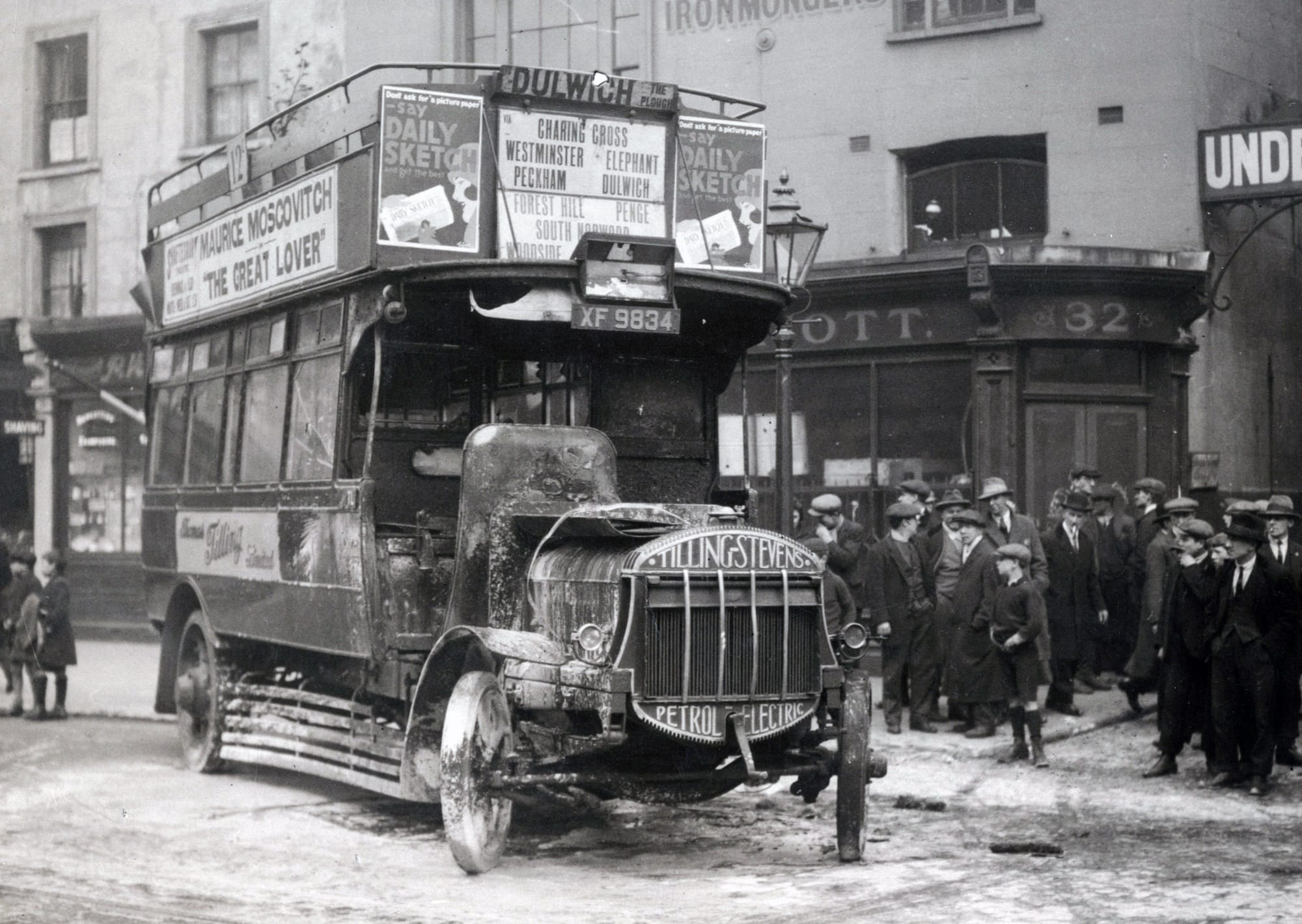
For nine days in May 1926, ordinary life in Great Britain was brought to a halt by a workers' revolt of massive proportions.
Remembered by history as 'The General Strike', those nine days terrified the establishment and unions in, perhaps, equal measure. Some even felt that Britain was nearing revolution.
Jonathan Schneer is the author of a new account of this episode, Nine Days in May. Here he answers some of our own questions about the 1926 General Strike.
Questions by Peter Moore

Unseen Histories
On several occasions since the 1640s England, later Great Britain, has flirted with the idea of revolution. Some historians think that May 1926 and the General Strike marks one of those occasions. Do you think this is a fair claim?
Jonathan Schneer
Yes, Britain flirted (but only flirted; it never went beyond flirtation) with revolution during the General Strike of 1926 in two distinct ways.
First, a national general strike, if it is effective, disrupts the supply and distribution of every necessity. If all the country’s railwaymen and truckers are on strike, how do you transport the essentials of life? If all the shop workers are on strike, how will you bring them to the public?
Furthermore, if all the power workers are on strike, how do you provide electricity for, say, cold stores in the nation’s larder (London’s docks)? Or for other industries that manufacture necessities; or for hospitals, schools, homes? It is the government’s job to ensure their continuing production, availability, distribution; if it cannot, then what is its reason for being?
An effective national general strike inevitably threatens the national government. So, yes, the General Strike at least threatened revolution.
Second, think of a national general strike as a Pandora’s Box containing all sorts of dangerous (revolutionary) ideas. Open the box and out they fly.
According to the TUC, the General Strike was supposed to have a specific, non-revolutionary, aim: to persuade the government to reconvene, and preside over, negotiations between the Mineowners’ Association of Great Britain (MAGB) and the Miners’ Federation of Great Britain (MFGB).
But the strike was so widespread, so successful a demonstration of trade-union power, that the men on strike soon began advocating more sweeping aims. They thought the General Strike could do much more than re-start negotiations, they thought it could turn the world upside down.
Unseen Histories
Is it known precisely how many people ‘went out’ in protest between 4–12 May?
Jonathan Schneer
Most students of the Strike say that close to 3,000,000 struck at one time or another during the nine days.
Unseen Histories
Did the strike have anything to do with the miners’ working conditions – you note that around three miners died each day, on average, in the early 1920s – or was it solely an economic dispute?
Jonathan Schneer
Certainly, the Strike was about working conditions. Let one man’s bitter recollection stand for the whole:
'I lost a leg at the age of seventeen,' remembered Thomas Baker of Sheffield. '10- per week compensation ... no artificial leg, not a stick, not a hope ... nearly broke my heart ... I really began to think ... 1926 General Strike ... I was HOT in my reasons for it.'
Moreover, working conditions could be difficult as well as dangerous. Sometimes a miner had to walk two miles to the coalface from the cage that brought him underground, crouching depending on the height of the 'road' (tunnel) he travelled, in water up to his knees, carrying heavy tools.
Herbert Smith, president of the MFGB, spoke of having 'to get four thousand yards, three feet nine inches, three picks in hand' – before reaching his workplace. Miners were paid only for their time hewing coal, seven hours, although working conditions meant they might spend even ten hours beneath the surface. Naturally they wanted their employers to recognize and recompense them for such hardships.
Moreover, in 1926 the owners demanded not merely that their employees accept steep pay cuts but also that they work an extra hour every day. It had taken the union many years to reduce the number of working hours to seven (they finally got it in 1919); they called the eighth hour the 'murder hour,' because a disproportionate number of injuries occurred then, when the men were exhausted.
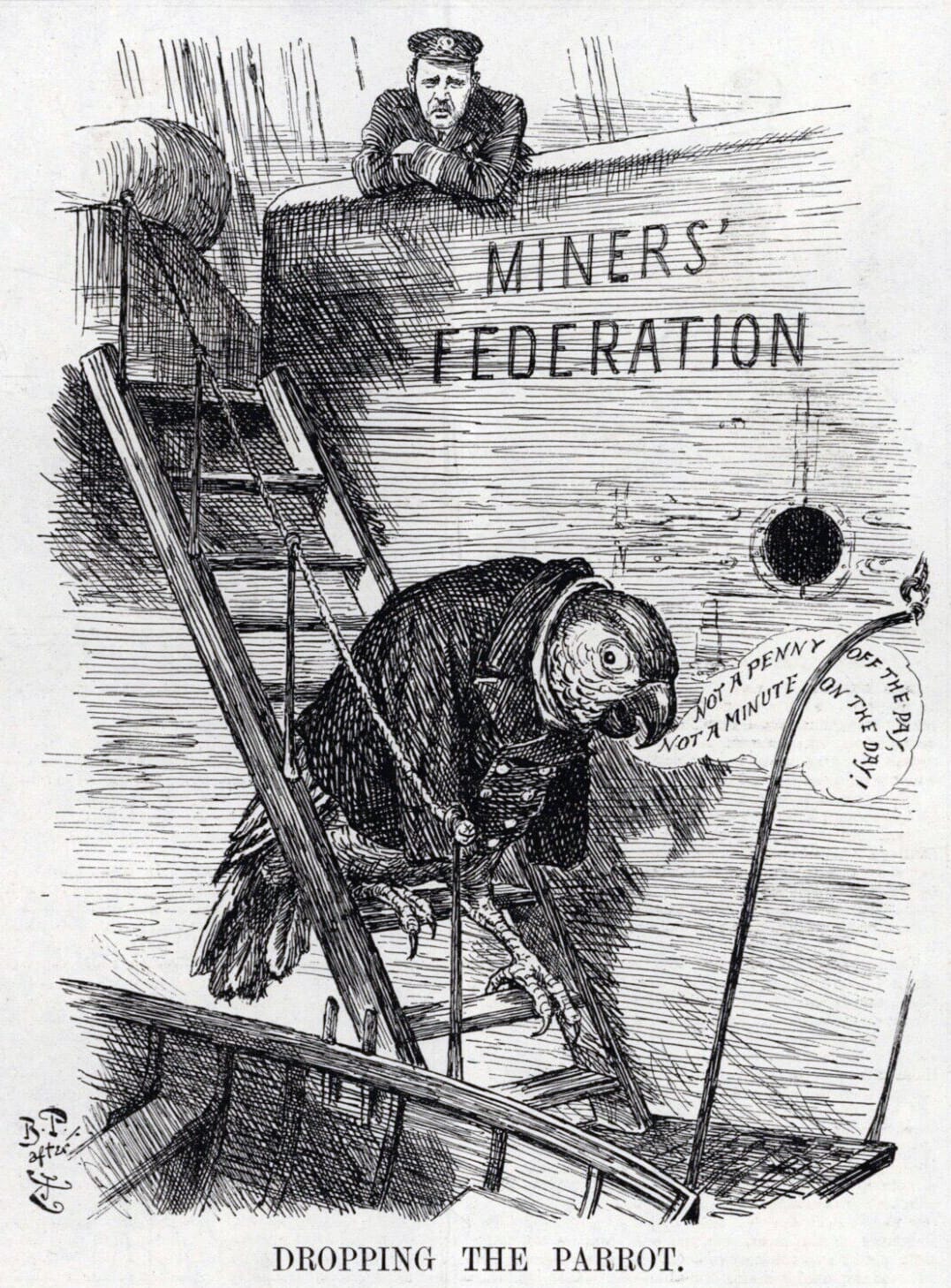
The miners’ slogan during the General Strike was 'not a penny off the pay, not a minute on the day.'
Unseen Histories
How much sympathy across the broader population was there for the miners’ plight? Did it, for instance, gain the support of the intelligentsia – the writers, the university professors, those in the professions?
Jonathan Schneer
There was nearly universal sympathy for the miners before and during the Strike, but that didn’t mean there was nearly universal support for them, least of all among artists and intellectuals.
The composer Ralph Vaughan Williams wrote, 'On the whole I am with the miners.' On the other hand, he also wrote: 'I doubt the side of revolution has any scheme for the better government of the country.' And, moreover, 'I cannot deny the duty of the [government] to see that people do not starve.' Eventually, he decided: 'If one accepts the benefits, one [must] support the organization which provides them.'
Many British writers and poets and intellectuals came to the same conclusion. The list includes Graham Greene, Joyce Carey, Ian Fleming and Anthony Powell. John Galsworthy refused even to sign a petition urging that the Government prohibit victimisation of strikers once the battle had finished.
On the other side, prominent academics such as R.H. Tawney, G.D.H. Cole, and Harold Laski actively supported the Strike. So did the young poets C. Day Lewis and WH Auden. So did Leonard Woolf. He and his wife Virginia made their home at Gordon Square a center of pro-Strike activity. Their fellow Bloomsburyite, John Maynard Keynes, said the miners were 'victims of cruel economic forces which they never set in motion.'
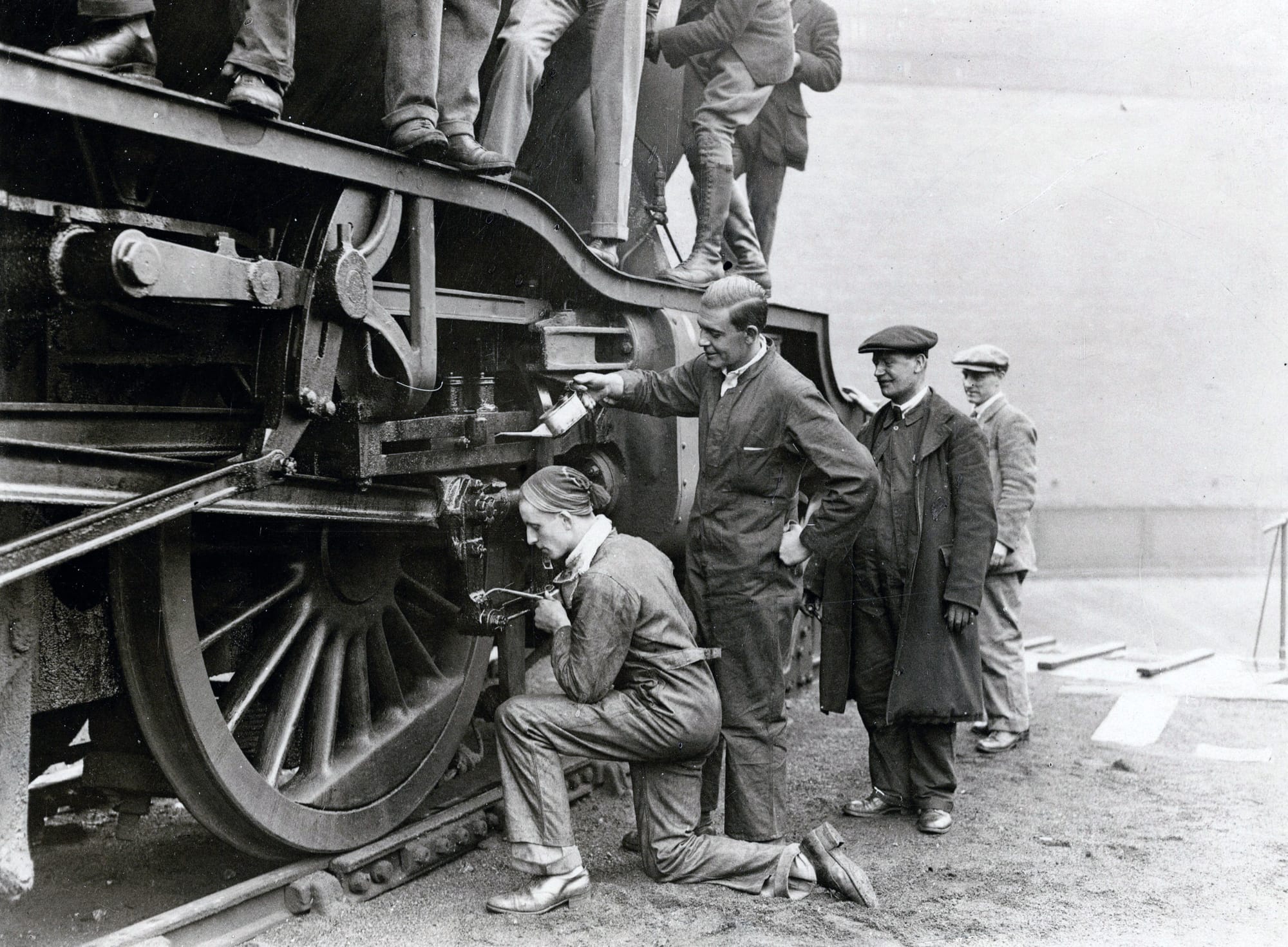
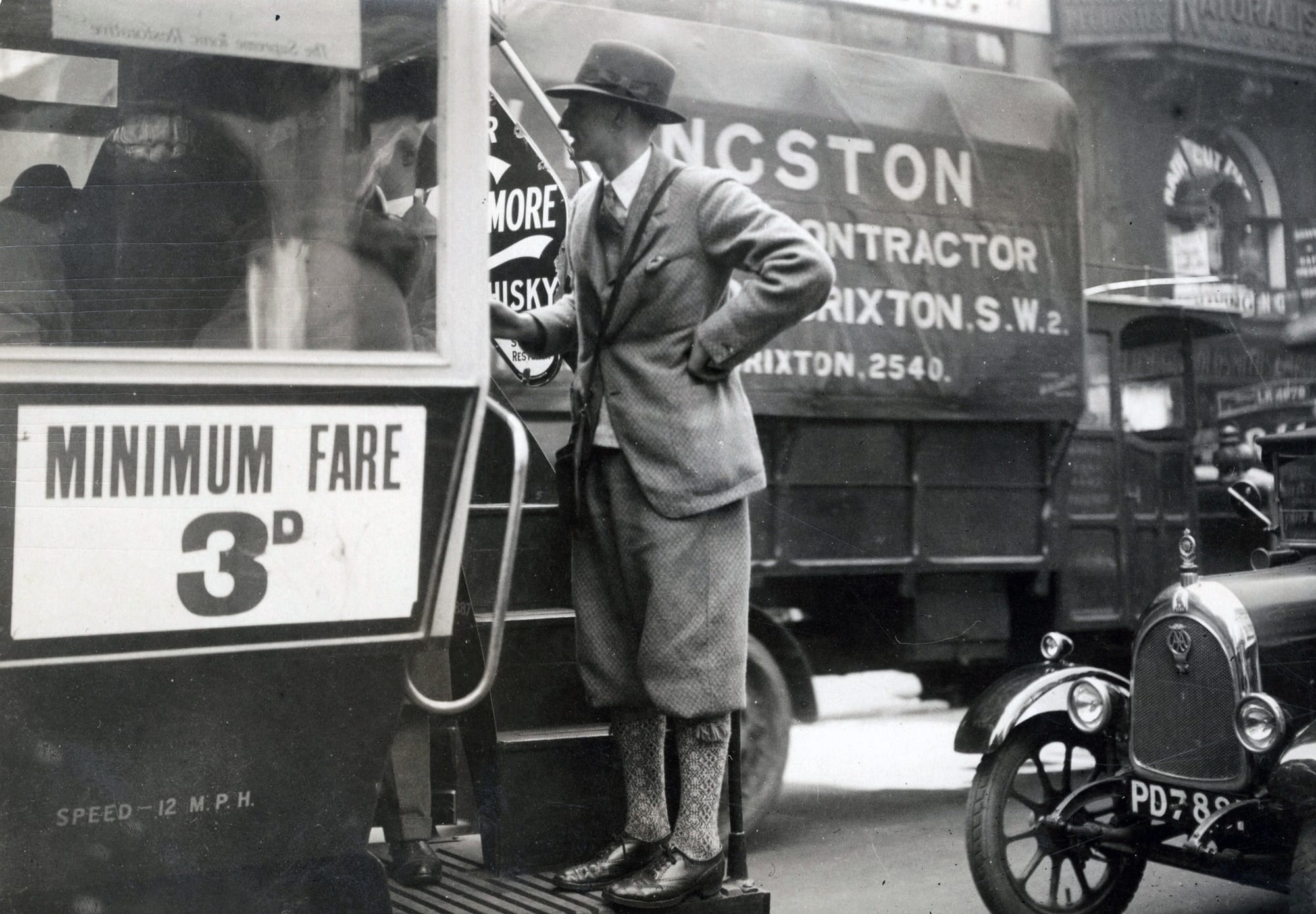
As for the universities: the provincial ones generally made it easy for students to break the strike, and many did. In Birmingham, 'University students had the pleasant task of unloading champagne from a lorry outside a [local] hotel.' In Hull, 400 undergraduates unloaded food ships at the docks, guarded by the military.
Edinburgh University students replaced striking railway workers. Aberdeen University men kept the local paper mills running. St Andrew’s postponed exams so that students could volunteer. Professor G. Henderson, Chair of the University of Glasgow Chemistry Department, told his students that volunteering to break the Strike 'would be regarded as war service when they came up for examination.'
The London universities took a similar view. For example, University College, London, posted a notice: 'Any student who feels that he can render service at once in his own locality or elsewhere has leave of absence.' Medical students from St. Thomas Hospital worked the London docks; others from St. Bart’s drove buses and collected fares. (Two medical students who showed sympathy for the Strike were sent to work, as punishment, in the maternity ward 'where there is no cessation of 'labour.'')
Cambridge University promised student volunteers that 'time spent in emergency work will count as time spent in residence.' It postponed University examinations until 'at least three weeks after the end of the emergency.' It smiled upon the pro-government efforts of one alum, Sir Philip Sassoon, formerly Lloyd George’s P.P.S. and now the Under-Secretary for Air.
Sassoon organized Cambridge men from a pool of 3,350 'in[to] gangs according to their capacity for various kinds of work.' He sent 460 to load and unload ships at Hull, Grimsby, and Tilbury. At Dover, disembarking passengers cheered the 'jolly-looking crowd of Cambridge undergraduates, lively and sturdy, mostly in their golfing clothes.' He sent hundreds more to work the London Tubes, buses and trams, and the nation’s railways, and Electric and Power Stations as civil and electrical engineers, and to drive lorries.
Another 447 Cambridge men performed 'general work of varying description.' More than 700 served as 'special constables.' He sent students who owned automobiles across the country, transporting strikebreakers wherever they were needed, or distributing the Government newspaper, the British Gazette, or other more obviously necessary commodities. 'The approximate mileage covered ... from Cambridge was 108,300.'
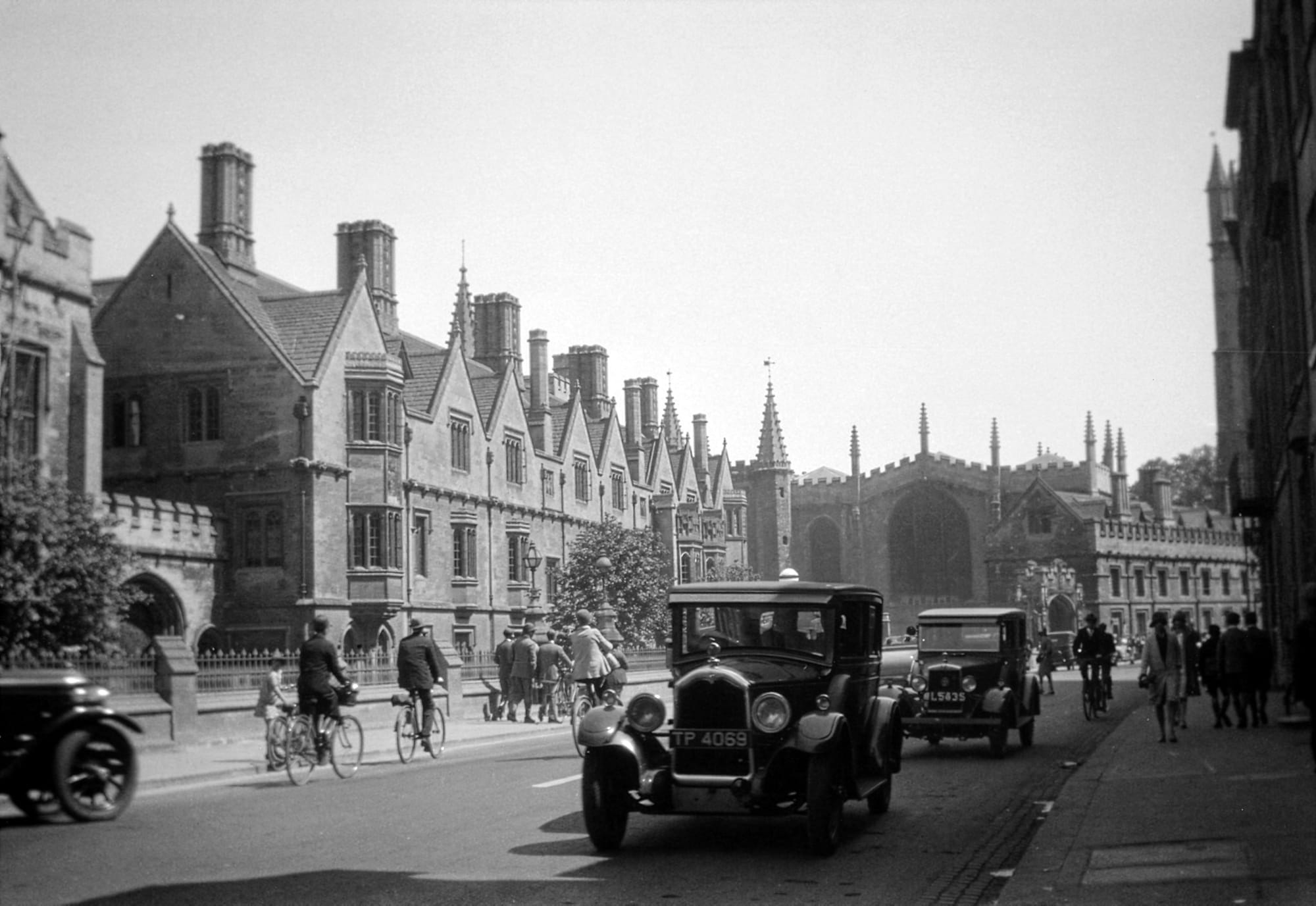
Oxford took a different line. Michael Sadler, Master of University College, noted on 1 May that 'Everyone seems to regret the breakdown of the negotiations, and to want a settlement.' A few days later the T.U.C. reported with satisfaction that 'a declaration of neutrality has been secured from Oxford University.' Then Sadler, GDH Cole who was also at 'Univ,' and Alexander Dunlop 'Sandy' Lindsay, Master of Balliol College, organized a public meeting, to which the following resolution (crafted by Cole and Sadler), was put:
'For the future peace and unity of the country, this Meeting earnestly hopes that in the present crisis nothing will be allowed to stand in the way of reopening negotiations.'
More than 60 fellows and 139 undergraduates signed. 'You should see this, signed by Fellows of Oxford Colleges,' one of the Prime Minister’s secretaries scrawled across a copy. 'Seen with disquiet and humiliation,' scribbled another. 'My children will be educated at Cambridge.'
However, Cole and his allies did not have it all their own way at Oxford. A Professor Blackman wrote reassuringly to Baldwin after the Strike had finished: 'The people who signed documents tending to weaken your hand were mainly a vociferous minority ... Oxford as a whole was sound to the core.'
Cole pointed to a letter supporting the Government, printed by The Times and signed by the University’s Vice Chancellor, the heads of Magdalen, Brasenose, Trinity, Worcester, Hertford, and Queen’s Colleges, as well as dozens more Oxford academics.
And, of course, plenty of Oxford undergraduates volunteered to break the Strike. But they were so comparatively disorganized that 'several' forgot their loyalties, and actually complained about their university’s hands-off policy to 'the leaders of the Cambridge parties.'
Unseen Histories
The idea of a tremendous simultaneous strike had long before been suggested by activists like the radical William Benbow. How terrifying a prospect was this for the government in Westminster?
Jonathan Schneer
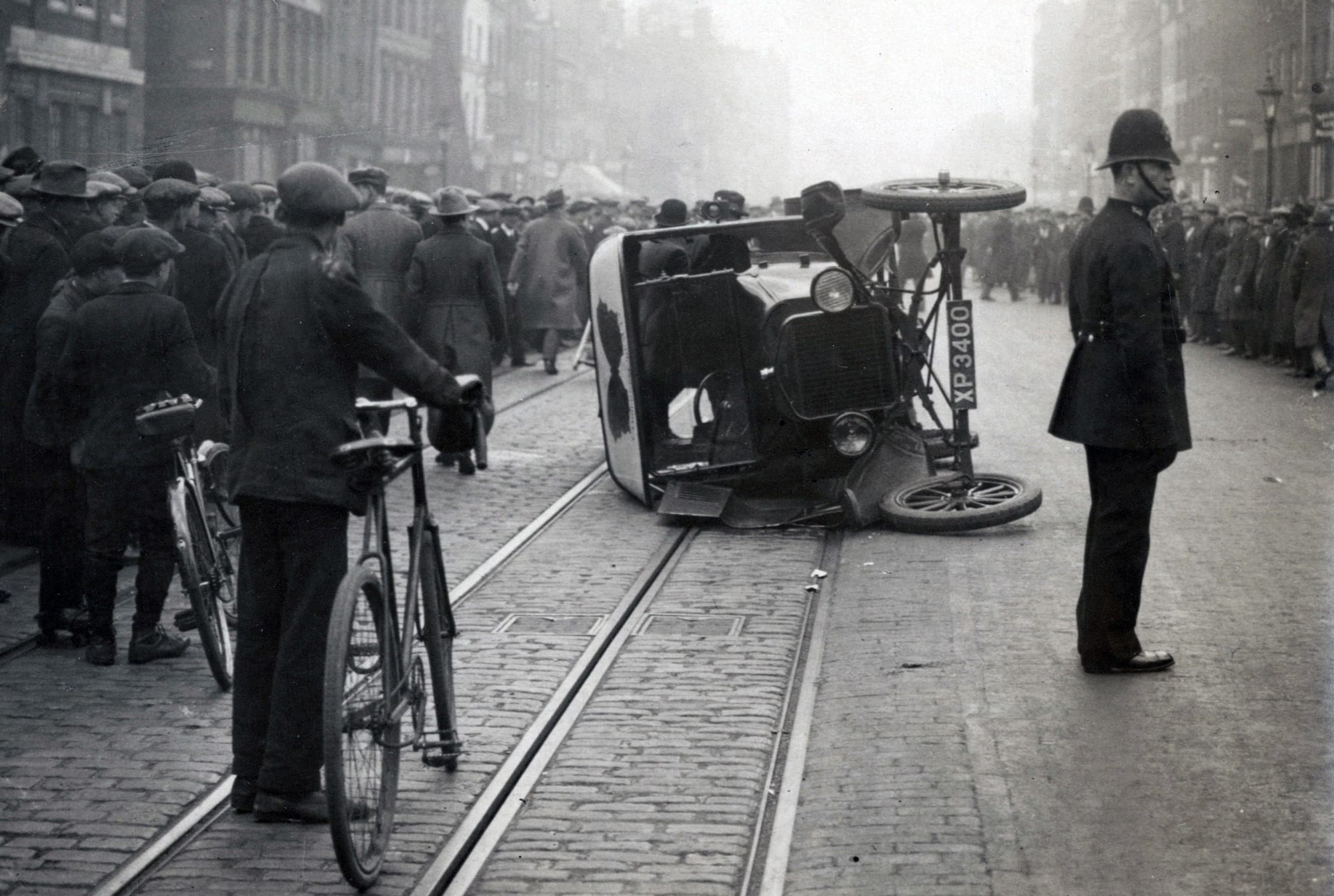
There were ill-informed Britons, mainly Conservative, who thought a general strike would be the prelude to attempted revolution in their country.
William Joynson Hicks, (Jix) the Home Secretary, was one such. 'Scratch a Socialist and you will find a Communist,' he warned, and he thought Russia controlled them all.
But Jix and other Conservative leaders were not terrified; they were determined to beat the revolutionaries. The Conservative government spent nine months before the General Strike getting ready. It developed careful plans and machinery for breaking the Strike. It arranged to recruit many thousand 'Specials' to augment regular police; and many thousand 'Volunteers,' i.e. 'black-legs,' to replace the striking workers. Moreover, it had as back-up, a military force that recently had won the First World War. On 4 May, a well-oiled, powerful government machine confronted an unprepared TUC.
Conceivably, some trade-union leaders were more terrified of a 'tremendous simultaneous strike' than the Government was. They understood its revolutionary implications, as per your first question – and they were not revolutionaries. Yes, they wanted to defeat Stanley Bladwin’s Conservative Government, but as the result of Labour winning a general election, not by labour having won a general strike.
Moreover, they did not think they could beat the Government anyway, and they feared that defeat would mean a lasting setback to the trade-union movement. This is partly why they ended the General Strike after only nine days.

Unseen Histories
In the 1920s British politics was haunted by communism and the events of the Russian Revolution. Did the events of 1917 bear at all upon those of 1926?
Jonathan Schneer
They did, but not as you might suppose.
First of all, Conservatives like Jix had the 1917 Bolshevik Revolution very much in mind, as I’ve just indicated. There must have been some British Communists who did too. However, following Stalin’s line in Moscow, British Communist Party leaders argued that the General Strike was not the precursor to revolution in their country, it was merely one in a series of crises that British capitalism would have to undergo before revolution became possible. Most CPGB members agreed.
Among Britons who thought the Strike could lead to revolution most thought not of Russia, but of their country’s radical heroes. Or they thought of Jesus Christ, the working man. Stolid Herbert Smith referred to 'that ideal – I am my brother’s keeper. The rank and file have said "Yes" to it.' (Cain, of course, had said ‘No’ to it when questioned by God on Abel’s whereabouts.)
In Kettering, the chairman of the town’s Trades and Labour Council, loosely quoted the nineteenth-century Scottish poet, Charles Mackay: 'When he was a boy, he was told ‘There is a good time coming,’ but ‘he might not live to see it.’' Now 'he knew there was a good time coming and ... the people of this generation would live to see it.'
Jessie Stephen, whom the chairman introduced to the same meeting as 'champion of the domestic servants,' reminded listeners that 'Jesus said ‘Feed My Lambs.’ He did not say "Give thousands of pounds to the Duke of Northumberland."' Miss Stephen, who hoped to represent the Labour Party in Parliament, stood for the 'practical operation of Christ’s teaching, and the same spirit that animated His disciples.'
Many British Conservatives did have 1917 in mind, but it was a bogey.
Unseen Histories
The words ‘General Strike’ are strongly depersonalised ones. But who were the core protagonists on either side during the nine days? Did any of them particularly engage your attention?
Jonathan Schneer
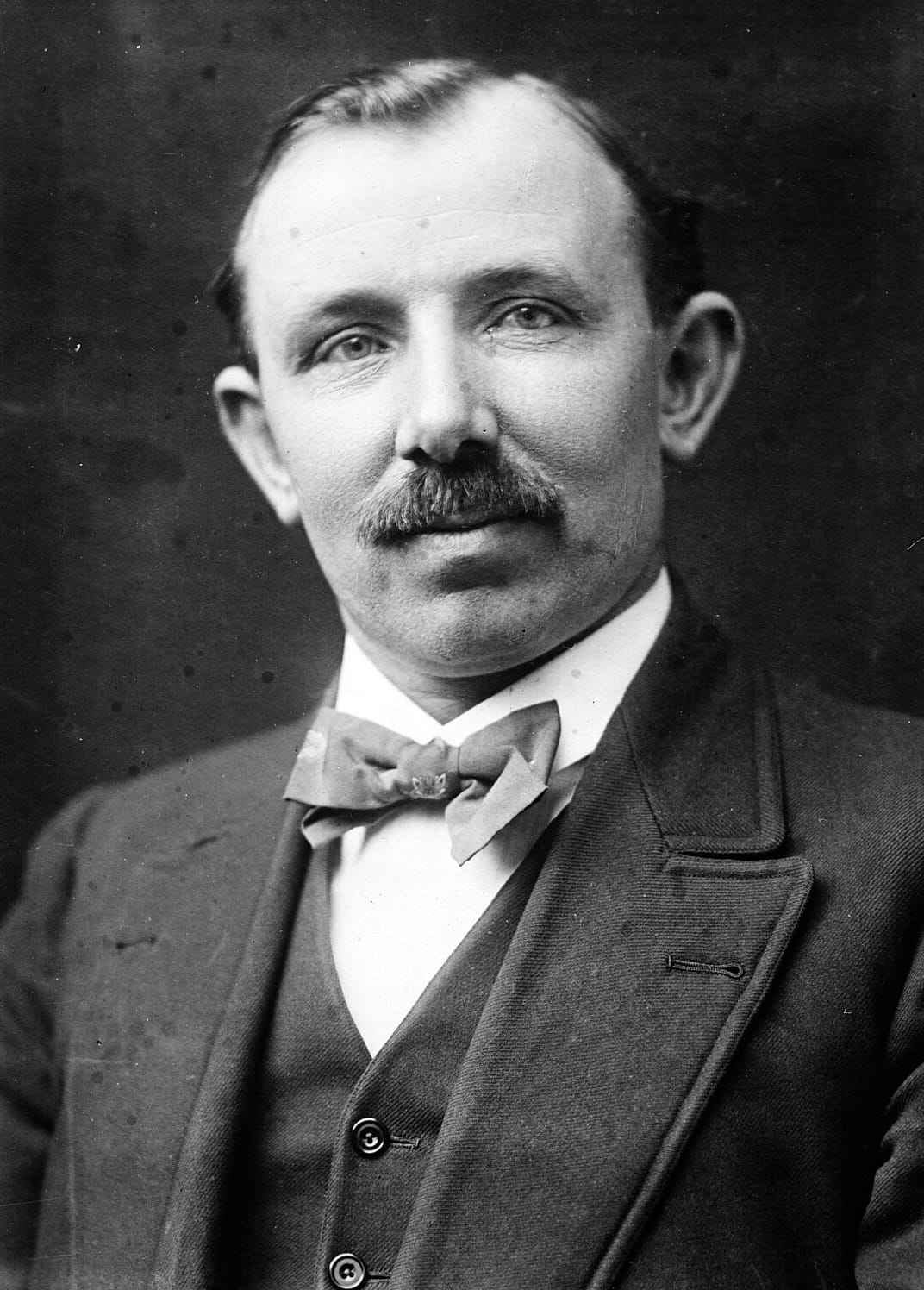
The cast of characters is large since it includes the entire TUC general council and entire British Cabinet, almost every one of them interesting in his own right.
Among the former Ernest Bevin (TGWU) stands out as being toughest-minded: just before the Strike ended, he worked out a plan for the TUC to take over distribution of all food, knowing, as one Council of Action had put it: 'Who feeds the people wins the Strike.'
The most enigmatic of the TUC men is JH (Jimmy) Thomas, leader of the NUR. On the one hand, he was the most persuasive negotiator on his side, although also he was prepared to abandon the miners when he decided their leaders were too intransigent. On the other hand, he was a supreme opportunist, who tried (and failed) to make a fortune from the General Strike by selling short (to the tune of between £50,000-£60,000!) on the stock exchange.
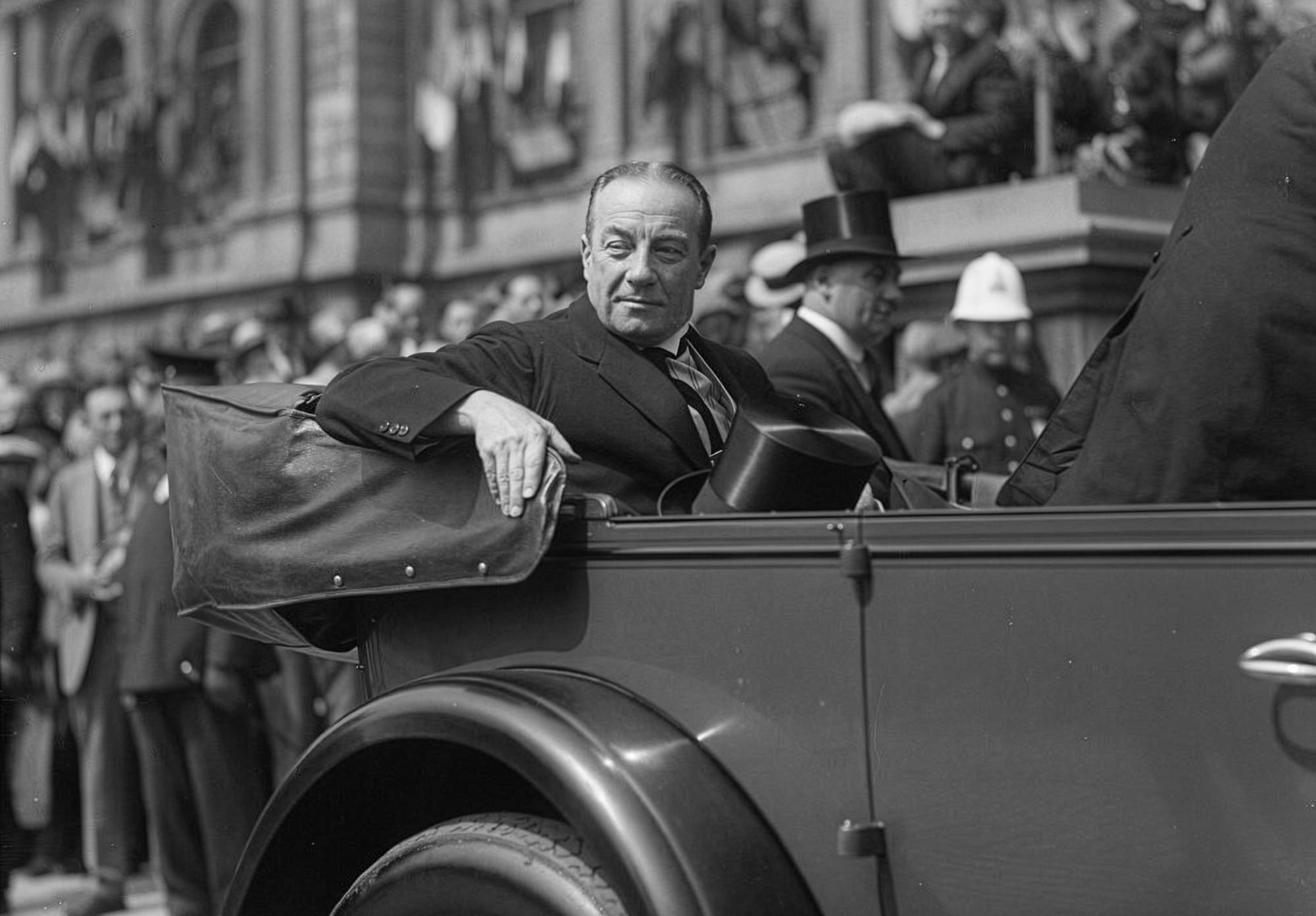
Among Cabinet Ministers, the Prime Minister, Baldwin, emerges as the shrewdest tactician, and also the best dissimulator. He drove a final nail into the coffin of the Liberal Party by, first, appointing one of its most important members, Herbert Samuel, to head the investigative commission into the coal industry before the Strike began; then by endorsing its findings – which the TUC never could do; which meant the Liberals could not oppose the Government during the Strike unless they condemned their own man, Samuel; which meant they had to say 'me too' to whatever the Government said.
Moreover, somehow, he kept important labour and Labour leaders on side as well: 'The Premier knows what he wants, and if any man can get a settlement, it is he,' a miner M.P. told a journalist on the second day of the Strike.
Willie Adamson, a Labour M.P., who had been MacDonald’s Scottish Minister in 1924, 'spoke [on 8 May] most sincerely of his personal belief in [Baldwin], & also of this being the feeling of his colleagues in the miners’ world.' The N.U.R.’s Charley Cramp declared on 11 May: 'Even in the heat of this moment he could not believe that the Prime Minister was mainly responsible for the breakdown of negotiations ... There were sinister influences behind Mr. Baldwin, who were determined to crush the working-class movement.'
Even old George Lansbury wrote wistfully of an exhausted Prime Minister, reluctant to declare war, overborne by Cabinet hawks. It is no minor accomplishment to emerge from a national emergency having sidetracked not merely your primary opponent, but your secondary one as well. Stanly Baldwin did it in May, 1926, when he neutered both militant trade-unionism and the historic Liberal Party. And he left them smiling.
The two great miners’ leaders, Herbert Smith and AJ Cook struck me as heroic – and doomed. Smith, who learned when he was ten years old that his coal miner father had just perished in an underground explosion, and whose mother would die soon after, said before the General Strike began: 'When I get to thinking of all suffering that will be caused ... it makes me very unhappy.'
Cook, who had seen a workmate next to him killed in a rockfall the very first day of his working life underground, seems to me a tragic figure of nearly Shakespearean dimensions.
During the period of the lockout after the Strike, somebody took a swing at him, and kicked him in the leg. But the leg had never entirely healed from an injury suffered during his years working underground. The kick exacerbated the old wound, which began to fester.
Eventually doctors amputated the limb. Cook lived the rest of his life in pain, and died in 1931, age forty-eight, from complications associated with this injury.
Unseen Histories
Strikes are times of heightened emotion and eerie unreality – empty streets and natural rhythms disrupted. Did any violent confrontations take place in May 1926?
Jonathan Schneer
Yes many. Although Britons often boasted that no other country could have engaged in so peaceful a general strike. They did not understand what had taken place.
There was no revolutionary insurrection during the Strike, but violent confrontations took place every day and everywhere. The strikers fought with sticks and stones, however, never with guns. I will cite one dramatic, illustrative, example.
On Friday morning, 7 May, five hundred miners descended upon the Glasgow tramway depot in Ruby Street 'to prevent student volunteers who were sleeping [there] from coming out with the Corporation cars.' The miners stormed the depot. 'A few police were on the alert and assistance was promptly summoned, until 100 members of the City Constabulary were on the scene. A baton charge was made.'
The miners fought back. They 'were armed with stones and other missiles ... windows were smashed.' Police Sergeant McClintock suffered head injuries and a concussion when someone hit him with a brick. 'Robert McCartney was dashed through a shattered window and was so seriously injured that his condition is reported as critical.'
At nearby Bridgeton Cross, student volunteer conductors sparked another melee when they declined pickets’ demands to cease blacklegging. At one point that day, the miners 'marched to the Student’s Union and challenged the students to a fight.' 'Another conflict occurred in the evening, lasting fully three hours.'
But here is the crucial point: such outbreaks were defensive in nature. They never aimed at overthrowing the government, only at protecting some aspect of the Strike. Usually, the police and Specials could contain them; where they could not, the Army and Navy always could.
Unseen Histories
This was the great age of newspaper journalism. Did the strikers gain much support from the press?
Jonathan Schneer
They did not. Of course, all the printers had struck, so many newspapers shut down. Some of the national quality dailies managed to publish abbreviated editions abroad and to distribute them at home. Of these, only the Guardian was relatively friendly.
To make up the shortfall the government produced and efficiently distributed the British Gazette (edited by Winston Churchill) to publicize its position. This simply trumpeted Government propaganda. Michael Sadler, Master of 'Univ,' wrote in his diary: 'Winston is off his head. He ... walks up and down spouting leaders for the BRITISH GAZETTE, and, if he is alone, sends for a Treasury clerk to listen to him!'
The BBC likewise served as a government organ during the Strike. John Reith turned it into the government’s lapdog. He refused to broadcast an appeal for the Government to reconvene negotiations made by the Archbishop of Canterbury, but the BBC read over the airwaves a speech delivered in the House of Commons by John Simon, a Liberal, who argued that the General Strike was illegal and that every trade-union leader who supported it 'is liable in damages to the uttermost farthing of his personal possessions.' Baldwin wrote to Reith afterwards: 'Your loyal service has earned a warm appreciation of the Government.'
The TUC produced the British Worker (less well-distributed than the Gazette) to promote its side. The Worker was relatively anodyne. 'There is no constitutional crisis,' was its refrain. Local trades councils often produced their own strike bulletins and worryingly for the TUC, some of them were much more militant. The TUC tried, often unsuccessfully, to muzzle these.
Unseen Histories
Although this was a national issue, concerning Great Britain, you note that it gained an international audience. What did other nations make of this historical moment from afar?
Jonathan Schneer
Except for Pravda in the Soviet Union, the foreign press condemned the General Strike.
A few examples: Le Matin in Paris judged it the most dangerous social movement since the great war. The Echo de la Bourse in Brussels believed 'the fight has begun between anarchical syndicalism and organized society.' The Frankfurter Zeitung thought that the Strike revealed the dread hand of Russian Bolsheviks who 'really now believe that England is ripe for revolution.'
The New York Times called it 'a threat gone lamentably wrong... wasteful and pitiably futile' •
Nine Days In May: The General Strike of 1926
Oxford University Press, 26 March 2026
RRP: £25 | ISBN: 978-0192894533
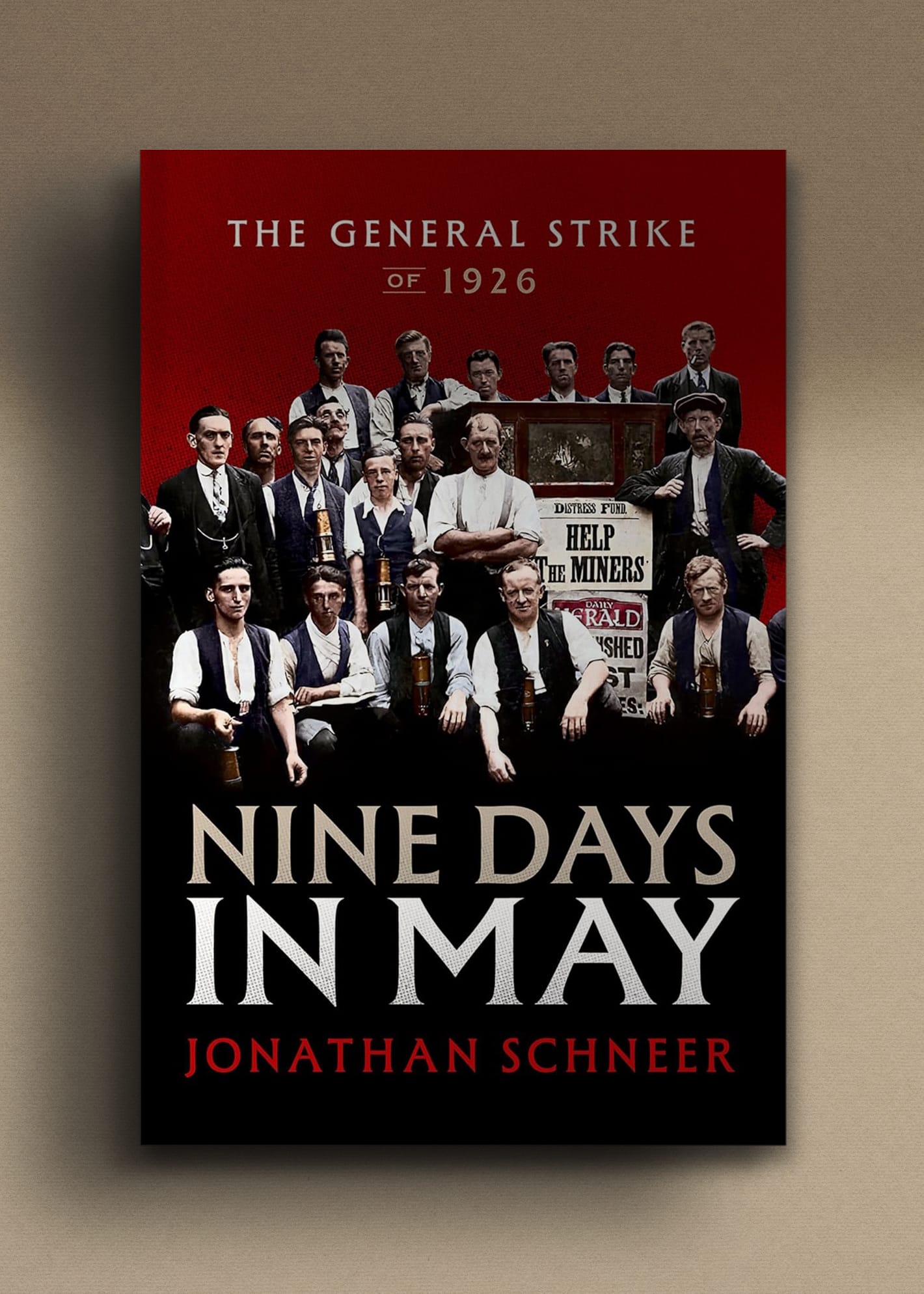
The General Strike of 1926: the tragic story of how the world's best organized working class confronted the world's most powerful, and self-confident, government.
In May, 1926, nearly three million British workers downed tools to support nearly one million of their countrymen, miners whose employers meant to lengthen their working day and cut their pay. This General Strike brought the country to a grinding halt - which, according to Conservative Prime Minister Stanley Baldwin, represented a threat not merely to the nation but to the parliamentary system itself. For nine days, the world's best organized working class confronted the world's most powerful, and self-confident, government. And yet the outcome was never in doubt, for Britain's most important trade-union leaders thought as Baldwin did, although they kept saying they were engaged in a wages dispute only. Really, they feared winning even more than they feared losing.
In Nine Days in May, award-winning author and historian Jonathan Schneer mines hitherto untapped archival sources to explain why and how the Strike came about, why and how it was waged and countered, why and how it ended. In addition to government reports and TUC reports, he uses reports of undercover agents and spies, "special" constables sworn in for the duration of the Strike, volunteer strike-breakers, Communist agitators, trade-union leaders and rank-and-file members of trade unions; also, of course, the papers of politicians of all parties.
This is a tale of Shakespearian dimensions, replete with tragic heroes and villains and buffoons and opportunists and double-dealers, and contending, evenly matched, forces - both of which meant to do their duty whatever the cost. There may never be another general strike in Britain, but the General Strike of 1926 was one for the ages, illuminating the human condition.
With thanks to Anna Silva.
📸 Dive into our Features
🎤 Read Interviews
🎧 Listen to Podcasts
🖼️ Buy fine art prints & more at our Store



.jpg?ref=unseenhistories.com)

.jpg?ref=unseenhistories.com)


