
1877: Recruiting Sergeants in Westminster
By the mid-Victorian Age people were beginning to look at recruiting sergeants with fresh eyes


The British recruiting sergeant was a soldier tasked with inducing volunteers to enlist into the army. Such sergeants become notorious for using underhand and deceptive methods to secure new recruits. In this picture the sergeants stand on the corner of King Street and Great George Street in London, now part of Parliament Square, across the road from the sixteenth century edifice of Saint Margaret’s Church.
The photograph is by John Thomson and taken from his Street Life in London with words by Adolphe Smith. Thomson worked in partnership with journalist Smith between 1873 and 1877 to portray the daily lives of Londoners, and in particular the poorest in the city.
Street Life in London was published as a monthly subscription, before being released as a single volume.
Words by Peter Moore
Photographs Remastered & Colourised by Jordan Acosta

To be a recruiting sergeant in the nineteenth century was to belong to a trade with a long and murky history. It had long been recognised that to find men for the ranks of the army was no simple task. Soldiering was dangerous work. It took young men far away from their homes and family. While some might be attracted by the promise of adventure as many others sensed the hard reality that awaited: the physical toil, the threatening atmosphere and the loss of independence.
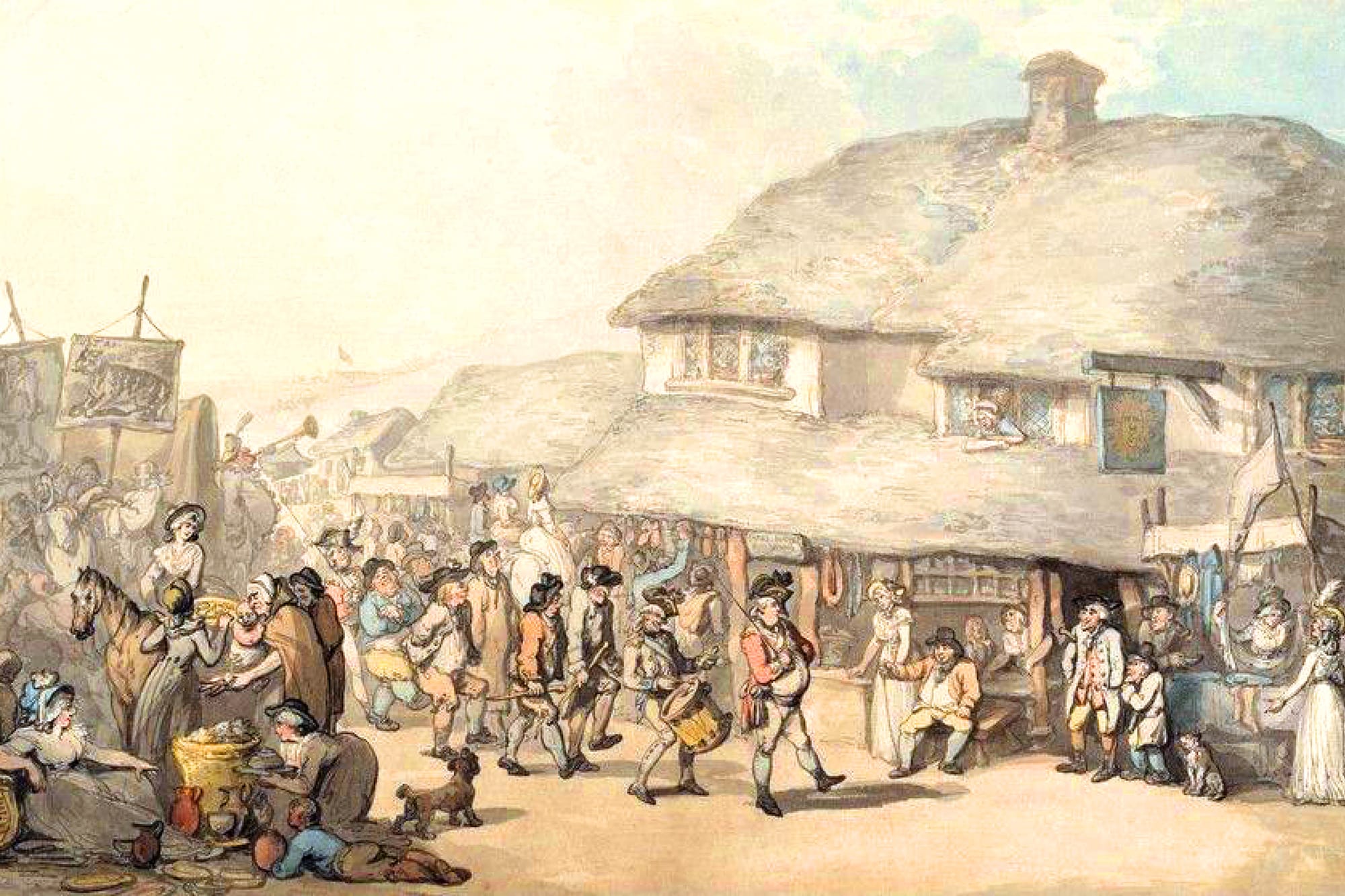
During the many wars of the Georgian Age, recruiters had gained a particularly grim reputation. Worst of all were the methods deployed by the Royal Navy – the infamous press gangs who stalked the coastal ports. These gangs, led by their sergeants would set up their base in a tavern or 'rondy' into which captured sailors would be hauled in readiness for their new life at sea. 'Pressing' as that was known, was frequently deemed a lawful enterprise, much to the terror of British sailors.
Although things were never quite as bad as this in the army, recruiting gangs were given free rein during the worst years of the American War in the 1770s. Memories of what happened at this time lived on in popular memory well into the nineteenth century.
There were tales of redcoated men blustering into towns and villages: drums beating, shouts echoing. Such stories always involved great volumes of alcohol and often they included devious tricks. The visits of the recruiters often ended with young men being plucked from their homes and bundled away to war. Some of these men never returned.
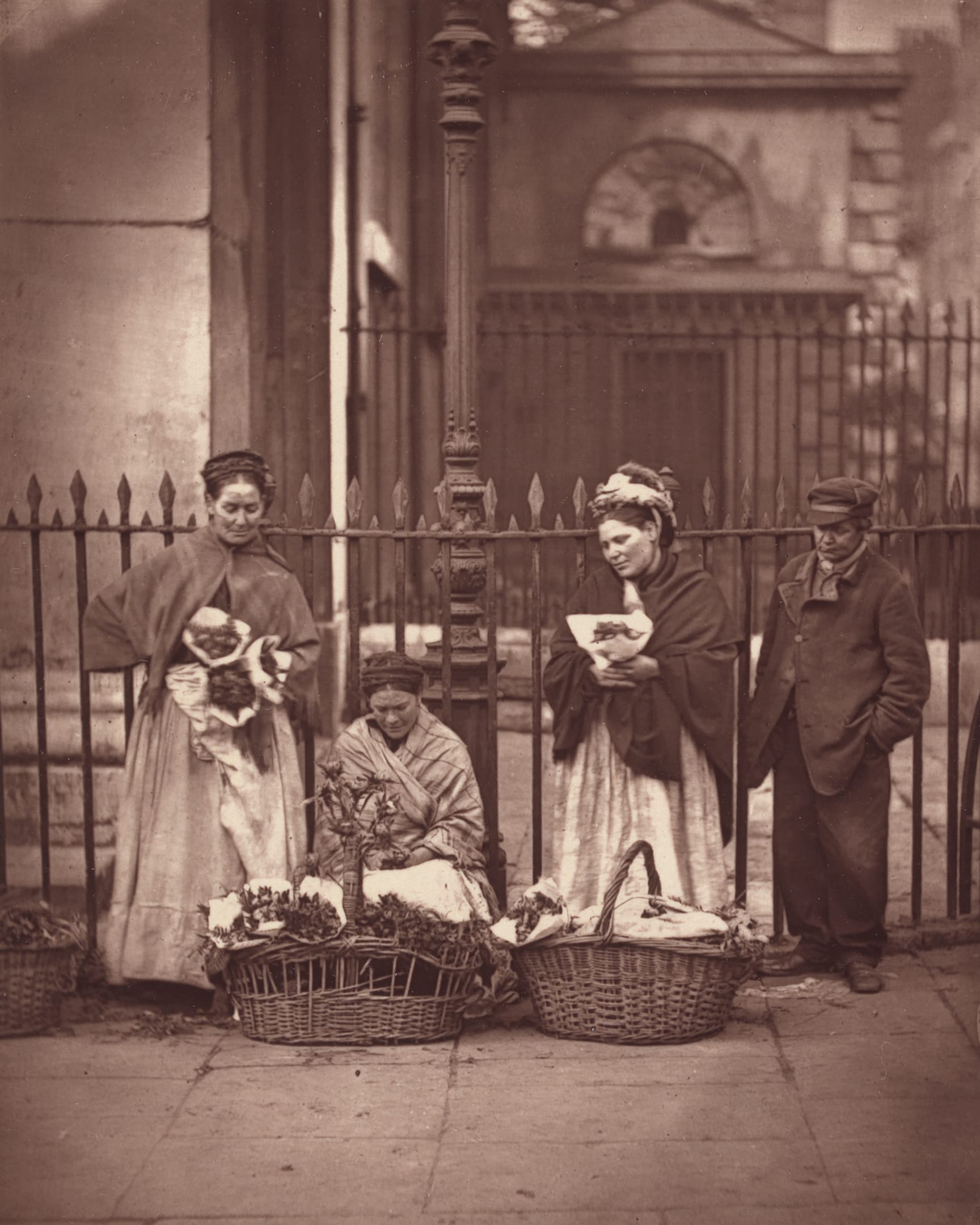
John Thomson's interest lay in documenting the reality of life for ordinary Londoners. He took photographs of public disinfectors, street floods in Lambeth and Covent Garden flower women. In Westminster his eye was caught by this photograph of the recruiting sergeants, loitering outside a pub in their dazzling uniforms on a bright day.
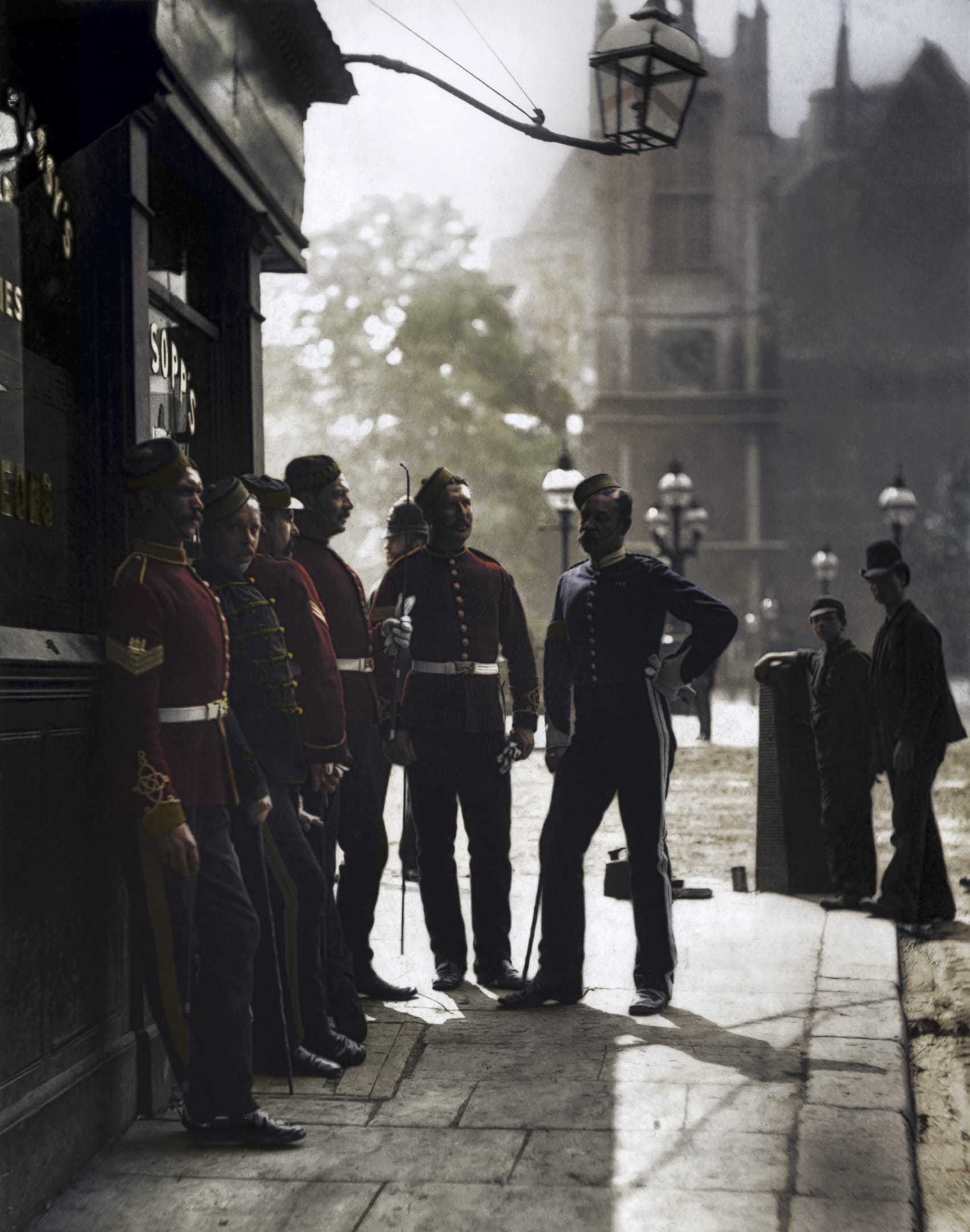
It is instantly clear in this photograph that there had been a change since the raw Georgian days. Just as the sergeants' uniforms had grown smarter so they had lost their menace. They still look formidable but they are not the devious and determined men of old. One newspaper dwelt on this change:
'It should be noted that the recruiting sergeant has rather outlives the conventional portrait drawn of him a century ago, and which most people imagine to be still a striking likeness. He continues to be often tipsy, that is certain, and it is to be feared that his respect for truth has not improved with time; but of the bluffness and jollity which were supposed to be his characteristics there is not much trace, and the poor fellow is in nine cases out of ten a sorry person enough.'
Like Thomson, the photographer, this journalist watched the recruiting sergeants that congregated in the Westminster streets every day of the year. In one characteristic in particular, they did remain identical to their Georgian forebears. Alcohol remained ubiquitous.
12 July 1873
'Will it be believed that there are men who tread the pavement between Westminster Bridge and King Street every day of the year, except Sundays, who drink on a daily average a gallon of beer, exclusive of spirits, to help them in their avocations, and who, after twelve months of this valiant work, have only three or four paying recruits to show?
... To be sent recruiting is a much envied post in the army because of the idle and easy life which recruiters are supposed to lead. But half a year of this easiness is enough for many constitutions; a few struggle on for twelve or eighteen months until checked by Delirium Tremens, and a few others will keep at the work for a dozen years; but when this is the case the man is made of exceptional stuff indeed, and it is not surprising to learn that it is these exceptionally sober sergeants who are most successful in their recruiting, which upsets the theory that a man must need to be a solid toper to attract others into the service.'
📸 Dive into our Features
🎤 Read Interviews
🎧 Listen to Podcasts
🖼️ Buy fine art prints & more at our Store


