
How I Discovered Kathleen Harriman's Wartime Letters
Geoffrey Roberts weighs the historical significance of the letters written by Kathleen Harriman during the Second World War.


As US Ambassador to the Soviet Union during the Second World War, W. Averell Harriman, held one of the most crucial diplomatic postings of the twentieth century.
While his story is well known, until now that of his daughter, Kathleen 'Kathy' Harriman, has never been fully investigated. Perceptive, irreverent and much admired, Kathy was a constant companion for her father on his overseas missions.
The letters she wrote during these years have just been published for the first time, edited by Geoffrey Roberts, an expert in Soviet history.
Here Roberts explains how he first discovered Kathy's letters and how he found them full of charm and wit.
By Geoffrey Roberts

Was it before or after the 9/11 terrorist attacks that I discovered Kathleen Harriman’s wartime letters? I can’t remember exactly. I know that I was in the Library of Congress, though, combing through the voluminous private papers of her father, the United States' Ambassador to the Soviet Union, W. Averell Harriman. Interspersed among the hundreds of files were copies of 'Kathy’s' letters to her family and friends.
The letter that hooked me was written soon after she arrived in Moscow in October 1943 with her father. Averell was a flamboyant business tycoon, with a distinctive, highly-personal diplomatic style that upset the stuffed shirts of the US State Department. But President Roosevelt had made use of these talents as his special envoy to Churchill and Stalin during the war.
On his arrival in Moscow the US diplomats were aghast, complaining that ‘the White House has moved into the embassy and the Department of State has moved out.’
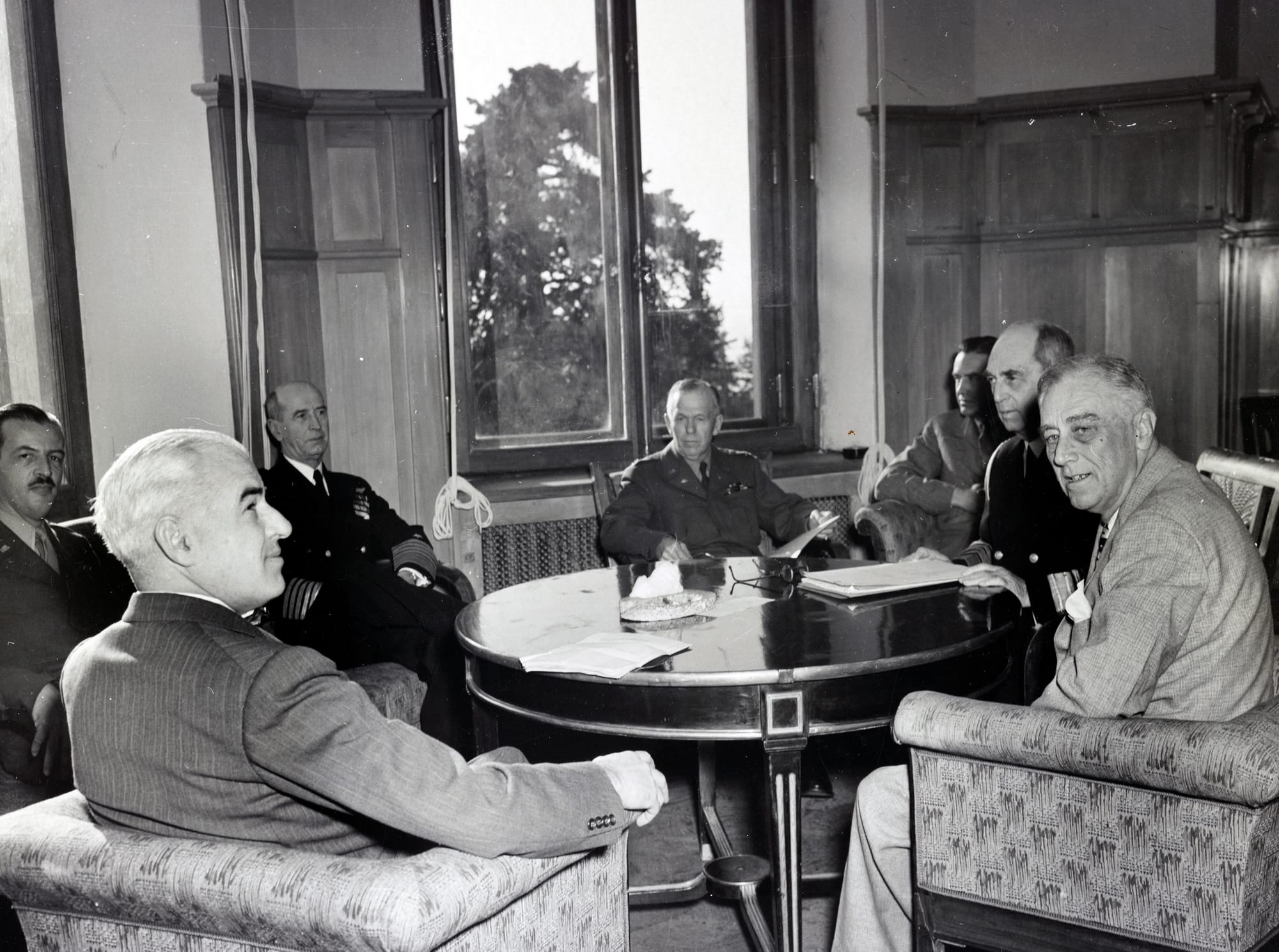
Kathy’s response to this situation was to write a mocking commentary of the State Department and its diplomats:
It’s great for the sense of humor to suddenly discover that the number one attitude of the members of the [State Department] is that ambassadors are a necessary evil of our foreign service set-up.
Ambassadors should be treated kindly and handled with the best of care, sort of like a great-grandfather or baby sister – better still a combination of both. Ambassadors are told what to do, and most particularly what not to do. Can you imagine Averell under this type of system? Or the consternation and bewilderment of the Foreign Service men at his complete failure after a month to fall into line?
Attitude number two deals with reports and cables. These are lengthy and usually manage to say nothing at all of importance. (If you don’t say anything you don’t get blamed for creating an impression which at some future date will be proven false.)
So, to cover up this failure to say a damned thing worth saying, the writer resorts to verbiage. The guy on the receiving end can’t understand what the hell the report is about, but since the words are strung at impressive length, he figures he should be impressed and to cover up his failure to be so, he files the report away and all is forgotten.
Frequently, however, cables telling of specific happenings are required. These are drafted according to [a] strict formula, day after day, year after year. Since they are boring to read and extremely pompous, no one reads them, except Averell, who only reads them to tear them up.
At the end of this letter to her sister, Mary, in New York, she wrote a postscript: ‘On re-reading, I’ve discovered I’m in a very blasphemous mood. So please for God’s sake read this letter and tear it up and don’t show it to anyone.’
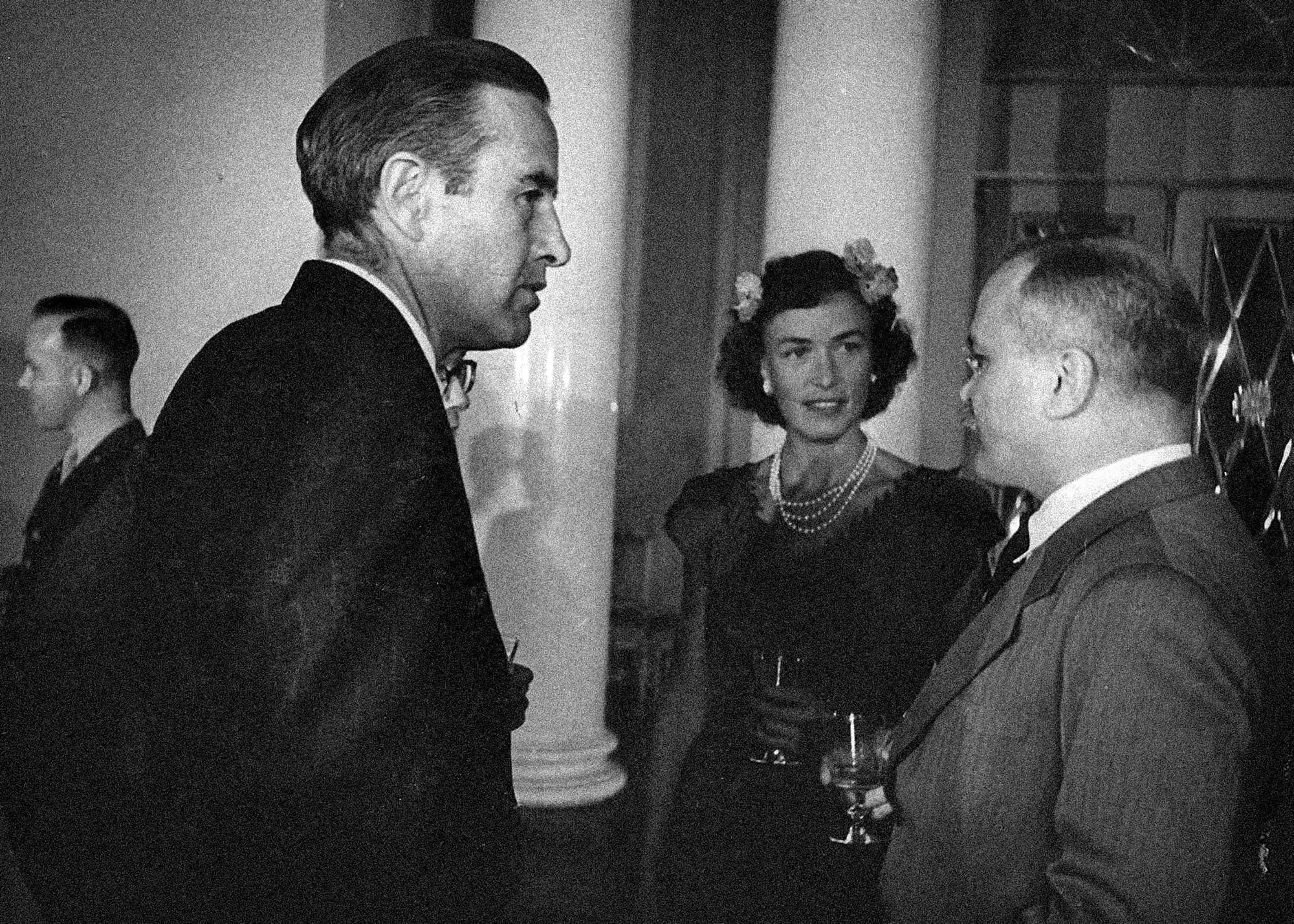
Kathy's irreverence was irresistible. Eagerly I searched for more letters, and found a treasure trove of correspondence. As a Soviet history specialist, I was intrigued by her offbeat portrayal of the Kremlin elite and amused by her experiences of the vagaries of the communist system.
Furthermore I was impressed by her determination to avoid what she called the ‘Moscow rut’ – a sort of diplomatic malaise. Kathy learned Russian and tried as much as she could to interact with the world beyond Moscow, visiting Soviet schools, hospitals, churches and military bases. She also pursued her own interests, such as horse riding, and skied against (and beat!) top-class Soviet competitors.
All this resulted in Kathy becoming something of a celebrity in Russia during the war. The renowned Soviet film director Sergei Eisenstein even drew caricatures imagining her as a ‘dollar princess’
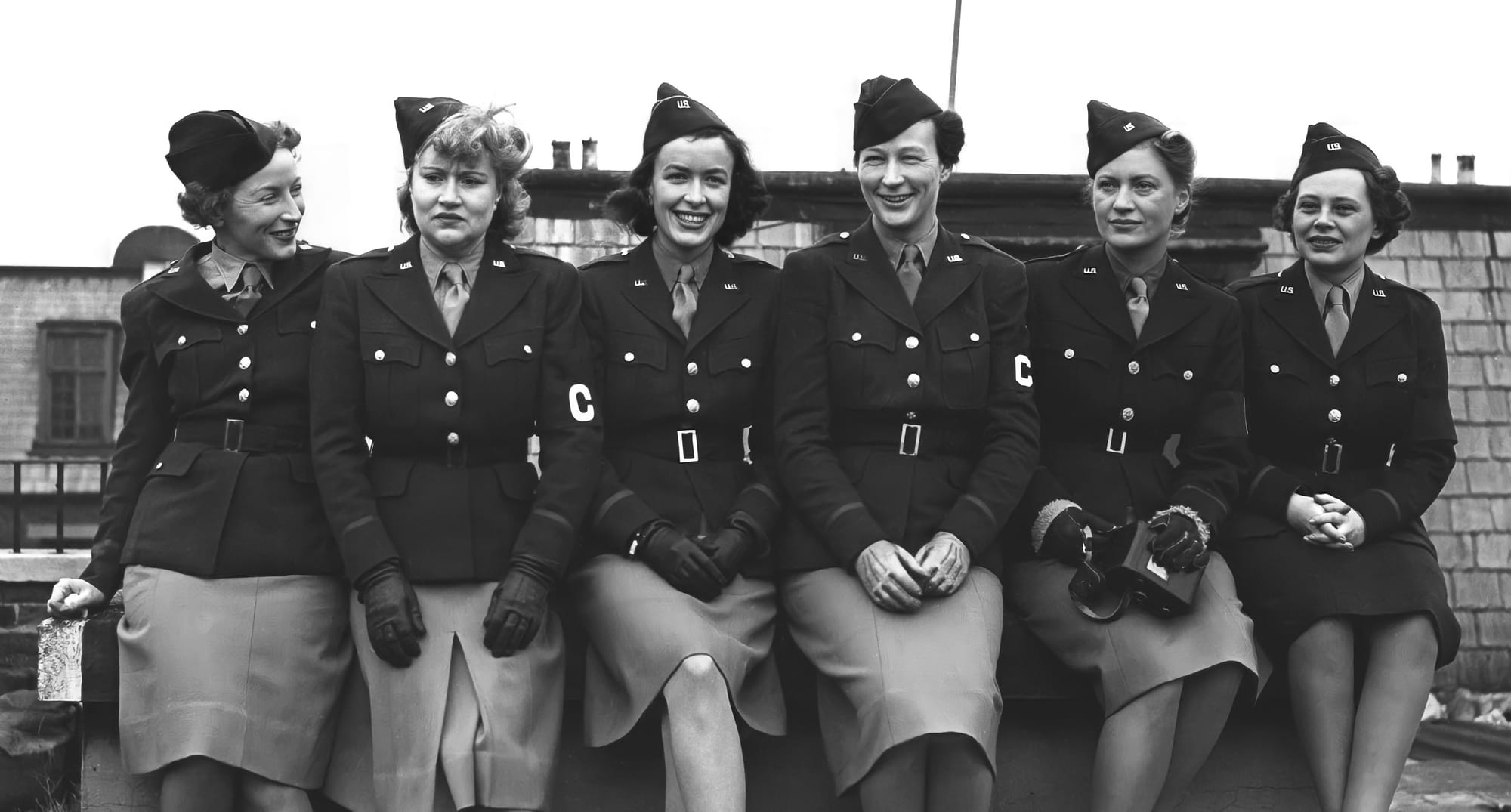
Kathy’s wartime letter writing began in May 1941 when, aged twenty-three, she crossed the Atlantic by seaplane to join her father in London.
'War correspondent' was Kathy’s day job, but she also spent a lot of time acting as Averell’s hostess. ‘Ave’, as Kathy called him, provided her with an entrée to the British military-political elite, while her role as a reporter for the US-based International News Service (INS) meant that she saw and experienced those early war years from many different angles.
Kathy’s letters were, in effect, her diary. Though often highly political, her letters were always deeply personal, and were rarely just about herself. Her depictions of high society in Britain and Russia were frank reportage, not boasts about who and what she knew as a consequence of her privileged life.
She wrote about the people she met, the circles she moved in and the events she witnessed, and above all sought to convey to others her unique wartime experiences.
While the letters were intended for circulation among family and friends, Kathy often wrote on the hoof – between assignments or social engagements – which gave her writing a spontaneous, visceral quality that kept it fresh.
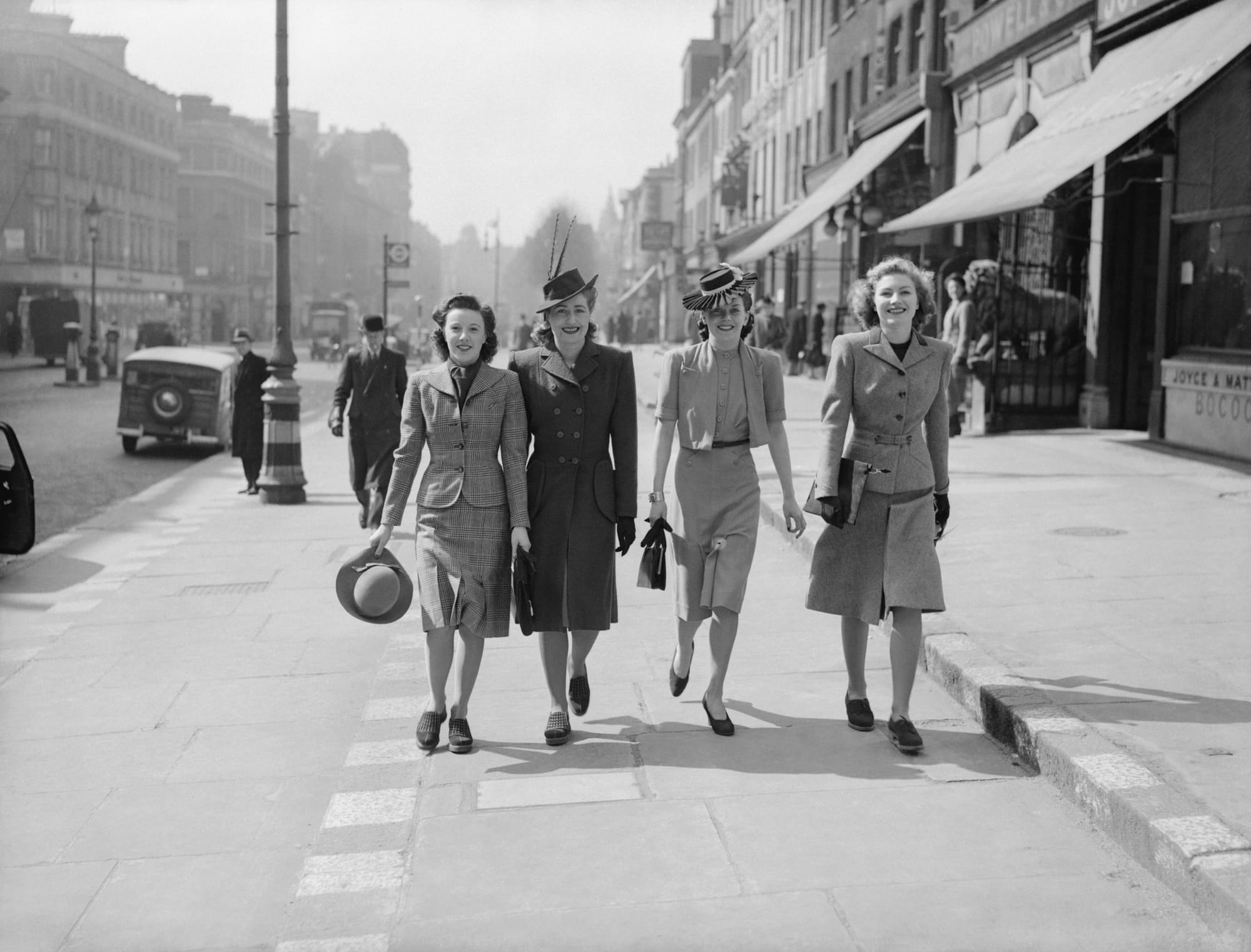
I wasn’t the first historian to be enchanted by Kathy’s correspondence, but I had a novel idea: to publish them as an independent source and record of her experiences.
To me, Kathy’s story was as interesting as her father’s. But not until I got back home to Ireland at the end of September 2001 did it occur to me that Kathy – born in 1917 – might still be alive. And indeed she was! So having tracked down her eldest son, David Mortimer, who gave me her address in New York, I wrote to her, making my pitch for an interview:
At first I read [the letters] for light relief, and with no little amusement. I often found myself laughing aloud at your descriptions of incidents and personalities.
Then I became captivated by your picture of diplomatic life in Moscow during the war. It finally dawned on me that your observations on the times and its politics offered unique insights and evidence that ought to be available to a wider public.
The letters are an invaluable source of information on your father’s missions to London and Moscow. They illuminate the character and personality of wartime politicians and diplomats. The letters are astutely observed, well-written, lively, graphic, personable, very human.
When we met in her New York apartment in March 2002, my main mission was to persuade Kathy to let me publish her letters – a book that I claimed would make her a twenty first century feminist icon! But she was adamantly against publication: ‘As the peace returned many underlings of the war leaders sprang into print. I felt they abused their wartime privilege (& luck) of being on hand as history was made & swore I’d not do likewise.’
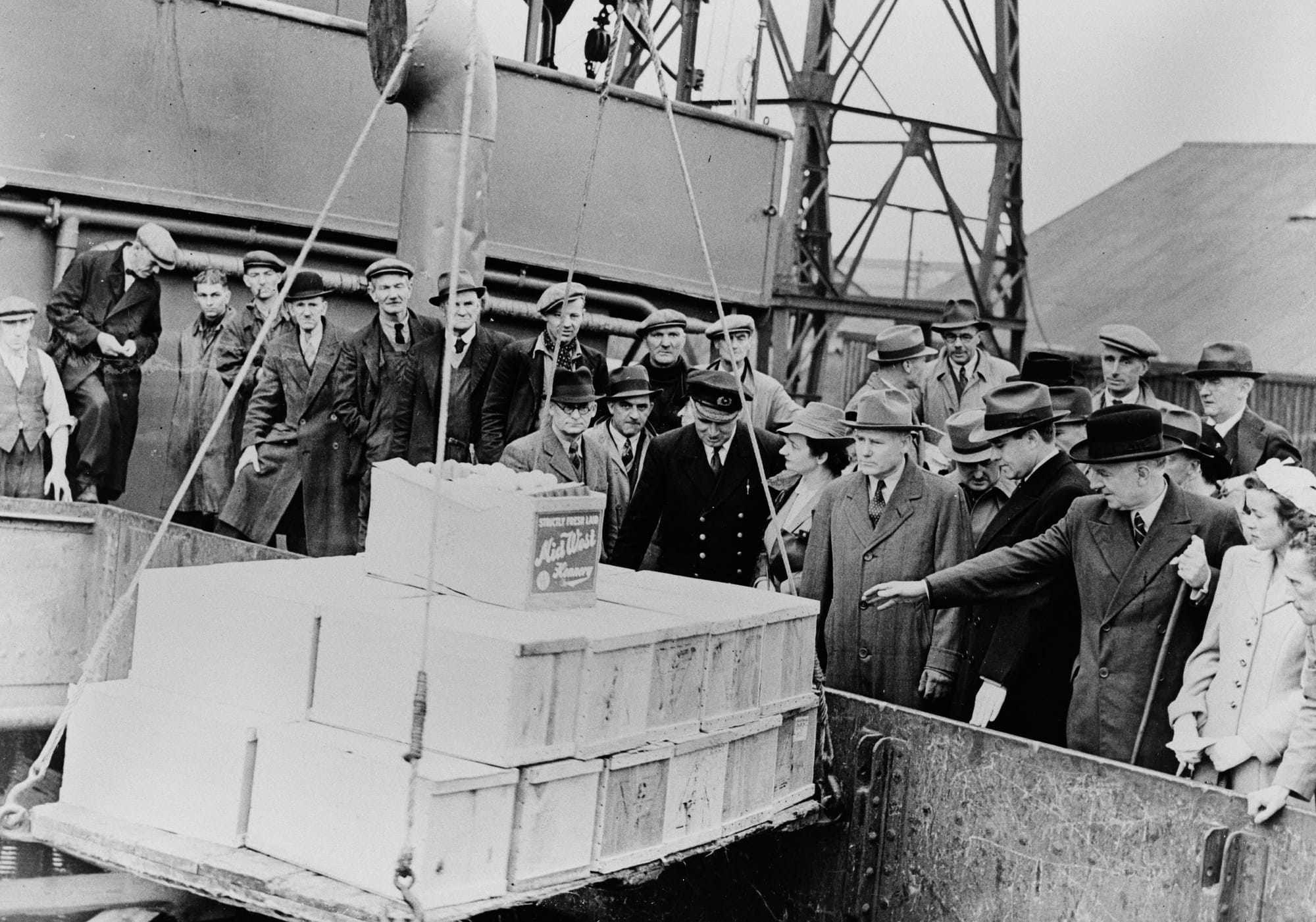
Thankfully, she left the door open for me to publish her letters when she was gone. After her death in 2011, at the age of ninety-three, David Mortimer kindly gave me access to Kathy’s private papers, where I discovered that the letters I had seen in the Library of Congress were merely the tip of an iceberg.
There were, in fact, several streams of correspondence – to sister, Mary, to step-mother, Marie, to Mouche’, her childhood English governess, and, when she went to Moscow, to her best friend, Pamela Churchill.
Pamela was married to Winston Churchill’s only son, Randolph. Pam, who was the same age as Kathy, had a wartime affair with Averell and when Marie died in 1970 they rekindled their romance and got married. As Kathy herself told me, she got on well with her new step-mother – until a rancorous family dispute about money after Ave’s death in 1986.
When Kathy died, the obituaries emphasised the great wealth and privilege that underpinned her wartime adventures. She was, after all the daughter of a rich businessman. Educated at elite institutions, she was a very fine war correspondent and her letters are a joy to read, but it was Ave who pulled the strings that got her a job at INS and secured the diplomatic passport she needed to travel to wartime Britain – where she was welcomed with open arms by the Anglo-American elite.
As someone from an utterly different background, what always struck me about Kathy – in person as well as in her letters – was how, in extraordinary circumstances, she had managed to transcend the potential confines of her upbringing to reach across class and cultural barriers.
This was the ability that made her such an acute and imaginative observer of both the people she met and the historic events she witnessed •
Wartime Letters – Kathleen Harriman, edited by Geoffrey Roberts, is published by Yale University Press.
Wartime Letters: London and Moscow 1941–1945
Yale University Press, 24 February 2026
RRP: £30 | 512 pages | ISBN: 978-0300278545
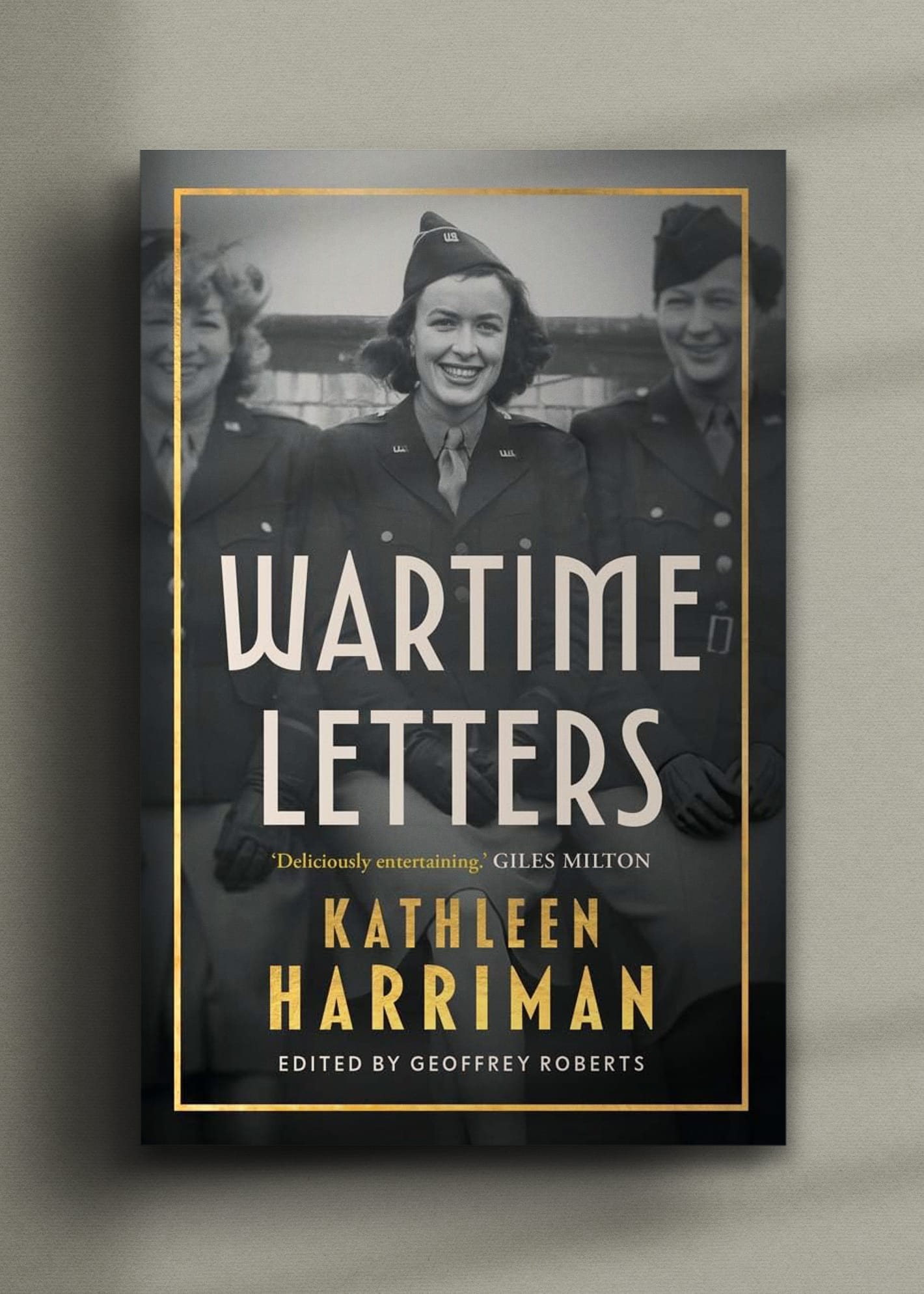
The extraordinary story of Kathleen Harriman, daughter of the US ambassador to the USSR, told through her wartime letters.
Kathleen Harriman was the daughter of American businessman W. Averell Harriman. A journalist by background, she accompanied her father on his wartime postings to London and Moscow, where he served as FDR’s envoy and later as US ambassador to the Soviet Union.
She dined with Winston Churchill at Chequers, played bridge with General Eisenhower, and, in Moscow, banqueted with Stalin. She learnt Russian and soon became one of the best-known American women in the USSR. In her work as a journalist, Kathy visited war-torn cities and sites of covered-up atrocities.
In more than two hundred letters, Harriman wrote all about these trips, people, and experiences. Deeply personal as well as highly political, her correspondence provides a fresh insight into the machinations of Second World War politics and diplomacy. In this fascinating account, Geoffrey Roberts brings together Harriman’s letters to tell the full story of her wartime life for the first time.
With thanks to Sally Oliphant.
📸 Dive into our Features
🎤 Read Interviews
🎧 Listen to Podcasts
🖼️ Buy fine art prints & more at our Store


.jpg?ref=unseenhistories.com)
