
Gabriele Tadino Goes to Rhodes
Edoardo Albert pinpoints a critical moment in the contest between the Venetians, the Knights Hospitaller and the Ottomans.


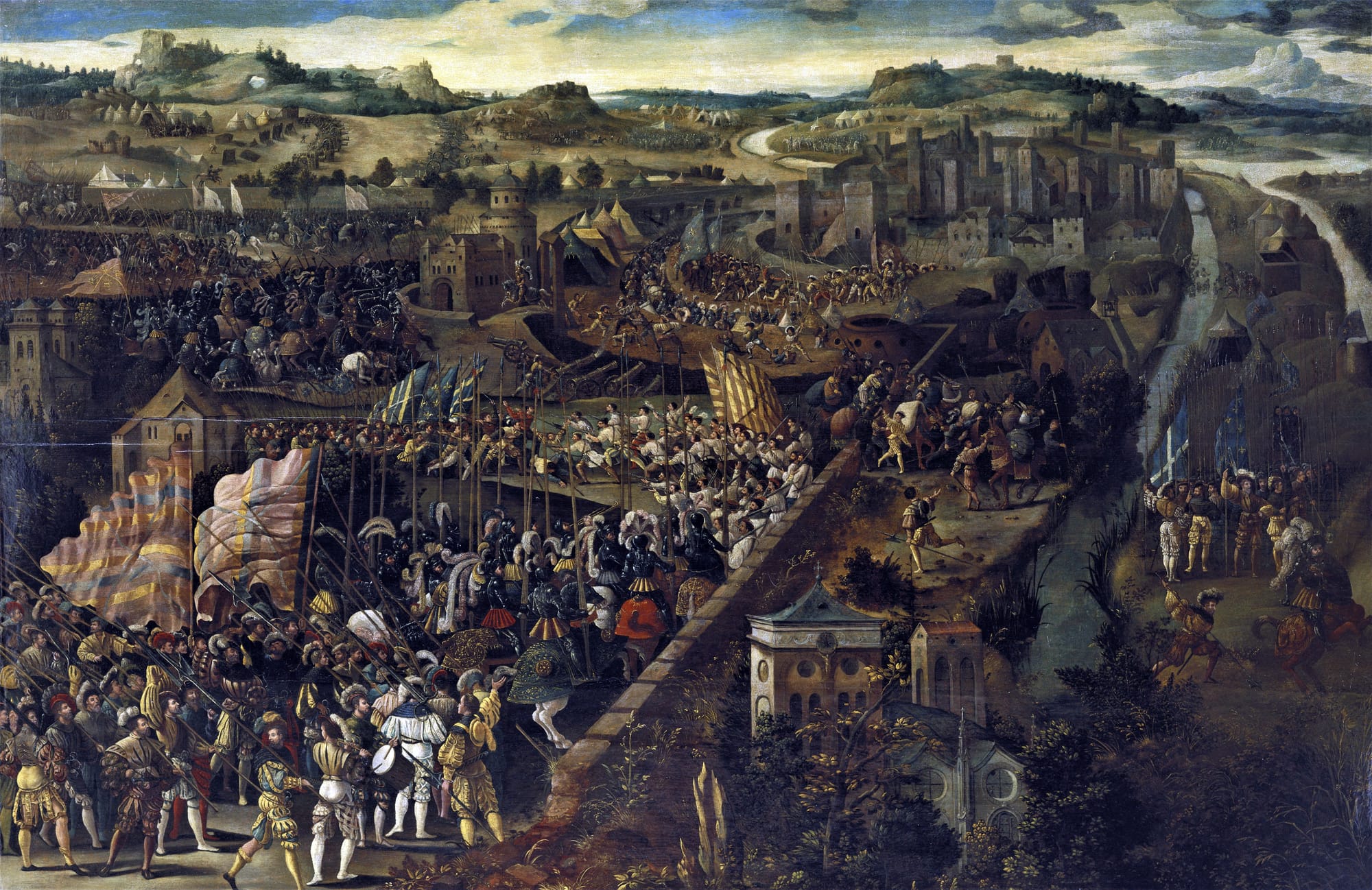
The 'Italian Wars' agitated a vast geographical area at the end of the fifteenth century. They marked one of the final phases of the old Medieval World and the moment when a new modern world was stirring into life.
One of those who symbolised this new world of science was Gabriele Tadino, a brilliant military engineer whose expertise would help the Habsburg Empire and the Knights Hospitaller to confront the might of the Ottoman Empire.
Here Edoardo Albert, the author of a new biography of Tadino, describes a significant moment in his subject's life. It happened in the early 1520s as an emissary of the Knights Hospitaller begged him to leave Crete for Rhodes, where his skills were desperately needed.

'The Great Sultan is coming. Will you help us?'
Gabriele Tadino was 44 years old. For 14 years, during the height of the Italian Wars (1494–1559), he had served the Republic of Venice. In reward for his loyalty, he had been handed a plum appointment as commander of the fortifications of Crete, which was a Venetian possession at the time.
And now Fra’ Antonio Bosio, emissary of the Knights Hospitaller, was standing in front of him on the island of Crete asking for his aid against the Ottoman Empire.
'You are a Christian. Your renown as a military engineer is known through Christendom. We have heard that Suleiman himself is leading the army by which he aims to take Rhodes. Will you come and help us?'
It is not known what immediate answer Gabriele Tadino gave to this plea, although it must have attracted him. While Tadino was not a native of Venice – his hometown, Martinengo, was a part of the Venetian Stato da Terà, lands in northern Italy – he was a faithful servant of the city state.
By the year 1520, though, Venice was confronting serious threats from the outside. In response to the expanding Ottomans, the Venetians had signed a treaty with the 'Sublime Porte', the central government in Constantinople. This was necessary because, as had been learned through bitter experience, the Venetians did not have the strength to defeat the Ottomans themselves.
Desperate to keep their trading privileges in Constantinople and the Levant, the treaty they signed with the Sublime Porte promised not to wage war against the Sultan, nor assist his enemies by transporting them in war against the Ottoman Empire.
Despite this Gabriele Tadino was tempted by the offer to enlist. He was a devout man. Like many, he still saw the Knights Hospitaller – a Catholic military order – as a shield against the spread of Islam and, again like many, he still dreamed of a renewed Crusade to reclaim the Holy Land for Christianity. Tadino wanted to go to help the Knights.
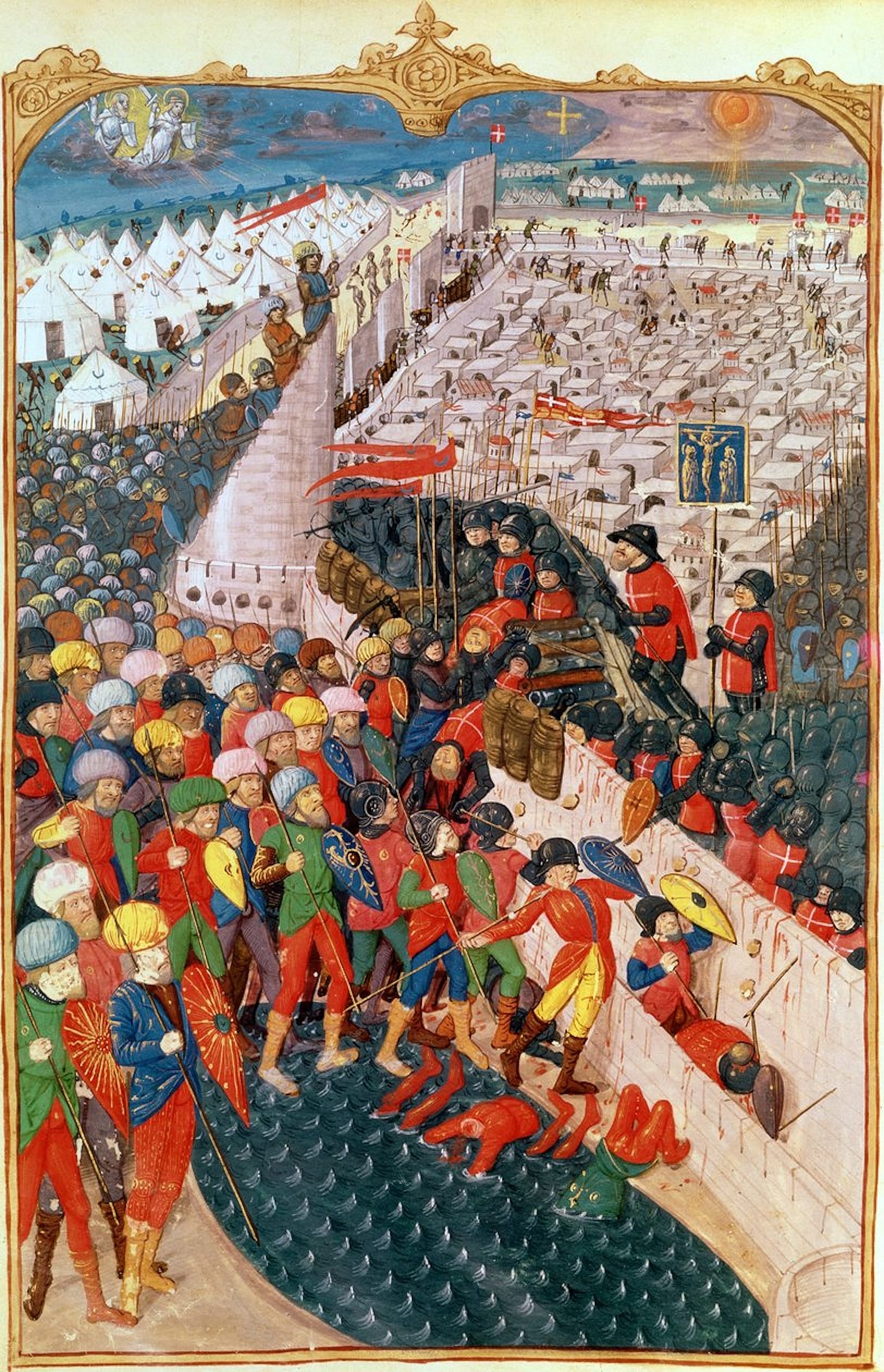
As Fra’ Antonio Bosio told him of the Hospitallers’ plight, Tadino’s determination only grew.
In 1520 the Grand Marshal, Fra’ Phillipe Villiers de l’Isle-Adam, had recalled all the religion’s knights to its base and stronghold in the city of Rhodes but even so, they only had about 700 Hospitallers and a few thousand mercenaries and men-at-arms.
The Ottoman army that had already started disembarking on Rhodes numbered in the many tens of thousands. What’s more, Suleiman himself was on his way.
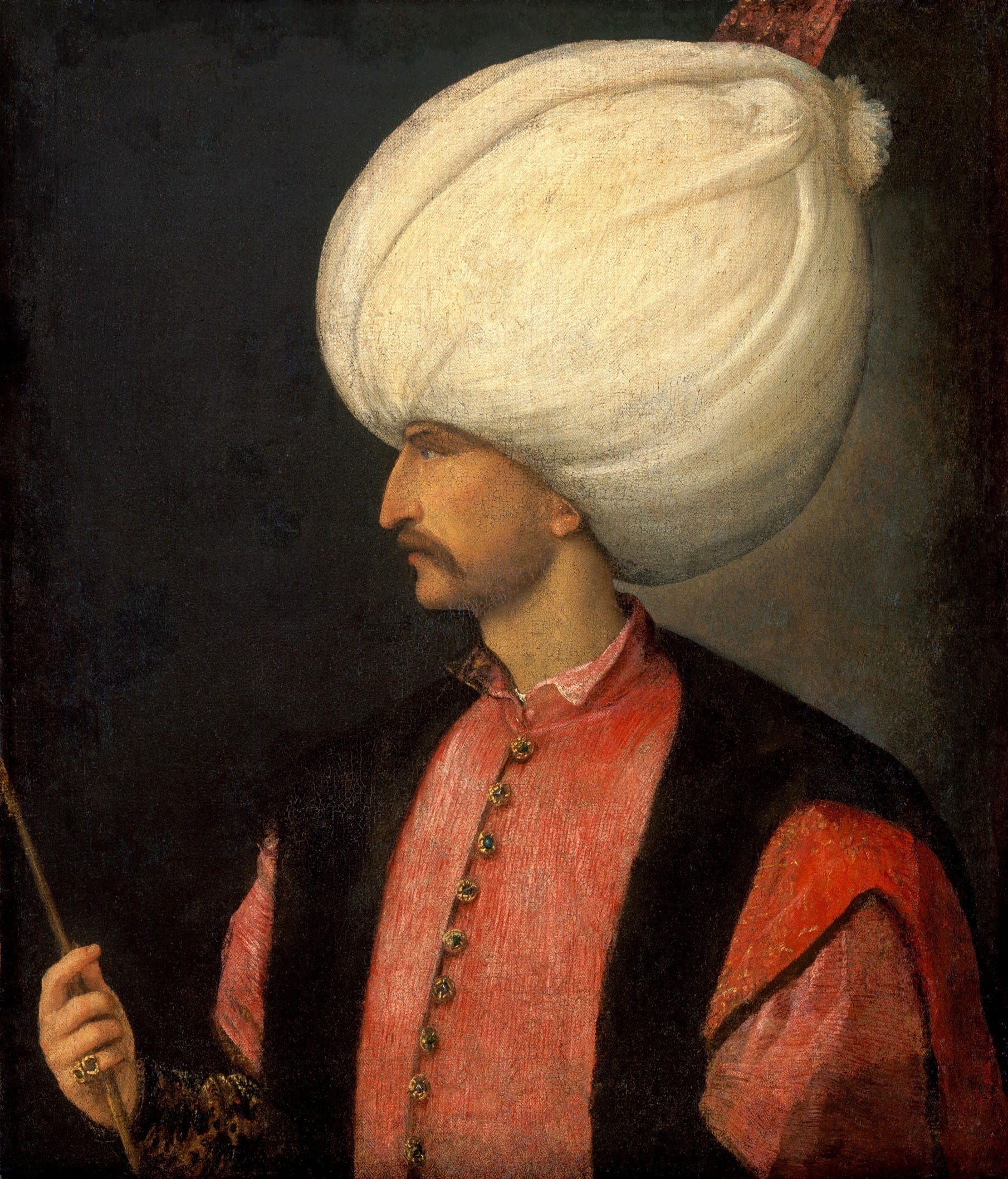
The young, vigorous sultan of the Ottoman Empire was only 27. He had already conquered Belgrade, something his great-grandfather, Mehmet the Conqueror had failed to do. Now, Suleiman was turning his attention to another piece of unfinished business Mehmet had left behind: Rhodes and the Knights Hospitaller.
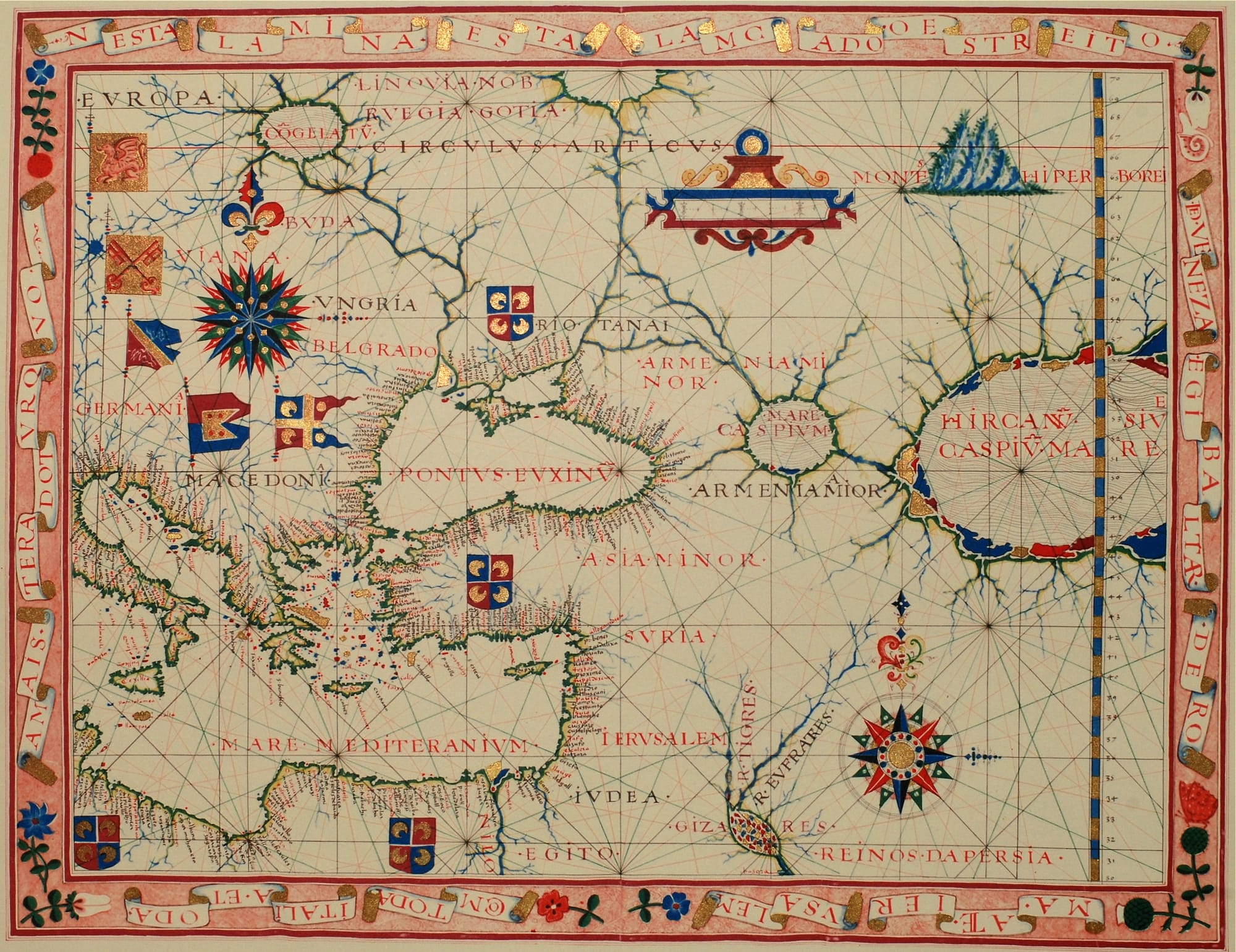
Rhodes lay just a few miles off the coast of Anatolia, right across the shipping lanes from Constantinople to the Levant. For the Knights, it was a strategic position from which they could raid Ottoman shipping. As far as the sultan was concerned, Rhodes was a nest of pirates that he was determined to clear.
Despite the desperate odds, Gabriele Tadino wanted to answer the Hospitallers’ plea. But when Bosio went to the governor of Crete, begging permission that Tadino be allowed to travel to Rhodes to help the Knights, the governor refused.
The governor had strict orders from the 'Signoria' – the Venetian governing council – not to get involved in any conflicts with the Ottomans. Bosio next requested that Tadino be allowed to go and help the Knights in the capacity as a private citizen but the governor refused that as well.
However, when Bosio, deflated and despairing, came to Tadino to tell him of the governor’s decision, he was completely unprepared for the response.
Tadino told Bosio that he would disregard the orders of the governor of Crete. He would leave in secret and travel to Rhodes.
Bosio pointed out to Tadino what that would mean. He would have explicitly and knowingly gone against direct orders. He would have disobeyed the terms of the treaty the Venetian Republic had signed with the Sublime Porte.
As such, Tadino would certainly be stripped of his position as superintendent of the fortifications of Crete. His generous salary would stop. Whatever possessions he left behind would be forfeit. He would turn the governor into an enemy and the Republic into foreign territory because the Signoria would certainly declare him a renegade.
In summary, all that Tadino had worked for would be lost. The state for which he had risked his life over and over again would regard him as a traitor.
Did he really want to give all that up in order to go and die as one of the defenders of Rhodes?
According to Bosio’s later report, Tadino replied that if he died in helping defend Rhodes, then all these questions would be moot. But should he live, and help the Knights Hospitaller successfully defend Rhodes, then the service he would have done for God would outweigh any other loss he might suffer.
But the question remained, how to get Tadino to Rhodes? Now suspicious, the governor of Crete had men watching Tadino’s movements. So Tadino and Bosio hatched a plan.
Bosio ostentatiously boarded his brigantine and sailed away from Crete. But, once out of sight, he moored his ship in a secluded cove and waited there for two days while Tadino went about his normal business. With the danger of the island's superintendent of fortifications absconding now apparently gone, the governor removed his watchmen.
This was the moment Tadino was waiting for. On the third night, he crept from his house and made his way to the place where Bosio awaited him. He went aboard the brigantine and they set sail.
But then disaster struck. The wind turned violently against them and Bosio had no choice, in his light brigantine, but to find shelter on shore.
Meanwhile the next day on Crete, when Tadino did not appear for his normal appointment, the governor realised something was wrong. Finding Tadino’s home empty, he dispatched fast galleys in pursuit of Bosio’s brigantine – not knowing that the brigantine was laid up, unable to move, in a cove just down the coast.
Knowing that there would be boats searching for them, Bosio had his crew dismast his brigantine and haul it ashore, so that it looked like an ordinary vessel undergoing repairs. Passing Venetian galleys even hailed, asking if they had seen a fleeing brigantine belonging to the Knights Hospitaller.
Finally, when night came, the wind dropped and Bosio remasted his ship and set sail. Carrying Gabriele Tadino, one of the greatest military engineers of the age, they sailed away from Crete, arriving in Rhodes just before the Ottoman siege was closed.
Gabriele Tadino came ashore on the island on 22 July 1522. He did not leave again until the first day of the new year. •

The Man Who Stopped the Sultan
Osprey Publishing, 29 January, 2026
RRP: £25 | 304 pages | ISBN: 978-1472869999
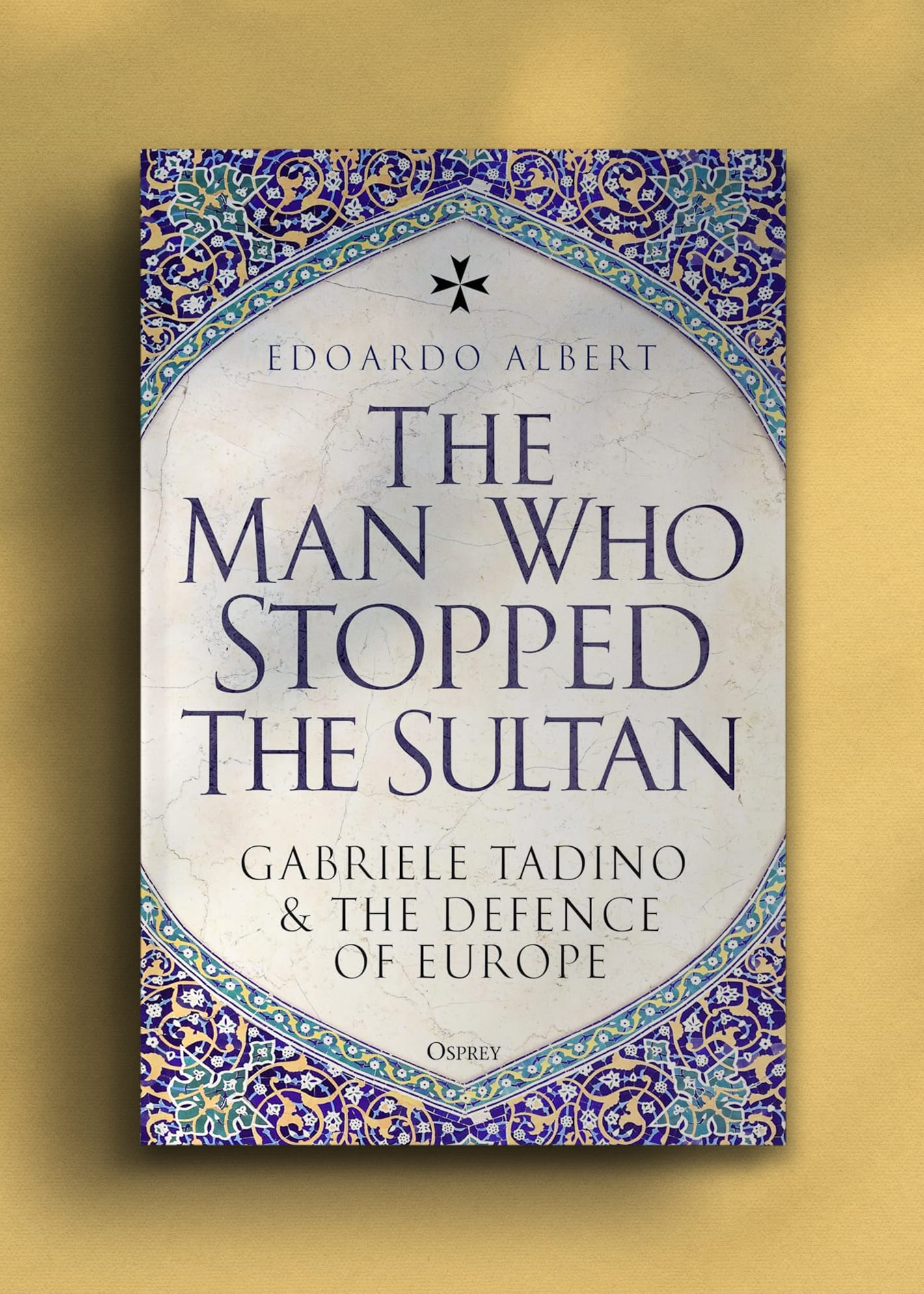
An extraordinary account of how one man defied the most powerful ruler of his age and in doing so changed the course of European history.
Throughout the 16th century, wars raged across Europe as kings and republics jostled for wealth and power. Yet one man exceeded all these medieval princes of Christendom: Suleiman the Magnificent. As ruler of the Ottoman Empire, he governed 25 million people from Constantinople, his realm stretching from Persia to the Atlantic Ocean. Turning his gaze to Europe, Suleiman attacked Rhodes, the island fortress of the Knights Hospitaller but was opposed by Gabriele Tadino - an Italian who had risen through the ranks thanks to his genius as a military engineer.
This is a fascinating history of crusading knights and gunpowder, of spies and tunnels, and of a crossroads in history when the medieval age gave way to the Renaissance. Delving deep into Italian source material, Edoardo Albert weaves together the story of an ordinary man alive in an extraordinary time and performing extraordinary feats of military genius. Through the lens of his life we discover how military tactics and fortifications rapidly changed thanks to the discovery of gunpowder, and how Europe, divided by power-hungry rulers and religion, almost fell to one of the greatest rulers the world has ever seen, but was prevented by a humble engineer.
With thanks to Elle Chilvers.
📸 Dive into our Features
🎤 Read Interviews
🎧 Listen to Podcasts
🖼️ Buy fine art prints & more at our Store


