
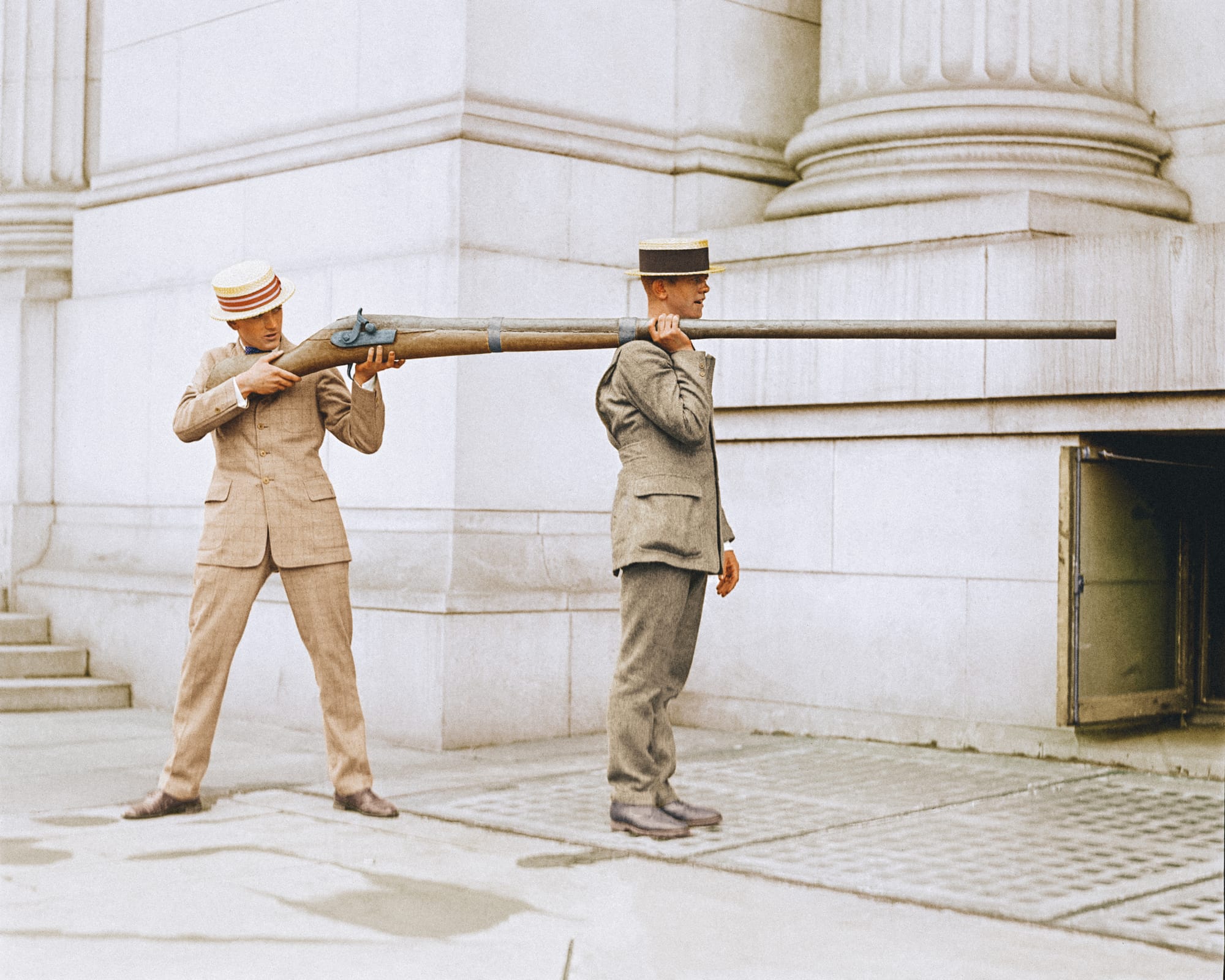
1923: A Punt Gun
We look at a strange, divisive and forgotten weapon that was banned in the USA but tolerated in Great Britain.


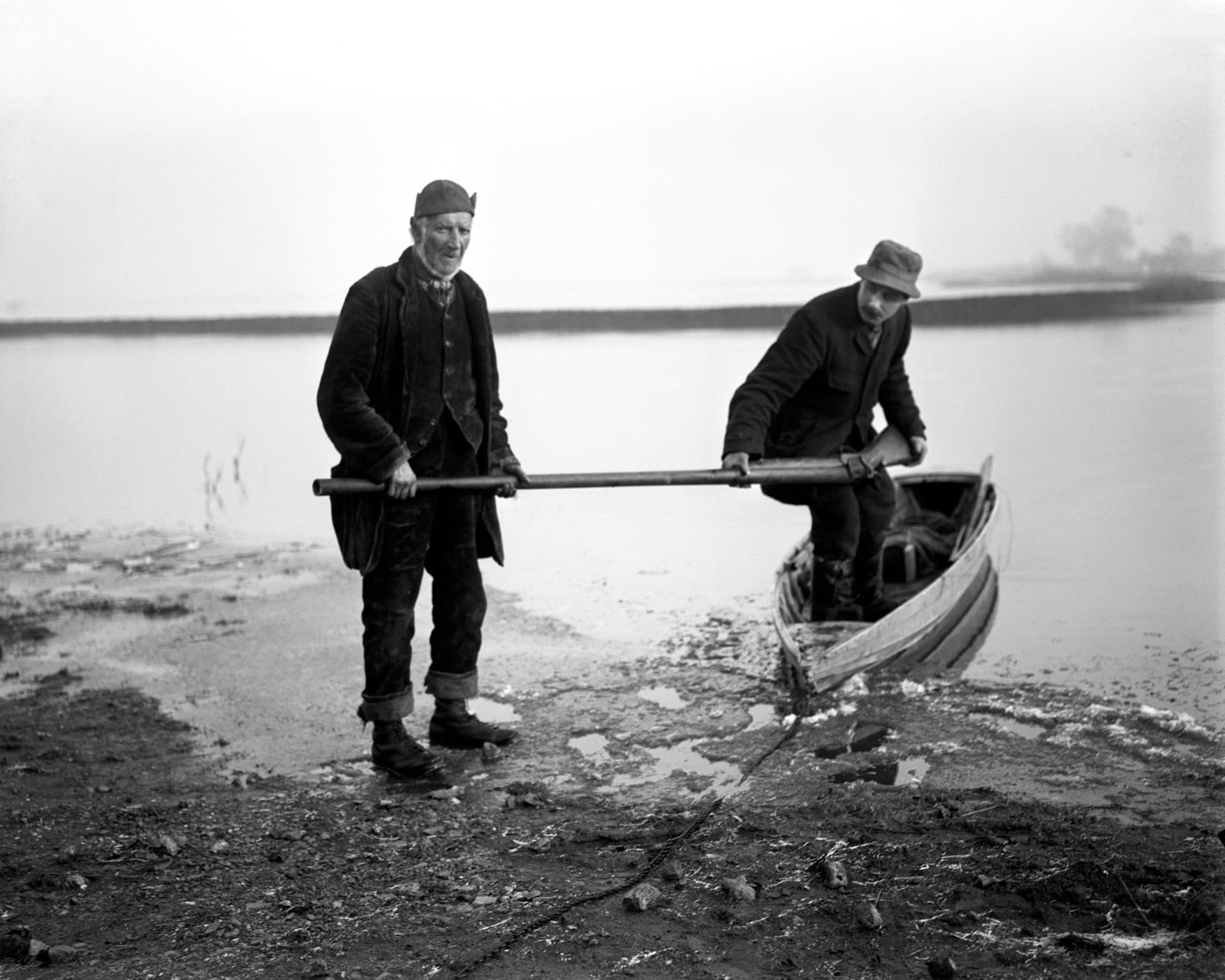
Punt guns were designed to be fired from punts – small boats – and used to hunt waterbirds. With a bore often above two inches, and capable of firing in excess of one pound of shot, punt guns commonly killed seven dozen birds in a single blast.
Such was the level of destruction wreaked by punt guns that they were banned in most American states. In Great Britain, however, they long remained in use.
Words by Peter Moore
Photograph Remastered & Colourised by Jordan Acosta

The image above shows a punt gun, a kind of weapon that is utterly unfamiliar to us today. When the original photograph was taken, however, in July of 1923, most people would have known something of these outlandish guns and 'the strange sport' to which they belonged.
'Punt gunning' traditionally took place in the winter months. Slipping out in their shallow bottomed boats, pointed fore and aft, at dawn, the marksmen would glide quietly through the waterways hunting for flocks of birds.
'The punt gun', it was said, 'appeals to the sportsman with big ideas.' A single discharge could burn through three quarters of a pound of powder, projecting forward the same weight of shot.
This was not so very far from the firepower of a small cannon. As such, it was said to be the most dangerous and exhilarating kind of shooting – a sport that was easy in principle and hard in practice; one that demanded real nerve.
The decisive moment came, at length, once a target had been identified. It was described in lively prose in The Graphic:
A tongue of tawny flame shoots from the muzzle of the grey, long gun, an opening flower of smoke, "brr-r-rup!", the heavy report rattles across the water and the punt surges back yards under the recoil.
But the degree of the slaughter prompted moral questions, even among the shooting community. Wasn't this mass extermination rather than sport?
By the time the 1923 photograph was taken, seemingly as part of a publicity stunt in Washington DC, punt guns had long been banned across the various states for the havoc that they had wreaked on America's coastal wetlands.
Not so in Great Britain. As the twentieth century got underway, punt gunning was seen as a sport with a gentlemanly, masculine allure. In 1908 a newspaper in Norfolk, England, announced that a ‘record bag’ had been attained by someone who had aimed at a flock of green plover. 74 out of 75 of them had fallen.
‘At this rate’, wrote an anxious newspaper correspondent on hearing the news, ‘the destruction must be enormous’ among the plover, geese, teal, widgeon and curlew. It was additionally unsettling for some Britons that their laws were more relaxed than those in gun-loving America.
The sophistication of these weapons, too, was concerning. In the early years of the twentieth century they grew increasingly bigger and more powerful. Should this trend continue, it was conjectured, then vast stretches of Britain's pretty coastal waterways might fall quiet.
Meanwhile the punt gunners sought to defend themselves from the charge that they were ‘greedy, bloodthirsty ruffians’. Many birds might fall in an instant, they admitted, but if the size of their bag was to be compared with that of a game shooter’s at the season’s end, theirs would be by far the smaller.
‘The punt gunner’s day’s sport often consists of only one shot’, ran one letter in 1910. ‘If he kills, say, 20 birds, that is his bag for the day’.
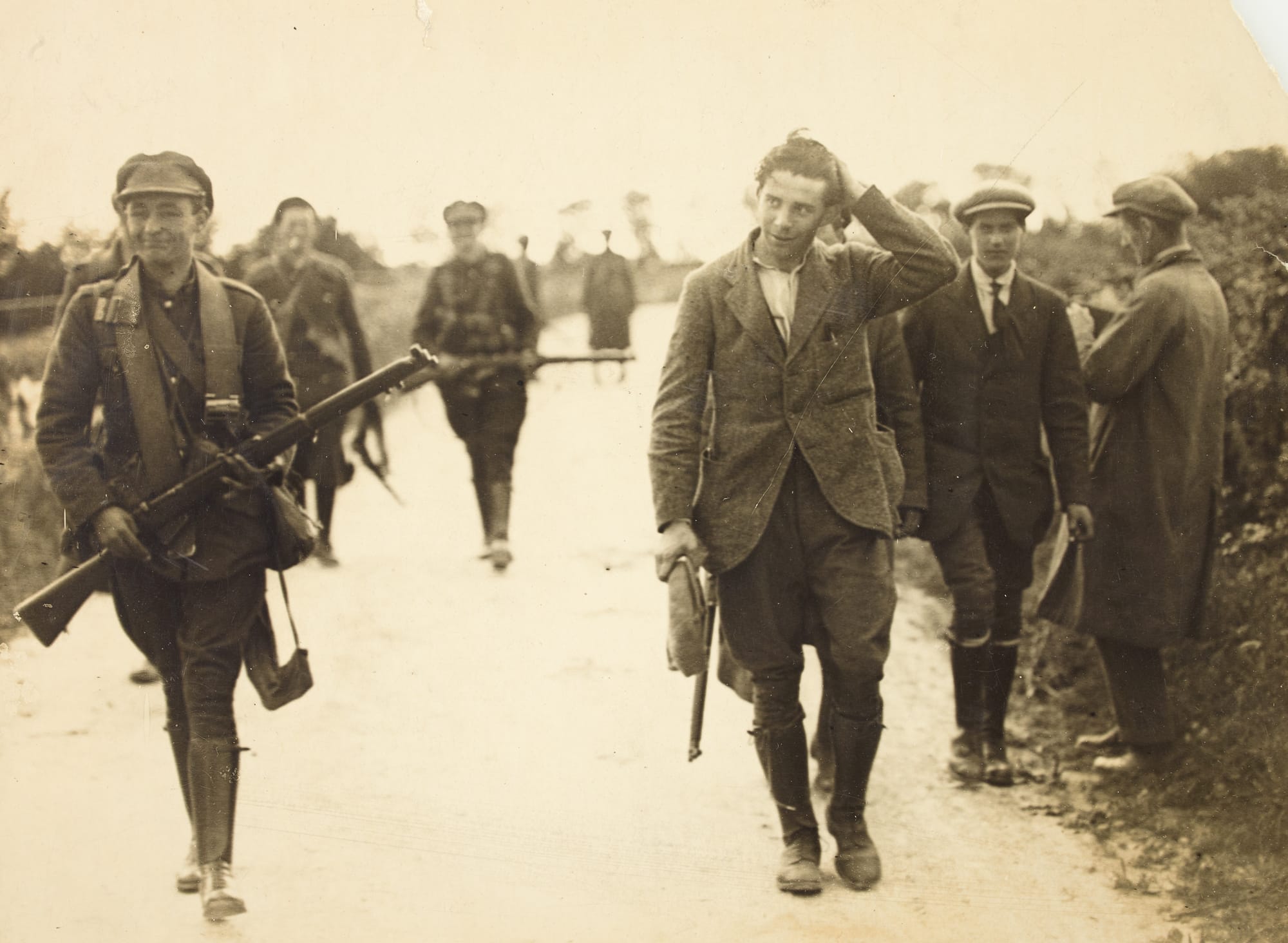
This argument seemed to carry the day because, in the UK, no restrictions were forthcoming. Instead of a ban, punt guns continued to proliferate in rural part of Great Britain. On one occasion in 1921 Crown forces opposing the Irish Republican Army in the Dingle Peninsula, Co Kerry, were confronted with a 14-foot long punt gun during an ambush.
‘The Punt gun, which was captured, would probably have hit the whole patrol at one shot’, it was reckoned. ‘It was loaded with about one pound of leaden slugs.’
While none of the patrol were struck on that occasion, punt guns did continue to menace the coastal flats near Holy Islands in Northumberland. At the start of the twentieth century this was a feeding place and breeding ground for thousands of ducks, mallards, widgeon, teal and geese. But by the mid-1930s, exasperated locals were complaining that the birds had been 'practically driven away'.
This had been the experience of America before. But in Britain the frequent public letters in the newspapers failed to progress into anything more formal. Politicians were happy to let country sports continue without interference.
Rather than being prohibited by the law, punt gunning died a natural death. It had thrived in the late Victorian and Edwardian ages in a culture obsessed by technological development, risk taking and gentlemanly display.
But by the 1940s it was only really working men who were seen with punt guns. With a real war to fight, it appears like the idea of lying flat in a boat for hours on end with a huge, 80 pound gun at one's side lost its appeal.
By the time that the Wildlife and Countryside Act of 1981 finally did ban guns of such tremendous size, there was really very few who cared •
📸 Dive into our Features
🎤 Read Interviews
🎧 Listen to Podcasts
🖼️ Buy fine art prints & more at our Store


.jpg?ref=unseenhistories.com)